

1 Michelin Key · Design Hotels Member
Satoyama Jujo sits in the rice-farming heartland of Minami-uonuma, Niigata Prefecture, where traditional Japanese farmhouse architecture and the rhythms of satoyama land — the cultivated zone between mountain and village — define both the physical space and the experience. The property holds a Michelin Key for 2025, placing it among Japan's most credentialed rural retreats.

Pearl is the En Primeur Club membership app — saves, bookings, and concierge access live there. Same editors, same standards.
- Address
- 1209-6 Oosawa Minami-uonuma, Niigata Prefecture, Japan
- Phone
- +81(0)25 783 6777
- Website
- satoyama-jujo.com
- Directions
- Get directions
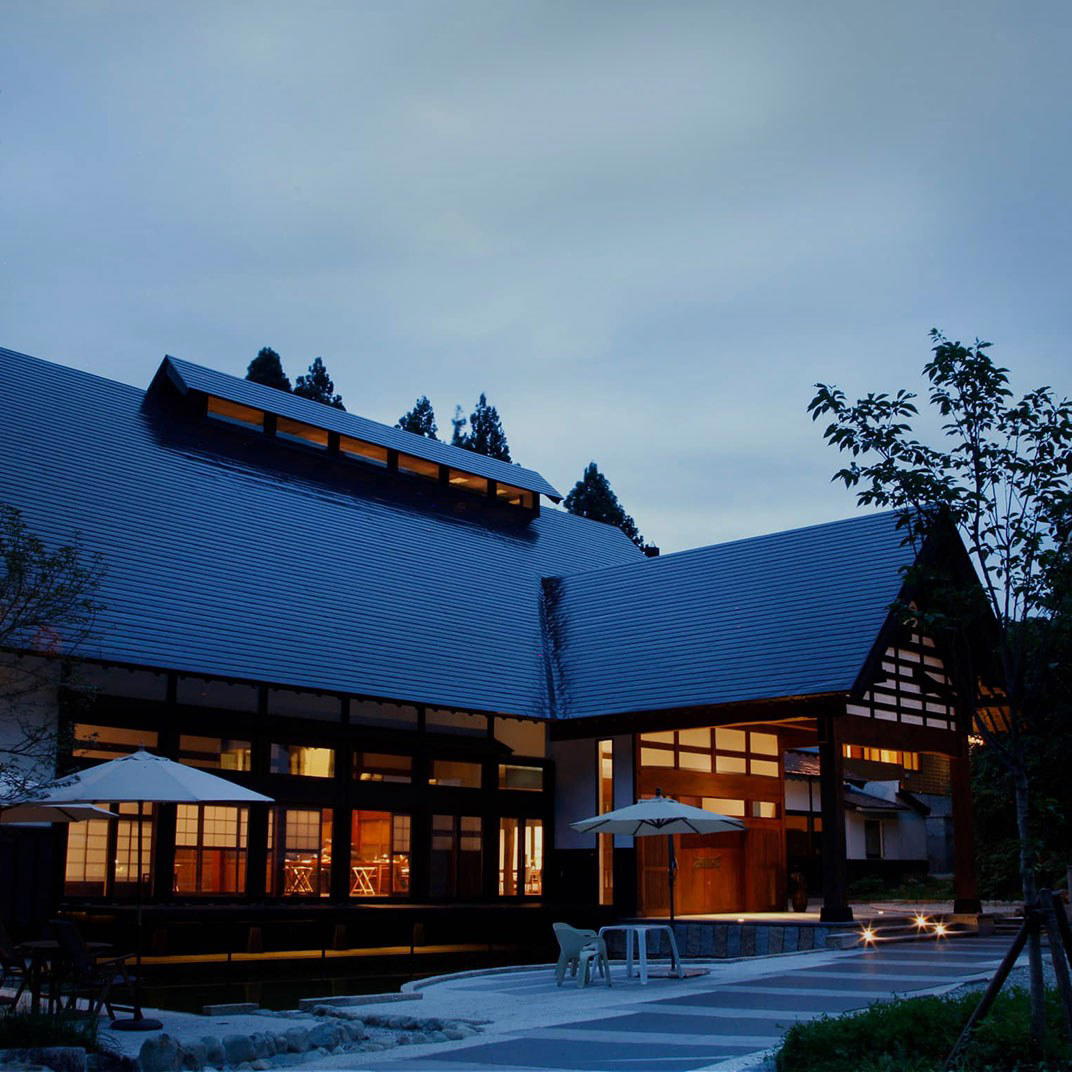
Farmhouse Architecture at the Edge of the Mountain
The satoyama concept describes a specific geography: the transitional belt between mountain wilderness and human settlement, where centuries of rice cultivation, forestry, and seasonal foraging shaped the Japanese countryside. Minami-uonuma, in Niigata Prefecture's interior, sits squarely in that zone. The region produces some of Japan's most prized short-grain rice, fed by snowmelt from the Echigo Mountains, and it carries a particular kind of quietness that separates it from Japan's coastal ryokan destinations or the volcanic drama of Hakone. Satoyama Jujo takes its name from this landscape and from the number of guest rooms, the Japanese character for ten combined with the word for dwelling. That precision of concept is built into the structure itself.
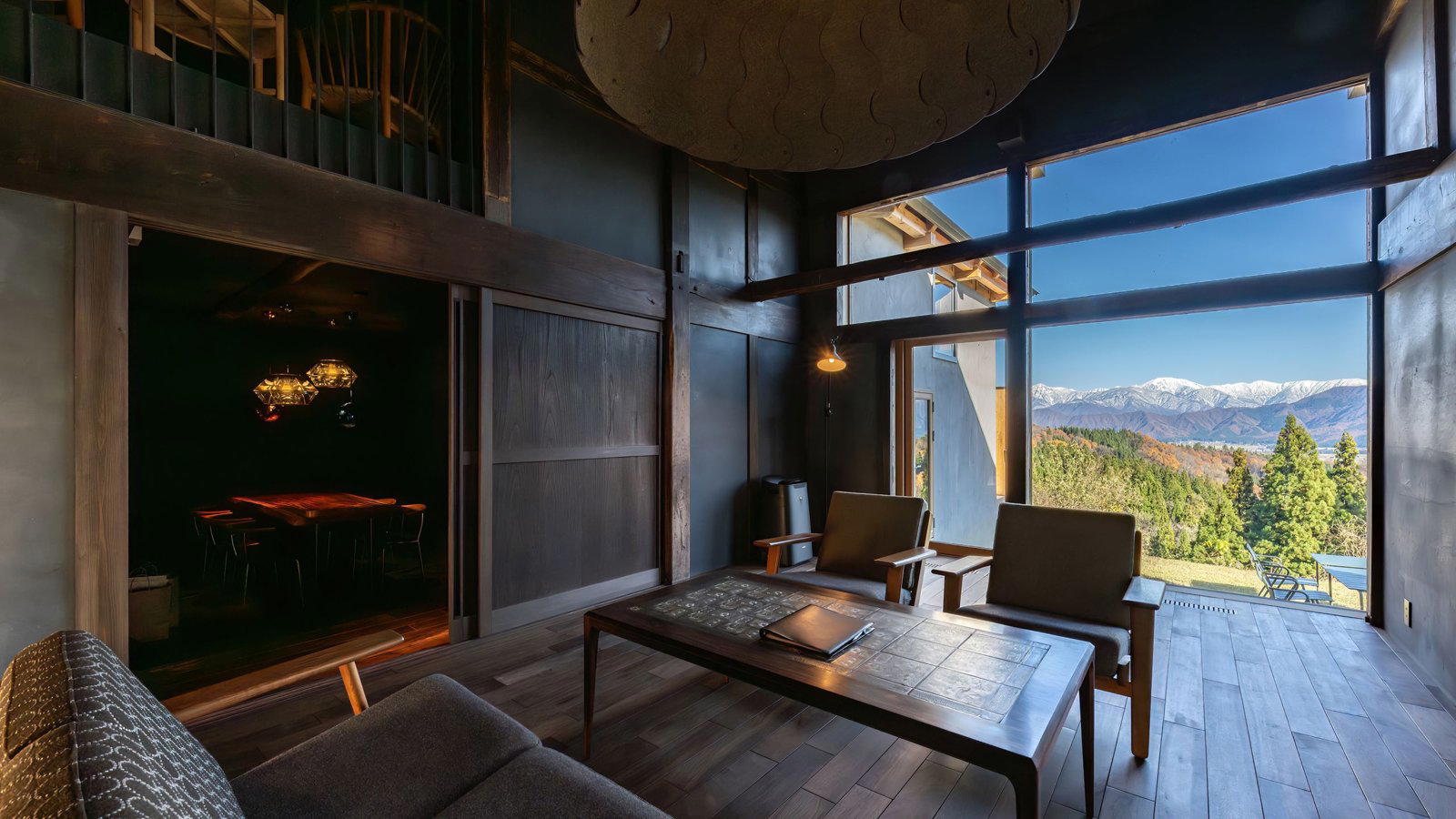
The building is a restored traditional farmhouse, the kind of heavy-timbered, steeply pitched structure called a kominka that once defined rural Niigata's architecture before depopulation and modernisation thinned the countryside. Kominka preservation has become a distinct design genre in Japanese hospitality, sitting apart from both the urban new-build luxury hotel and the conventional resort ryokan. The appeal is specific: thick wooden beams blackened by generations of irori smoke, earthen walls, and the spatial drama of a high-ceilinged central space that rural Japanese builders used to ventilate smoke and store equipment. Gora Kadan in Hakone and Asaba in Izu operate in the classical-ryokan tradition, with meticulous service hierarchies and formal kaiseki formats. Satoyama Jujo belongs to a different lineage, one where the building itself is the argument.
What the Michelin Key Signals
Michelin Guide's hotel arm introduced the Key distinction as a parallel credential to its restaurant stars, designed to identify hotels that deliver an experience worth travelling for. A single Key in the 2025 edition places Satoyama Jujo inside a small, vetted cohort of Japanese properties where the evaluation goes beyond room quality to assess the totality of the stay, including food, setting, and the coherence of the concept. In Niigata Prefecture, that recognition carries particular weight because the region has historically sat outside Japan's primary hospitality circuits, which favour Kyoto, the Hakone-Atami corridor, and the Hokkaido ski belt.
Properties earning Michelin Keys in regional Japan, as opposed to the urban and resort-known prefectures, tend to succeed through specificity rather than breadth of amenity. Zaborin in Kutchan and Nasu Mukunone in Nasu follow a similar pattern: a defined natural context, a limited number of rooms, and a programme anchored in local produce or landscape. Satoyama Jujo fits that model closely. See also our full Niigata Prefecture restaurants guide for broader context on the region's food culture.
The Design Argument: Preservation as Hospitality
Kominka conversion requires a different design sensibility than new construction. The structural vocabulary is inherited, not invented, and the designer's task is to make the existing fabric liveable and legible without erasing what gave it meaning. In practice, this means working around irregular beam layouts, managing the thermal challenges of earthen walls in a prefecture that receives some of the heaviest snowfall in Japan, and deciding how much of the building's agrarian roughness to retain versus smooth away for a paying guest.
The approach taken at properties like this tends toward selective retention: original structural elements preserved and highlighted, while floors, screens, and sleeping arrangements are updated to contemporary standards. The result is a space that reads simultaneously as old and comfortable, carrying material evidence of rural Niigata's past while functioning as accommodation for guests who arrive from Tokyo or abroad with modern expectations of warmth, quiet, and private bathing. This model differs substantially from international luxury design, where newness and material perfection tend to dominate. It also differs from the pure traditional ryokan, where formality of service and ceremony of meal can feel like the primary product. Here, the building is the primary product.
For comparison, properties like Benesse House in Naoshima use architecture as a deliberate editorial statement, with Tadao Ando's concrete geometry making the building inseparable from the art-island mission. Satoyama Jujo operates with different materials and a different regional logic, but the same principle applies: the physical structure carries the argument that the brochure does not need to make.
Minami-uonuma as a Destination
The address, 1209-6 Oosawa Minami-uonuma, places the property in a rural stretch of Niigata that most international travellers pass through only as a transit point on the shinkansen between Tokyo and the Japan Sea coast. That positioning is part of the appeal for the guest who books here deliberately. Niigata's food credentials are well-documented within Japan: the prefecture's Koshihikari rice is a benchmark variety, its sake production is among the most prolific in the country, and the mountain rivers supply freshwater fish that appear in regional cooking in forms rarely seen in Tokyo restaurants.
The seasonality of Minami-uonuma is pronounced. Winter brings deep snow that isolates and insulates in equal measure, shifting the landscape into something severe and quiet. Spring and summer accelerate into intense green, the paddy fields filling and the mountain paths clearing. Autumn delivers the rice harvest, which in this region carries cultural weight alongside agricultural significance. A stay calibrated to one of these seasonal inflection points rewards differently than a generic off-peak booking, and guests arriving in harvest season are in a different place, experientially, than those arriving in deep winter, even within the same building.
Comparable rural-immersive properties in Japan's Michelin Key tier include Fufu Nikko in the mountains above Nikko, Kamenoi Besso in Yufu, and Sekitei in Hatsukaichi-shi, each of which draws on a specific regional landscape to anchor the stay. For guests mapping a broader Japan itinerary that moves between urban precision and rural depth, Satoyama Jujo fits as the rural counterpoint to properties like Bvlgari Hotel Tokyo or HOTEL THE MITSUI KYOTO, which operate in an entirely different register of luxury hospitality.
Planning the Stay
Satoyama Jujo sits outside Japan's primary booking infrastructure, and with ten rooms the property operates at a scale where availability moves quickly around peak seasons. The nearest shinkansen access is through Urasa Station on the Joetsu Shinkansen line, placing the property roughly 90 minutes from Tokyo by rail. The surrounding Minami-uonuma area is accessible by local transport but a property car or taxi transfer from the station is the practical option for most guests arriving without their own transport. Given the small room count and the Michelin Key recognition, booking lead times for harvest-season and peak-winter visits align with advance-planning requirements typical of Japan's most sought-after rural ryokan. Guests intending to anchor a broader Japan itinerary in this region should also consider Fufu Kawaguchiko and Fufu Kyu-Karuizawa Restful Forest for comparable mountain-context stays in central Honshu.
At-a-Glance Comparison
Comparable venues nearby, for context on price, style, and recognition.
| Venue | Cuisine | Price | Awards | Notes |
|---|---|---|---|---|
| Satoyama JujoThis venue — the venue you are viewing | Renovated traditional Japanese folk house with modern luxury. | $500–750 | 1 Michelin Key · Design Hotels Member | Not listed |
| Satoyama-Jujo | Renovated 150-year-old kominka ryokan fusing Japanese folk architecture with Scandinavian influences. | $500–750 | 1 Michelin Key · Design Hotels Member | Minamiuonuma |
| Maruyo Hotel | Historic designers ryokan with traditional elegance. | $500–750 | Michelin Selected · Tablet Hotels Best New Hotel Designs (Asia) | Senbacho |
| Aman Kyoto | Contemporary ryokan-inspired pavilions integrated into a forested landscape. | Not listed | 2 Michelin Keys · World's 50 Best #74 | Kita |
| Hyatt Regency Tokyo (ハイアットリージェンシー東京) | Contemporary urban luxury with Shinjuku-inspired reinvention | $300–500 | Not listed | Nishi-Shinjuku |
| Naoshima Ryokan Roka | Modern Japanese ryokan blending contemporary art, local materials, and island serenity. | Not listed | 1 Michelin Key | Honmura |
Recognition history
Dated appearances from independent guides and award organizations, with the underlying list record or original source where available.
Michelin 1 Key
Michelin
Design Hotels Member
Design Hotels
Full recognition history (4 entries)
Michelin 1 Key
Michelin
Michelin 1 Key
Michelin
Continue exploring
More in Niigata
Hotels in Niigata
Browse all →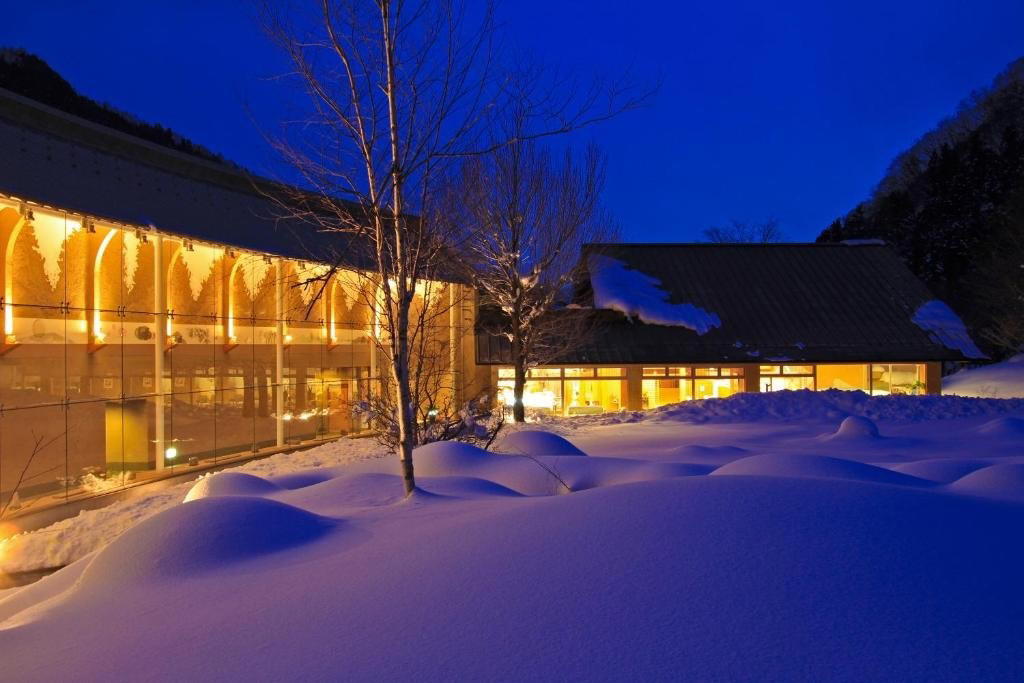
Details
- Quiet
- Scenic
- Elegant
- Rustic
- Minimalist
- Intimate
- Romantic Getaway
- Wellness Retreat
- Anniversary
- Weekend Escape
- Panoramic View
- Design Destination
- Restaurant
- Wi Fi
- Mountain
- Garden
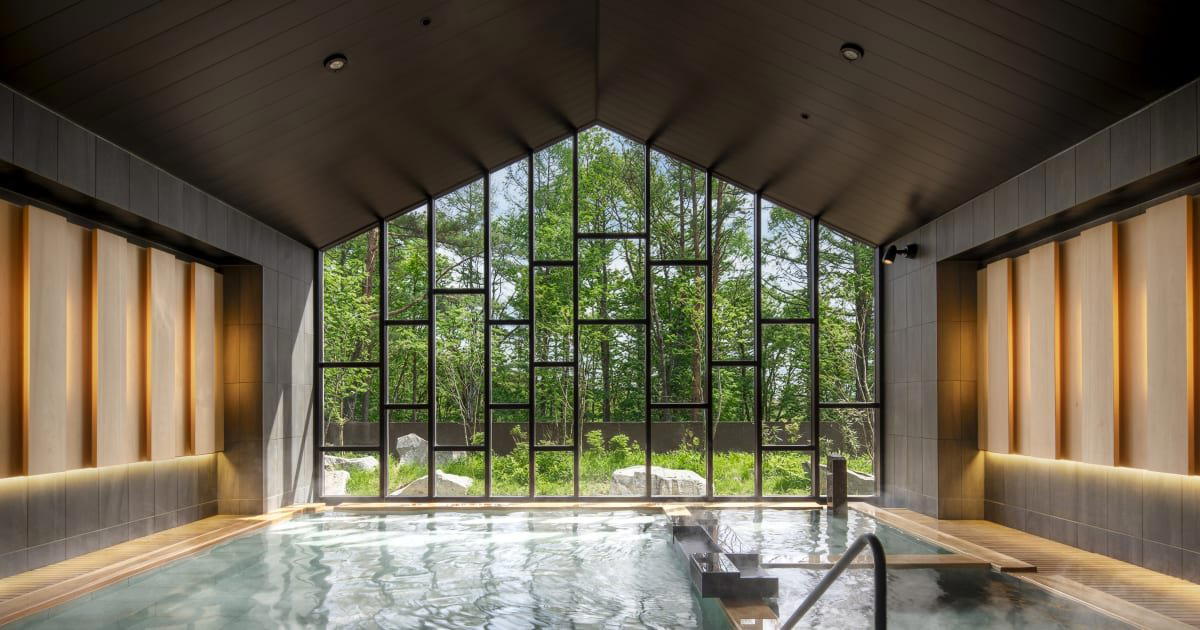
Bright, airy spaces with natural materials, tatami floors, low beds, and a tranquil, breathable atmosphere emphasizing serenity and connection to nature.