
Forbes Recommended
San Clemente Palace occupies a 15-acre private island in the Venetian lagoon, reached by a complimentary water shuttle that runs every 30 minutes. The former monastery trades the crowds of San Marco for antique gardens, terrazzo-floored rooms, and Murano glass chandeliers, all within 10 minutes of the city's historic centre.

Pearl is the En Primeur Club membership app, where members save venues, book tables and use the concierge.
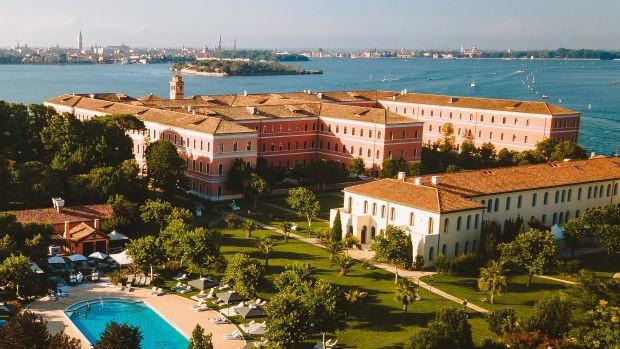
An Island Apart: What San Clemente Palace Offers That the Canal Hotels Cannot
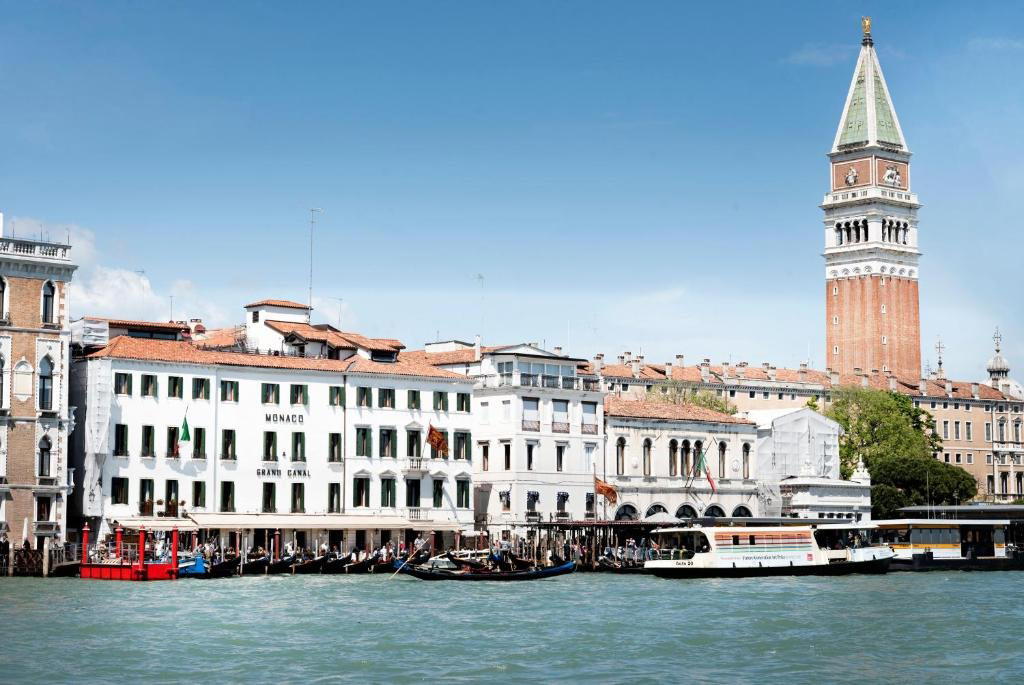
Venice's luxury hotel market splits cleanly into two categories: the canal-facing palazzi that place you inside the city's spectacle, and the island properties that offer distance from it. San Clemente Palace belongs firmly to the second group, occupying its own 15-acre island in the lagoon rather than a converted townhouse on a rio. That distinction shapes everything about the overnight experience, the silence, the scale of the grounds, the relationship between architecture and open air. For guests who want Venice accessible but not inescapable, the island format is a fundamentally different proposition than staying at, say, Aman Venice or Hotel Gritti Palace, where the city presses against every window.
The building itself carries the weight of its previous life as a monastery, and the historical fabric is not cosmetic. Guests arrive to imposing architecture that reads as institutional in the leading sense, proportioned for contemplation rather than commercial hospitality. The 12th-century church on the property is still intact and draws visitors for reasons beyond accommodation: it functions as a ceremony venue and a point of genuine historical curiosity. Properties built at this scale, with this depth of provenance, are rare in Italian luxury hospitality, where much of the competition relies on frescos and antique furniture rather than intact medieval structures. For comparable estate-scale properties elsewhere in Italy, Castello di Reschio in Lisciano Niccone and Rosewood Castiglion Del Bosco in Montalcino operate at similar acreage and historical depth, though on the mainland rather than water.
Inside the Rooms: Space as the Defining Luxury
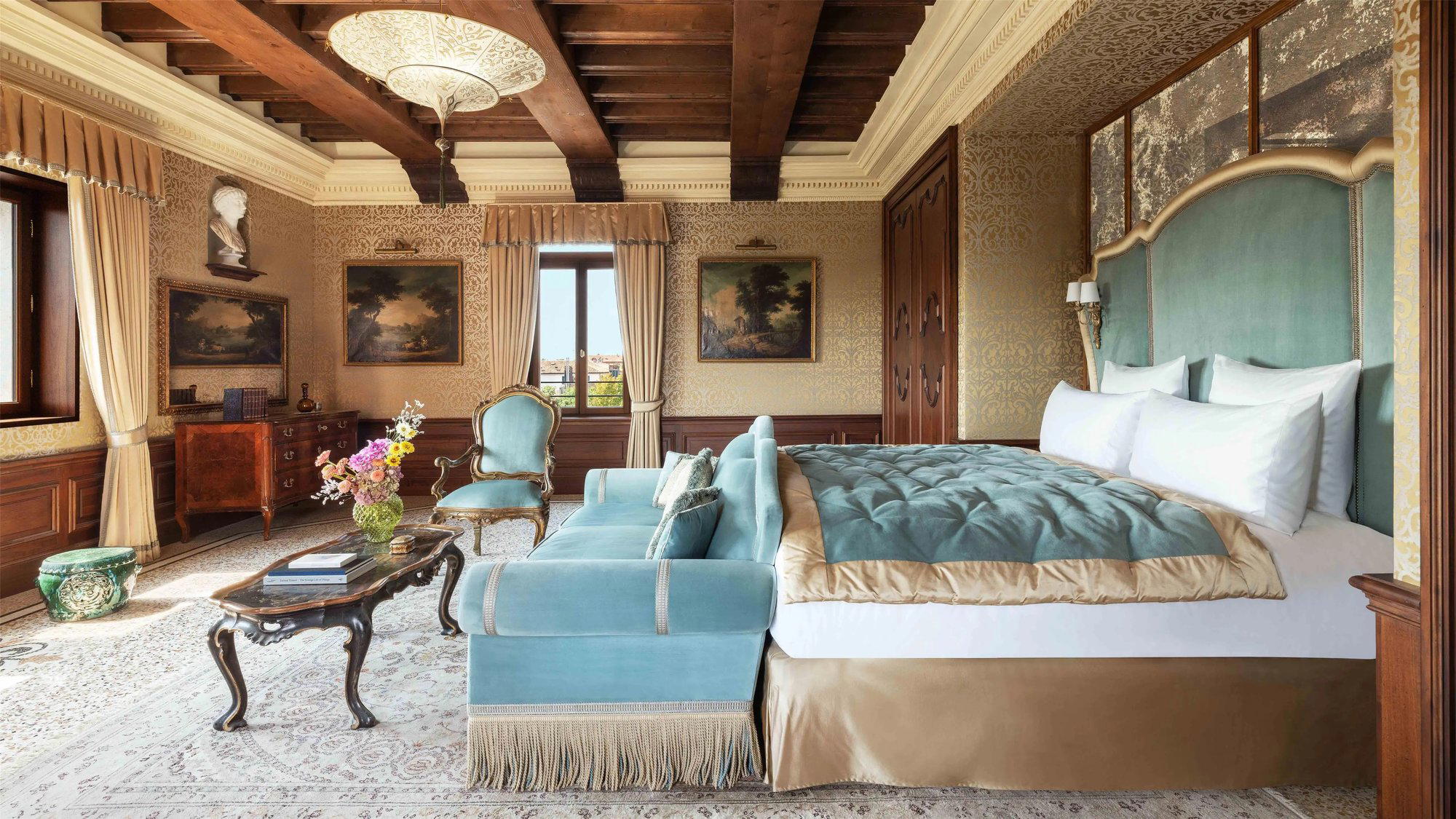
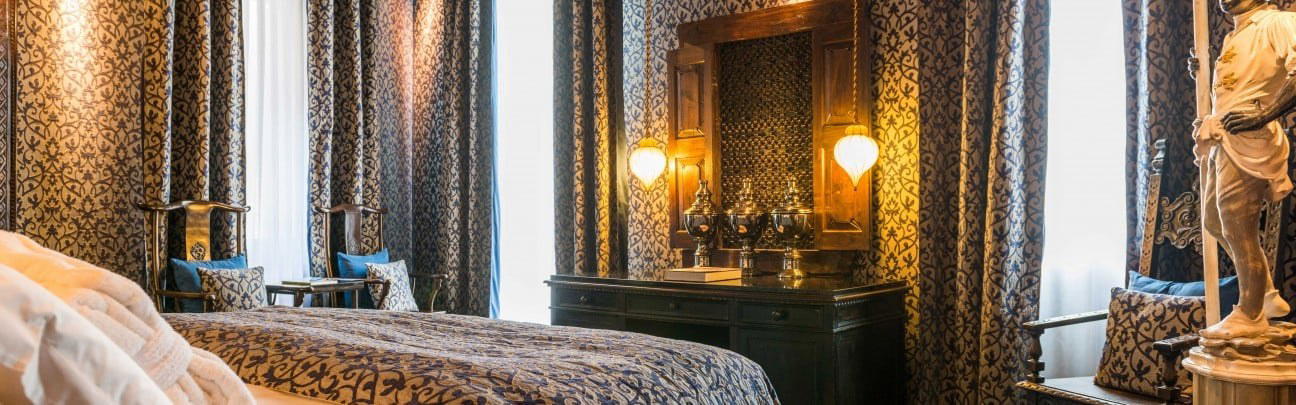
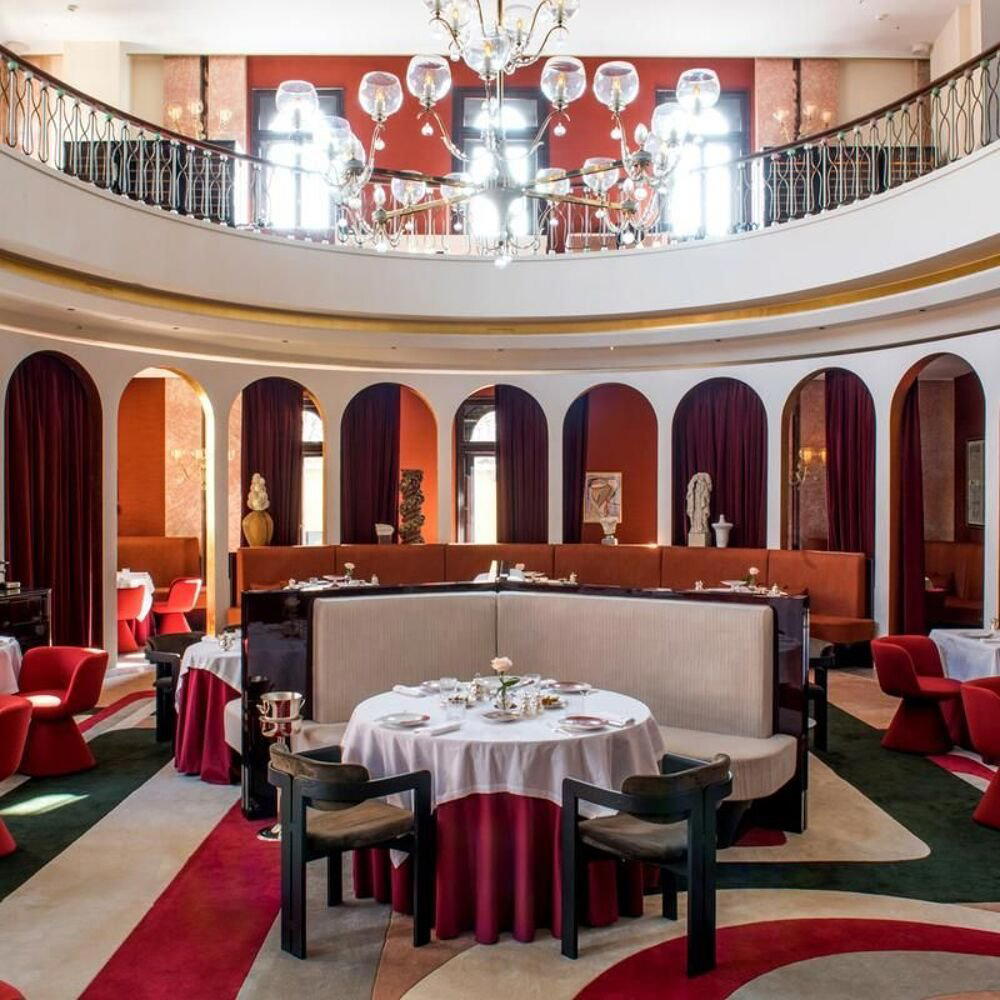
In a city where even five-star hotels routinely compromise on room dimensions, Venice's medieval footprints were not designed for king beds and walk-in wardrobes, San Clemente Palace's island setting allows for something genuinely harder to find: generous floor plans. The rooms carry terrazzo floors, heavy drapes, and Murano glass chandeliers, the expected vocabulary of Venetian luxury, but the spatial allowance places them outside the category of atmospheric-but-cramped that characterises much of the historic centre's accommodation.
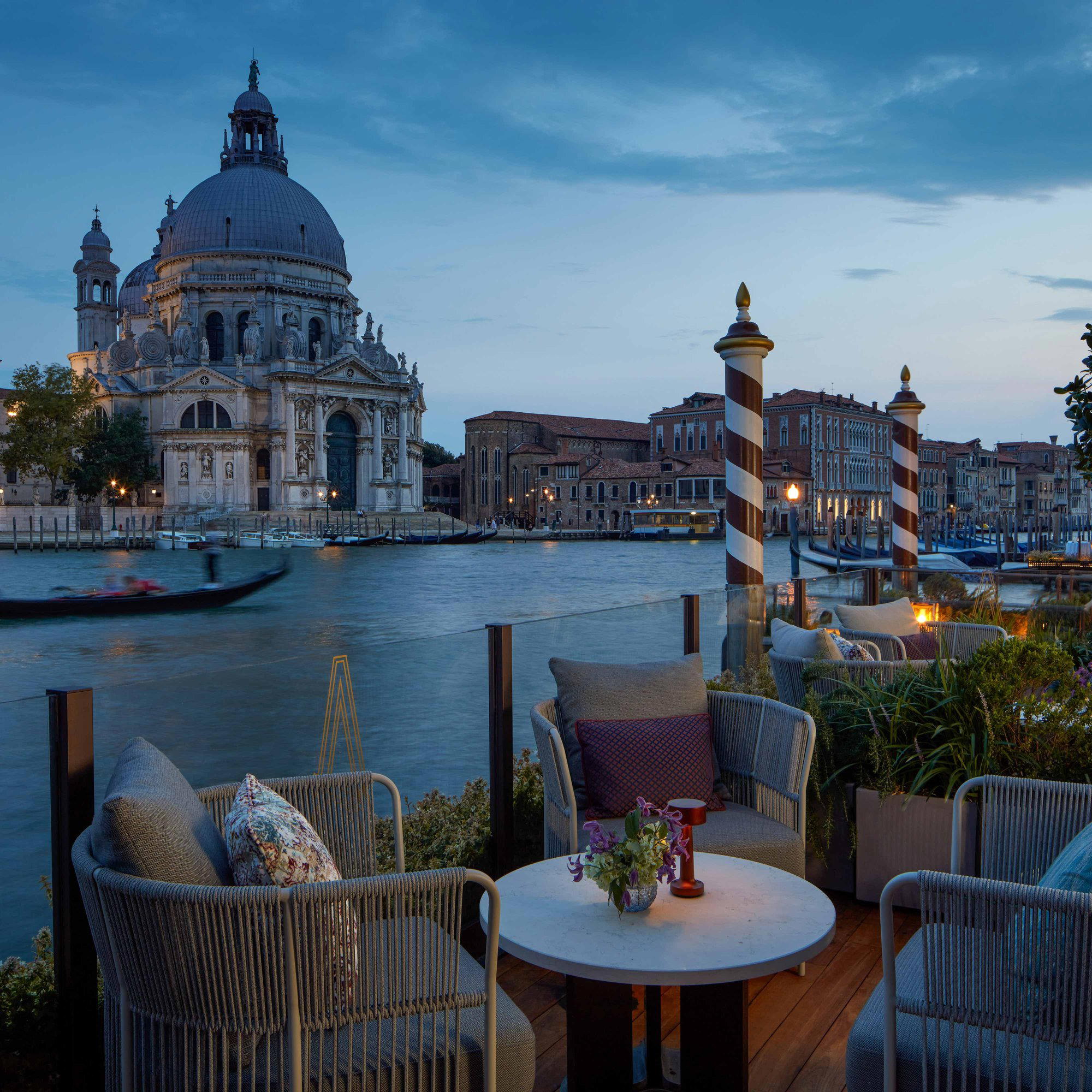
The distinction between a standard room and a lagoon-facing one matters here in a way that it does not at a canal hotel, where every window already faces something. On an island property, the interior-facing rooms look onto gardens and grounds; the lagoon-view rooms open out toward Venice itself, the dome of the Salute visible across the water. Booking the latter is not an upgrade so much as a different product. The San Clemente Suite represents the most spatially generous option the property offers: a living room, kitchen, two bathrooms, and lagoon views from every room. For a city where suite-level space is often more about ceiling height than actual square footage, that configuration is worth noting specifically.
The room furnishings follow the conventions of Venetian grand-hotel style, the chandeliers are Murano glass, the fabrics are rich, the palette is warm, without the eccentricity that some design-led competitors pursue. Guests at Ca' di Dio or Il Palazzo Experimental are choosing a more contemporary design position; San Clemente Palace sits in the classical register, using historical elegance as its primary argument rather than curatorial design intelligence.
The Active Property Anomaly
Luxury hotels in Venice almost never mention running trails. The city's geography makes active amenities structurally impossible for most properties, you walk, or you take a boat, and the notion of a fitness circuit through gardens is simply not available to a hotel on a narrow calle. San Clemente Palace's 15 acres change that equation. The property has running trails, a fitness centre, tennis, and golf, a combination that sits in a category of its own within the Venice luxury tier. Families with children have the additional draw of a kids' club, and interlocking suite configurations make multi-generational travel more practical than at most of the city's boutique competitors such as Corte di Gabriela or Londra Palace Venezia.
Properties such as Borgo Egnazia in Savelletri di Fasano and Borgo Santandrea on the Amalfi Coast attract a similar guest profile: travellers who want Italy's historic depth without sacrificing the resort-style amenities that a full week's stay tends to require.
Getting There and Staying Connected to Venice
The logistics of an island property require clarity before arrival. San Clemente is not accessible via the vaporetto network or any public water transport, the island sits outside the standard ferry routes, and guests who miss the hotel shuttle must arrange a private water taxi at their own cost. The hotel's complimentary shuttle departs every 30 minutes and takes approximately 10 minutes to reach the San Marco area, which keeps the city genuinely accessible without making the journey reflexive. The private dock accommodates guests arriving by their own vessels, which places San Clemente in a practical tier occupied by very few Venice properties.
The seasonal operating window runs from late March to early November. Guests planning visits during the Biennale, the Film Festival, or the high-summer peak should factor in that booking windows compress significantly during those periods.
For travellers building a wider Italian itinerary around Venice, the island property logic connects naturally to comparable estate-scale options elsewhere: Four Seasons Hotel Firenze in Florence similarly occupies a walled garden compound that separates it from the city's street-level intensity, and Passalacqua in Moltrasio applies a comparable logic of lake-edge seclusion to the Como market. See our full Venice restaurants and hotels guide for a broader view of where San Clemente sits within the city's accommodation hierarchy.
How It Positions Against Venice's Island and Grand-Hotel Tier
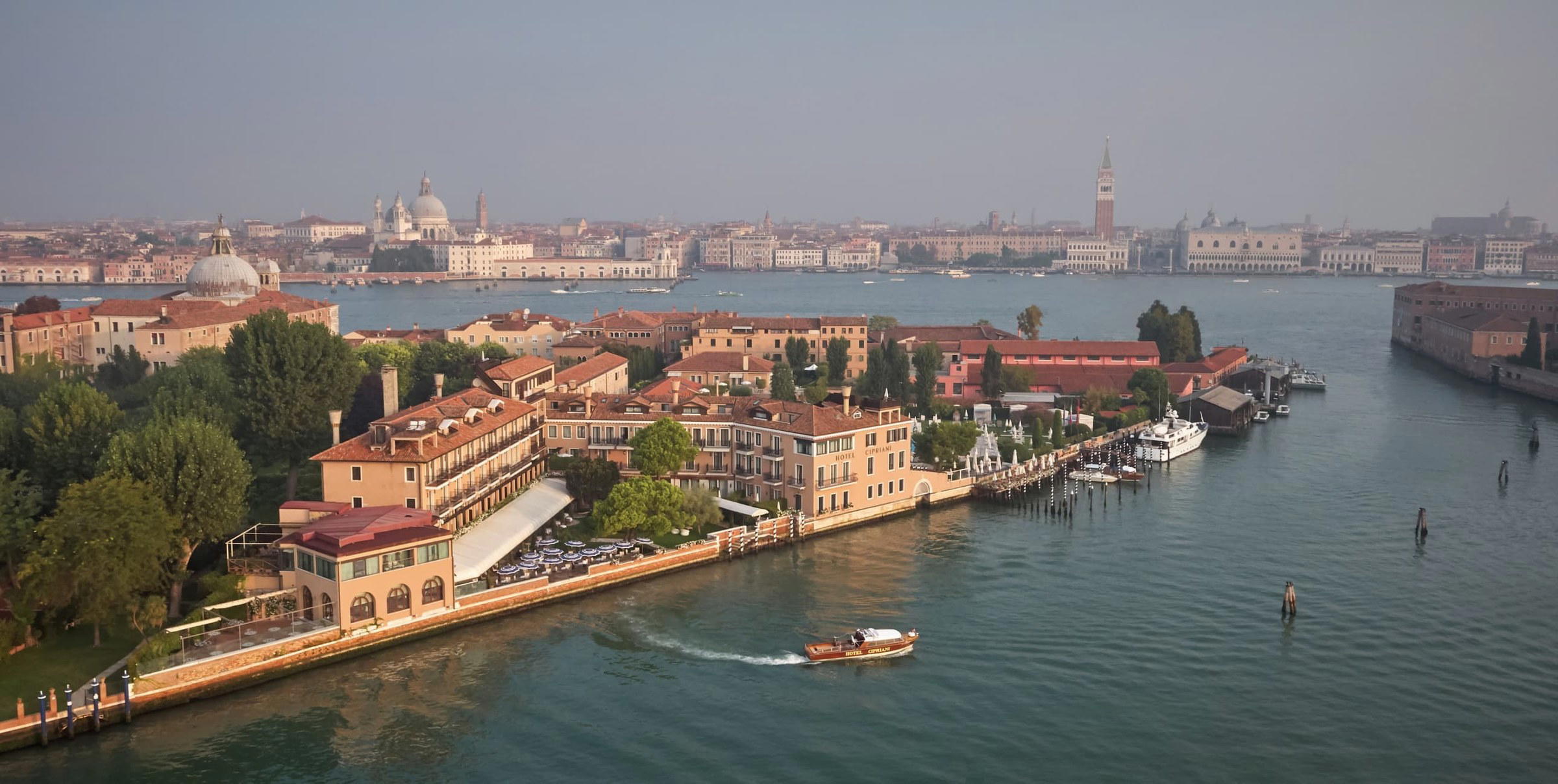
The closest structural comparison within Venice is Cipriani, A Belmond Hotel, Venice, which occupies the eastern tip of Giudecca and similarly trades city-centre adjacency for island separation and resort-scale grounds. Both properties use the water crossing as a feature rather than an inconvenience. The difference lies primarily in brand positioning and the character of the grounds: Cipriani carries Belmond's curatorial weight and a pool that has functioned as a social institution for decades; San Clemente offers more acreage, more activity infrastructure, and the specific texture of a former monastery. Guests making a direct choice between the two are often resolving a question about what kind of retreat they want, not which hotel is more accomplished.
Nolinski Venezia, Aman Venice, and Hotel Gritti Palace all place guests inside the city fabric rather than outside it, different in kind rather than degree. For travellers whose priority is the overnight experience on the island itself rather than immediate proximity to the Rialto, San Clemente's combination of historical depth, spatial generosity, and active amenities makes a clear case that no canal-facing property can replicate. Other Italian alternatives worth considering include Il Pellicano in Porto Ercole, JK Place Capri, Portrait Milano, and Casa Maria Luigia in Modena for those extending their journey beyond the lagoon.
Cuisine and Recognition
Comparable venues nearby, for context on price, style, and recognition.
| Venue | Cuisine | Price | Awards | Notes |
|---|---|---|---|---|
| San Clemente PalaceThis venue (the venue you are viewing) | Historic 17th-century palace on a private island transformed into a luxury retreat | $500–750 | Forbes Recommended | Not listed |
| Hotel Danieli | Historic Venetian palace with three interconnected buildings offering timeless luxury. | Not listed | La Liste Top Hotels · Virtuoso Luxury Hotel Partner | Castello |
| Eight Venezia | Historic Venetian palazzo transformed into a luxury boutique hotel | Not listed | Michelin Selected | Castello |
| Ai Reali di Venezia | Renovated aristocratic Venetian palace with refined elegance. | Not listed | Forbes Recommended · Small Luxury Hotels of the World Member | San Marco |
| Hotel Excelsior Venice Lido Resort | Well-known Moorish-inspired beach resort with Venetian glamour and spacious accommodations. | $300–500 | Star Wine List | Lido |
| Airelles Venezia, Palladio | Restored historic Venetian palazzo with French luxury hospitality brand positioning, blending classical Italian architecture with contemporary French design sensibilities. | $1,000–1,500 | 3 Michelin Keys · Michelin Guide New Hotels New Hotel | Giudecca |
Recognition history
Dated appearances from independent guides and award organizations, with the underlying list record or original source where available.
Forbes Recommended
Forbes
Full recognition history (2 entries)
Forbes Recommended
Forbes
Continue exploring
More in Venice
Hotels in Venice
All hotels in Venice →
Bars in Venice
All bars in Venice →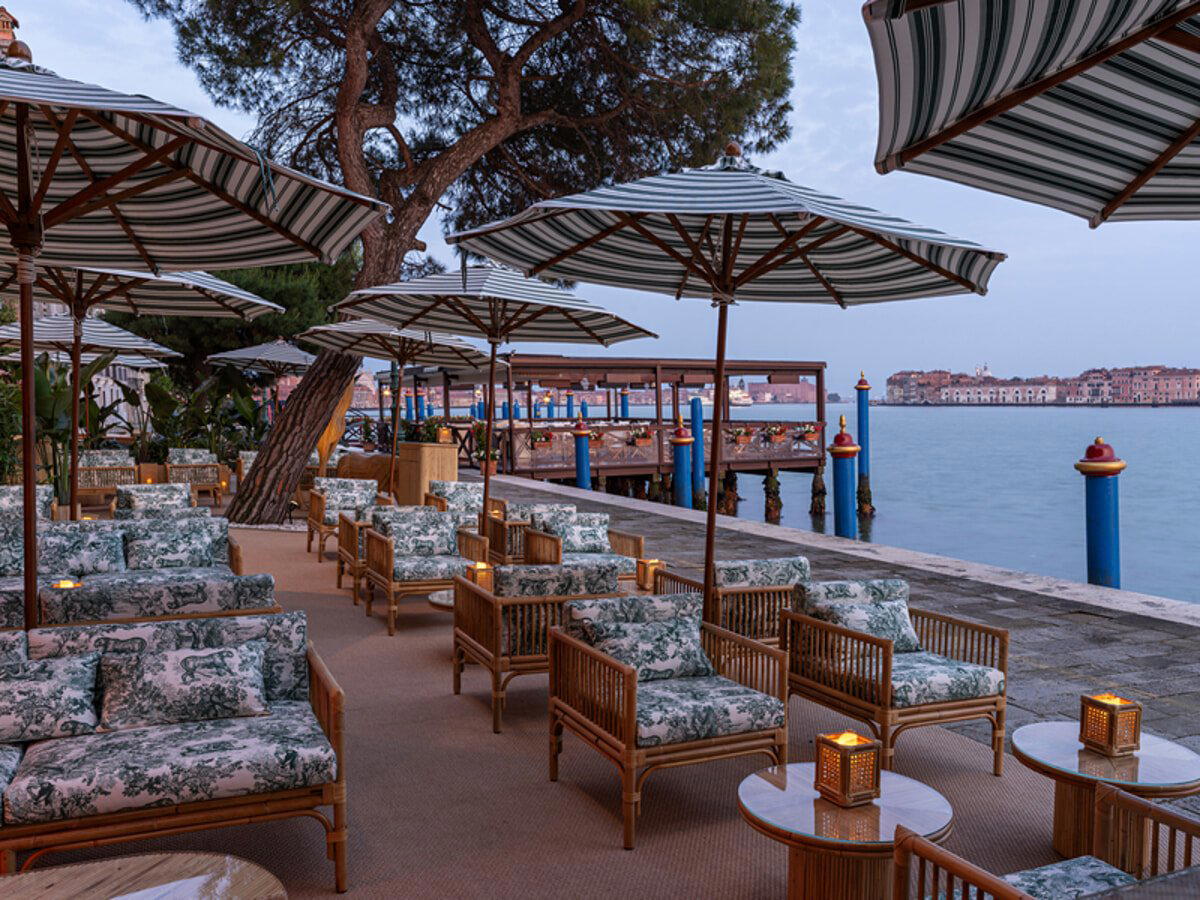

Details
- Elegant
- Scenic
- Ornate
- Sophisticated
- Honeymoon
- Romantic Getaway
- Anniversary
- Celebration
- Waterfront
- Historic Building
- Panoramic View
- Terrace
- Wi Fi
- Pool
- Spa
- Fitness Center
- Room Service
- Concierge
- Tennis
- Garden
- Waterfront
- Garden
- Wheelchair Accessible
- Elevator
Serene and elegant atmosphere with spacious high-ceilinged rooms overlooking peaceful gardens and lagoon, enhanced by soundproofing and luxurious historic interiors.