


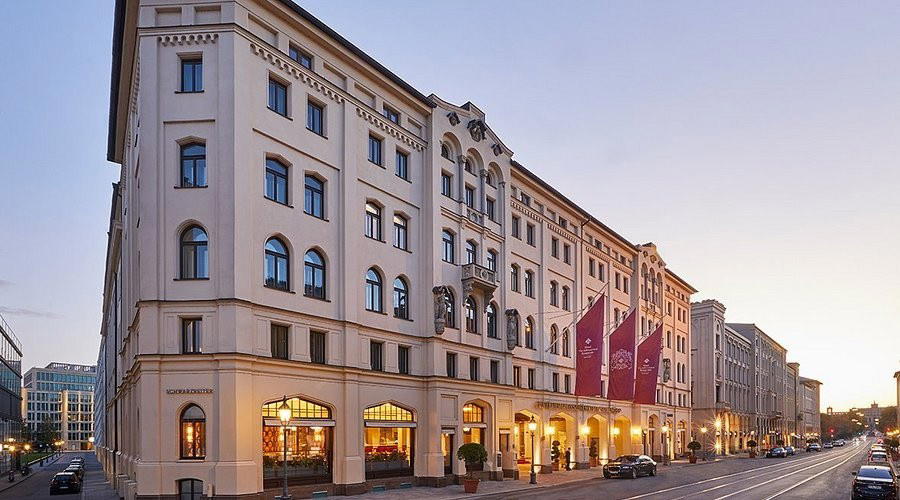
Rosewood Munich opened in October 2023 inside two restored landmark buildings in the city's historic core: the former Bavarian State Bank headquarters and the adjacent Palais Neuhaus-Preysing. With 132 rooms, four dining venues including Brasserie Cuvilliés, and a 14,000-square-foot Asaya Spa, it earned a Michelin 2 Keys designation in its first full year. Rates from $966 per night.
Pearl is the En Primeur Club membership app — saves, bookings, and concierge access live there. Same editors, same standards.
- Address
- Kardinal-Faulhaber-Straße 1, 80333 München
- Phone
- +49 89 8000190
- Website
- rosewoodhotels.com
- Directions
- Get directions
 Saves & bookings on Pearl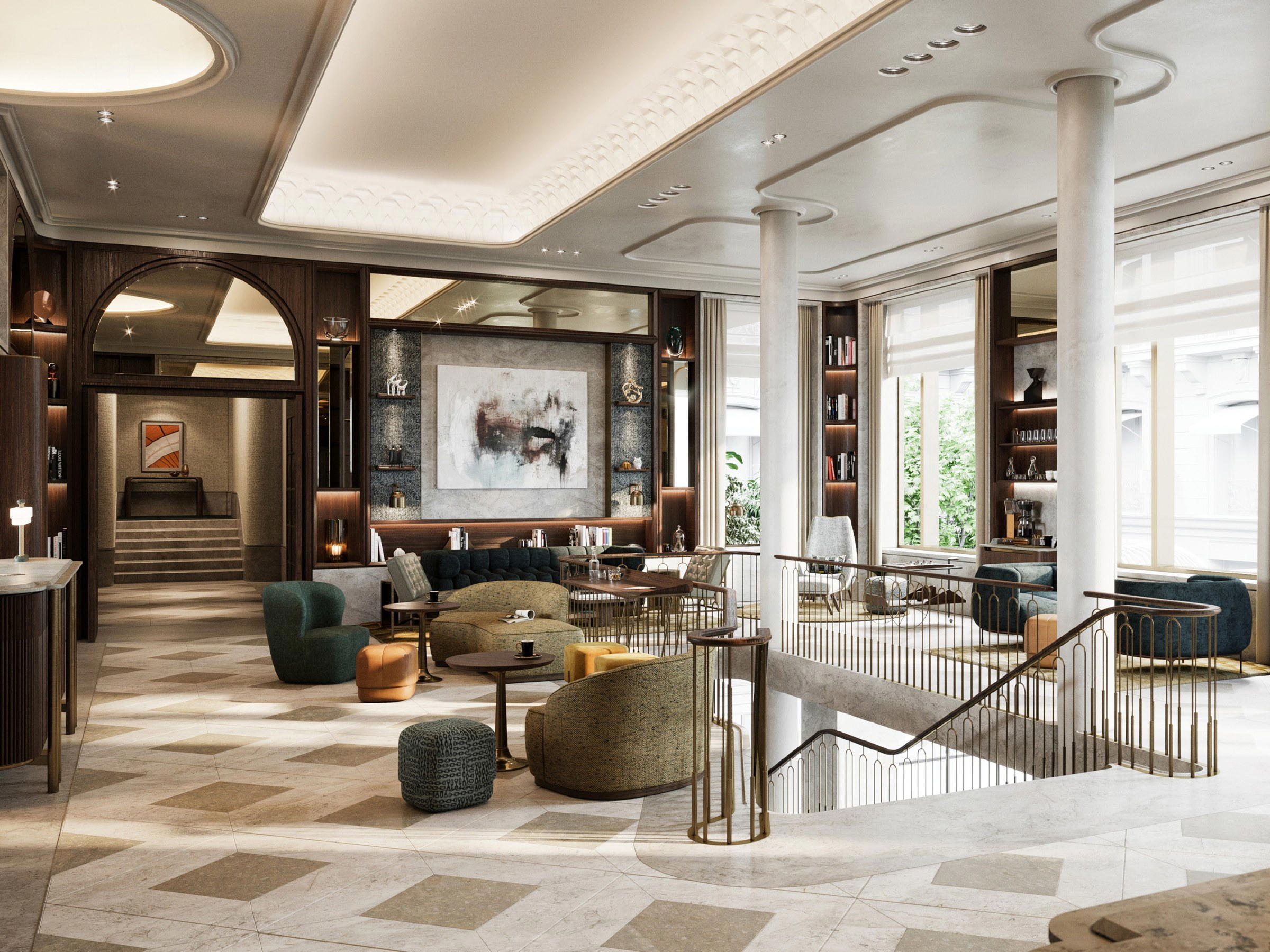
Two Buildings, One Address, Several Centuries of Munich
Kardinal-Faulhaber-Strasse sits in the kind of Munich block that still reads as a complete architectural sentence: baroque facades, cobbled approaches, and building lines that predate the Bavarian monarchy's final chapter. When Rosewood Hotels & Resorts chose this address for its first German property, it selected two structures that carry that history in their bones. The former headquarters of the State Bank of Bavaria, built in the 19th century, anchors one side. The Palais Neuhaus-Preysing, an aristocratic residence dating to 1703, connects on the other. Together they form a single hotel without producing the seam that usually betrays a conversion project. The grand staircase, vaulted ceilings, and preserved 19th-century frescos remain in place in the lobby, the kind of architectural evidence that takes decades of continuous occupation to accumulate, and that no new-build can replicate.
Rosewood Munich opened in October 2023 as the brand's seventh European property and its first in Germany, earning a Michelin 2 Keys designation in 2024. That speed of recognition reflects both the calibre of the physical restoration and the operating standard the team has established in its first full year.
The Rooms: Size, Naming, and What the Five Houses Signal
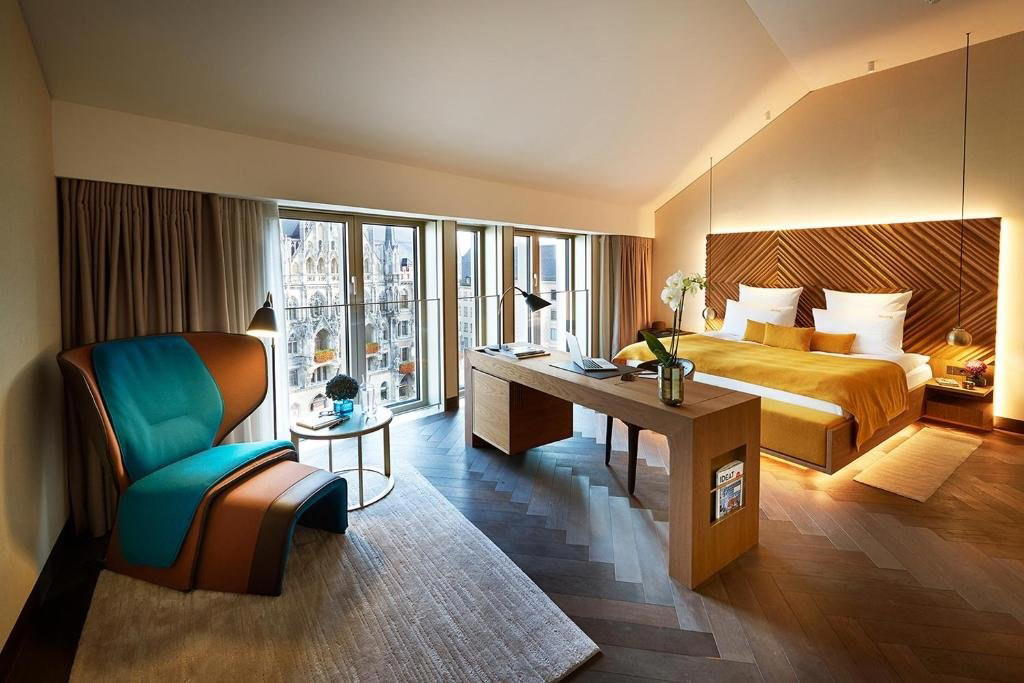
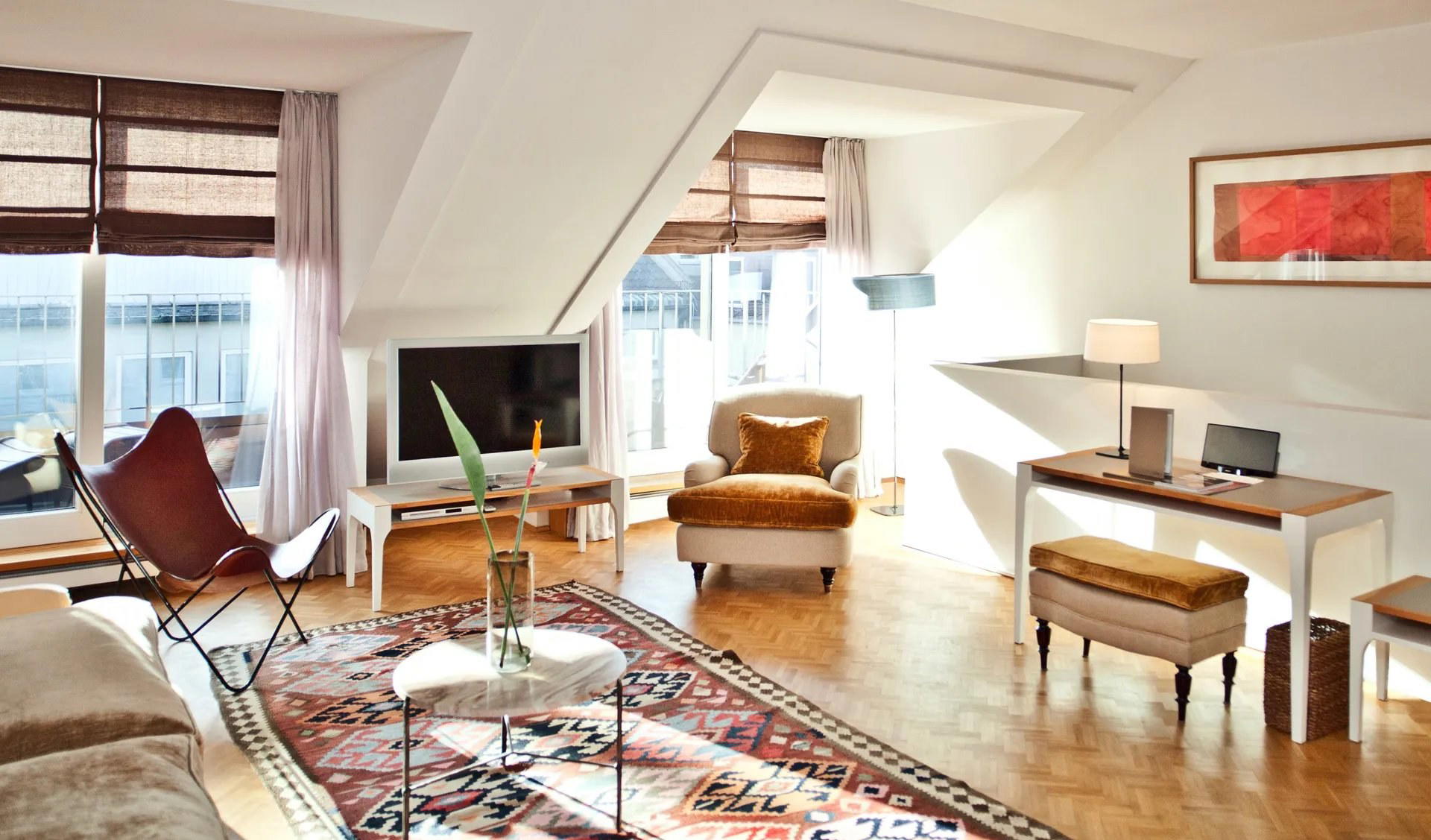
In Munich's upper hotel tier, room count and average size tend to move in opposite directions. Properties with fewer keys generally offer more generous footprints; the larger international flagships trade space for location and brand infrastructure. Rosewood Munich sits at 73 rooms and suites, a number that keeps it in the midsize bracket for this category while allowing room dimensions that skew spacious.
The hierarchy peaks at five signature suites named after Bavarian royalty. The Prinzessin Ferdinande House begins at 840 square feet; the Konig Maximillian I House reaches 2,690 square feet and includes a private terrace. Naming suites after royal family members is a deliberate callback to the building's civic role in Bavarian life, the State Bank existed to serve the royal economy, and it positions these accommodations as something closer to private apartments than hotel rooms. For guests comparing this against other Munich addresses, the Mandarin Oriental Munich or the Bayerischer Hof Munich represent the legacy standard; Rosewood enters as the newer, architecturally distinct option in that same upper bracket. Rates start at $1,024 per night.
Four Dining Venues and the Logic Behind Them
Munich's hotel dining has historically split between grand traditional restaurants anchored in Bavarian cooking and international formats that treat the city as interchangeable with any other European capital. Particularly coherent recent moves have been hotels that commit to a regional culinary identity while applying contemporary technique, a position that serves both local clientele and international guests who want location-specific food rather than a globally legible menu.
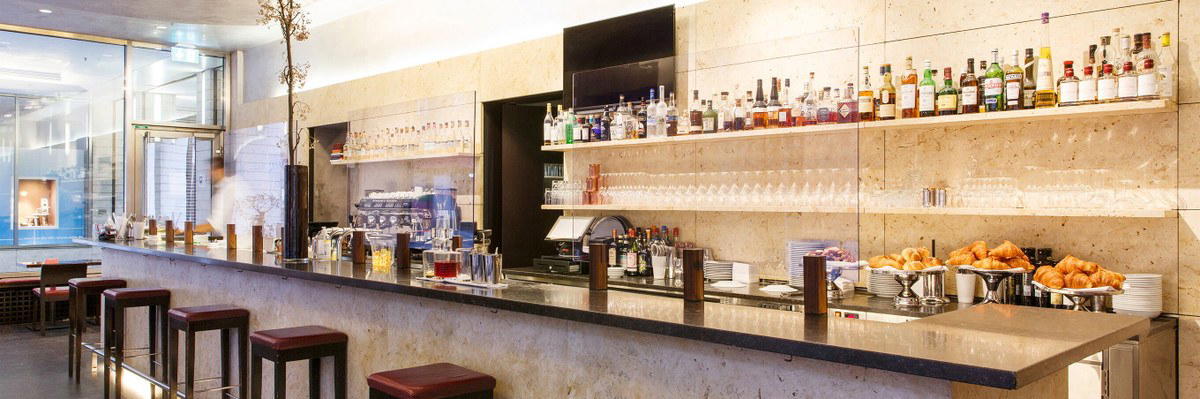
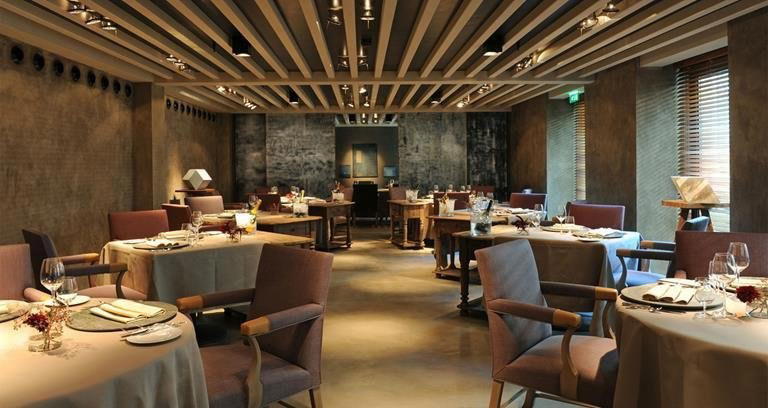
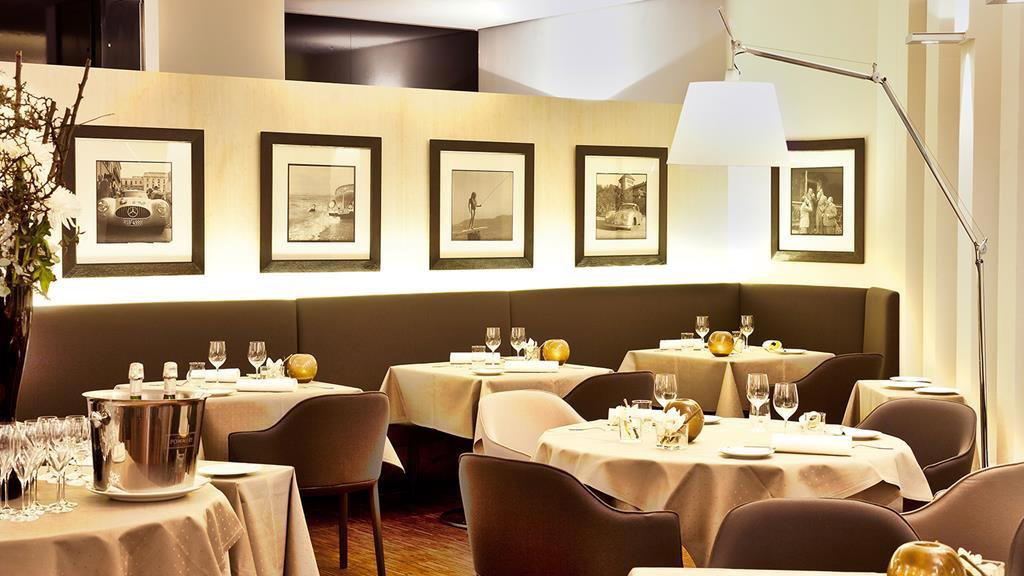
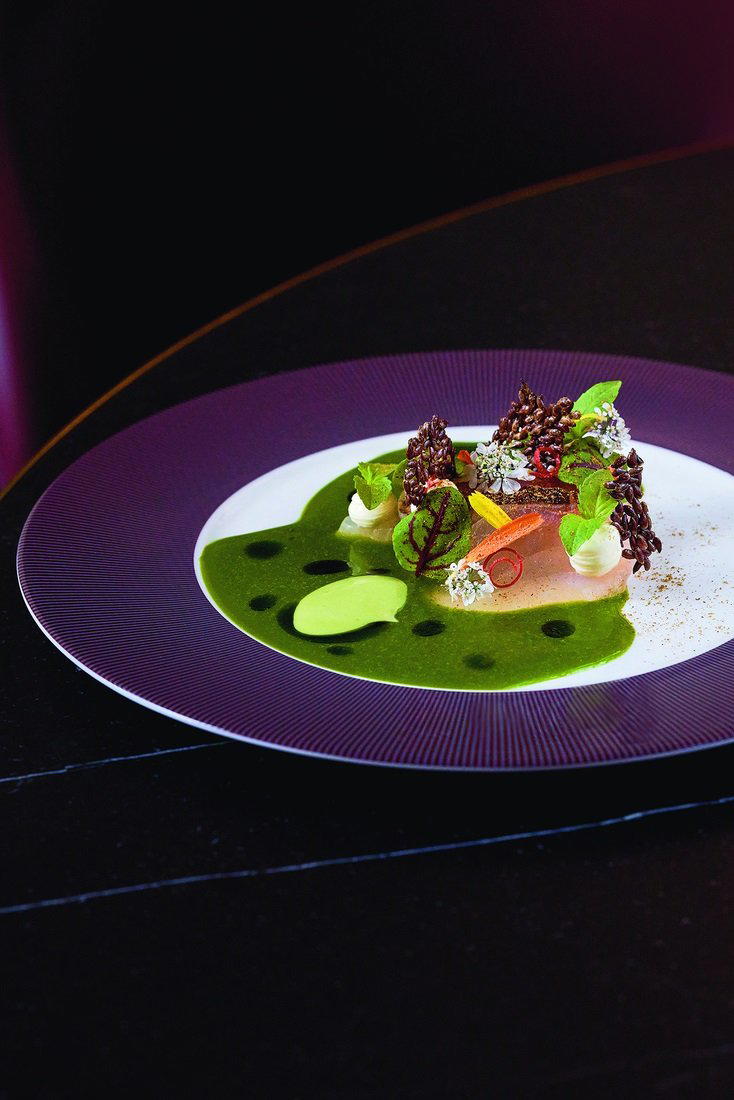
Rosewood Munich's primary dining operation, Brasserie Cuvilliés, sits in that second category. The open kitchen format allows the service team to function as a relay between production and table, a structural choice that favours the kind of collaborative front-of-house approach where the line between kitchen communication and guest interaction is deliberately compressed. Executive chef Caspar Brok's menu moves seasonally, with recent iterations including ox cheek with wild cherries, Alpine gold trout baked in a salt crust, and zwiebelrostbraten (Bavarian beef with spinach spätzle and braised onions in beer sauce). These are not reinterpretations of Bavarian cooking as novelty; they read as a kitchen taking its regional reference seriously while applying the precision that a property at this price point demands.
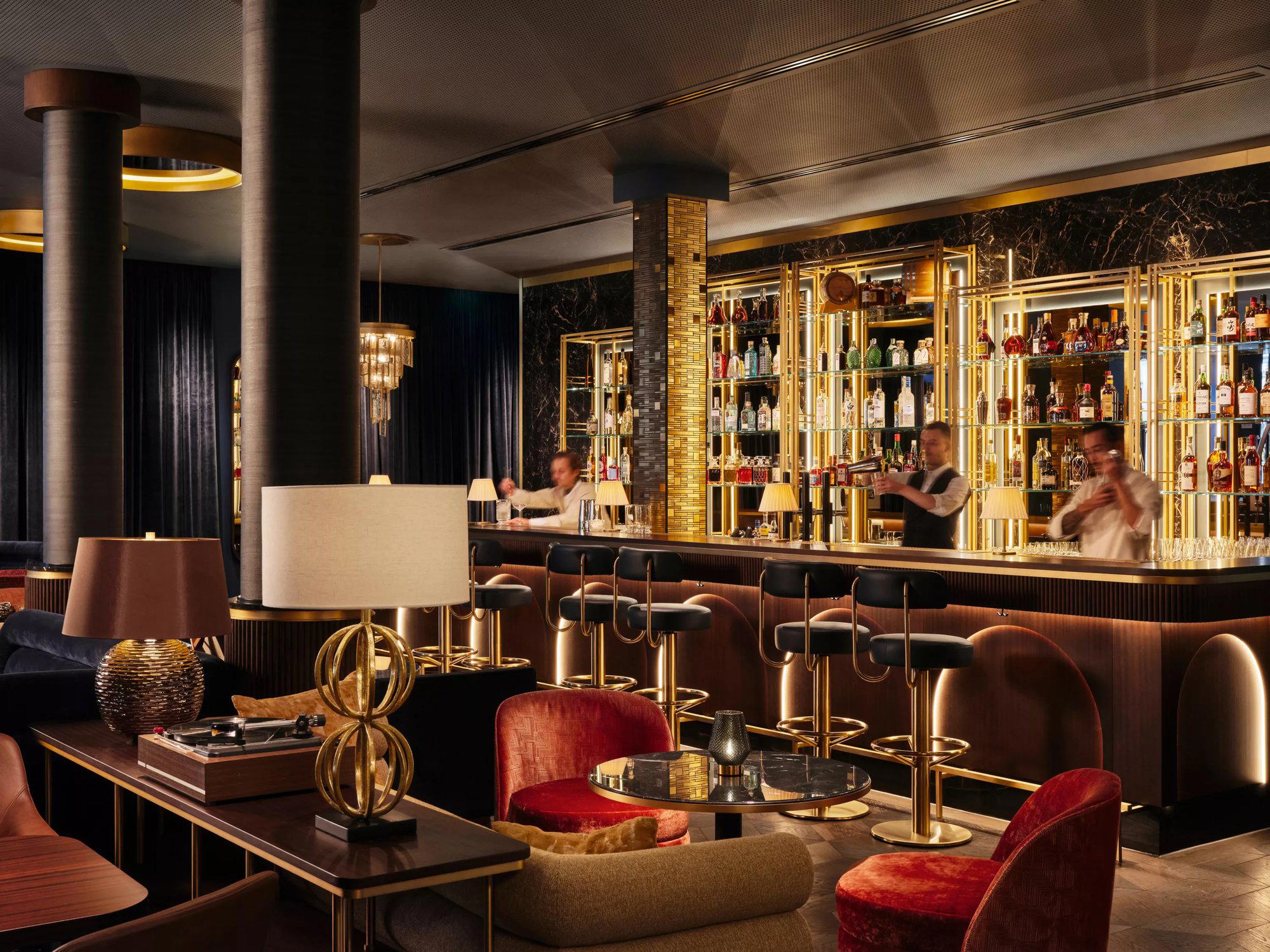
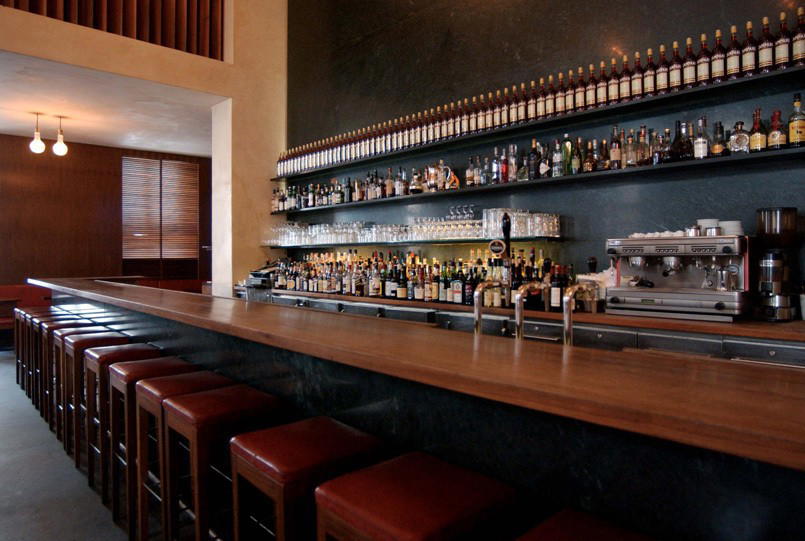
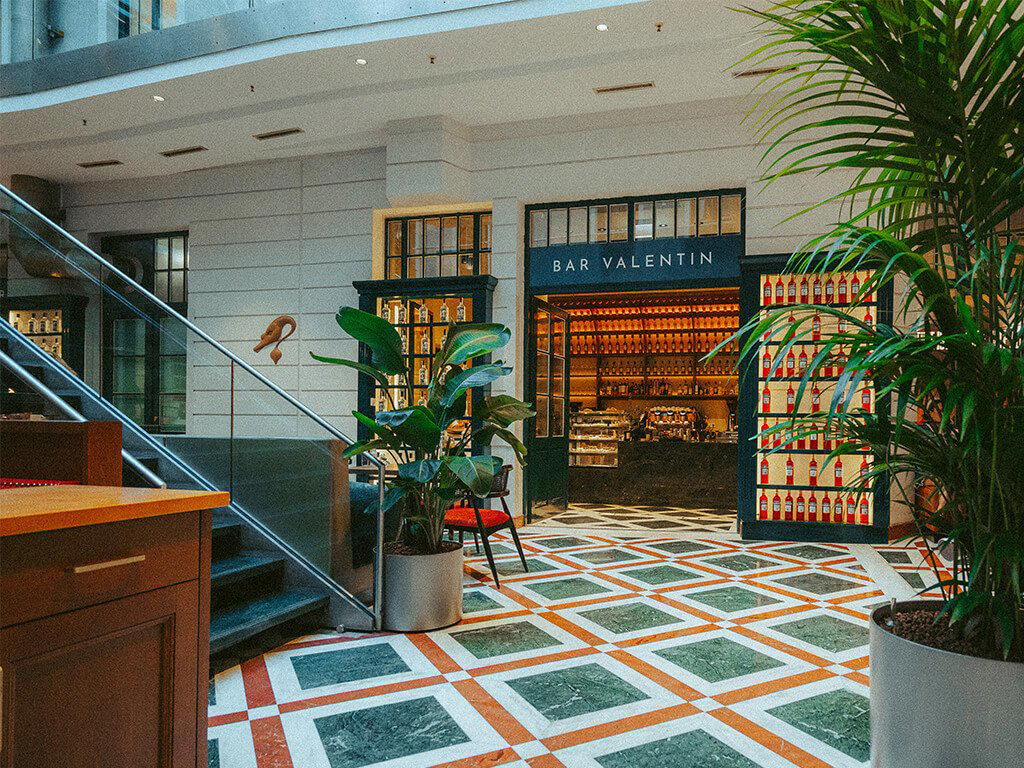
The supporting venues each occupy a distinct register. Bar Montez, framed around the 19th-century figure of Lola Montez, actor, dancer, and famously the mistress of King Ludwig I of Bavaria, operates as a live jazz and cocktail room with a vintage aesthetic that earns its theme through the building's own historical proximity to Bavarian royal life. The Wintergarten, with its all-white interior and structured greenery, runs afternoon tea service in a room that reads as a conservatory rather than a hotel lounge. The Schanigarten, added more recently, takes the corner of the building's exterior and turns it into a street-facing terrace, a format well-established in Vienna and increasingly common in Munich as hotels seek year-round activation of their courtyards and facades.
The Asaya Spa: Scale and Treatment Partners
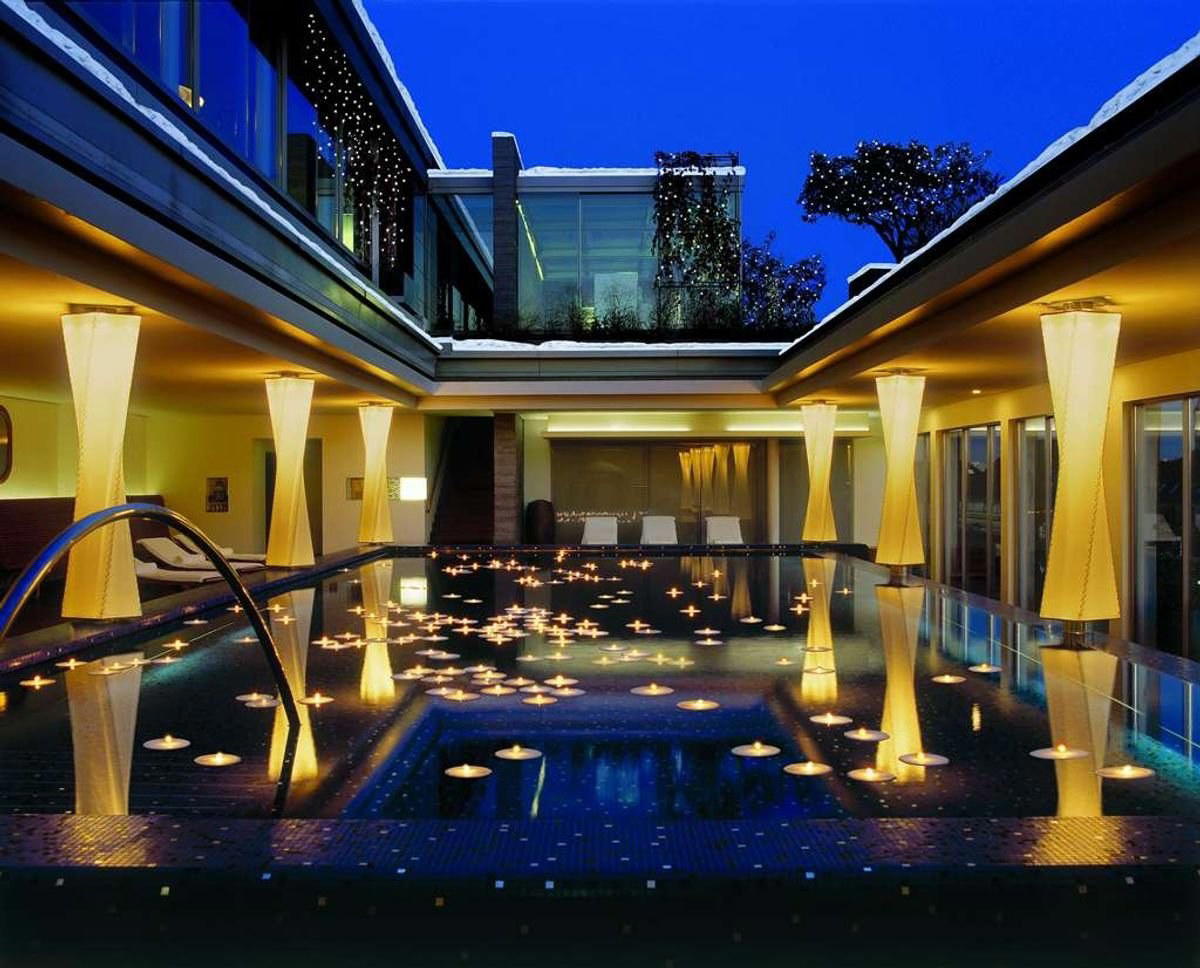
At just under 14,000 square feet across two floors, the Asaya Spa operates at a scale that places it above most urban hotel wellness offerings in Germany. The column-lined indoor pool, two saunas, and herbal steam room form the passive wellness infrastructure; the six treatment rooms draw on a roster of external partners including Dr. Barbara Sturm, OTO, Ground Wellbeing, and EviDenS de Beauté. The use of named treatment brands rather than a single proprietary program reflects a broader shift in luxury hotel wellness toward curated partnerships, a format that gives guests access to products with independent market standing rather than house-branded alternatives. For comparison, properties like Schloss Elmau Luxury Spa Retreat & Cultural Hideaway in Elmau or Das Kranzbach Hotel & Wellness Retreat in Kranzbach anchor their wellness offer in Alpine setting and scale; Rosewood Munich delivers comparable treatment depth from an urban address.
The Art Program and Interior Approach
The interior design draws from Bauhaus principles, dark tones balanced against neutrals from natural materials, geometric shapes that avoid the gilt-and-velvet excess that can make Bavarian heritage properties feel like stage sets. The art program functions as a curatorial layer over that foundation: works from German illustrator Olaf Hajek, wood carvings by sculptor Rosanna Merklin, and urban photography by Michael Mann are positioned to read as a collection rather than decoration. The stated intent is to operate as a living gallery for local artisans, a framing that connects the hotel's identity to Munich's contemporary creative community rather than anchoring it exclusively in its architectural past.
Location and What It Puts Within Walking Distance
Few Munich addresses compress this range of civic reference into a single walk radius. Marienplatz is within easy reach on foot; the Residenz, Munich's former royal palace, sits nearby, as does the Bavarian State Opera. The Viktualienmarkt, the city's covered and open-air food market, and the major shopping corridors of Maximilian- and Theatinerstrasse are accessible without transport. For guests combining a hotel stay with Munich's museum circuit, the Deutsches Museum, the Alte Pinakothek, the Museum Brandhorst, the location functions as a sensible base even for itineraries that extend well beyond the old town perimeter.
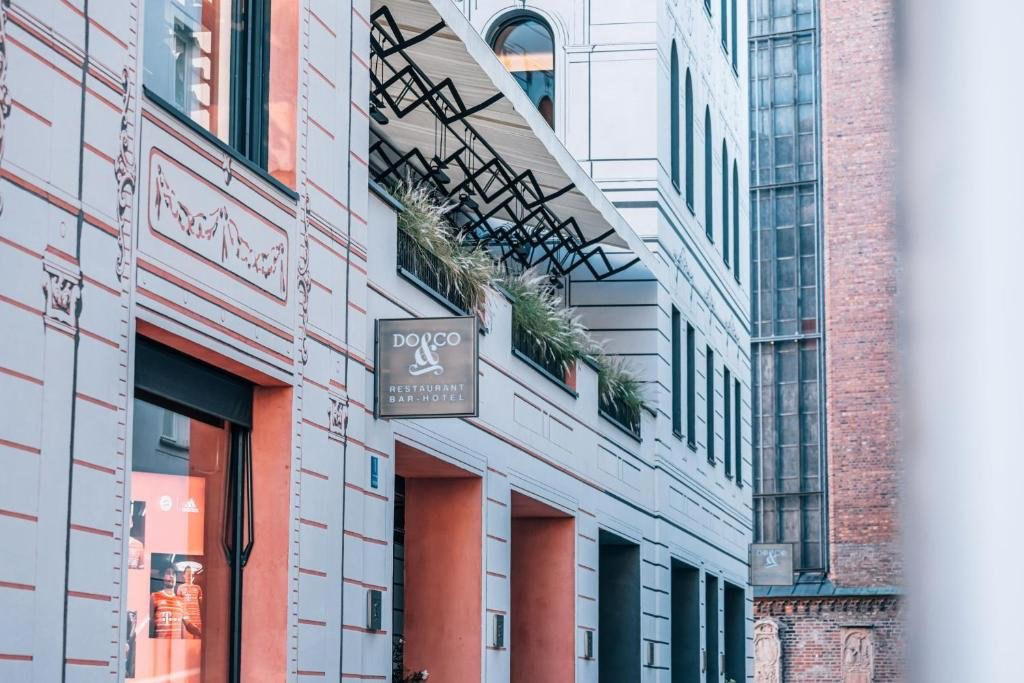
Guests extending into Bavaria or the wider German market can cross-reference properties like Althoff Seehotel Überfahrt in Rottach-Egern for lakeside contrast, or consider Hotel Bareiss in Baiersbronn for a Black Forest alternative. Within Munich itself, Rocco Forte Charles Hotel, Andaz Munich Schwabinger Tor, and BEYOND by Geisel represent the nearest peer comparisons in terms of design ambition, with Cortiina Hotel and Do & Co Hotel Munich offering smaller-scale alternatives for guests who prioritise boutique scale over full-service amenity depth. The Hilton Munich Airport serves a different operational purpose entirely.
The hotel is located at Kardinal-Faulhaber-Strasse 1, 80333 Munich. Reservations are handled through Rosewood Hotels & Resorts' central booking system.
For Rosewood properties at comparable urban luxury positioning, The Fifth Avenue Hotel in New York City, Aman New York in New York City, and Aman Venice in Venice offer useful reference points for how heritage-building conversions perform across different markets. Within Germany's wider luxury hotel tier, Fairmont Hotel Vier Jahreszeiten in Hamburg, Hotel de Rome in Berlin, Excelsior Hotel Ernst in Cologne, Bülow Palais in Dresden, Breidenbacher Hof Düsseldorf in Düsseldorf, BUDERSAND Hotel in Hörnum, Der Öschberghof in Donaueschingen, Gut Steinbach Hotel Chalets Spa in Reit im Winkl, and Esplanade Saarbrücken in Saarbrücken represent the range of approaches to heritage luxury across the country.
Where the Accolades Land
Comparable venues nearby, for context on price, style, and recognition.
| Venue | Cuisine | Price | Awards | Notes |
|---|---|---|---|---|
| Rosewood MunichThis venue — the venue you are viewing | Contemporary residential elegance in historic Bavarian buildings | $$$$ | Michelin 2 Key | Not listed |
| Mandarin Oriental Munich | Historic luxury hotel blending Biedermeier elegance with contemporary Bavarian accents in Munich's Altstadt. | $$$$ | Michelin 2 Key | Altstadt |
| Rocco Forte Charles Hotel | Contemporary luxury with traditional Bavarian hospitality; modern design that complements Munich's architectural heritage without excessive opulence. | $$$$ | Michelin 2 Key | Isarvorstadt |
| Hotel Vier Jahreszeiten Kempinski Munich | Historic luxury grand hotel blending tradition with modern living. | $$$$ | Michelin 1 Key | Lehel |
| BEYOND by Geisel | Contemporary luxury boutique hotel with minimalist elegance and personalized service; member of Preferred Hotels & Resorts. | $$$$ | Michelin 1 Key | Isarvorstadt |
| Andaz Munich Schwabinger Tor | Contemporary luxury lifestyle hotel designed for cosmopolitan travelers with emphasis on local Munich experiences and creative inspiration. | $$$$ | Michelin 1 Key | Schwabing |
Recognition history
Dated appearances from independent guides and award organizations, with the underlying list record or original source where available.
Forbes 4-Star
Forbes
Virtuoso Luxury Hotel Partner
Virtuoso
Forbes 4-Star
Forbes
Michelin 2 Keys
Michelin
Michelin 2 Keys
Michelin
At a Glance
- Elegant
- Sophisticated
- Ornate
- Romantic Getaway
- Business Trip
- Anniversary
- Historic Building
- Terrace
- Wi Fi
- Pool
- Spa
- Fitness Center
- Room Service
- Concierge
- Business Center
- Valet Parking
- EV Charging
- Street Scene
- Skyline
- Wi Fi
- Pool
- Spa
- Fitness Center
- Room Service
- Concierge
- Business Center
- Valet Parking
- EV Charging
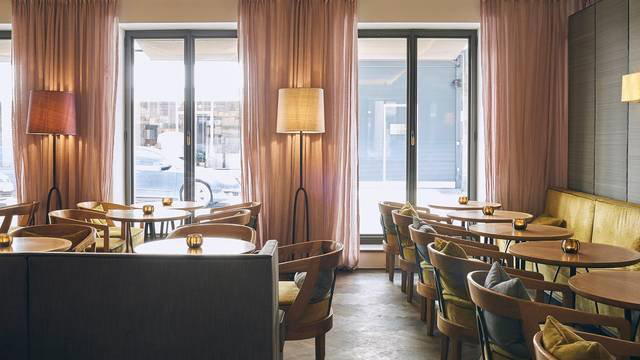
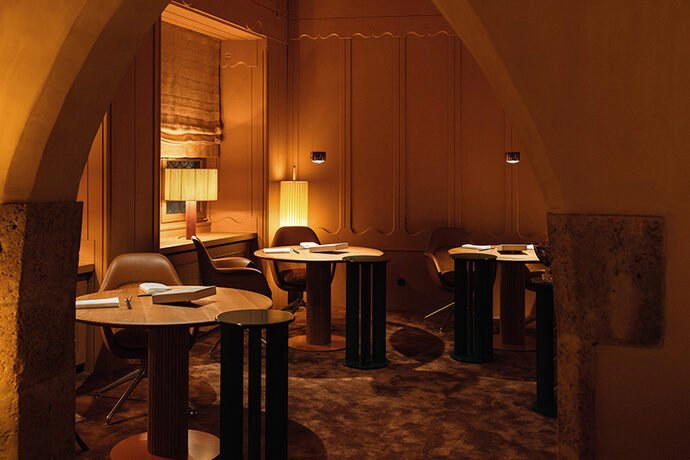
Elegant and stylish with dramatic lighting, cozy wood paneling, indoor greenery, and a serene yet sophisticated atmosphere.