Rooms of Rome sits in the Appio Latino neighbourhood, a residential quarter that operates at a remove from Rome's tourist circuits. The property occupies a format that places it within the smaller, address-led tier of Rome accommodation, a category where building character, neighbourhood access, and room configuration matter more than brand scale. For travellers who want to read Rome through its streets rather than its monuments, the address is a considered starting point.
Pearl is the En Primeur Club membership app — saves, bookings, and concierge access live there. Same editors, same standards.
- Address
- Via S. Remo, 3/int C3, 00182 Roma RM, Italy
- Directions
- Get directions
 Saves & bookings on Pearl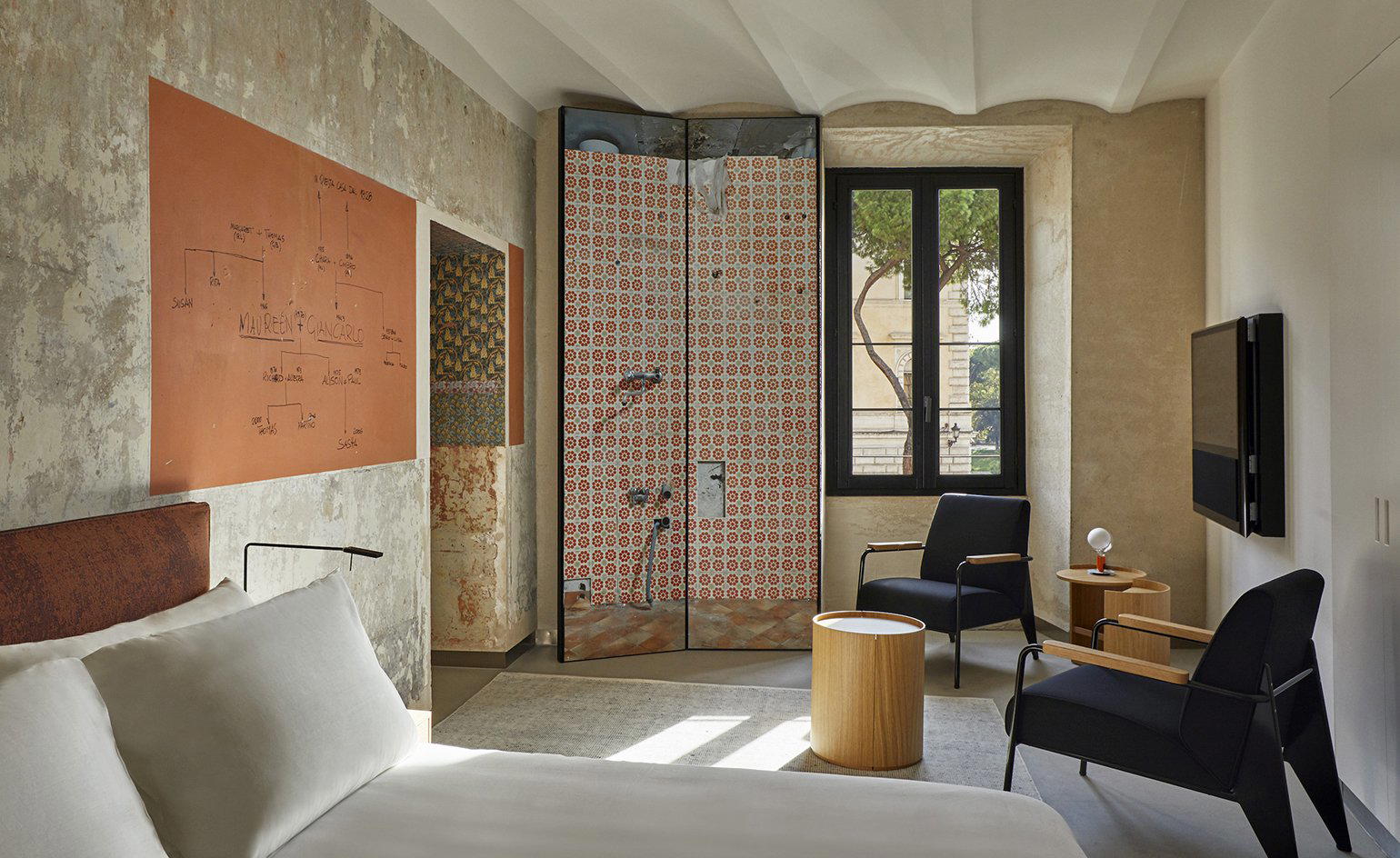
A Residential Quarter, Not a Tourist Corridor
Rooms of Rome is a hotel in Rome’s Appio Latino district, at Via S. Remo, 3/int C3, 00182 Roma RM, Italy. Rome's accommodation splits along a fault line that has become more pronounced over the past decade: on one side, the grand hotels clustered around the Spanish Steps, the Pantheon, and the Vatican, where addresses like Bulgari Hotel Roma, Hassler Roma, and Hotel Eden compete on monument proximity and formal grandeur; on the other, a smaller tier of address-led properties that treat the city's residential fabric as a feature rather than a liability. Rooms of Rome, positioned on Via S. Remo in the Appio Latino district, sits in that second category. The neighbourhood runs southeast of the Aurelian Walls, away from the Centro Storico crowds, and is defined by tree-lined streets, local markets, and the kind of bar culture where regulars occupy the same stool at the same hour each morning.
This positioning is not incidental. Across Italian cities, a particular model of boutique accommodation has matured around the idea that the building itself, its history, its materials, its relationship to the street, carries as much weight as the services inside it. Properties like Hotel Vilòn and Portrait Roma in Rome's historic centre represent one version of that model. Rooms of Rome, operating in a more residential register, represents another: quieter, less curated for the international luxury circuit, and more embedded in the texture of a functioning Roman neighbourhood.
The Architecture of a Room-Based Stay
The concept of selling individual rooms rather than a conventional hotel program reflects a structural shift in how smaller Italian properties have learned to position themselves. Rather than competing with full-service hotels on amenity breadth, the room-led format concentrates value in the physical space itself: ceiling height, original detail, the quality of light at a particular hour. This approach has precedent across Italy. In Venice, Aman Venice built its identity around palazzo rooms that function almost as self-contained apartments within a historic structure. In Umbria, Castello di Reschio applies similar logic at estate scale. The hotel works from the same principle at a more urban, more accessible price tier, the room as the primary editorial proposition, the neighbourhood as context.
The Appio Latino address places guests within walking reach of the Terme di Caracalla, one of Rome's most spatially dramatic ancient sites, and close to the Via Appia Antica, the consular road whose first miles remain among the more legible pieces of Roman urban archaeology in the city. These are not the monuments that dominate Rome's tourist economy, which is precisely why they reward the kind of extended, unhurried visit that a residential-neighbourhood stay enables. Properties in Rome's core, from JK Place Roma to Hotel Locarno, are calibrated for guests who want monuments at arm's reach. The hotel is calibrated for guests who want the city at walking pace.
Where Rooms of Rome Sits in the Roman Accommodation Set
Rome's boutique and small-property sector has grown significantly in the post-pandemic period, driven partly by travellers who spent time in apartment rentals and returned wanting properties with similar spatial generosity but more reliable quality control. The demand has produced a category that sits between the full-service luxury hotel and the self-catered apartment: properties with curated rooms, minimal but present service infrastructure, and strong address logic. Maalot Roma occupies a version of this tier in the centro storico. The hotel occupies it in a residential quarter where the dynamics are different: fewer tourists, more neighbourhood rhythm, and a physical environment that has not been optimised for hospitality in the way that the historic centre has.
For comparison, consider how the room-led model plays out in other Italian contexts. Casa Maria Luigia in Modena demonstrates that a property with limited keys and a clear address identity can command serious attention without the infrastructure of a conventional hotel. Borgo Santandrea on the Amalfi Coast and Il San Pietro di Positano both show how physical setting and room quality can carry an entire hospitality proposition. In Rome, the hotel is working in less dramatic scenery but with the same structural logic: the room is the argument.
Planning a Stay: Practical Considerations
The Via S. Remo address puts the hotel in Rome's Zone 10 (Appio Latino), accessible by metro Line A from Termini or by tram lines that connect directly to the centro storico. For travellers arriving at Fiumicino, the journey into this part of Rome is comparable in time to arriving at most central addresses once traffic is factored in. The neighbourhood's infrastructure is self-sufficient: markets, bakeries, and restaurants that operate without a tourist-facing price structure are within short walking distance.
Travellers comparing options across Rome's smaller-property set will find the competitive context useful: properties like Portrait Roma and Hotel Vilòn represent the higher end of the boutique tier in terms of service and price; the hotel sits at a different point on that curve, where the proposition is neighbourhood access and building character rather than full hotel service. For broader context on where Rome's accommodation sits relative to other Italian destinations, the options at Four Seasons Hotel Firenze, Passalacqua in Moltrasio, and Rosewood Castiglion Del Bosco in Montalcino illustrate how the small-property model scales across different Italian regions and price tiers.
Borgo Egnazia in Puglia, Il Pellicano in Porto Ercole, JK Place Capri, and Corte della Maestà in Civita di Bagnoregio, each representing a distinct register of Italian small-property hospitality. Our full Rome restaurants and hotels guide covers the wider city context for those building a complete Roman itinerary. For international travellers who also want to understand how the boutique room-led model translates outside Italy, The Fifth Avenue Hotel in New York, Aman New York, and Amangiri in Utah offer useful points of comparison in how address and physical environment drive a hospitality identity at different scales.
What It’s Closest To
Comparable venues nearby, for context on price, style, and recognition.
| Venue | Cuisine | Price | Notes |
|---|---|---|---|
| Rooms of RomeThis venue — the venue you are viewing | Contemporary art-infused palazzo apartments | $$$$ | Not listed |
| Soho House Rome | Members-only club-hotel blending industrial aesthetics with Roman elegance using upcycled materials. | $$$$ | San Lorenzo |
| Piazza di Spagna 9 | Boutique art gallery hotel in historic palazzo | $$$$ | Tridente |
| The Inn At The Spanish Steps | Historic palazzo renovated as intimate boutique hotel with annexes and private terraces. | $$$$ | Campo Marzio |
| Baccarat Hotel Rome | Ultra-luxury urban hotel positioned as a glamorous social and cultural hub on Rome’s Via Veneto. | $$$$ | Via Veneto |
| DOM Hotel | Hotel | Not listed | Ponte |
Continue exploring
More in Rome
Hotels in Rome
Browse all →
Bars in Rome
Browse all →
Restaurants in Rome
Browse all →

At a Glance
- Modern
- Sophisticated
- Intimate
- Trendy
- Romantic Getaway
- Weekend Escape
- Design Destination
- Historic Building
- Terrace
- Street Scene
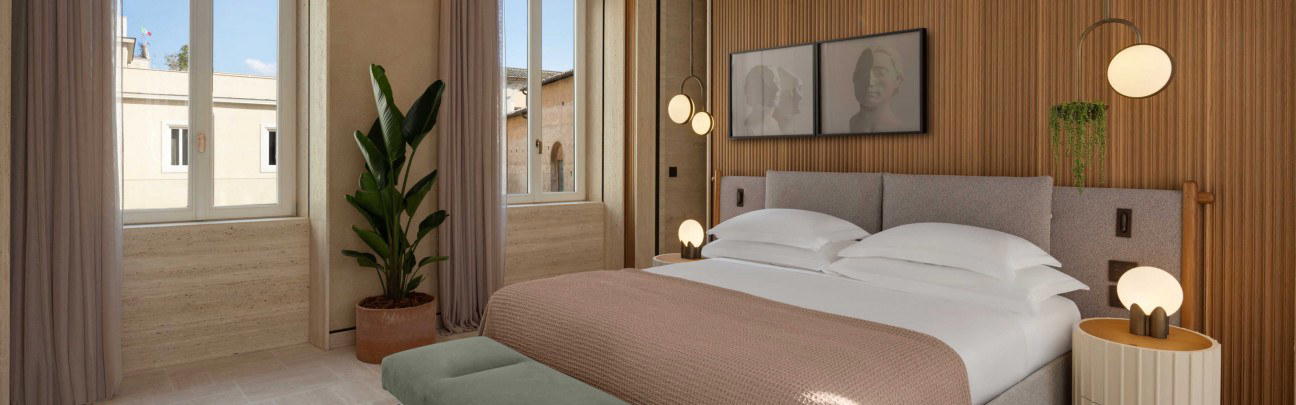
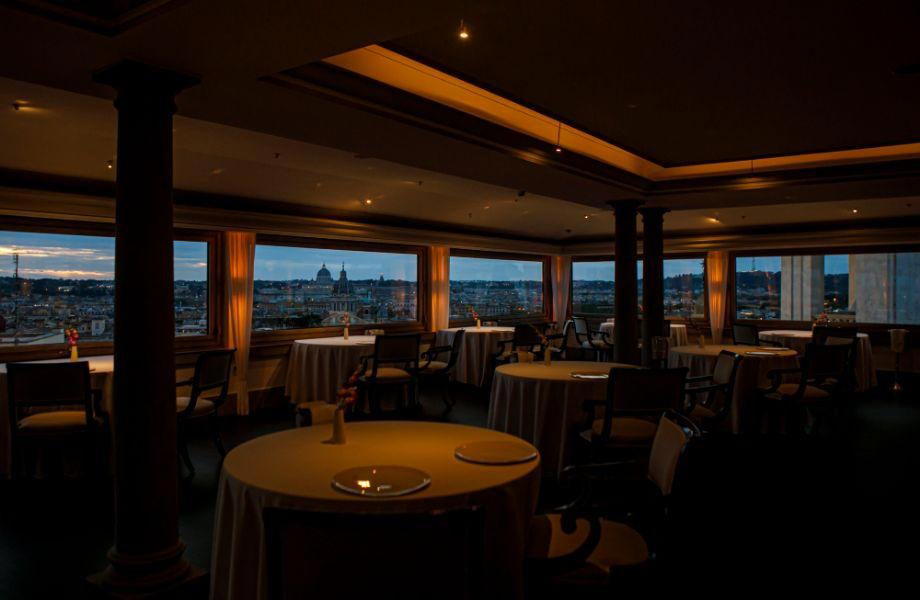
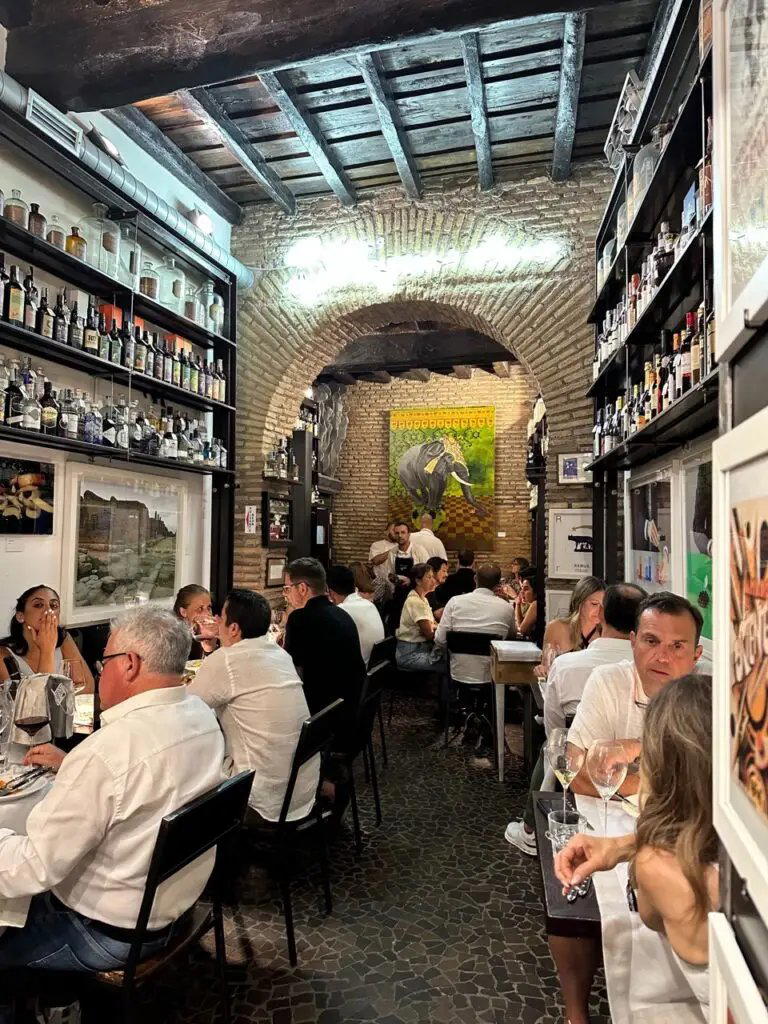
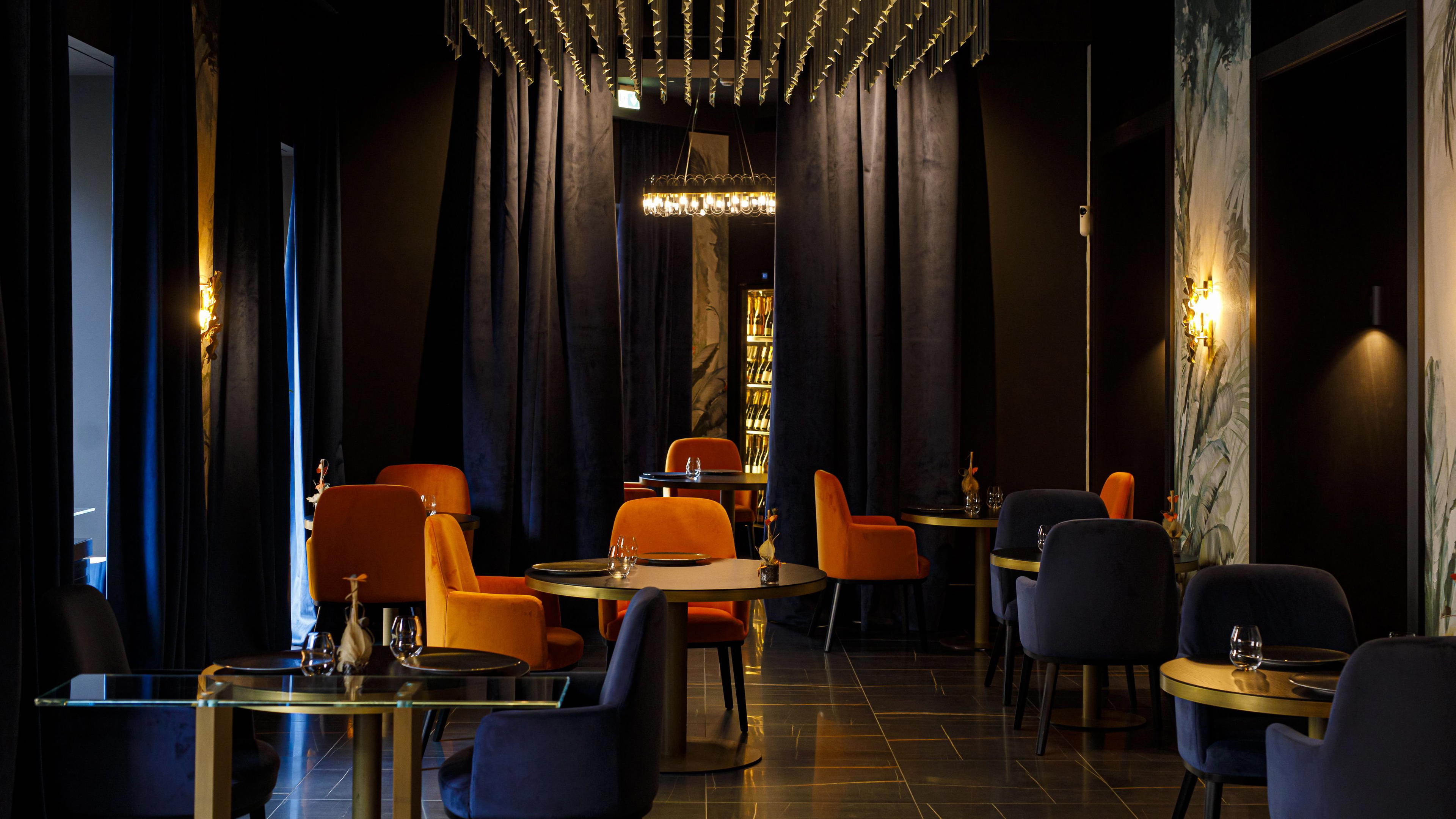
Sophisticated atmosphere with untreated concrete, steel finishes, trompe l’oeil panels, and midcentury-inspired furniture bathed in natural light.