Mama Ruisa Boutique Hotel

Michelin Selected
A Michelin Selected boutique hotel on a cobblestone street in Santa Teresa, Rio de Janeiro's most architecturally layered neighbourhood. Mama Ruisa occupies a restored colonial mansion at Rua Santa Cristina 132, placing guests inside a neighbourhood defined by Belle Époque villas, independent art galleries, and tram lines rather than beachfront hotel rows. For travellers who want Rio at street level rather than behind a resort perimeter, it sits in a different category from the city's large beach-facing hotels.

Pearl is the En Primeur Club membership app — saves, bookings, and concierge access live there. Same editors, same standards.
- Address
- R. Santa Cristina, 132 - Santa Teresa, Rio de Janeiro - RJ, 20241-250, Brazil
- Phone
- +55 21 98885-0631
- Directions
- Get directions
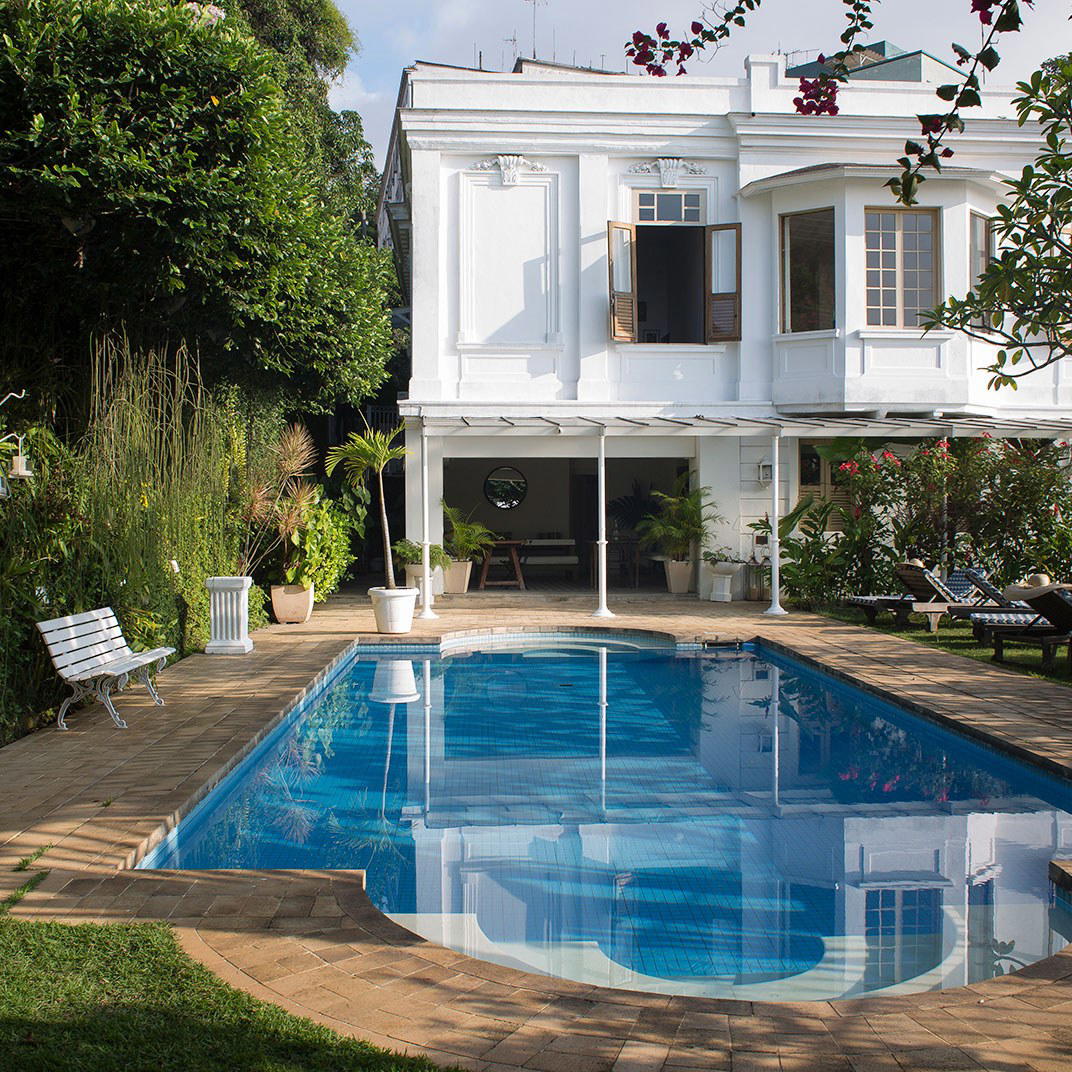
Santa Teresa's Architecture and What It Demands of a Hotel
Santa Teresa is the part of Rio de Janeiro where the city's colonial and Belle Époque building stock survived largely intact, not through preservation campaigns but through decades of being too steep, too narrow-laned, and too far from the beachfront to attract the developers who reshaped Ipanema and Leblon. The neighbourhood climbs the hillside above Lapa on a grid that occasionally abandons all pretense of being a grid, and the result is a streetscape of tiled mansions, wrought-iron balconies, and bougainvillea spilling over whitewashed walls. Hotels that enter this context face a specific design problem: the architecture around them sets expectations that a generic property cannot meet.
Mama Ruisa Boutique Hotel, at Rua Santa Cristina 132, occupies a restored colonial mansion and enters that context on its own terms. The address is Michelin Selected in the 2025 guide, which for hotels in this category signals a baseline of quality, character, and operational consistency rather than the full-service apparatus of a larger property. That recognition places it alongside properties across Brazil that are doing something editorially interesting within their tier, from Chez Georges to Casa Marques Santa Teresa, both of which occupy similar positions in the Santa Teresa accommodation conversation.
The Physical Environment: Colonial Architecture as the Point
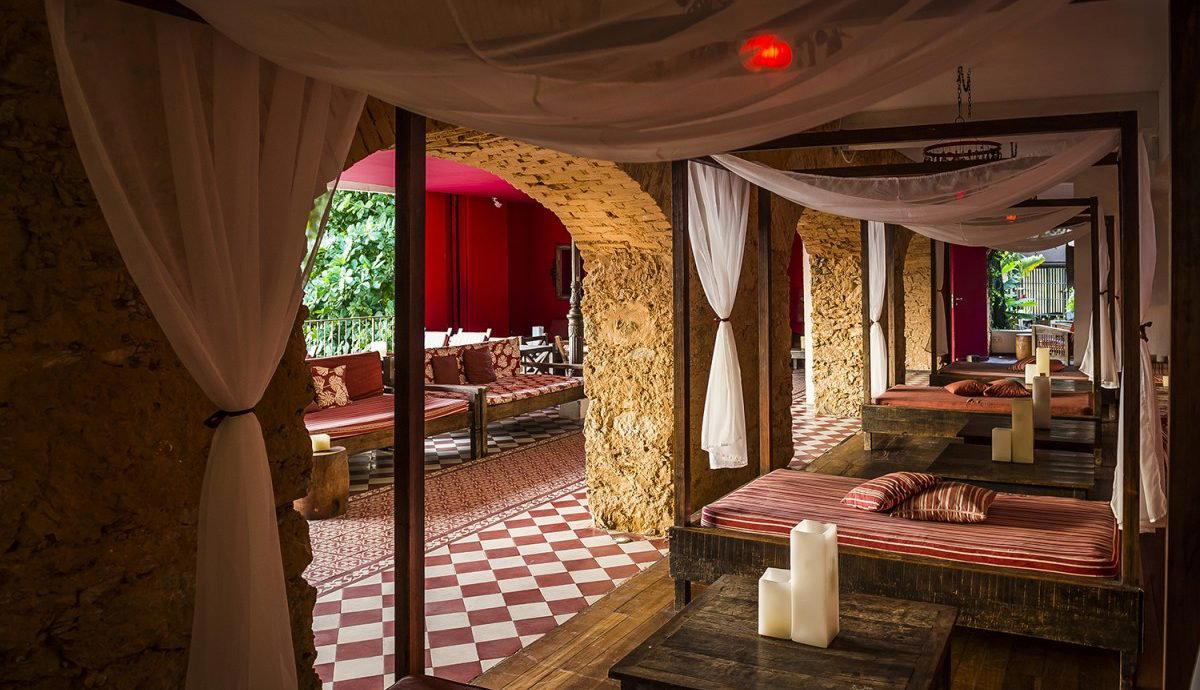
The design argument for Santa Teresa's boutique hotels rests on the buildings themselves. A restored colonial mansion in this neighbourhood carries a spatial logic that a purpose-built hotel rarely replicates: rooms arranged around interior courtyards, ceiling heights calibrated for pre-air-conditioning airflow, tile work that predates the colour palettes of contemporary interior design. When a property works with that logic rather than against it, the architecture does the atmospheric work that a conventional hotel offloads onto lobby furniture and curated playlists.
What distinguishes Mama Ruisa's position in Santa Teresa is partly the address itself. Rua Santa Cristina sits within the neighbourhood's residential core, close enough to the main cultural axis of Largo das Neves and Largo do Guimarães to reach both on foot, but removed from the tourist-facing concentration that has formed around those squares. Guests arrive at a property that reads as a private residence from the street, which is not a design affectation but a consequence of the building's actual history.
Boutique properties of this scale, typically a handful of rooms rather than dozens, occupy a specific niche in Rio's accommodation market. The city's largest luxury properties, including Copacabana Palace, A Belmond Hotel, and Fairmont Rio de Janeiro Copacabana, are organised around beachfront access, pool terraces, and multi-outlet food and beverage programs. Properties like Mama Ruisa operate without that infrastructure and are not trying to replicate it. The trade is a different kind of access: proximity to a neighbourhood with genuine architectural and cultural texture, and a scale at which service is personal rather than departmentalised.
Where Mama Ruisa Sits in the Rio Boutique Tier
Rio's boutique hotel tier has grown more coherent over the past decade. Santa Teresa has become the default address for travellers who want a neighbourhood-embedded stay rather than a beachfront one, and several properties have established themselves in that positioning. Casa Cool Beans and Casa Mosquito operate in the same hill-neighbourhood register, each with a slightly different take on the restored-house format. Emiliano Rio and Grand Hyatt Rio de Janeiro represent a different tier entirely, with full amenity stacks and price points to match.
Mama Ruisa's Michelin Selected status positions it within the curated independent tier, not the branded luxury tier. That distinction matters for how to read what the property offers. Michelin's hotel selection process emphasises character, quality of experience relative to context, and the authenticity of the property's positioning, not the number of amenities or the thread count of the linen. A selection in this category is an editorial endorsement of the property's coherence, not a comparison with five-star branded hotels.
For travellers considering Brazil more broadly, the boutique and design-led independent sector extends well beyond Rio. Properties like Casas Brancas Boutique Hotel and Spa in Búzios, Txai Resort Itacaré, and Cristalino Lodge in Alta Floresta each occupy specific geographic and experiential niches, while Rosewood São Paulo and Hotel Fasano Salvador represent the branded luxury end of the same country's accommodation spectrum. The range illustrates how differently Brazilian hospitality reads depending on where you are and what you are looking for.
Planning a Stay: Practical Considerations
Santa Teresa is accessed from the city centre and southern zones by taxi, rideshare, or the restored bonde tram, which runs from Carioca metro station up the hill. The neighbourhood's hillside position means walking to and from Lapa, directly below, is direct downhill and a meaningful climb on the return. For Copacabana or Ipanema, a rideshare of roughly twenty minutes covers most of the distance depending on traffic. The neighbourhood itself repays walking: the main squares, the MUSEU Chácara do Céu, and the concentration of bars and restaurants along the main streets are all within a compact radius of Rua Santa Cristina.
Booking directly or through a specialist channel is the standard approach for properties of this scale. Because the room count is small, availability at Mama Ruisa requires more lead time than a large hotel in the same city, particularly during Carnival season (February or March depending on the year) and the December-January summer peak. Travellers whose schedules allow for mid-year visits, particularly May through July when Rio's shoulder season delivers lower humidity and consistent weather, will generally find both better availability and quieter streets.
For context on the broader Rio dining and neighbourhood scene, our full Rio de Janeiro guide covers the city across multiple districts. Travellers extending into Brazil's northeast might also consider Fera Palace Hotel in Salvador or Zorah Beach Hotel in Trairi as part of a longer itinerary. For dramatic nature-focused stays, Hotel das Cataratas, A Belmond Hotel, Iguassu Falls occupies a category of its own.
At-a-Glance Comparison
Comparable venues nearby, for context on price, style, and recognition.
| Venue | Cuisine | Price | Awards | Notes |
|---|---|---|---|---|
| Mama Ruisa Boutique HotelThis venue — the venue you are viewing | Elegant 19th-century boutique guesthouse with French-Brazilian fusion. | $100–200 | Michelin Selected | Not listed |
| Yoo2 Rio de Janeiro | Modern design hotel blending tropical Brazilian elements with contemporary urban style. | $200–300 | Michelin Selected | Flamengo |
| R. Alm. Alexandrino, 660 - Santa Teresa | Luxury boutique hotel housed in a restored colonial mansion with contemporary design elements and Brazilian heritage influences. | $1,000–1,500 | 1 Michelin Key · Condé Nast Johansens Best for Romance | Lapa |
| La Suite by Dussol Rio de Janeiro | Intimate cliffside luxury guesthouse | $200–300 | Michelin Selected · Mr & Mrs Smith Seal of Approval | São Conrado |
| Fairmont Rio de Janeiro Copacabana | Luxury beachfront hotel blending 1950s style with modern comfort. | $300–500 | Michelin Selected · Forbes Recommended | Copacabana |
| Chez Georges | Private modernist villa with Brutalist architecture and tropical design elements. | $300–500 | Michelin Selected | Lapa |
Recognition history
Dated appearances from independent guides and award organizations, with the underlying list record or original source where available.
Michelin Selected
Michelin
Continue exploring
More in Rio de Janeiro
Hotels in Rio de Janeiro
Browse all →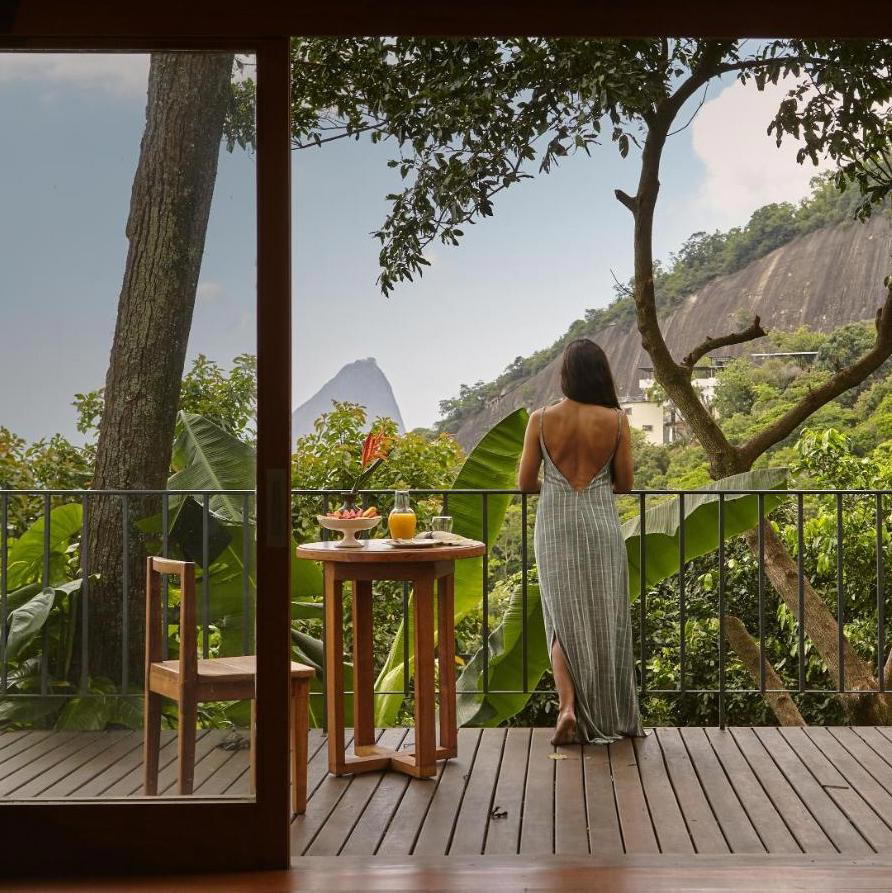
Bars in Rio de Janeiro
Browse all →
Details
- Romantic
- Bohemian
- Elegant
- Intimate
- Sophisticated
- Romantic Getaway
- Honeymoon
- Weekend Escape
- Panoramic View
- Terrace
- Historic Building
- Wi Fi
- Pool
- Spa
- Room Service
- Concierge
- Breakfast Included
- Waterfront
- Skyline
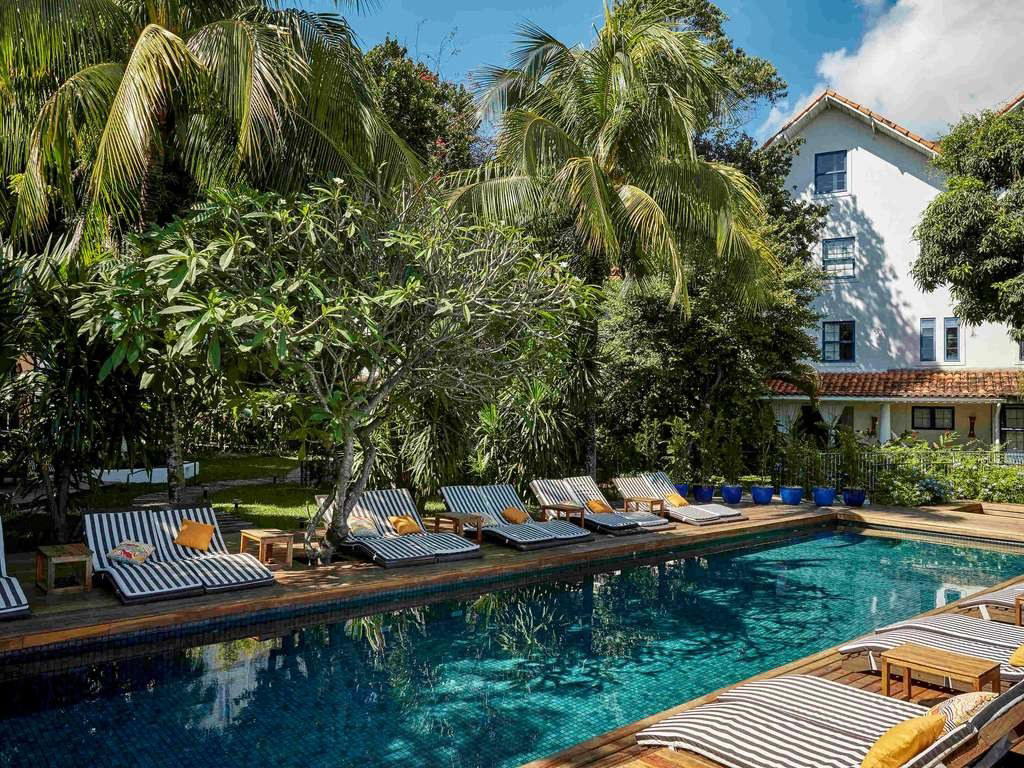
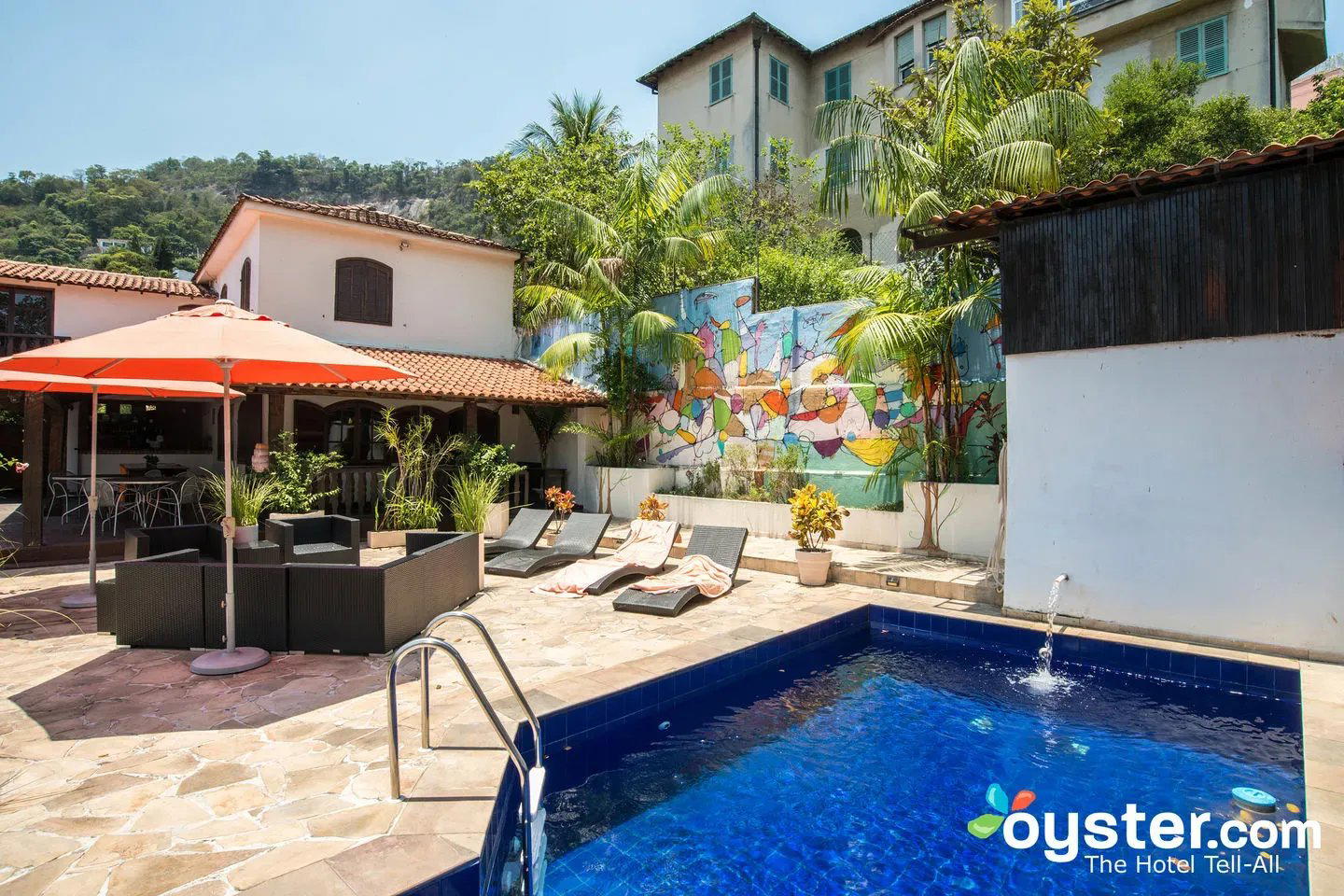
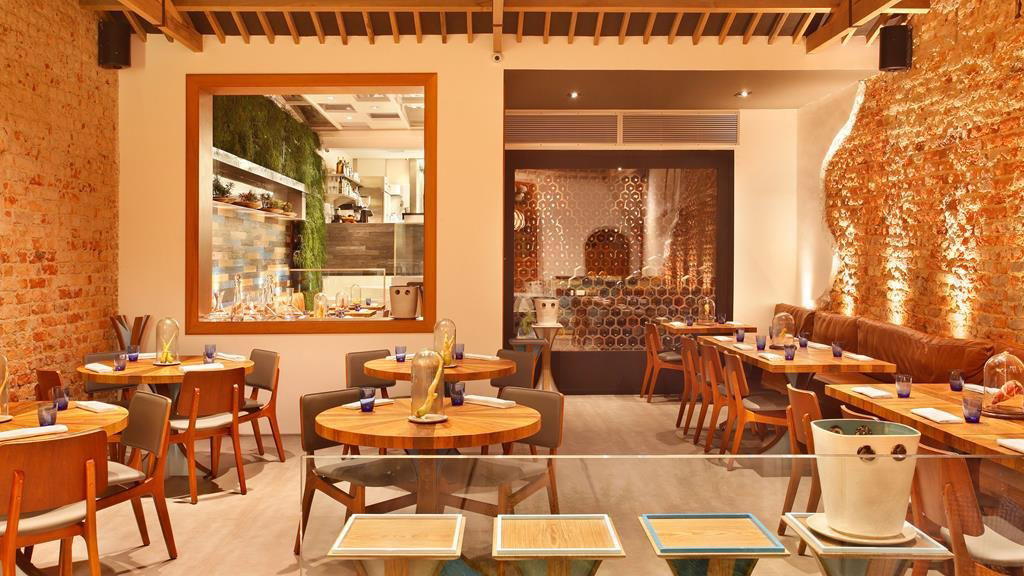
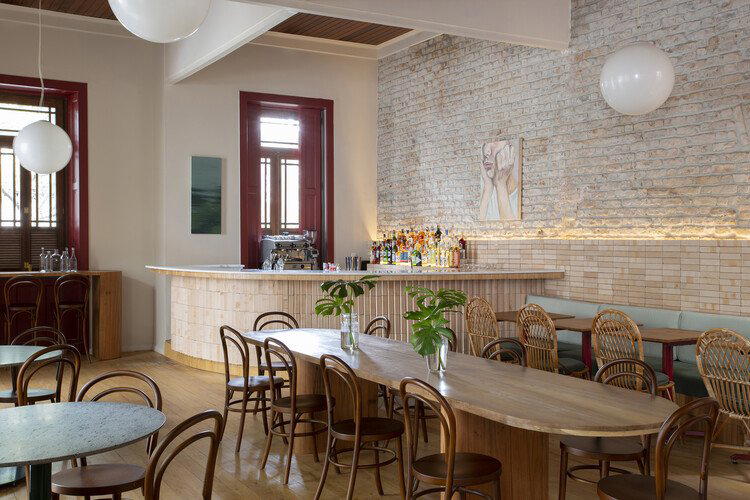
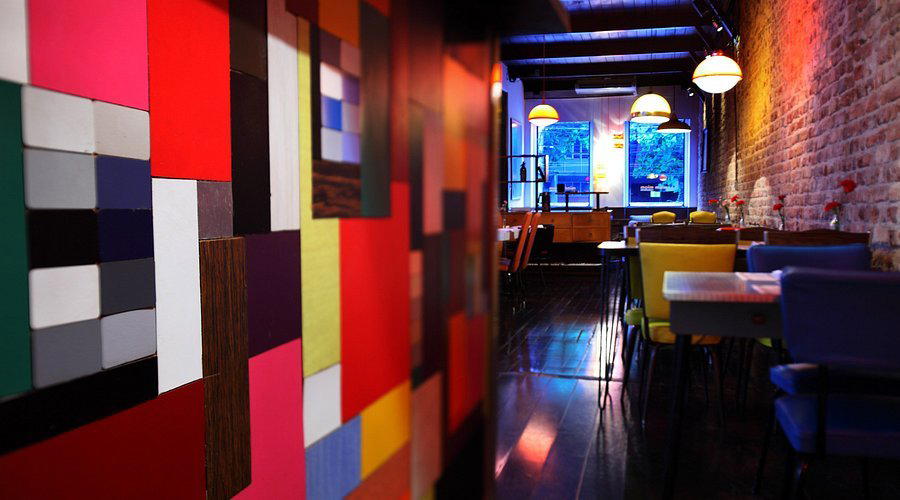
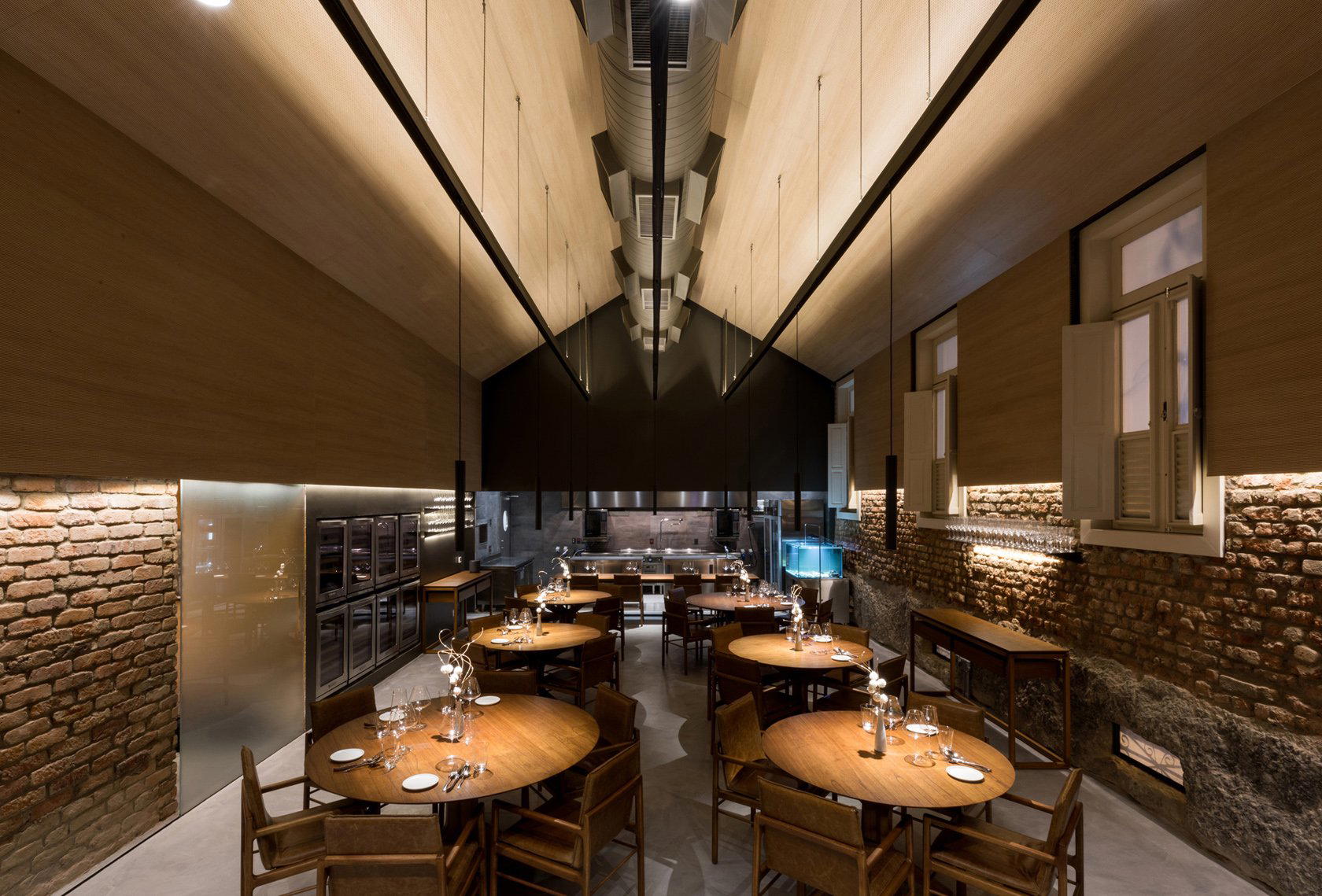
Relaxing with high ceilings, wooden floors, white-washed walls, palm-shaded pool, and elegant lounge blending rustic charm and urban sophistication.