
Michelin Selected
On the wild Atlantic edge of Ceará state, Zorah Beach Hotel sits at Guajiru Beach in Trairi, earning Michelin Selected status in the 2025 hotels guide.

Pearl is the En Primeur Club membership app — saves, bookings, and concierge access live there. Same editors, same standards.
- Address
- R. da Praia, 95 - Guajiru, Trairi - CE, 62690-000, Brazil
- Phone
- +55 85 98160-1249
- Website
- zorahbeach.com.br
- Directions
- Get directions
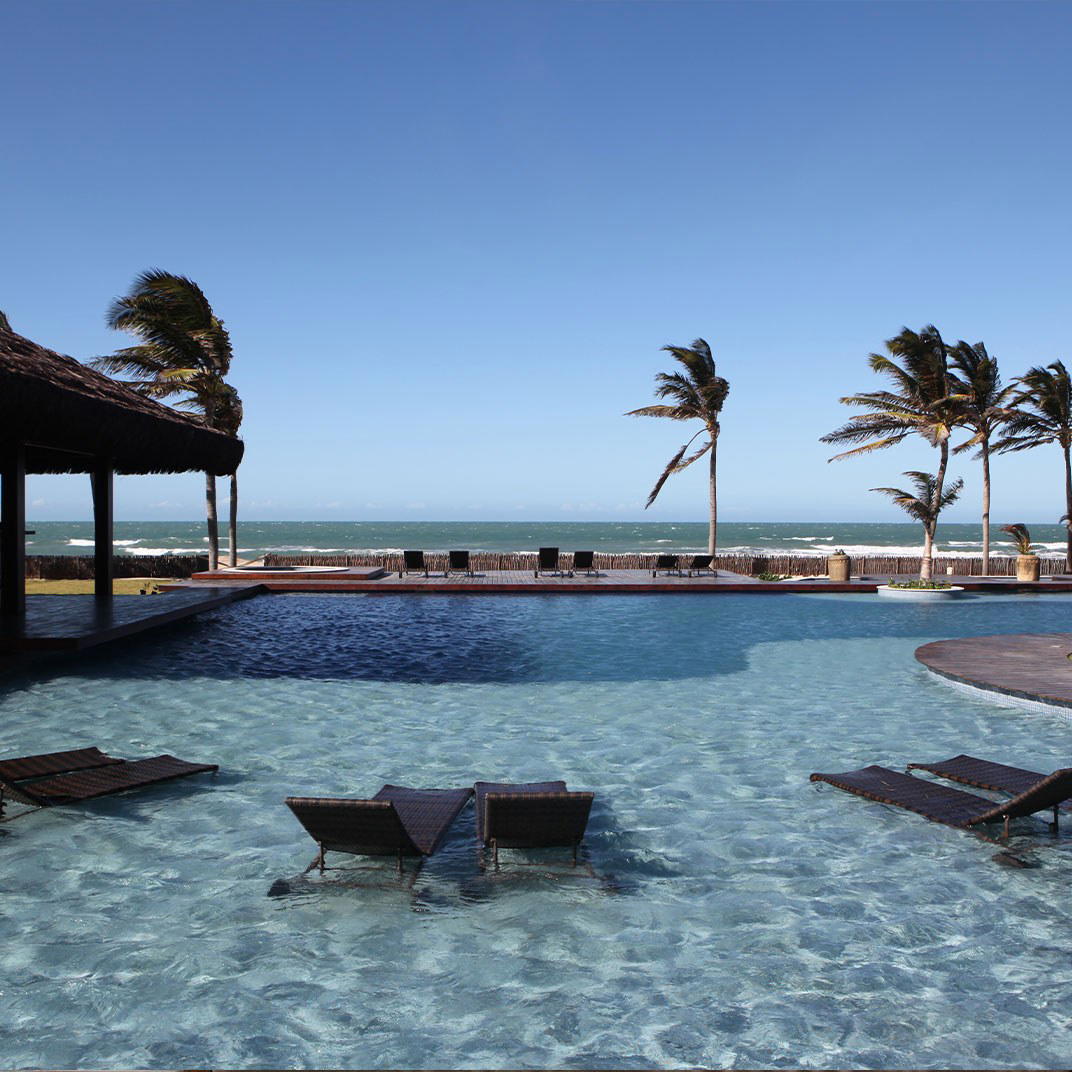
Where the Dunes Meet the Architecture
Approaching Guajiru Beach along the red-dust tracks that cut through Ceará's coastal scrubland, the built environment thins to almost nothing. The Northeast Brazilian littoral between Fortaleza and Jericoacoara holds some of the continent's most geographically dramatic coastline: wind-sculpted dunes, freshwater lagoons coloured green by refracted light, and a near-constant onshore breeze that has turned the region into a kitesurf corridor of international standing. It is in this context, at Rua da Praia, 95, Guajiru Beach, Trairi, that Zorah Beach Hotel operates, and the location is not incidental to the property's identity — it is the design premise.
The hotel earned Michelin Selected status in the 2025 Michelin Hotels guide, a designation that places it within a curated tier of independent accommodation recognised for quality of environment and guest experience rather than scale or brand affiliation. In Brazil's hospitality sector, that tier sits at a meaningful distance from the international-chain properties that dominate São Paulo and Rio de Janeiro. Properties like Rosewood São Paulo or the Copacabana Palace operate within a globally legible luxury grammar; Zorah's Michelin recognition signals something different, more spatially specific and harder to replicate elsewhere.
Design Approach on the Northeast Coast
Brazil's premium coastal accommodation has split over the past decade into two broad camps. One camp pursues full-service resort infrastructure: pools, spas, multiple restaurant concepts, branded affiliations. The other prioritises environmental integration, low key counts, and architecture that responds to site rather than imposing upon it. Zorah occupies the second camp, and its address at Guajiru Beach makes that choice intelligible. This stretch of Trairi coastline is classified as an Environmental Protection Area, which constrains development and, by extension, concentrates the accommodation offer toward smaller, more considered operations.
Comparable properties along the broader Northeast coast follow a similar logic. Rancho do Peixe in Jericoacoara and Txai Resort in Itacaré both work within coastal ecologies that limit footprint and require the architecture to earn its presence. The design discipline this demands tends to produce properties with a stronger sense of place than their full-resort counterparts, precisely because the physical constraints force genuine responsiveness to landscape, light, and local material.
At Guajiru specifically, the governing conditions include high wind exposure, salt air, intense tropical light, and the proximity of the lagoon system that defines the area's character. Architecture built for these conditions typically favours open, cross-ventilated structures, local or regional materials that weather predictably, and sightlines that treat the dune-and-water geography as the primary visual experience rather than the building itself. Whether Zorah executes this through a particular material palette or structural form is detail that sits outside the available record, but the Michelin selection implies a standard of spatial coherence that editorial recognition of that kind requires.
Trairi and the Ceará Coastal Circuit
Trairi sits roughly 100 kilometres west of Fortaleza, the state capital, making it accessible by road transfer while remaining sufficiently remote to preserve the conditions that make the coastline worth the journey. The Ceará coastal corridor from Fortaleza to Jericoacoara has drawn consistent attention from kite surfers, Brazilian urban escapees, and a growing cohort of international travellers who have exhausted the more developed beach resorts of Rio Grande do Norte. Guajiru is one of the earlier stops on that westward drift, positioned between the relative accessibility of the state capital and the deeper remoteness of points further along the coast.
The broader Northeast travel context is relevant for calibrating expectations. This is not the infrastructure-dense hotel corridor of Búzios or the historic colonial weight of Salvador. Fera Palace Hotel and Hotel Fasano Salvador in Bahia operate within a city that has architecture, cuisine, and culture beyond the hotel gates. Trairi's offer is almost entirely defined by its natural setting. The dunes, the lagoons, the wind, and the light are what you travel for, and the accommodation choice becomes primarily a question of how well a property frames and preserves access to those conditions.
For comparison points in geographically analogous positions, Ilha de Toque Toque Eco Hotel in São Sebastião and Pousada Do Toque in São Miguel dos Milagres operate within a similar logic of natural-setting primacy and limited-key design. For those drawn to raw ecological settings rather than cultural capitals, Caiman in the Pantanal or Cristalino Lodge in Alta Floresta represent the same instinct applied to very different biomes.
Planning Your Stay
Trairi is most easily reached via Fortaleza's Pinto Martins International Airport, with road transfer to Guajiru taking approximately 90 minutes depending on route and conditions. The Northeast's dry season runs broadly from July through January, with July and August bringing the strongest trade winds that make the area particularly well-suited to kitesurf and windsurf activity. The wet season, from February through June, softens the wind and typically thins the visitor numbers, which alters the atmosphere at properties along this coast considerably. For those drawn to the lagoon landscape rather than wind sports, the green-season months offer a different, quieter version of the same geography.
For travellers building a broader Brazilian itinerary, properties worth cross-referencing include Etnia Casa Hotel in Trancoso, Campo Bahia in Santo André, Parador Casa da Montanha in Cambará do Sul, and Botanique Hotel Experience in Campos do Jordão, each representing the same design-led, site-responsive instinct applied across different Brazilian geographies. For the Northeast specifically, Hotel Jaguarindia Village in Fortim covers similar coastal terrain a little further east along the Ceará coast.
At-a-Glance Comparison
Comparable venues nearby, for context on price, style, and recognition.
| Venue | Cuisine | Price | Awards | Notes |
|---|---|---|---|---|
| Zorah Beach HotelThis venue — the venue you are viewing | Asian-inspired beachfront boutique | Not listed | Michelin Selected | Not listed |
| Soho House São Paulo | Members-only creative club blending heritage preservation with contemporary Brazilian design in a reimagined historic hospital complex. | $300–500 | Michelin Selected · Mr & Mrs Smith Seal of Approval | Bela Vista |
| Rancho do Peixe | Eco-friendly beachfront pousada with wooden bungalows integrated into coconut groves and dunes. | $100–200 | Michelin Selected | Prea |
| Uxua Maré | Restored antique farmhouses honoring heritage with low-density construction in rainforest sanctuary | Not listed | Travel + Leisure It List Hotels · Conde Nast Hot List Hotels | Itapororoca |
| Novotel Florianopolis | Modern beachfront hotel with residential-style rooms and event spaces. | Not listed | Michelin Selected | Not listed |
| Aventora Resort Baía Formosa, Minor Reserve Collection | Luxury eco‑resort and branded residence enclave positioned as a landmark destination in northeastern Brazil’s Baía Formosa region. | Not listed | Not listed | Baía Formosa |
Recognition history
Dated appearances from independent guides and award organizations, with the underlying list record or original source where available.
Michelin Selected
Michelin
Continue exploring
More in Trairi
Hotels in Trairi
Browse all →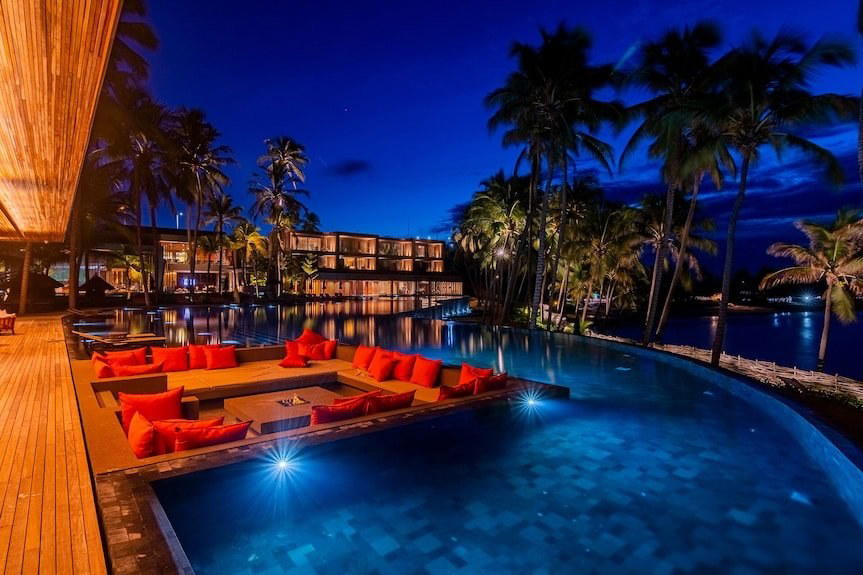
Details
- Romantic
- Quiet
- Elegant
- Sophisticated
- Scenic
- Honeymoon
- Romantic Getaway
- Wellness Retreat
- Weekend Escape
- Beachfront
- Infinity Pool
- Private Villa
- Pool
- Spa
- Hot Tub
- Fitness Center
- Massage
- Beach Access
- Wi Fi
- Restaurant
- Room Service
- Waterfront
Traditional elegance and quiet atmosphere with eclectic, wonder-cabinet design elements amid lush tropical gardens and ocean views.