Le Méridien Grand Hotel Nuremberg occupies Bahnhofstraße 1-3, steps from the central station, placing guests at the threshold between the city's medieval core and its modern rail gateway. The hotel sits in a tier of German grand-address properties where architecture and location do significant work, making it a logical base for both business travellers and those spending time in the Altstadt and its surrounding cultural circuit.

Pearl is the En Primeur Club membership app — saves, bookings, and concierge access live there. Same editors, same standards.
- Address
- Bahnhofstraße 1-3, 90402 Nürnberg, Germany
- Phone
- +49 911 23220
- Website
- marriott.com
- Directions
- Get directions
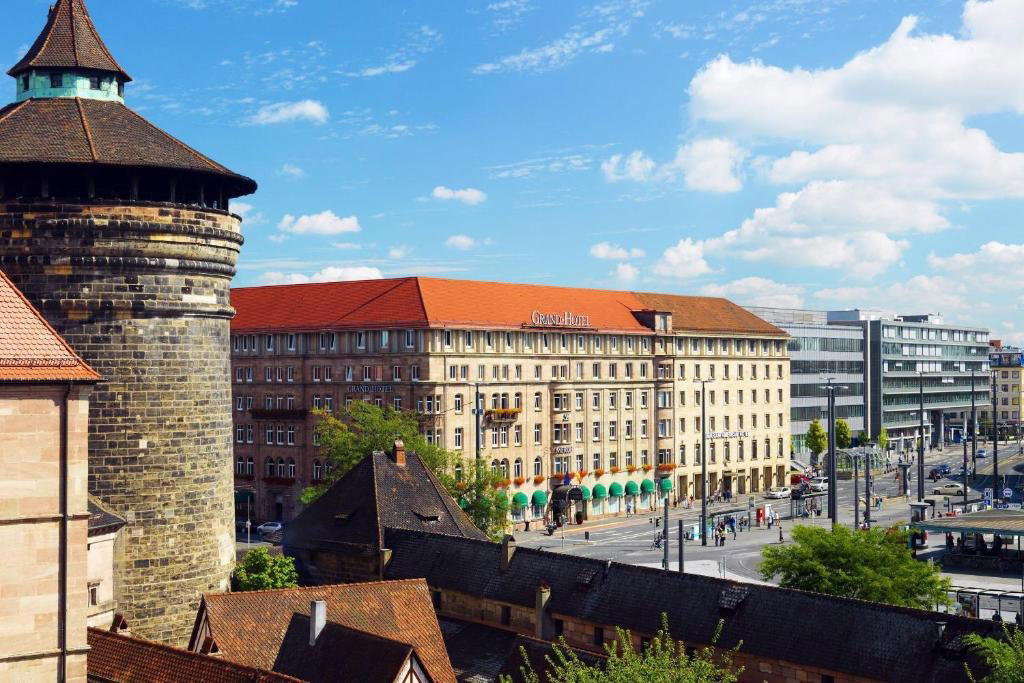
Where the City's Two Identities Meet
Nuremberg has always carried a dual identity: a medieval city of imperial history and craft tradition on one side, a rebuilt, forward-facing Bavarian commercial centre on the other. That tension is most visible at the main station end of the city, where the Altstadt's sandstone walls give way to the wide transit corridors of the Bahnhofstraße. Le Méridien Grand Hotel Nuremberg sits precisely at that junction, at Bahnhofstraße 1-3, and the address is not incidental. Grand hotels placed at railway approaches were, through the late nineteenth and early twentieth centuries, the standard way a city announced its ambitions to arriving visitors. Nuremberg's version of that logic is still legible in the hotel's position.
The Architecture of the Grand Hotel Threshold
The European grand hotel tradition is inseparable from its relationship to rail infrastructure. When rail travel created a new class of mobile, prosperous guest in the latter half of the 1800s, the hotels that appeared beside major stations were not simply convenient lodgings. They were civic statements, designed to signal permanence and status to everyone who passed through. The Bahnhofstraße address places Le Méridien within that lineage, at an entry point where Nuremberg's transit gateway and its commercial centre converge. Properties in this position tend to work differently from resort or boutique alternatives: they are orientation points for a city, their lobbies functioning as a kind of extended public threshold between travel and arrival.
This matters architecturally because the grand station-adjacent hotel type demands scale and address presence over intimacy. The spatial logic is outward-facing. The building must hold its own against the volume and movement of a major European rail hub, which shapes everything from facade treatment to lobby proportion. For hotels in this category across Germany, from the Fairmont Hotel Vier Jahreszeiten in Hamburg to the Excelsior Hotel Ernst in Cologne, the relationship between the building's presence and the street it anchors is central to how guests experience arrival.
Nuremberg as a Hotel Market
Germany's mid-sized city hotel market is more competitive than it often appears from outside. Cities like Nuremberg, Dresden, and Saarbrücken support a tier of serious full-service properties because they combine strong convention and trade-fair traffic with a consistent leisure base. Nuremberg draws visitors year-round through its Christmas market (one of Germany's most attended), the Germanisches Nationalmuseum, Albrecht Dürer's house, and the Documentation Centre at the former Nazi rally grounds. That breadth of demand means the hotel market here is not purely seasonal and not purely business-oriented, which sustains properties that need to serve both cohorts effectively.
Within Germany's upper-tier hotel set, the competitive reference points for a property at this address and scale include the Mandarin Oriental Munich, the Kempinski Hotel Berchtesgaden, and the Hotel de Rome in Berlin, all of which anchor specific urban or landscape addresses and use architecture as a primary differentiator. Le Méridien's positioning at Nuremberg's central rail approach places it in that broader conversation about what a grand address hotel does for a city's self-presentation. For travellers comparing against more rural or spa-focused alternatives such as Schloss Elmau or Das Kranzbach Hotel and Wellness Retreat, the urban station-side hotel serves a different function entirely: proximity to transport and cultural infrastructure rather than retreat from it.
The Le Méridien Brand in European Context
Le Méridien as a brand has a specific position in the upper-tier international hotel market. Founded in France in 1972 and eventually absorbed into the Marriott Bonvoy portfolio, the brand has historically aligned itself with arts and culture programming, positioning properties as entry points into a city's creative life rather than as self-contained destinations. That brand orientation is relevant context for the Nuremberg property given the city's own strengths in that direction: Nuremberg has a serious museum infrastructure and a documented history in printmaking, instrument-making, and civic art. A hotel that frames itself against that tradition has coherent material to work with.
For travellers who regularly compare European upper-tier properties, Le Méridien sits in a different register from the palatial independents such as the Althoff Seehotel Überfahrt or the Bülow Palais in Dresden, and from the design-led boutique tier represented by properties like LA MAISON in Saarlouis. It operates instead as a known international standard within a German city context, which is exactly what a certain type of traveller, particularly those arriving by rail on business or for a short cultural visit, is looking for.
Planning Your Stay
The hotel's address at Bahnhofstraße 1-3 places it within direct walking distance of Nuremberg's central station, which in turn connects to Munich in under two hours by ICE and to Frankfurt in roughly two hours. That rail connectivity makes the hotel particularly practical for short-stay business travellers working across southern Germany. The Altstadt is accessible on foot from the hotel, with the city walls and the Hauptmarkt (home to the Christmas market from late November through Christmas Eve) reachable in under ten minutes. For travellers considering Nuremberg as part of a broader German itinerary, the hotel's position between rail infrastructure and the old city makes sequencing direct. Nuremberg's Christmas market period (late November to 24 December) represents peak demand, and booking well ahead is advisable for that window. Convention periods tied to the city's trade-fair calendar also compress availability at upper-tier properties.
Travellers comparing hotels across Germany's wider scene can find our broader coverage, including properties across the country's resort, spa, and urban luxury tiers, in our full Nuremberg restaurants and hotels guide. For those building a longer German itinerary, the Breidenbacher Hof in Düsseldorf, the Hotel Bareiss in Baiersbronn, and the Weissenhaus Private Nature Luxury Resort each represent distinct alternatives depending on whether the priority is urban access, Black Forest retreat, or Baltic coast privacy. Further afield, Villa Contessa in Bad Saarow, Landhaus Stricker on Sylt, BUDERSAND Hotel in Hörnum, Luisenhöhe in Horben, Gut Steinbach in Reit im Winkl, Esplanade Saarbrücken, Der Öschberghof in Donaueschingen, and Hotel Ketschauer Hof in Deidesheim round out the range. For international reference points, The Fifth Avenue Hotel in New York, Aman New York, and Aman Venice illustrate how the grand-address model translates across different city typologies.
Comparison Snapshot
| Venue | Price | Awards |
|---|---|---|
| Le Méridien Grand Hotel NurembergThis venue — the venue you are viewing | $200–300 | Not listed |
| Fairmont Hotel Vier Jahreszeiten | $300–500 | 3 Michelin Keys · La Liste Top Hotels |
| Kempinski Hotel Berchtesgaden | $500–750 | 2 Michelin Keys |
| Kempinski Hotel Taschenbergpalais | $300–500 | 2 Michelin Keys · Virtuoso Luxury Hotel Partner |
| Mandarin Oriental Munich | Not listed | 2 Michelin Keys · La Liste Top Hotels |
| Rocco Forte Charles Hotel | $300–500 | 2 Michelin Keys · La Liste Top Hotels |
Continue exploring
More in Nuremberg
Hotels in Nuremberg
Browse all →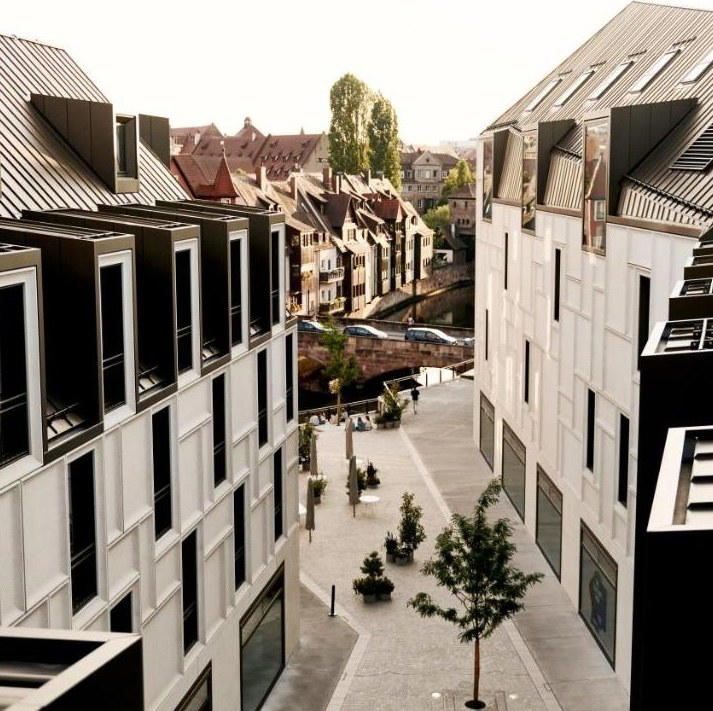
Bars in Nuremberg
Browse all →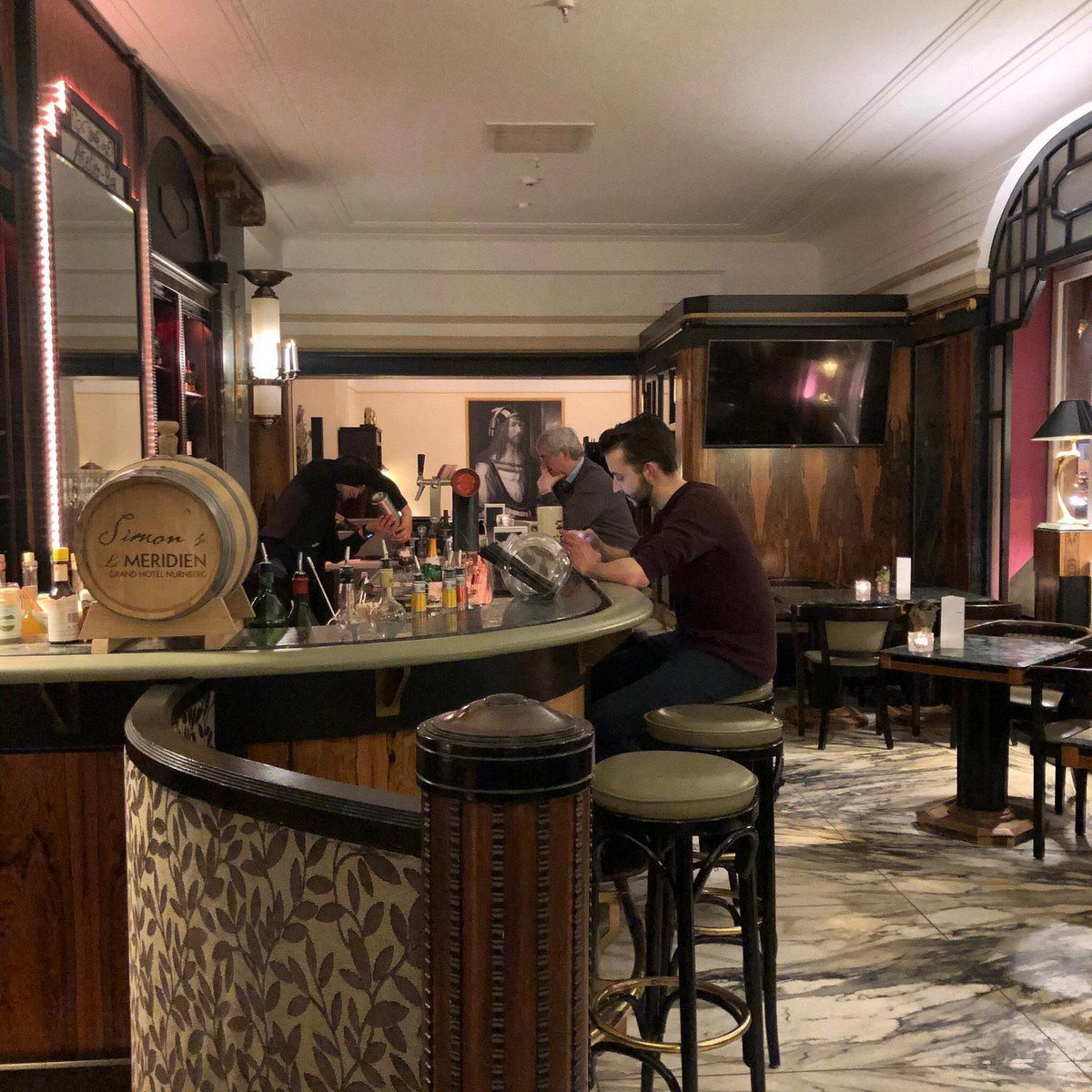
Restaurants in Nuremberg
Browse all →
Wineries in Nuremberg
Browse all →
Details
- Elegant
- Classic
- Sophisticated
- Business Trip
- Weekend Escape
- Historic Building
- Wi Fi
- Fitness Center
- Sauna
- Room Service
- Concierge
- Business Center
- Valet Parking
- Street Scene
- Wheelchair Accessible
- Elevator
- Step Free Entrance
Classic grand hotel atmosphere with elegant Art Nouveau marble bathrooms and sophisticated fusion of historic charm and contemporary design.