
Tabelog 100 #75
Our verdict
Restaurant Chimney gives Imari’s beef culture a compact, local expression: steak and hamburger steak in a city better known abroad for porcelain than restaurant chasing. Its 2025 Tabelog 100 Steak / Teppanyaki WEST selection places it in a regional conversation that rewards consistency, sourcing relevance, and everyday seriousness rather than spectacle.

Pearl is the En Primeur Club membership app — saves, bookings, and concierge access live there. Same editors, same standards.
- Address
- 3321-1 Tachibanacho, Imari, Saga 848-0027, Japan
- Phone
- +81 955-23-0515
- Hours
- Mon–Wed 11:30 AM–1:30 PMThu ClosedFri 11:30 AM–1:30 PMSat 11:30 AM–1:30 PM, 5:30–7:30 PMSun 11:30 AM–1:30 PM
- Website
- instagram.com
- Directions
- Get directions
The menu
What to order
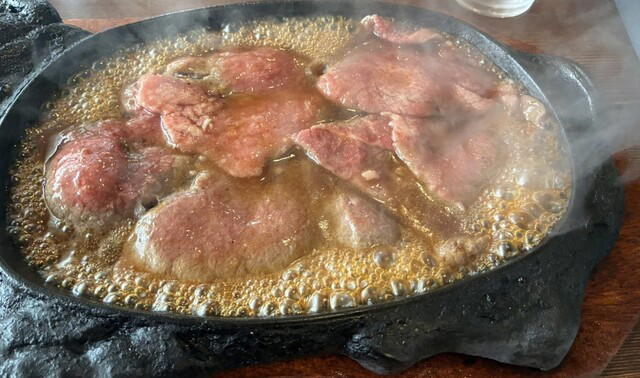
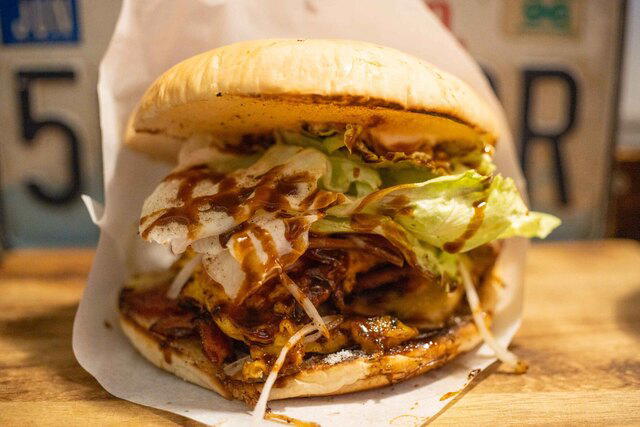
- Imari beef hamburger steak
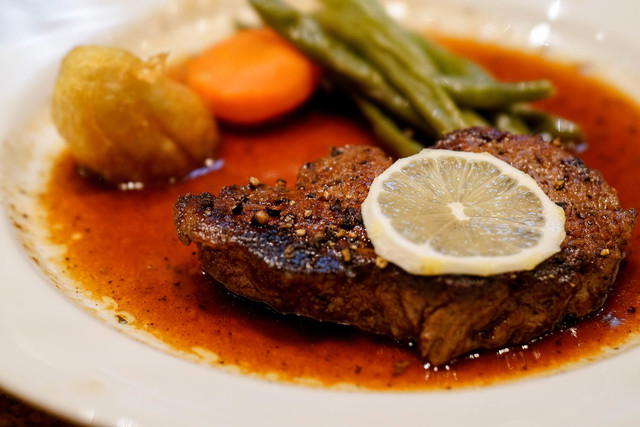
- Imari beef lemon steak
- Imari beef steak set
- Curry set
Imari is not a city that announces its restaurants with metropolitan theatre. The approach is quieter: local streets, daily traffic, and dining rooms where the point is less performance than repeatable craft. In that setting, Restaurant Chimney belongs to a local pattern that matters more than its modest scale suggests: beef, heat, and rice-led meals treated as everyday culture rather than special-occasion ceremony.
The useful way to read the room is through category and context. Restaurant Chimney is listed for steak and hamburger steak, and its 2025 Tabelog Hyakumeiten recognition puts it inside a field where diners judge directness: texture, doneness, sauce restraint, portion logic, and value.
Imari beef culture without the urban tasting-menu script
Japan’s steak culture often splits into two visible lanes. One is the polished counter format, associated with teppanyaki theatre and premium beef branding. The other is the yoshoku-adjacent steak and hamburger steak house, where Western-influenced formats have been naturalised into Japanese lunch and dinner routines. Restaurant Chimney sits closer to the second lane, which is why its appeal is not about luxury signalling. The interest is in how Imari turns beef into a practical meal.
That distinction matters for travellers. Imari’s dining map is not built like a major metropolitan centre, where restaurant categories multiply into micro-genres. Here, a tight set of reliable addresses carries more weight. For chicken and local casual eating, Drive-in Tori Imari ten occupies a different, more populist lane. Kate cuore points to another thread in the city’s dining mix, while Lion gives travellers another local point of comparison. Against that local spread, Restaurant Chimney reads as a beef-focused address with category recognition rather than a broad tourist restaurant.
The 2025 Tabelog Hyakumeiten recognition is the primary trust signal here. It does not make the restaurant a luxury counter, and it should not be read as Michelin-style hierarchy. It does say that, within the steak and hamburger steak field, the place has enough diner attention and category relevance to appear on a recognised list. For Imari, that is a meaningful marker.
Hamburger steak is the clue, not the compromise
Travellers often misread hamburger steak in Japan as the casual fallback below steak. In regional yoshoku culture, it can be the sharper test. The format asks whether a kitchen can manage fat, grind, browning, sauce, and timing without hiding behind expensive cuts. When a restaurant lists both steak and hamburger steak, the pairing signals a dining tradition that values beef in two registers: cut-based and composed.
That is also where the listing becomes more than a simple label. In Imari, a steak and hamburger steak restaurant has a different baseline from an anonymous urban grill because it is read through local dining habits as much as through menu category. The editorial question is not whether the room feels grand; it is whether the format gives beef culture a credible daily expression. Restaurant Chimney’s recognition suggests it does.
For travellers building a wider food itinerary, the contrast is useful. The city can be read through its everyday specialities rather than through a single prestige dinner. Start with our full Imari restaurants guide for the local dining spread, then place beef alongside the city’s other categories instead of treating it as the only story. The same approach applies beyond restaurants: our full Imari hotels guide, our full Imari bars guide, our full Imari wineries guide, and our full Imari experiences guide help frame Imari as a working regional city, not a dining district detached from place.
How to place it in a Japan-wide eating itinerary
Restaurant Chimney makes the strongest case for travellers already interested in regional Japan. It is not the address to choose for high-gloss ceremony; it is the address to understand how Imari treats beef as a local staple with enough craft to earn category attention. That makes it especially relevant for visitors moving through Japan beyond its largest cities, where food stops often work better when they are anchored in local habits rather than destination hype.
Compared with broader Japan dining itineraries, the Imari stop offers a useful counterweight. Other cities may present beef through different formats, from polished counters to casual grill rooms and everyday set-meal cooking. Imari’s value is narrower and more grounded: it lets travellers see how a recognised local steak and hamburger steak restaurant fits into a compact regional dining scene. Read alongside other dining in Imari, Restaurant Chimney becomes less a detour for novelty than a focused way to understand the city’s everyday restaurant culture.
The verdict is practical and narrow: Restaurant Chimney is for diners who want Imari’s beef culture in a focused, locally legible form. Its recognition gives the meal editorial weight, but the reason to go is simpler. In a city where craft often hides inside ordinary formats, steak and hamburger steak can tell the story more clearly than a long menu ever would.
Frequently asked questions
Is Restaurant Chimney suitable for children?
Restaurant Chimney is a steak and hamburger steak restaurant in Imari. Its listed dinner and lunch budget is JPY 3,000 - JPY 3,999, which places it in a mid-range bracket rather than a formal tasting-menu setting.
What is the atmosphere like at Restaurant Chimney?
Expect a steak-and-hamburger-steak address in Imari rather than a large, theatrical dining room. The 2025 Tabelog Hyakumeiten recognition signals category credibility, while the restaurant remains best understood as a focused local dining option.
What's the price range at Restaurant Chimney?
Pricing at Restaurant Chimney is listed as JPY 3,000 - JPY 3,999 JPY 3,000 - JPY 3,999 View spending breakdown.
What is Restaurant Chimney known for?
Restaurant Chimney is known as an Imari restaurant listed for steak and hamburger steak, with 2025 Tabelog Hyakumeiten recognition.
In Context: Similar Options
Comparable venues by cuisine and price in the same metro.
| Venue | Cuisine | Price | Awards | Notes |
|---|---|---|---|---|
| Restaurant ChimneyThis venue — the venue you are viewing | Imari beef steak & hamburger restaurant | $20–30 | Tabelog 100 #75 | Not listed |
| Lion | Teppanyaki steakhouse featuring Imari beef | $30–50 | Tabelog 100 #6 | / Niricho Ozato Otsu |
| Drive-in Tori Imari ten | Traditional Japanese chicken grill & yakitori | $20–30 | Tabelog 100 #58 | Otsubocho, Imari |
| Kate cuore | Exquisite Farm-to-Table Italian | $500+ | Tabelog Silver #51 | Tachibanachō |
| 北のうまいもん碧水 | 北海道ローカルフード | Not listed | Not listed | 支笏湖温泉 |
| レストラン横倉 | Western-Japanese Ski Resort Fare | Not listed | Not listed | Zao Onsen |
Recognition history
Dated appearances from independent guides and award organizations, with the underlying list record or original source where available.
Tabelog 100 #75 · No. 75
Tabelog · Tabelog 100 - Steak / Teppanyaki - WEST - 2025
Continue exploring
More in Imari
Restaurants in Imari
Browse all →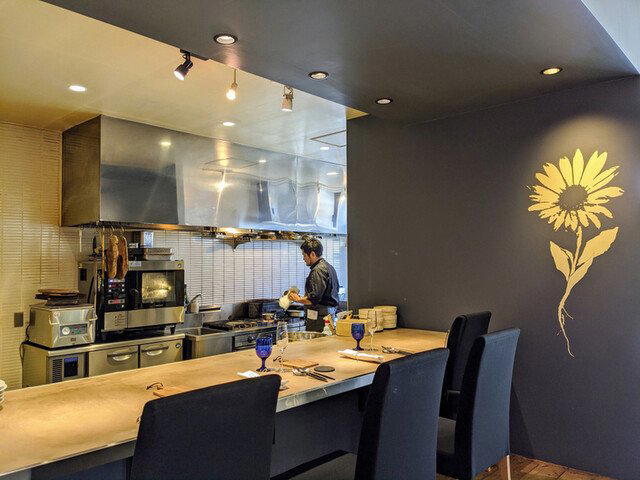
Details
- Date Night
- Group Dining
- Family
- Casual Hangout
- Standalone
- Local Sourcing
- A La Carte
- Set Menu
Current opening hours
- Monday
- 11:30 AM–1:30 PM
- Tuesday
- 11:30 AM–1:30 PM
- Wednesday
- 11:30 AM–1:30 PM
- Thursday
- Closed
- Friday
- 11:30 AM–1:30 PM
- Saturday
- 11:30 AM–1:30 PM, 5:30–7:30 PM
- Sunday
- 11:30 AM–1:30 PM
Hours can change for holidays and private events. Last verified .