
Set on the Xianshan Peninsula at Thousand Island Lake, this Michelin Selected resort places guests inside one of eastern China's most photographed freshwater landscapes. The property sits well outside Hangzhou's urban core, making it a deliberate retreat rather than a city base. Anticipatory service and lake-facing positions define the stay.
Pearl is the En Primeur Club membership app — saves, bookings, and concierge access live there. Same editors, same standards.
- Address
- Xianshan Peninsula, Hangzhou, China
- Phone
- +86 571 8881 8888
- Directions
- Get directions
 Saves & bookings on Pearl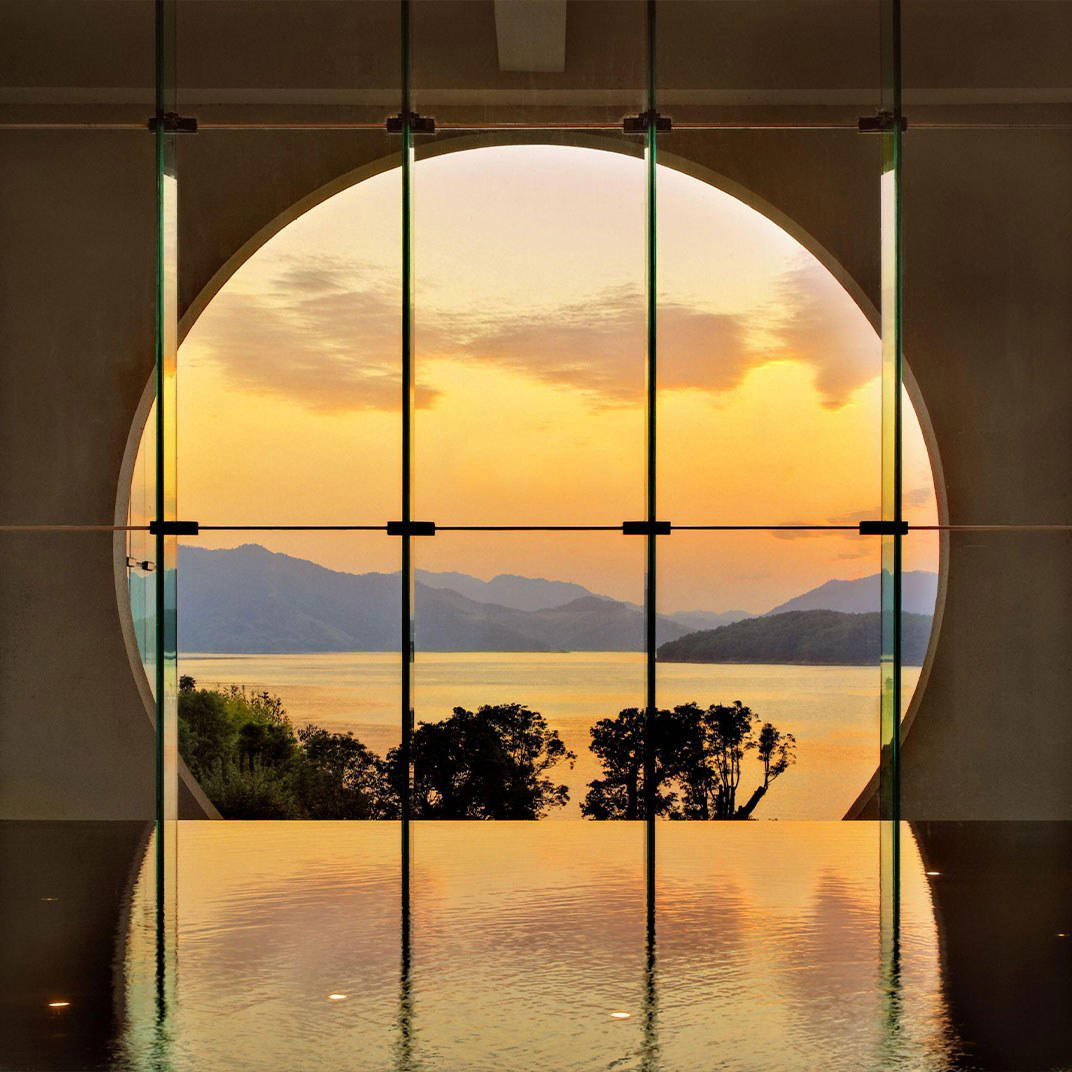
The approach to Thousand Island Lake already tells you something about the register of the stay ahead. The reservoir, formed in 1959 when the Xin'an River was dammed and roughly a thousand forested islands emerged from the rising water, has a quality of theatrical stillness that urban Hangzhou properties cannot replicate. Arriving at the Xianshan Peninsula, the transition from highway to forested shoreline takes long enough that the city genuinely recedes. The InterContinental One Thousand Island Lake Resort holds a Hangzhou address, but its operating logic belongs to a different tier of the regional hotel market: the immersive nature retreat, where the surroundings are the primary amenity and service exists to keep guests oriented within them.
Where This Property Sits in the Hangzhou Hotel Market
Hangzhou's premium hotel scene divides cleanly between two models. The first clusters around West Lake and the city's cultural infrastructure, as seen at properties like Four Seasons Hotel Hangzhou at West Lake and Amanfayun, where proximity to temples, tea gardens, and urban dining shapes the guest experience. The second model, less crowded, places the resort in a natural environment far enough from the city that it functions as a destination in itself. The InterContinental One Thousand Island Lake Resort belongs firmly to that second cohort, alongside properties like Fuchun Resort Hotel Fuyang further along the river valley. The distance from Hangzhou's city centre, roughly two to three hours depending on departure point, is not a disadvantage here, it is the product. Guests arriving at this peninsula are not using it as a base; they are arriving at the destination itself.
The property carries a 2025 MICHELIN Selected designation, which underscores its place within Hangzhou's broader recognition tier.Banyan Tree Hangzhou and the Conrad Hangzhou within the city's broader recognition tier. In global terms, the Michelin Hotels selection for China now covers a handful of destinations, and Hangzhou-area inclusions tend to reward properties where physical setting and service coherence work together rather than either factor alone.
Service Architecture in a Remote Setting
Remote resort properties carry a particular service challenge that urban hotels do not: when a guest needs something, there is no alternative around the corner. The entire service culture at properties of this type has to be anticipatory rather than reactive, because the gap between identifying a guest need and resolving it is measured differently when the nearest alternative is an hour away. This structural pressure tends to produce either frustration or unusually attentive hospitality, and properties that earn recognition in this format typically resolve it toward the latter.
At IHG's upper-tier resort properties in China, the service model generally emphasises pre-arrival profiling and in-stay responsiveness over formal ceremony. That orientation fits a lake resort context well. The activity rhythm here is different from a city stay: early mornings on the water, afternoon recovery, longer dinners. A service culture calibrated to that rhythm, rather than a standard check-in-checkout hotel pace, makes the difference between a well-managed room and a stay that feels considered. This is the operative frame for understanding what a Michelin Selected designation signals for a property in this category: it is as much an assessment of hospitality consistency as it is of physical infrastructure.
For comparison within China's broader recognition tier, properties like Mandarin Oriental Qianmen in Beijing or JW Marriott Hotel Shanghai at Tomorrow Square sit at the urban-luxury end of the same national market. The Thousand Island Lake property occupies a different axis entirely, it is competing against nature-retreat peers rather than metropolitan luxury flagships.
The Landscape as Programme
Thousand Island Lake covers approximately 580 square kilometres, making it one of the largest freshwater reservoirs in eastern China. The islands themselves vary from rocky outcroppings barely above the waterline to forested landmasses with their own internal topography. For a peninsula-based resort, the lake functions simultaneously as view, activity space, and emotional register. Morning mist over the water, boat access to the outer islands, and the quality of light that comes off a large freshwater surface in the late afternoon are conditions that cannot be replicated in a city property, regardless of budget.
This environmental specificity places the resort in a different conversation from Hangzhou's urban luxury tier. Guests choosing between this property and, say, the Four Seasons Hotel Hangzhou at Hangzhou Centre or the Hangzhou Muh Shoou Xixi Hotel are not trading equivalent experiences at different price points. They are making a fundamental choice about what they want the stay to do: connect them to urban Hangzhou's cultural depth, or withdraw them from it entirely. The InterContinental One Thousand Island Lake Resort serves the second decision.
For guests considering other remote or nature-focused properties across China, the broader regional category includes destinations like Tian Ranju Inn in Tian Tou Zhai and Hylla Vintage Hotel in Lijiang, each anchored to a specific landscape rather than an urban hotel district.
Planning Your Stay
The resort sits on the Xianshan Peninsula, Hangzhou, China. Spring (April to May) and autumn (September to October) deliver the clearest light and most comfortable lake temperatures, while summer months bring warmer water but also increased visitor density at the public areas of the reservoir. Winter stays are quieter and can offer striking low-mist mornings, though the full outdoor activity programme narrows accordingly.
Room category selection at a peninsula resort of this type typically rewards prioritising lake-facing orientation over room size. Guests comparing lake-retreat properties at a similar tier across China's eastern region may also consider The Hanyu Garden Reserve Suzhou or, for a contrasting urban context, Conrad Hangzhou Tonglu. For those extending into broader China itineraries, InterContinental Chongqing Raffles City sits within the same brand family and offers a direct urban contrast.
What It’s Closest To
Comparable venues nearby, for context on price, style, and recognition.
| Venue | Cuisine | Price | Awards | Notes |
|---|---|---|---|---|
| InterContinental One Thousand Island Lake ResortThis venue — the venue you are viewing | Nature-inspired luxury resort | $$$$ | 5-Star | Not listed |
| Conrad Hangzhou | Contemporary luxury tower with riverfront positioning | $$$$ | 5-Star | Jianggan |
| Conrad Hangzhou Tonglu | Contemporary luxury resort inspired by natural Tonglu landscape with modern amenities and traditional regional design elements. | $$$$ | 5-Star | Tongluxian |
| Hangzhou Muh Shoou Xixi Hotel | Boutique luxury seamlessly integrated with surrounding wetlands. | $$$$ | 5-Star | Yuhangxian |
| Banyan Tree Hangzhou | Seasonally-themed luxury suites and villas blending traditional Jiangnan style with modern comforts in a wetland paradise. | $$$$ | 5-Star | Yuhangxian |
| DC Hotel Hangzhou CBD | Modern business-lifestyle hotel with serviced-residence features. | $$$ | 4-Star | Qianjiang New Town / Qianjiang CBD |
Recognition history
Dated appearances from independent guides and award organizations, with the underlying list record or original source where available.
Michelin Selected
Michelin
Continue exploring
More in Hangzhou
Hotels in Hangzhou
Browse all →
Bars in Hangzhou
Browse all →
Restaurants in Hangzhou
Browse all →
At a Glance
- Scenic
- Elegant
- Sophisticated
- Romantic Getaway
- Family Vacation
- Weekend Escape
- Panoramic View
- Infinity Pool
- Pool
- Spa
- Fitness Center
- Room Service
- Concierge
- Kids Club
- Wi Fi
- Waterfront
- Mountain
- Pool
- Spa
- Fitness Center
- Room Service
- Concierge
- Kids Club
- Wi Fi
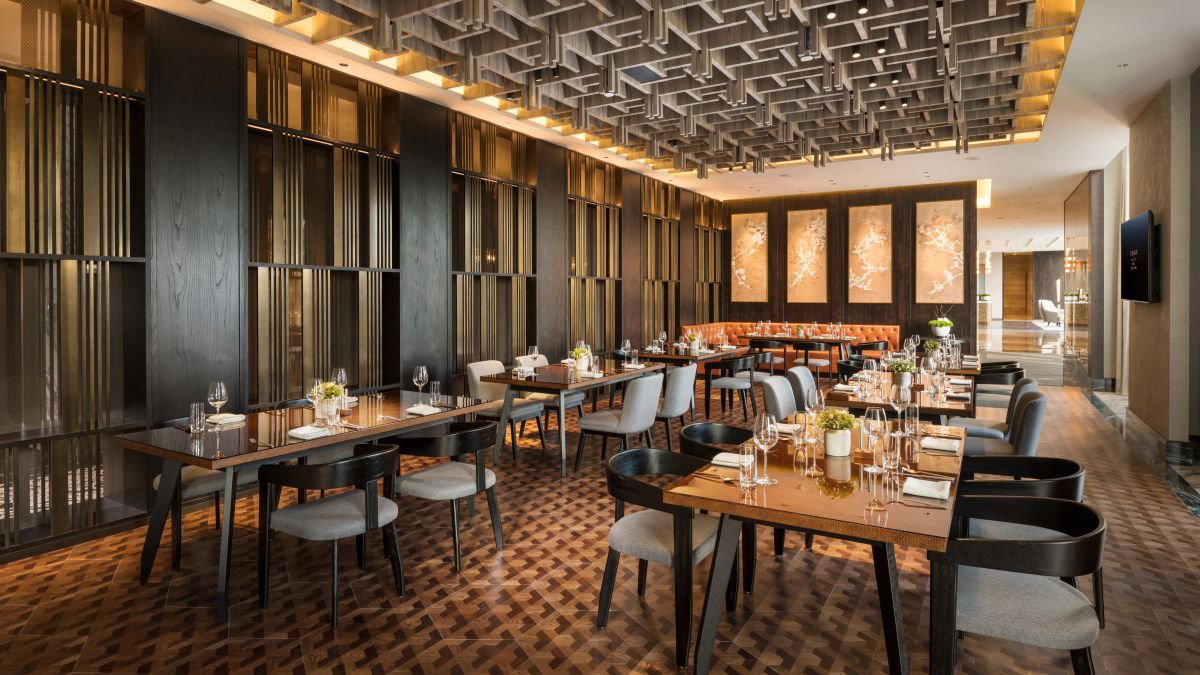
Tranquil natural surroundings with modern-traditional room styling emphasizing large windows for lake and forest views, spa-like bathrooms, and a serene lakeside setting.