
1 Michelin Key
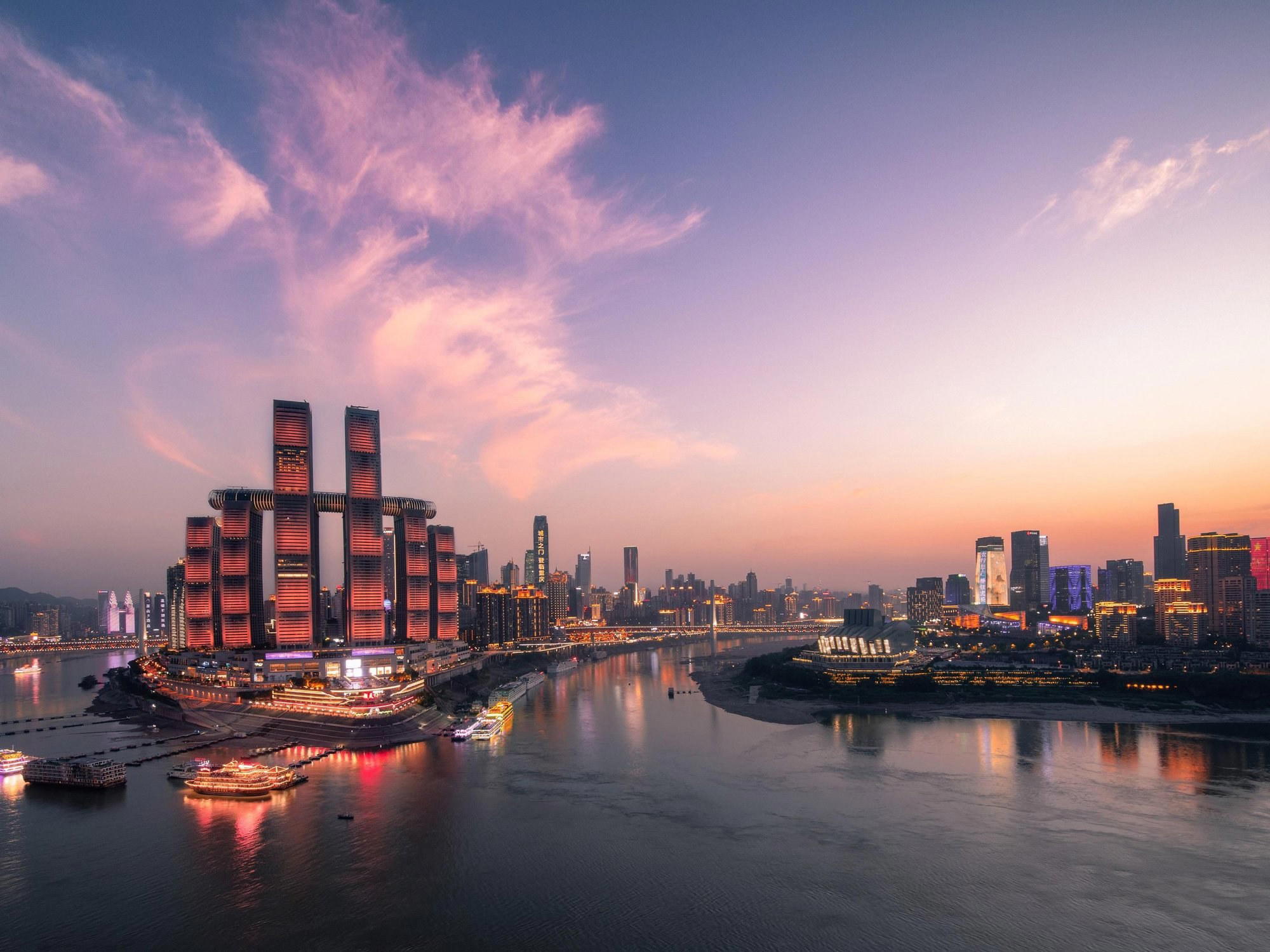
InterContinental Chongqing Raffles City occupies the Crystal, a horizontal skyscraper suspended 75 stories above Yuzhong district at the confluence of the Yangtze and Jialing rivers. Its 380 rooms and suites combine marble bathrooms, Tivoli sound systems, and floor-to-ceiling city views with a dining and bar programme spread across the dramatically curved glass structure. Rates from $195 per night.

Pearl is the En Primeur Club membership app, where members save venues, book tables and use the concierge.
A Hotel Designed Around the View, and the Meal
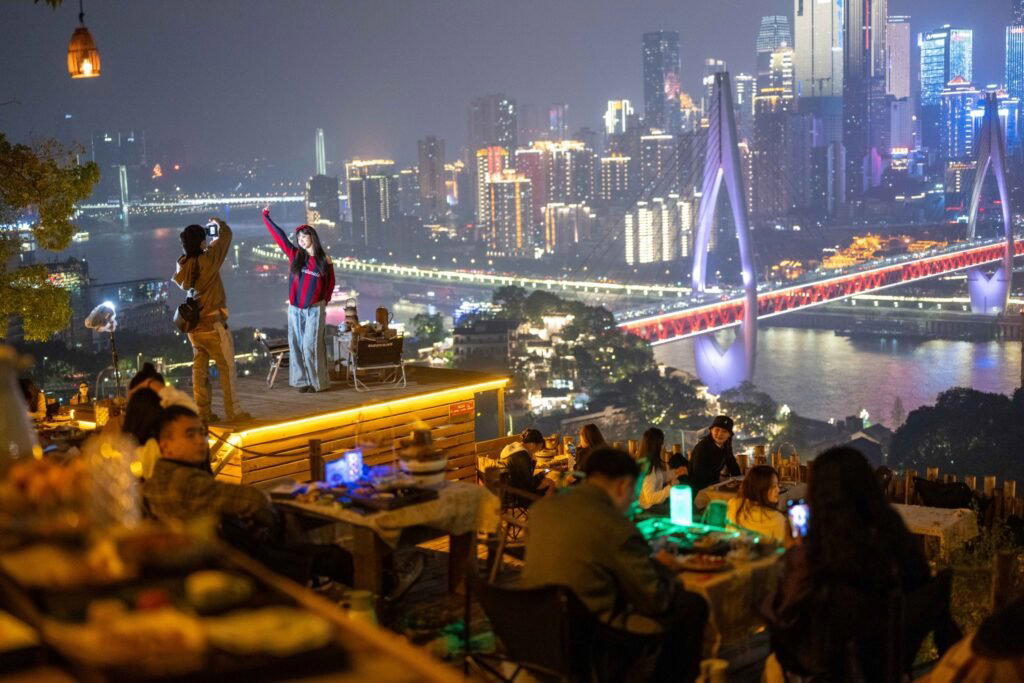
Chongqing has always been a city that defies easy categorisation. Built across steep hills at the meeting of the Yangtze and Jialing rivers, it operates on a vertical axis that most Chinese metropolises don't, where street level and sky level can be separated by dozens of floors, and where the city's famous fog sits in valleys while towers breach the cloud line. The Raffles City complex in Yuzhong district pushes that verticality to an architectural conclusion: a cluster of supertall towers connected by the Crystal, a curved glass bridge suspended at the 250-metre mark. Our full Chongqing restaurants guide covers the broader dining scene, but for visitors staying within this complex, the hotel itself functions as a self-contained programme.
InterContinental Chongqing Raffles City occupies a specific position within the complex: guest rooms and suites are distributed across one of the vertical towers, while the hotel's lobby and its full suite of restaurants and bars unfold inside the Crystal itself. Checking in means ascending to a reception set on what the building claims as the world's highest sky bridge, a logistical fact that also sets the register for everything that follows. The views from that elevation, looking out over the Yuzhong peninsula and the confluence of the two rivers below, situate the hotel in a broader story about Chongqing's geography: this was historically the site of the city's old imperial gate, a threshold position that the architecture now translates into glass and steel.
The Dining Programme as Architectural Spectacle
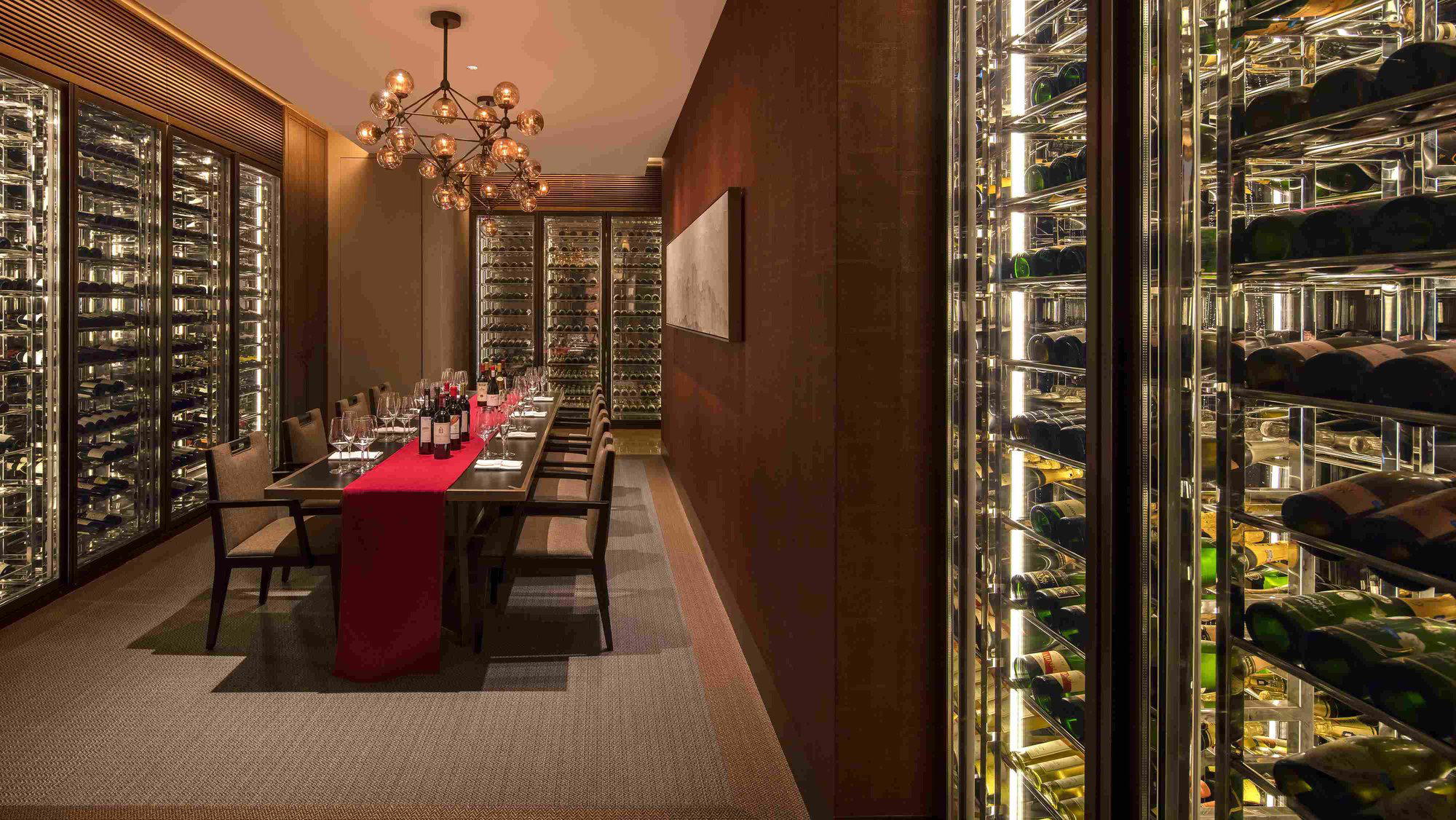
In Chinese luxury hotels that anchor large mixed-use developments, the food and beverage offer often reads as an afterthought, a sequence of hotel-standard outlets filling space between the lobby and the tower lifts. Raffles City Chongqing inverts that formula. Here, the Crystal's dramatically curved and glass-walled corridor becomes the connective tissue for a series of restaurants and bars that are the property's primary draw, as much as the rooms themselves. At 75 stories of elevation, every table in the Crystal comes with a view over the megacity below that operates on a different scale from street-level dining in Chongqing.
This positions the property in a tier of Chinese urban hotels where the F&B programme is designed to generate its own traffic, drawing both hotel guests and Chongqing residents. Properties like the JW Marriott Hotel Shanghai at Tomorrow Square and the Mandarin Oriental Qianmen in Beijing operate on similar logic: the address and the altitude matter as much as the menu, and the dining rooms are destination spaces in their own right. At Raffles City Chongqing, the Crystal's geometry, its curve, its glass walls, its position spanning between towers, means the architecture is always present in the room, framing the meal against a panorama that changes as light shifts from afternoon into evening.
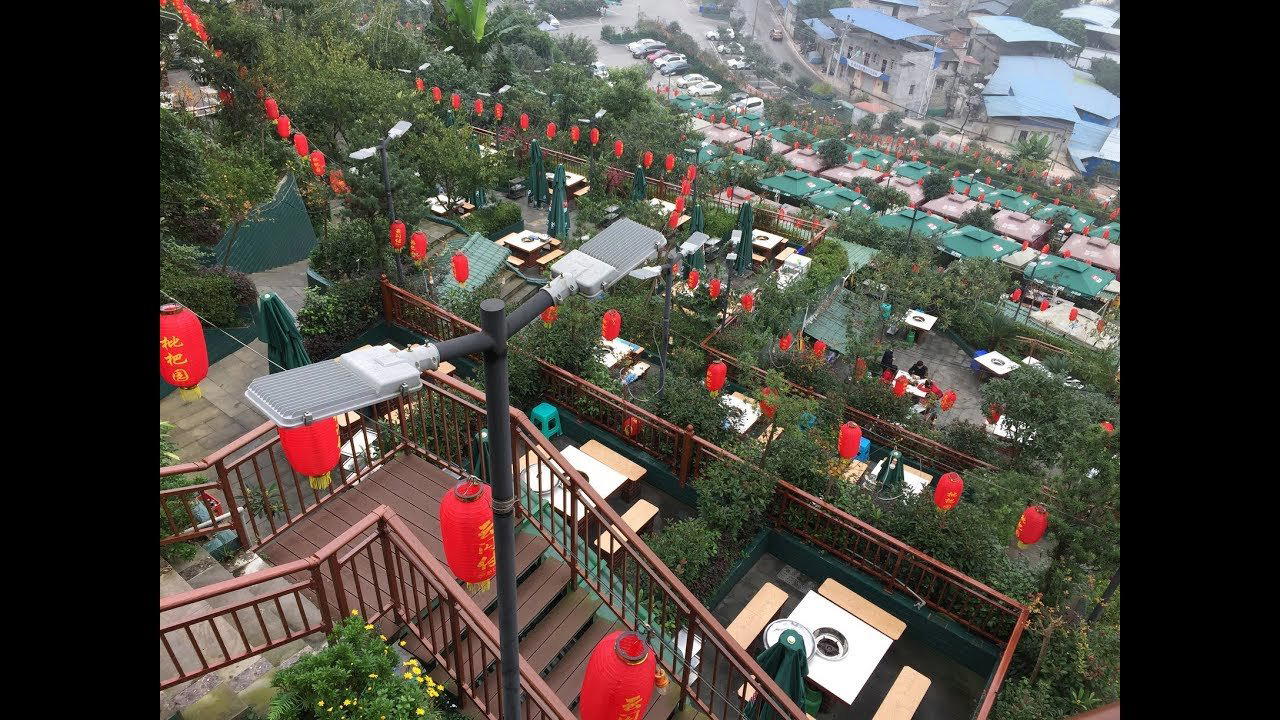
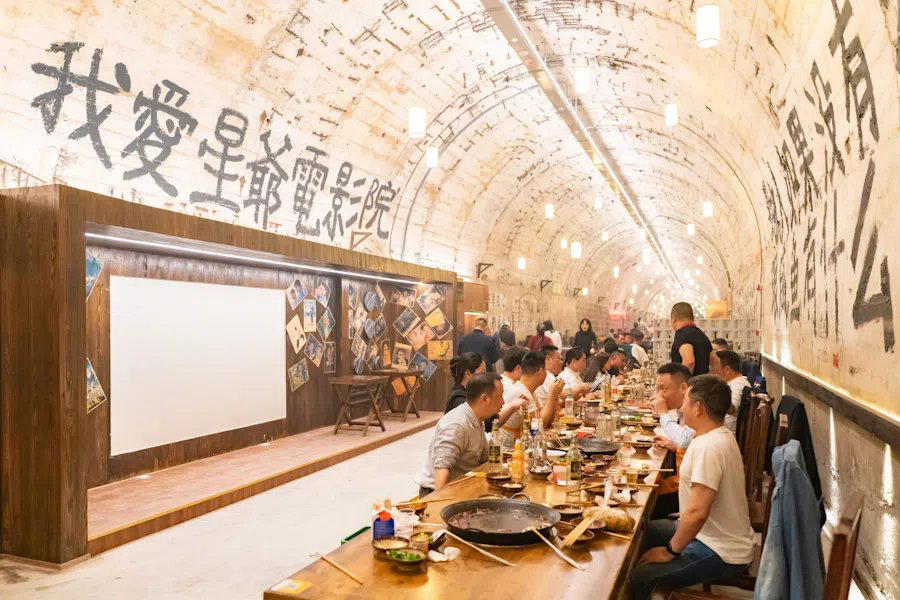
Chongqing's own culinary identity is worth placing on record here. The city is the source of Chongqing-style hotpot, a considerably spicier and more aggressively seasoned variant than Sichuan hotpot from Chengdu, built on a base of butter and dried chilies and served at tables that fill with smoke and heat. That tradition belongs to the street level of Yuzhong and Jiangbei districts, not to the tower dining rooms above. A hotel of this register tends to offer international and refined Chinese formats rather than the vernacular hotpot experience, and Chongqing's ground-level food culture remains accessible without requiring a hotel stay to reach it.
Rooms and Infrastructure
The 380 rooms and suites follow a contemporary palette of white, ivory, and beige, with floor-to-ceiling windows that make the city and river views a structural feature of the room design rather than an incidental bonus. Bathrooms carry marble fixtures, recessed lighting, walk-in showers, and freestanding soaking tubs, a specification level that holds up against comparable tower properties in Chinese tier-one cities. Standard rooms are equipped with Tivoli sound systems and Dyson hairdryers; suites extend to modular living areas, walk-in closets, and direct Yangtze-facing outlooks.
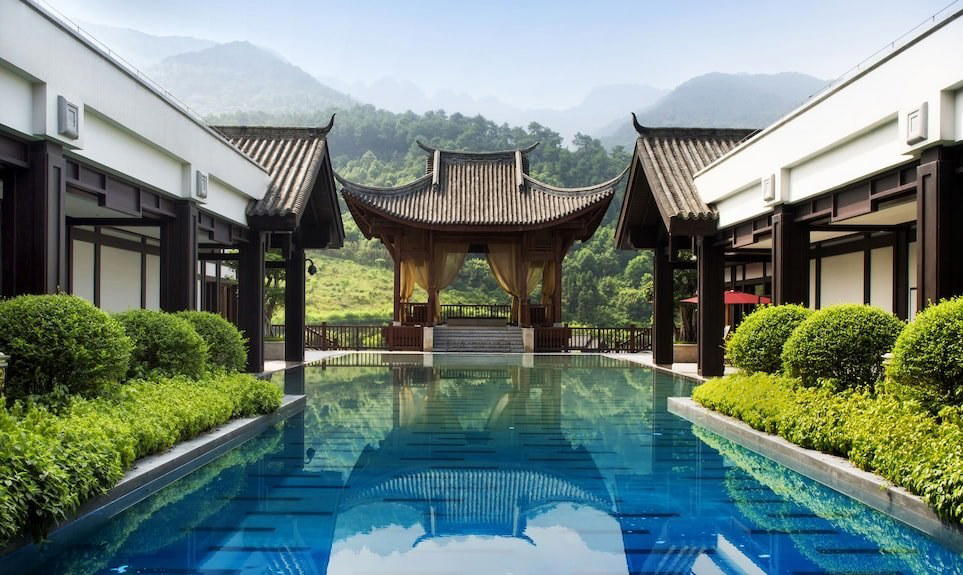
For comparison within Chongqing's upper accommodation tier, Banyan Tree Chongqing Beibei takes a different approach, positioned in the Beibei district with a resort sensibility rather than an urban tower format. The Raffles City property is emphatically a city hotel, its selling proposition is proximity to Yuzhong's commercial core and the visual drama of its position above the river confluence. Pushine Jinfoshan Resort sits further out again, offering a nature-oriented alternative for visitors with more than a single Chongqing base in mind.
Fitness facilities sit on the 43rd floor, including a mosaic-tiled indoor pool, a lower elevation than the Crystal, but still well above city-street level. Rates begin at $195 per night, which is a reasonable entry point for what the hotel delivers in terms of position, infrastructure, and the Crystal's dining and bar access.
How to Approach the Stay
The Raffles City complex draws heavily from domestic Chinese business and leisure travellers, alongside international visitors making Chongqing a primary destination rather than a transit point. Given the property's integration into a major mixed-use development in the heart of Yuzhong, room availability can tighten around Chinese national holidays and during Chongqing's conference and trade calendar. Booking ahead of peak domestic travel windows, particularly Golden Week in October and the Spring Festival period, is advisable at this price tier.
Yuzhong's transport infrastructure is well-developed, with metro lines connecting the district to Chongqing's two main rail stations and to the newer districts across the Jialing. The hotel's address on Changjiang Binjiang Road places it along the Yangtze waterfront, accessible from Linjiangmen metro station. For visitors arriving by high-speed rail from Chengdu or other Sichuan cities, the journey from Chongqing North or Shapingba stations is manageable by metro without requiring a taxi through the city's notoriously steep and congested surface streets.
Hotels in the same international-brand orbit across China offer useful comparative context for calibrating expectations: Andaz Shenzhen Bay and Conrad Guangzhou represent the southern China luxury tier, while Amanfayun in Hangzhou, Amandayan in Lijiang, and Banyan Tree Ringha anchor the heritage and nature-oriented end of the Chinese luxury market. Raffles City Chongqing sits closer to the urban spectacle category, a property where the built environment and the altitude are the primary experience, and where the dining programme delivers on that promise in a way that the rooms, well-appointed as they are, don't quite match on their own.
Booking and Cost Snapshot
Comparable venues nearby, for context on price, style, and recognition.
| Venue | Price | Awards | Notes |
|---|---|---|---|
| InterContinental Chongqing Raffles CityThis venue (the venue you are viewing) | Not listed | 1 Michelin Key | Not listed |
| Banyan Tree Chongqing Beibei | Not listed | 1 Michelin Key | Beibei District, Eco-luxury contemporary resort set in nature with emphasis on wellness and cultural immersion |
| Regent Chongqing | Not listed | 1 Michelin Key | Jiangbeizui, Blends modern elegance with traditional Chinese elements inspired by courtyards and cultural heritage. |
| Pushine Jinfoshan Resort | Not listed | Leading Hotels of World Member | Nanchuan District, Small-scale mountain retreat emphasizing privacy and nature integration |
| Banyan Tree Ringha | $200–300 | 1 Michelin Key | Ringha Valley, Traditional Tibetan farmhouse resort blending rustic authenticity with luxury comforts |
| DongFengYun Hotel Mi’Le - MGallery | $100–200 | Michelin Selected | Dongfengyun Art Town, Artistic luxury boutique in vineyard setting with post-modern red brick architecture |
Recognition history
Dated appearances from independent guides and award organizations, with the underlying list record or original source where available.
Michelin 1 Key
Michelin
Full recognition history (2 entries)
Michelin 1 Key
Michelin
Continue exploring
More in Chongqing
Hotels in Chongqing
All hotels in Chongqing →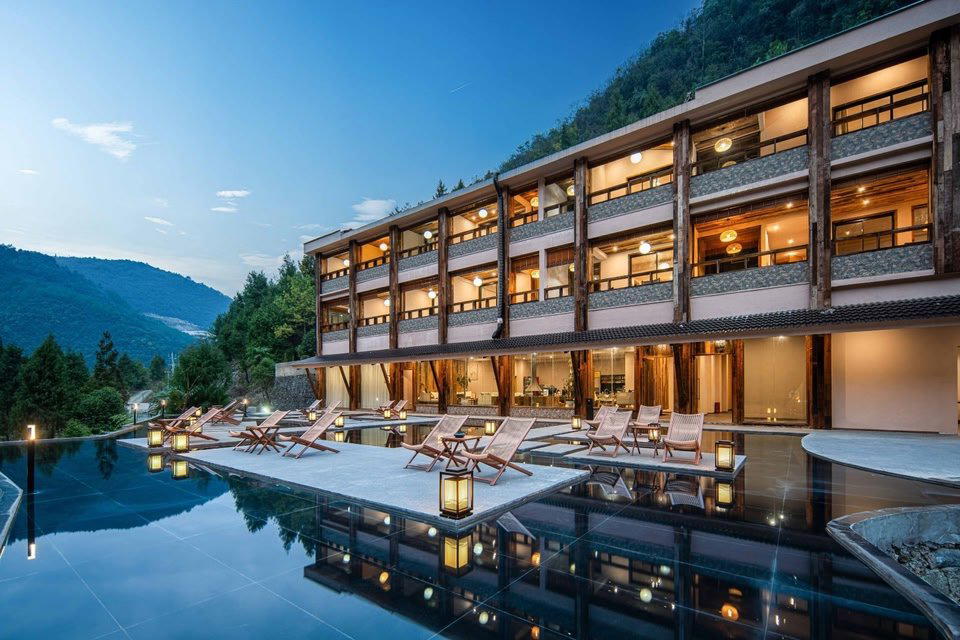
Bars in Chongqing
All bars in Chongqing →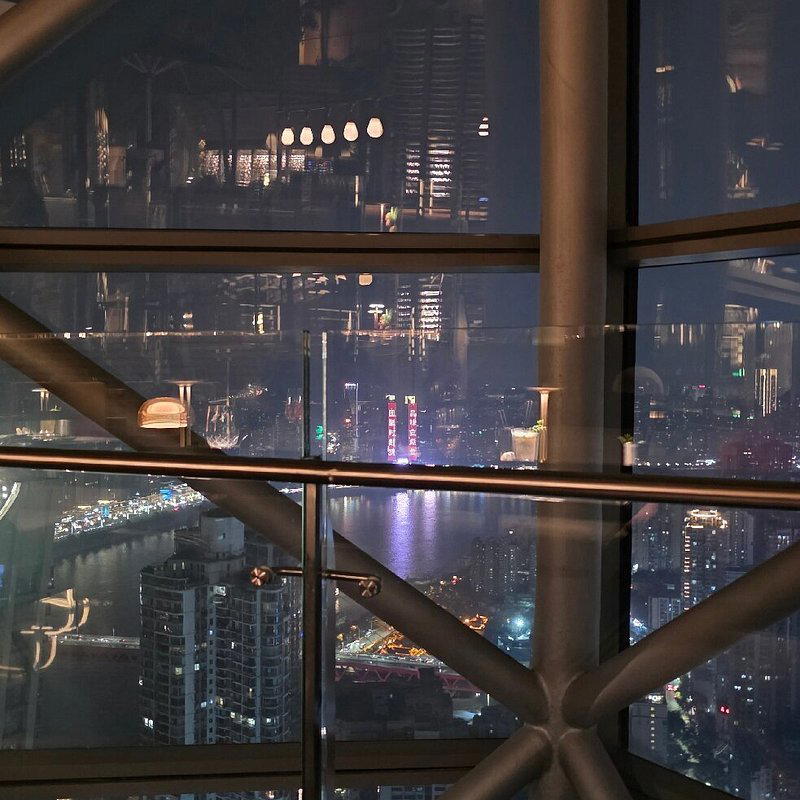
Details
- Modern
- Elegant
- Sophisticated
- Scenic
- Business Trip
- Romantic Getaway
- Weekend Escape
- Panoramic View
- Rooftop Pool
- Pool
- Indoor Pool
- Fitness Center
- Spa
- Room Service
- Concierge
- Business Center
- Wi Fi
- Restaurant
- Skyline
- Wheelchair Accessible
- Elevator
Bright and modern subtropical forest-inspired lobby with fresh flowers, elegant nautical aesthetics blending streamline features and Chinese motifs, offering dramatic city and river vistas.