




Michelin Selected · Mr & Mrs Smith Seal of Approval · Conde Nast Gold List
A restored 15th-century aristocratic villa on the Fiesole hillside above Florence, Il Salviatino positions itself in the smaller, design-led tier of Florentine luxury accommodation, where the property's physical history — hidden frescoes, buried garden pathways, and a repurposed Roman sarcophagus — does the work that brand identity does elsewhere. Thirty-nine rooms and suites, each individually decorated, with direct views across the city's roofline to the Duomo.

Pearl is the En Primeur Club membership app — saves, bookings, and concierge access live there. Same editors, same standards.
- Address
- Via del Salviatino, 21, 50137 Firenze FI
- Phone
- +39 055 904 1111
- Website
- salviatino.com
- Directions
- Get directions
On the Hill Above the City
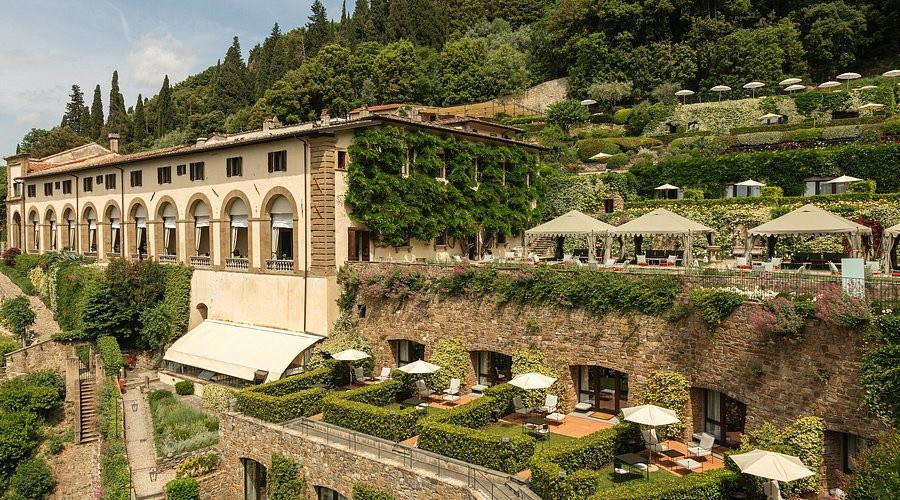
Florence's premium hotel market divides into two fairly distinct camps: properties at the city's historic core, where the Arno, the Ponte Vecchio, and the density of the centro storico provide the drama, and hillside villas above Fiesole, where the drama is the view back down over all of it. Il Salviatino sits firmly in the second camp. The approach along Via del Salviatino already signals a departure from the urban hotels below: the road narrows, the city noise recedes, and the gates open onto private gardens that read less like hotel grounds and more like the working estate they once were. The 15th-century villa itself was an aristocratic residence long before anyone thought to convert it, and that sequence matters for understanding what it is now.
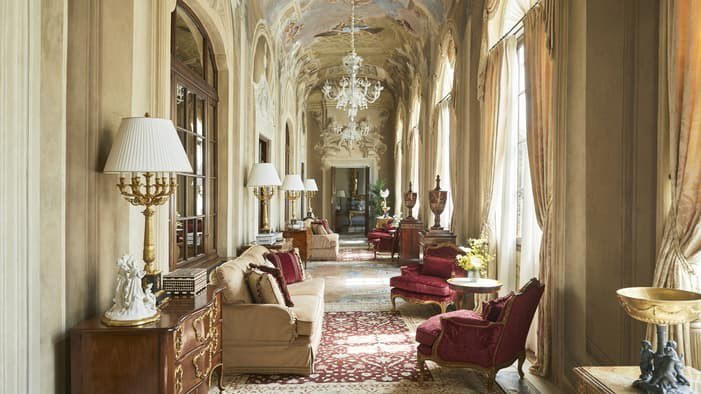
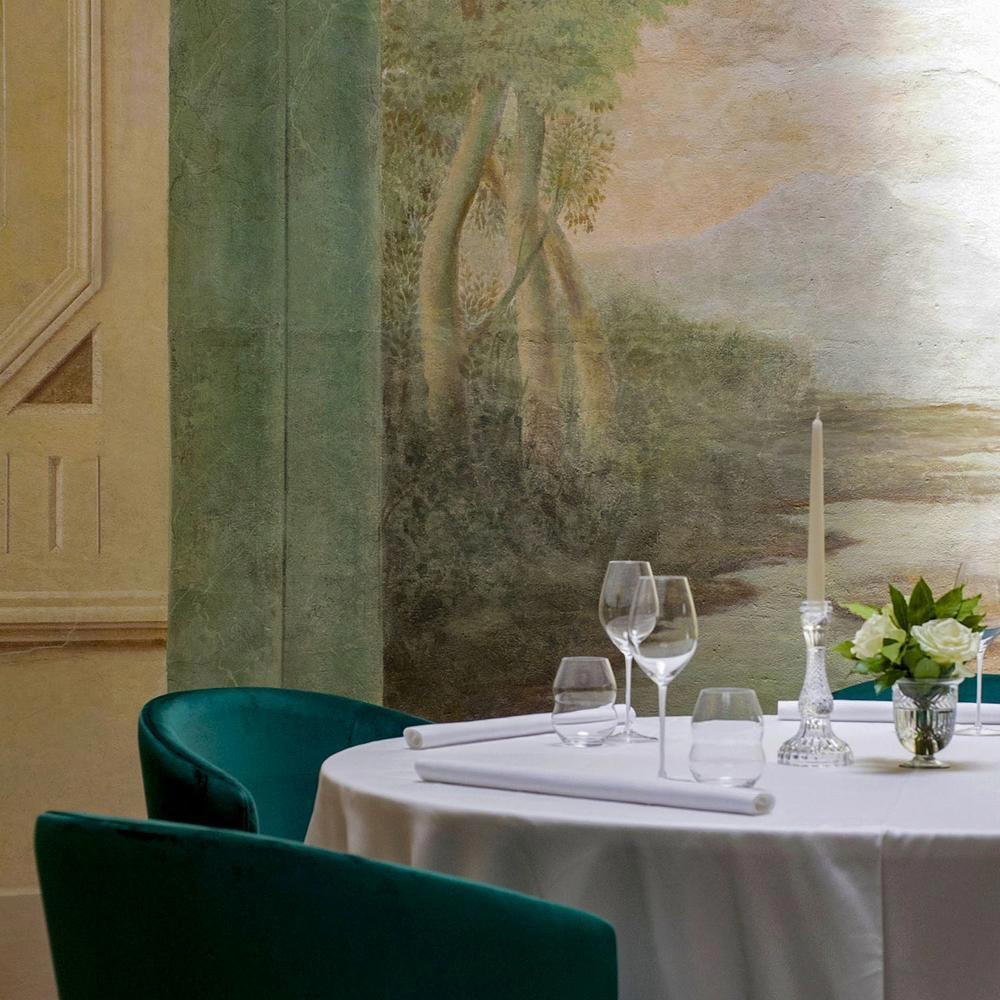
Properties in this category — historic villas repositioned as luxury accommodation — tend to succeed or fail on the credibility of the restoration. At Il Salviatino, the restoration process was its own form of due diligence. Hidden frescoes emerged from beneath a false ceiling. An old network of pathways through the estate, buried under years of undergrowth, was uncovered and reinstated. A sarcophagus belonging to a previous owner was repurposed as a bath in one of the guest suites. These are not decorative choices. They are the sediment of a building that has been lived in continuously across centuries, and the restoration chose to surface that history rather than smooth it over. This is what separates the villa hotel category from a branded property with period aesthetics applied at the fit-out stage, and it is the standard against which Il Salviatino should be read. Comparable Italian villa conversions include Castello di Reschio in Lisciano Niccone and Rosewood Castiglion Del Bosco in Montalcino, both of which operate in the same niche of historically grounded Tuscan luxury with limited keys and a design approach anchored in the existing structure rather than imposed upon it.
The Rooms and What Distinguishes Them
Thirty-nine rooms and suites make Il Salviatino a mid-scale property by volume, but the internal distribution leans toward the suite end of the range: half of the accommodation is classified as suites, which is a higher proportion than most comparable Florentine hotels. Each room is decorated individually, working with the villa's existing architectural particulars rather than against them. Handmade Tuscan linen and selected artwork appear throughout, sourced to reinforce local material identity rather than achieve a generic luxury finish. Many rooms carry direct views across Florence's roofscape to the Duomo, a line of sight that properties within the city center are structurally unable to offer, because you have to be outside and above the city to have it. For an alternative within the city that trades the view for immediate proximity to the monuments, Four Seasons Hotel Firenze and Hotel Lungarno occupy that different but equally considered position in Florence's premium tier.
Table, Cellar, and the Tuscan Provenance Question
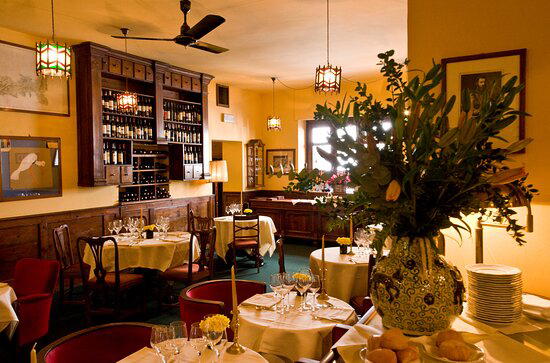
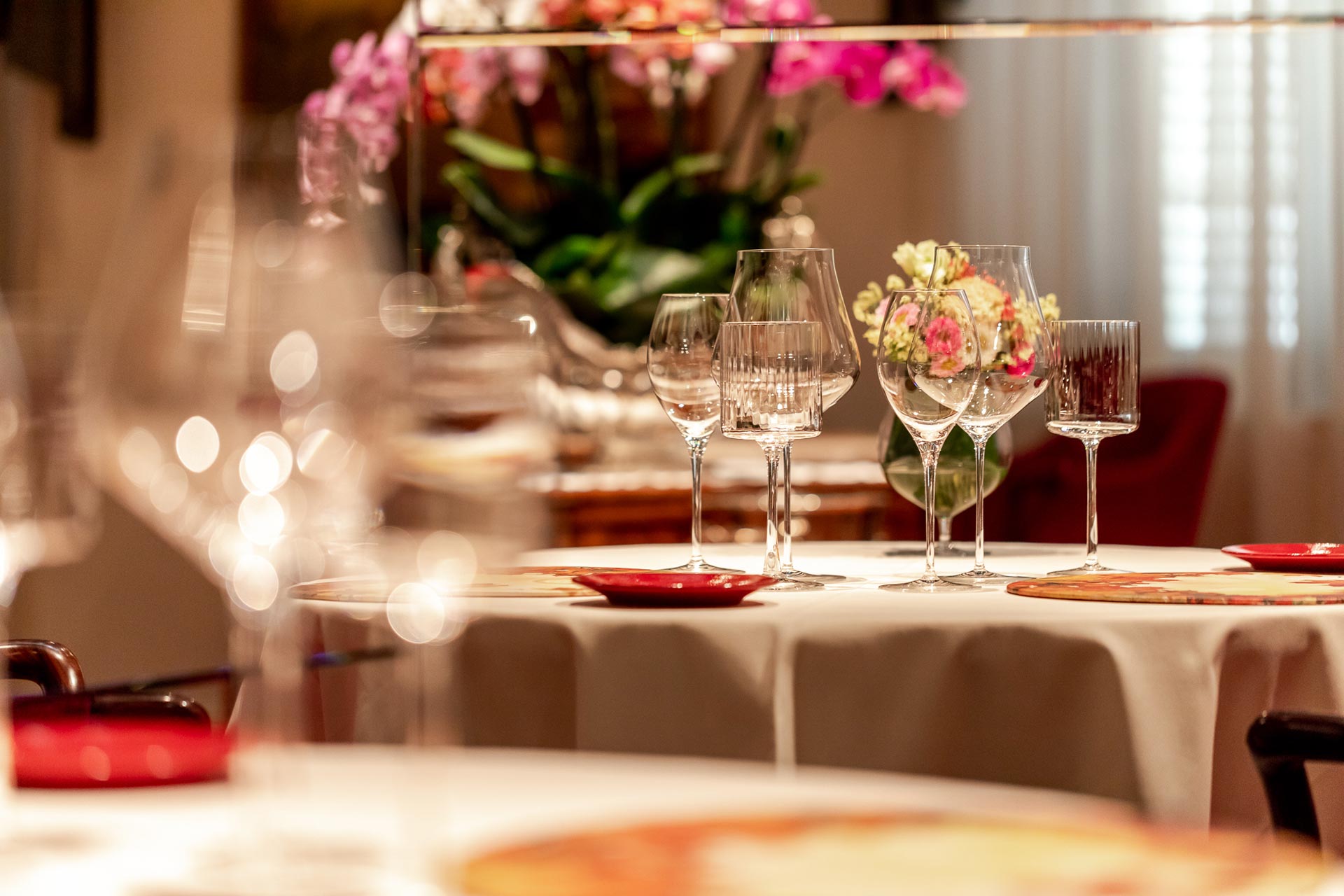
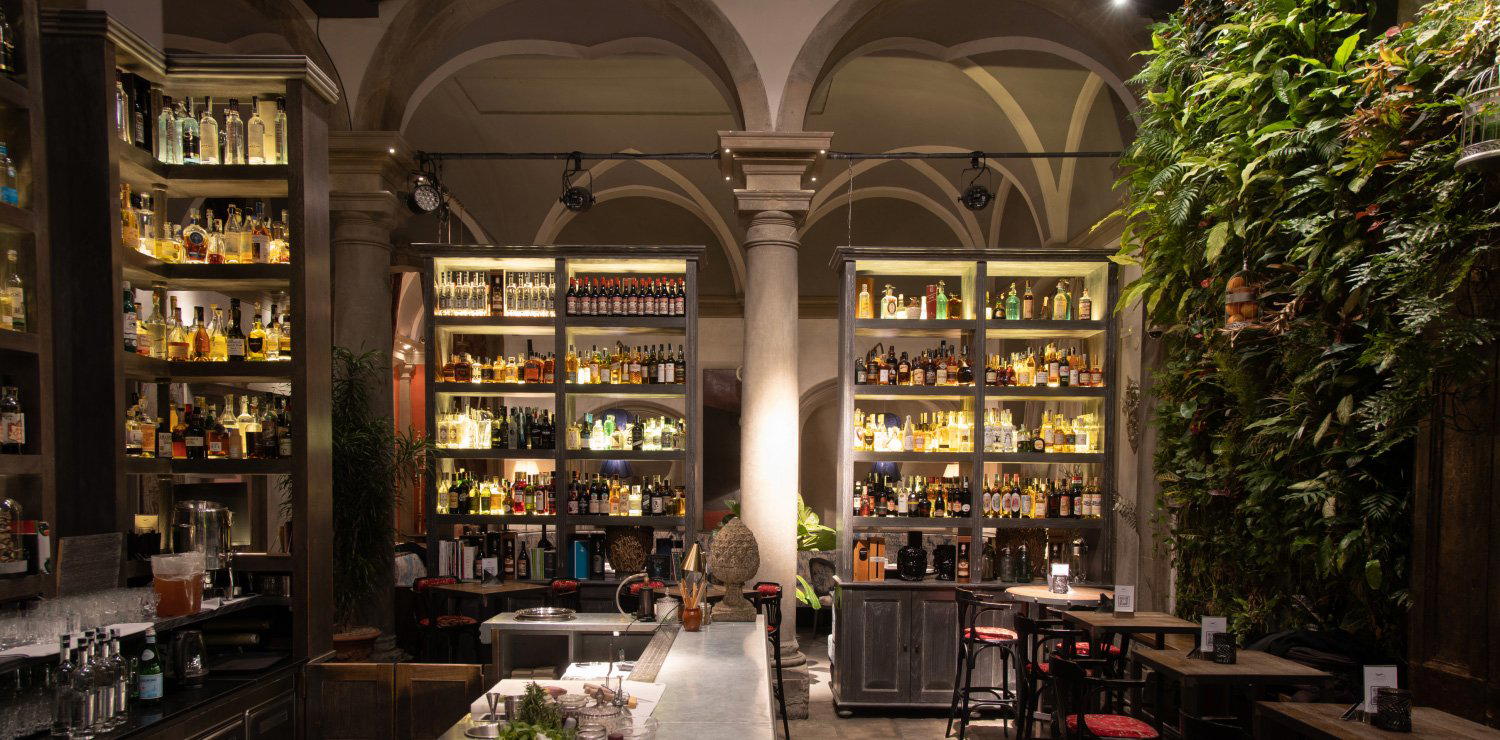
Tuscany has a particular relationship with provenance-led hospitality. The region's food and wine identity is built on the idea that ingredients carry geographical meaning, and that a Chianti served within sight of the vines that produced it is a different experience from the same bottle in a city restaurant. Il Salviatino's food and beverage approach operates within this tradition: the restaurant concept is structured around authentic Florentine gastronomy served across multiple locations within the hotel and grounds, with the emphasis on the roots of Tuscan cuisine and the traceable origin of local ingredients. Multiple service locations across a historic estate is a format that suits the villa's physical spread, guests eat on terraces, in garden settings, and in interior rooms that each carry a different register of the property's character.
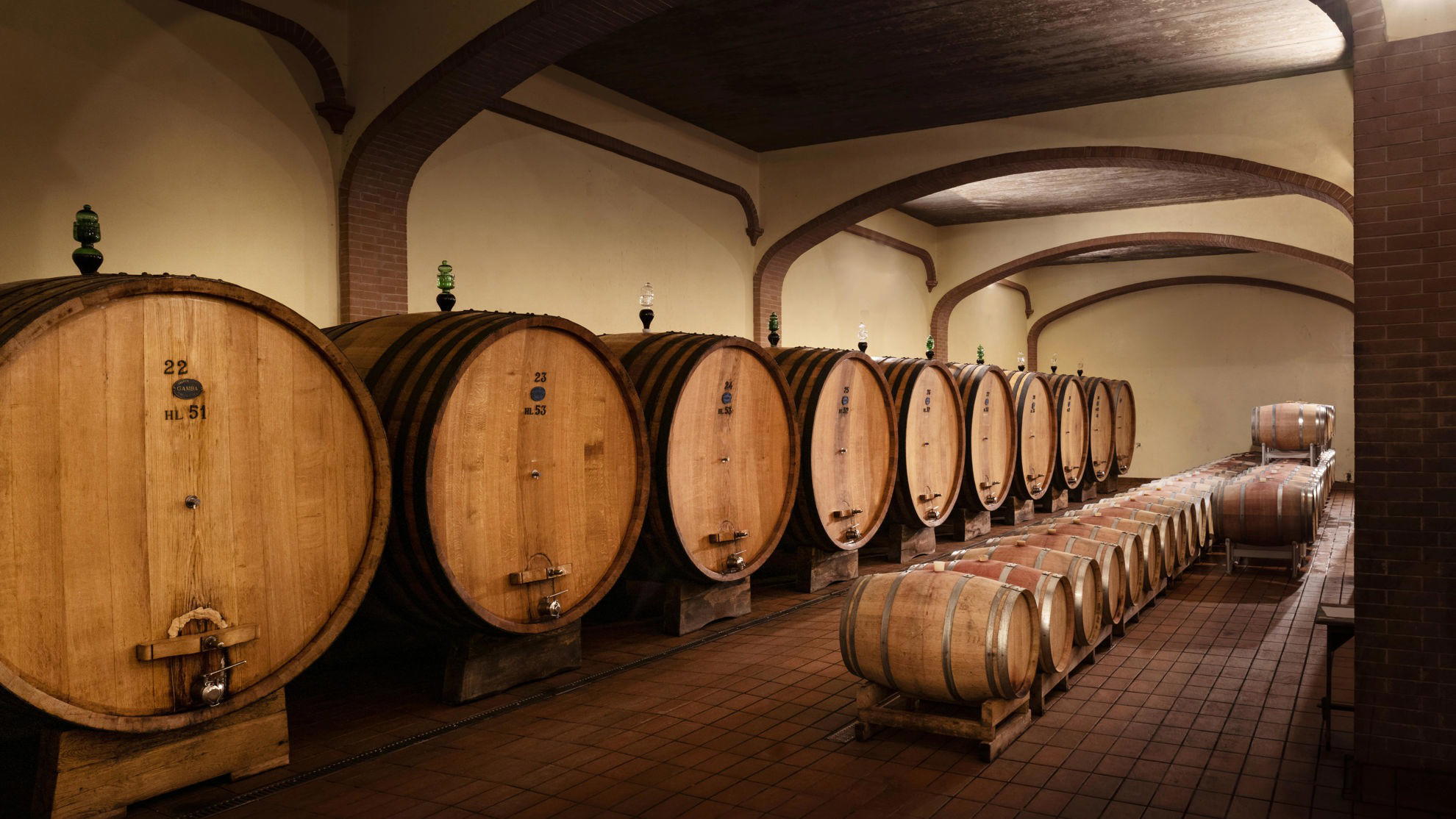
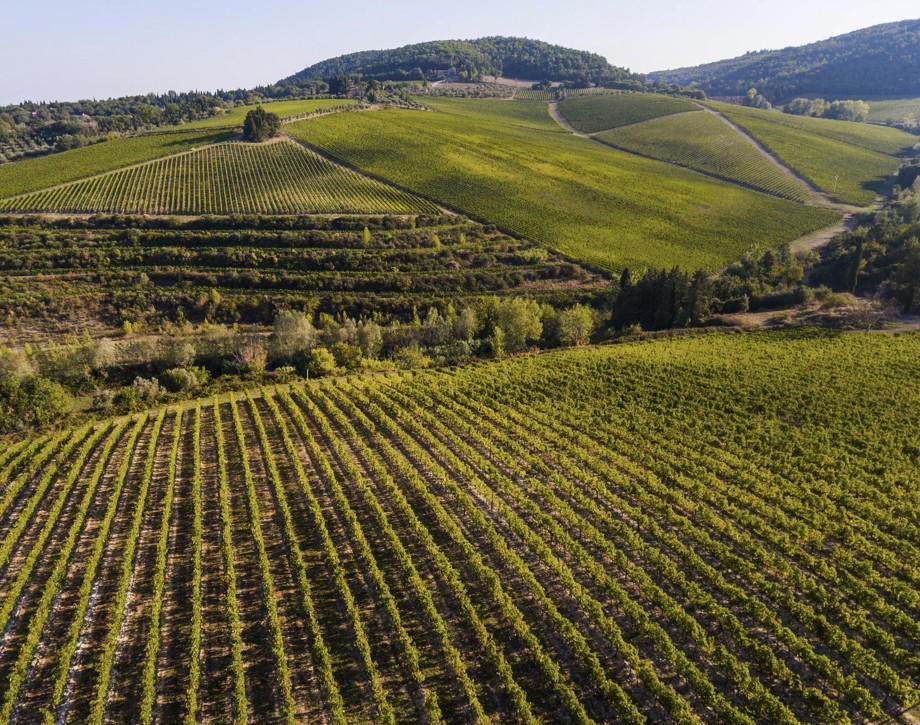
The wine context matters here. Tuscany's wine geography places Il Salviatino within reach of some of Italy's most consequential cellars. Chianti Classico producers in the Greve and Panzano corridors are accessible within an hour. The Montalcino zone, home to Brunello, sits roughly 90 minutes south. A property of this type, with this orientation toward local provenance, has the structural argument for a cellar that draws on the surrounding region's depth, Super Tuscans from the Bolgheri coast, single-vineyard Sangiovese from the Chianti hills, Vernaccia di San Gimignano for aperitivo hours. Whether the actual cellar curation reaches that level of regional specificity is something to verify directly with the property, but the framework that justifies such an approach is built into the location and the stated philosophy. For wine-anchored Tuscan escapes with similar geographical positioning, Rosewood Castiglion Del Bosco sits directly within the Brunello di Montalcino DOCG and operates its own estate production, which places it in a different category of wine integration than any city-adjacent property can achieve.
The Spa, Pool, and the Logic of the Fiesole Position
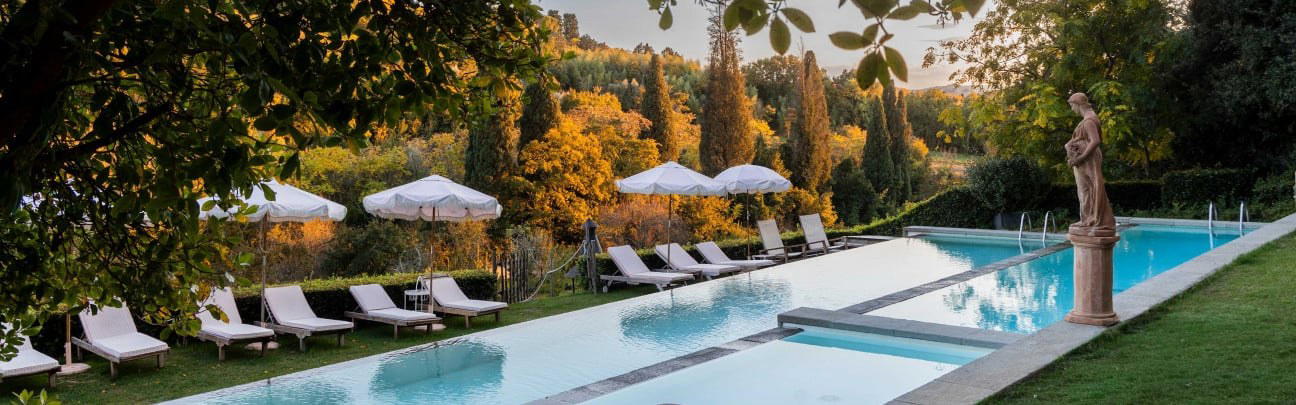
The outdoor heated swimming pool and spa occupy the hillside gardens adjacent to the villa. The pool's position, refined above the city with views across the rolling terrain, is the most direct argument for choosing a Fiesole hillside property over a centro storico hotel in warmer months. Urban Florence in summer runs warm and dense; the hillside at this altitude catches a different air quality and provides a working psychological separation from the city, even though the Duomo is visible from the garden. The spa runs four treatment rooms, each with its own steam shower, with a therapist program focused on aromatic relaxation and anti-aging treatments. This is a reasonable but not extensive spa offering for a property of this positioning, comparable in scope to what Villa Cora and Villa La Massa provide in the same Florentine villa category.
Getting There and Getting Around
Property sits on Via del Salviatino, 21, in the Fiesole hills above the city's northeastern edge. Santa Maria Novella train station is approximately 15 minutes by car, which makes rail arrivals from Rome or Milan direct. Florence's Amerigo Vespucci Airport is around 9 miles out, translating to roughly 30 minutes in normal traffic. Pisa's Galileo Galilei Airport, the larger hub with more international routes, is approximately 69 miles away and around an hour and twenty minutes by car. The city center with the Duomo, the Uffizi, and the Oltrarno neighborhood is 15 minutes by car, which positions Il Salviatino as genuinely accessible rather than a countryside retreat that requires real commitment to reach urban Florence. That said, guests without a car or a willingness to use taxis will find the hillside location more constraining than properties like Brunelleschi Hotel or Hotel Calimala, which sit within walking distance of the major monuments.
For Italian properties that offer a similar balance of historical depth, limited scale, and landscape remove, the comparison set extends beyond Florence: Aman Venice occupies a comparable niche in Venice, Borgo Santandrea on the Amalfi Coast, and Il San Pietro di Positano in Positano each represent the same instinct toward historically or geographically grounded small-scale luxury. See our full Florence guide for how Il Salviatino fits into the wider accommodation picture across the city's different neighborhoods and price tiers.
Planning Your Stay
Il Salviatino's 39-room scale means availability tightens during peak Florentine travel periods, particularly spring (April to June) and early autumn (September to October), when the combination of mild temperatures and cultural programming draws the heaviest visitor concentration. The hillside garden and pool make summer a credible choice here in a way it rarely is for city-center hotels in Florence, where the heat and tourist volume are less manageable. Booking directly through the property is the standard approach for a villa of this type, and arriving with specific room preferences is worth communicating in advance given the individually decorated nature of each space. Also worth noting for broader Italian planning: Palazzo Portinari Salviati offers a different register of historic Florentine accommodation within the city walls, while Ad Astra represents Florence's newer design-led boutique tier for comparison. If the Tuscany region is the wider frame for your trip, Il Pellicano in Porto Ercole and Casa Maria Luigia in Modena extend the same instinct toward character-led Italian hospitality into different regional contexts.
Compact Comparison
Comparable venues nearby, for context on price, style, and recognition.
| Venue | Price | Awards | Notes |
|---|---|---|---|
| Il SalviatinoThis venue — the venue you are viewing | Not listed | Michelin Selected · Mr & Mrs Smith Seal of Approval | Not listed |
| Portrait Firenze, Lungarno Collection | $750–1,000 | Michelin Selected · La Liste Top Hotels | Santo Spirito, All-suite luxury residence with personalized lifestyle service |
| NH Collection Firenze Porta Rossa | $200–300 | Michelin Selected | Duomo, Historic 13th-century tower transformed into a 5-star luxury hotel blending Renaissance architecture with modern comforts. |
| The Excelsior, a Luxury Collection Hotel, Florence | $300–500 | Michelin Selected · Virtuoso Luxury Hotel Partner | San Frediano, Historic Florentine palazzo reimagined as a contemporary luxury retreat, blending Renaissance architectural heritage with modern sophistication and refined Italian design. |
| Dimora Ghirlandaio | $500–750 | Michelin Selected · Virtuoso Luxury Hotel Partner | Galluzzo, Historic Tuscan estate with authentic Florentine charm |
| Relais Santa Croce | $500–750 | Star Wine List · Forbes Recommended | San Niccolo, Aristocratic Renaissance palazzo converted to luxury boutique hotel maintaining the atmosphere of a noble Florentine residence. |
Recognition history
Dated appearances from independent guides and award organizations, with the underlying list record or original source where available.
Michelin Selected
Michelin
Conde Nast Gold List
Conde Nast
Mr & Mrs Smith Seal of Approval
Mr & Mrs Smith
Virtuoso Luxury Hotel Partner
Virtuoso
Preferred Hotels Member
Preferred Hotels
Continue exploring
More in Florence
Hotels in Florence
Browse all →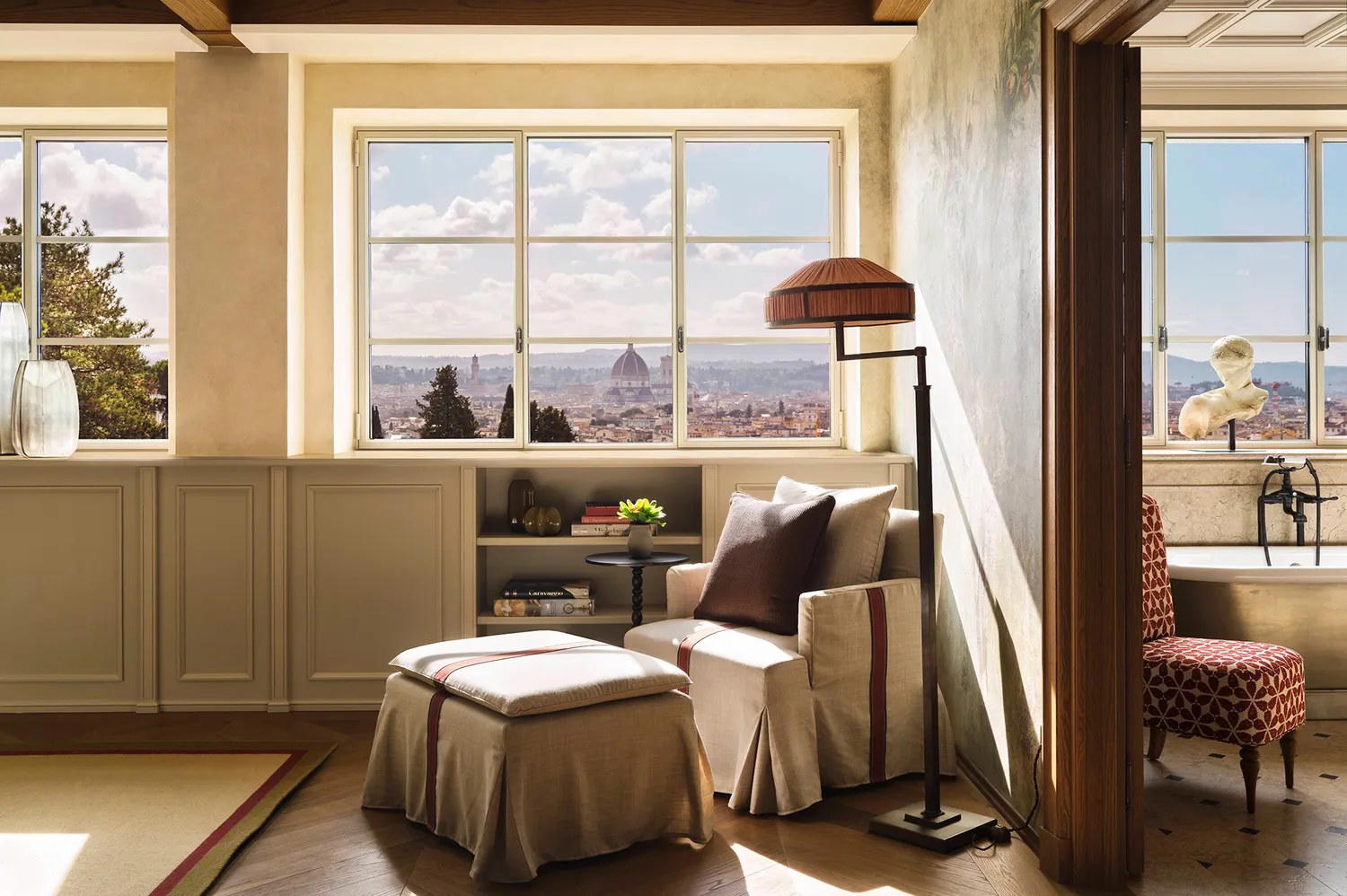
Bars in Florence
Browse all →
Restaurants in Florence
Browse all →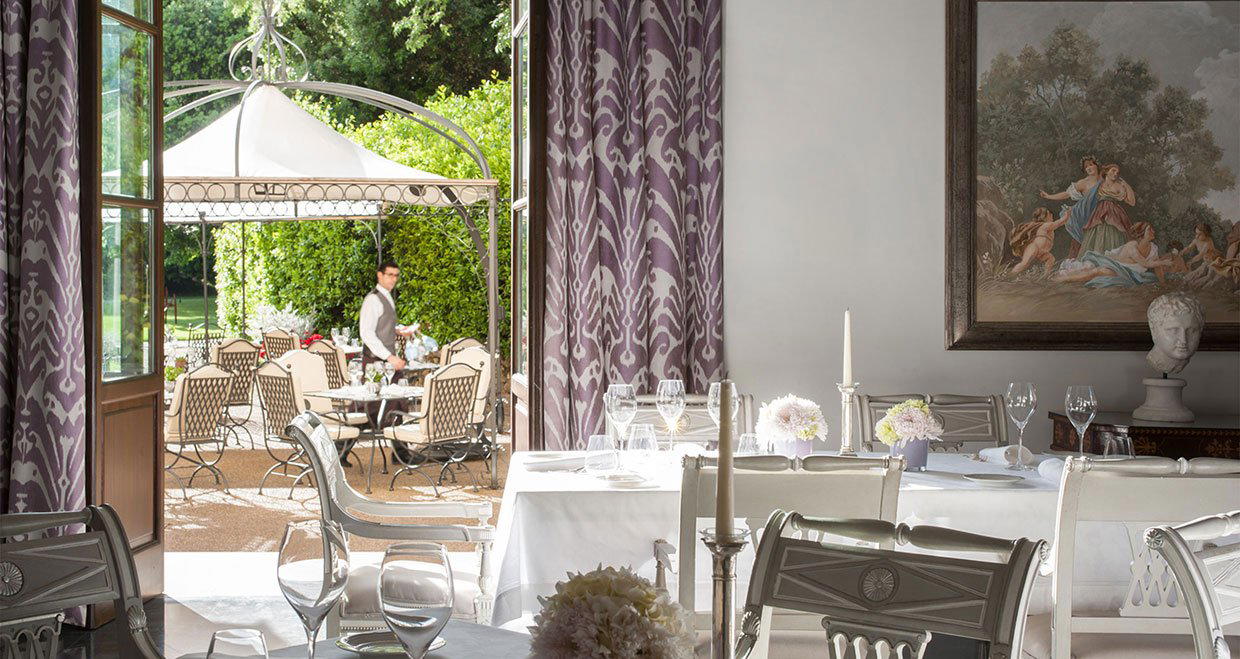
Details
- Romantic
- Elegant
- Sophisticated
- Scenic
- Ornate
- Honeymoon
- Romantic Getaway
- Anniversary
- Wellness Retreat
- Panoramic View
- Historic Building
- Terrace
- Garden
- Wi Fi
- Pool
- Spa
- Fitness Center
- Room Service
- Concierge
- Valet Parking
- Skyline
- Garden
- Elevator
- Wheelchair Accessible
Romantic and serene with elegant lighting, fresh flowers, candles in evenings, and far-reaching terrace views over Florence.