

Hotel New Otani Osaka occupies a historically grounded position in Chuo, adjacent to Osaka Castle Park and within the city's administrative core. Its 2026 Star Wine List recognition signals a dining and beverage program that sits above the standard city-hotel baseline. For guests who value institutional service depth and a castle-facing setting over the design-forward energy of newer arrivals, this address remains a substantive choice.
Pearl is the En Primeur Club membership app — saves, bookings, and concierge access live there. Same editors, same standards.
- Address
- 1-4-1 Shiromi, Chuo
- Phone
- 81-6-6941-1111
- Website
- newotani.co.jp
- Directions
- Get directions
 Saves & bookings on Pearl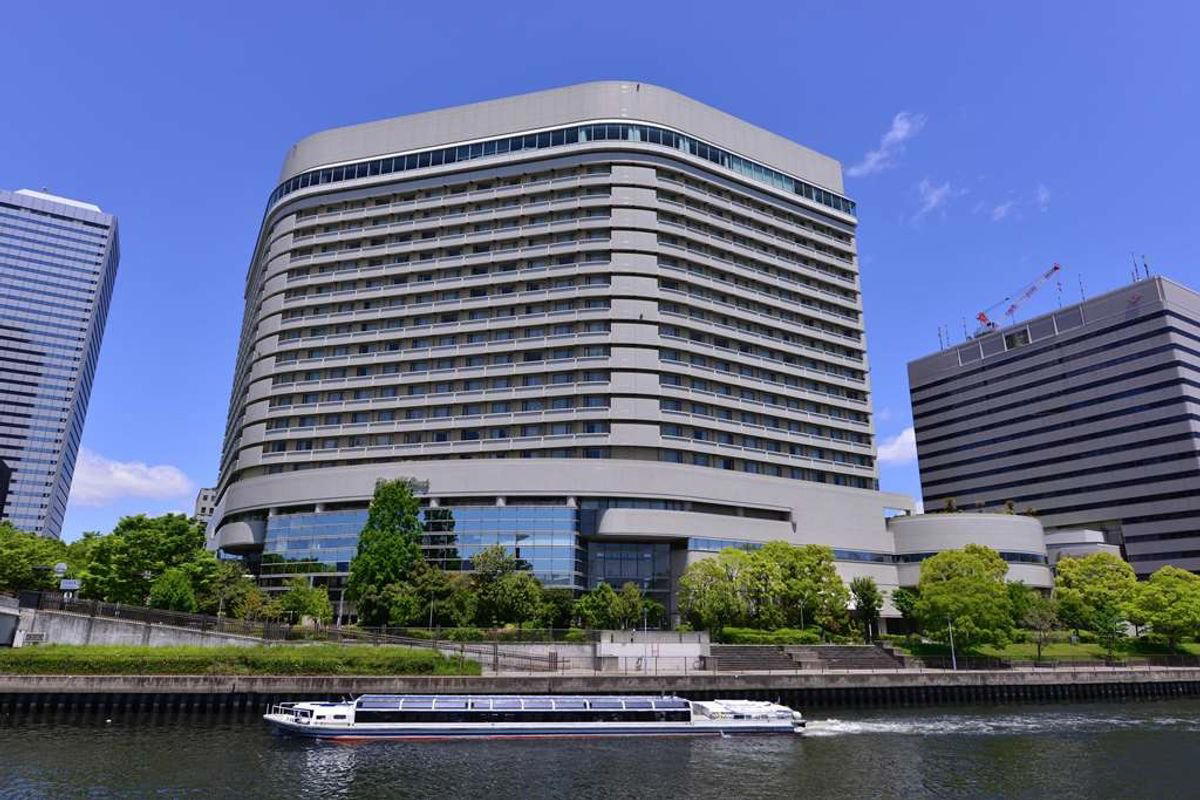
A City-Center Address That Earns Its Position
Osaka's hotel corridor along the Chuo ward has filled steadily over the past decade with properties competing on design signature and brand prestige. The conversation now runs from the glass-tower drama of Conrad Osaka and the riverside positioning of InterContinental Osaka to the traditional luxury register of The Ritz-Carlton, Osaka. Hotel New Otani Osaka is a 4-star hotel in Osaka, set at 1-4-1 Shiromi, Chuo, near Osaka Castle Park.
The group's flagship in Tokyo helped define what a grand Japanese city hotel could mean for international guests in the postwar decades, and the Osaka property inherits that institutional seriousness. Where newer competitors such as W Osaka or Four Seasons Hotel Osaka have arrived with globally standardised luxury formats, Hotel New Otani Osaka represents a strain of Japanese hospitality that predates the international brand wave and continues to operate on its own terms.
Heritage in a Contemporary City
The editorial angle on Hotel New Otani Osaka is not sentiment for its own sake. Large-format Japanese city hotels of the New Otani generation were built to contain multiples: several dining options across price points and cuisine registers, meeting and banquet infrastructure, and floor plans that do not feel compressed. That spatial generosity has become rarer as land costs push newer builds toward tighter footprints. For the guest who has experienced the geometry of a recently opened boutique tower and found it wanting, the older grand-hotel format offers a different proposition.
The hotel received Star Wine List recognition in 2026, reflecting a serious wine program.
The Shiromi Location: What the Address Means in Practice
Shiromi sits east of the Nakanoshima business island and north of Namba's dense commercial grid, which places the hotel at a slight remove from both the hyperactive street-food circuits of Dotonbori and the luxury retail concentration of Shinsaibashi. That distance is not a disadvantage. Osaka Castle Park is immediately adjacent, giving guests access to one of the city's primary green spaces and a historical anchor that the hotel's Chuo address makes genuinely walkable. The surrounding ward also holds the city government complex and major corporate headquarters, which historically anchored the hotel's business travel base and contributed to the scale of its meeting and events infrastructure.
Guests arriving for leisure rather than business should factor this geography into their planning. The location is well-served by Osaka's subway network, which makes Namba, Shinsaibashi, and the Umeda district all reachable in under fifteen minutes. Tenjinbashisuji shopping street and the covered arcades of the city's older commercial neighborhoods are similarly accessible. For those comparing this address against more centrally-positioned options like Centara Life Namba Hotel Osaka or the design-led Cuvée J2 Hôtel Osaka by Onko Chishin, the trade-off is ambient noise and density against the calmer, castle-adjacent setting that Shiromi provides.
Placing Hotel New Otani Osaka in the Broader Japan Hotel Conversation
Understanding how this hotel fits requires mapping it against the wider spectrum of Japanese accommodation. Japan's hotel offer runs from the intimate ryokan tradition, represented by properties such as Nishimuraya Honkan in Kinosaki-cho, Gora Kadan in Hakone, and Asaba in Izu, to the architecturally ambitious resort format of Benesse House in Naoshima and Amanemu in Mie. The urban grand hotel sits between these poles: neither the immersive cultural immersion of the ryokan nor the destination-as-hotel logic of the resort, but a platform for city engagement at full scale.
Within the urban category, the comparison points extend beyond Osaka. Guests spending multiple nights across the Kansai region might route through Kyoto first, using HOTEL THE MITSUI KYOTO as a base before moving to Osaka. Those crossing from Tokyo might begin at Bvlgari Hotel Tokyo. The point is that hotel functions as a node in a broader itinerary logic rather than a standalone destination, and its proximity to Osaka Castle Park, Osaka's museum cluster, and the business core gives it a distinct role in that network.
Planning Your Stay
The hotel draws a mixed clientele: corporate travelers using the Chuo address and meeting infrastructure, and leisure guests drawn by the castle adjacency and the hotel's scale of amenities. That mix affects how the property prices and how room availability shifts across the week. Corporate demand peaks midweek, which historically eases weekend availability and can influence rate structures. The hotel's 2026 Star Wine List recognition points to a well-considered beverage program.
For broader context on how Japanese grand-format hotels compare to international equivalents, the The Fifth Avenue Hotel in New York City and Aman New York offer useful reference points from the American market, while Aman Venice represents the European equivalent of heritage-location hospitality. Travellers who prefer intimate-scale alternatives within Japan should also consider Fufu Kawaguchiko, Fufu Nikko, ENOWA Yufu, Halekulani Okinawa, Jusandi in Ishigaki, or Sekitei in Hatsukaichi-shi for a counterpoint format. The Hotel Granvia Osaka also warrants consideration for guests prioritising direct station access over the castle-park setting.
Similar Picks
Comparable venues nearby, for context on price, style, and recognition.
| Venue | Cuisine | Price | Notes |
|---|---|---|---|
| Hotel New Otani OsakaThis venue — the venue you are viewing | Classic luxury urban resort | $$$$ | Not listed |
| Centara Grand Hotel Osaka | Modern architectural masterpiece fusing Japanese and Thai cultures | $$$$ | Naniwa |
| voco Osaka Central | Design-oriented IHG sub-brand emphasizing contemporary aesthetics with cultural heritage integration | $$ | Kyomachibori, Nishi-ku |
| Zentis Osaka | Contemporary urban boutique with modular functional spaces | $$$$ | Kita |
| The Osaka Station Hotel, Autograph Collection | Railway-inspired luxury hotel in skyscraper directly connected to JR Osaka Station. | $$$$ | Kita |
| Osaka Excel Hotel Tokyu | Osaka Kaleidoscope concept blending lively opulence with city night views | $$$ | Chūō |
Recognition history
Dated appearances from independent guides and award organizations, with the underlying list record or original source where available.
Forbes Recommended
Forbes
Star Wine List
Star Wine List
Continue exploring
More in Osaka
Hotels in Osaka
Browse all →




Bars in Osaka
Browse all →

Restaurants in Osaka
Browse all →




Wineries in Osaka
Browse all →
At a Glance
- Elegant
- Sophisticated
- Scenic
- Family Vacation
- Business Trip
- Anniversary
- Panoramic View
- Rooftop Pool
- Historic Building
- Pool
- Spa
- Fitness Center
- Room Service
- Concierge
- Tennis
- Wi Fi
- Garden
- Pool
- Spa
- Fitness Center
- Room Service
- Concierge
- Tennis
- Wi Fi
Riverside luxury retreat with relaxing spa atmosphere, elegant garden restaurant views, and cultural art gallery charm.