On Taketomi Island, one of the Yaeyama archipelago's smallest inhabited islands, HOSHINOYA Taketomi Island translates the ryokan tradition into a setting defined by star-sand beaches, traditional Ryukyuan village architecture, and a slower pace of life than mainland Okinawa. The property belongs to Hoshino Resorts' premium HOSHINOYA line, which positions its houses at the intersection of cultural specificity and refined comfort.
 Discover on Pearl
Pearl is the En Primeur Club membership app — saves, bookings, and concierge access live there. Same editors, same standards.
- Address
- 1955 Taketomi, Yaeyama District, Okinawa 907-1101, Japan
- Phone
- +81 50 3134 8091
- Website
- hoshinoya.com
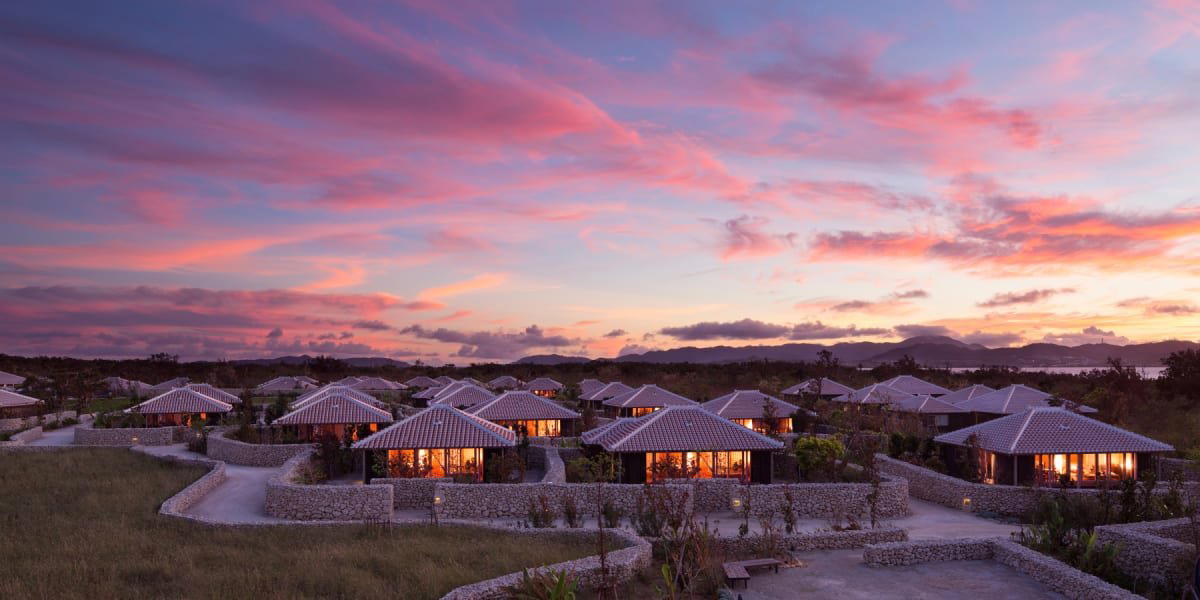
An Island Built to Slow You Down
Taketomi Island sits roughly ten minutes by ferry from Ishigaki, but the distance it puts between a visitor and the rest of Japan's travel circuit is considerably greater. The island's population hovers around 350. Water buffalo carts move along coral-walled lanes. Hibiscus hedges and bougainvillea mark property lines in a village that Okinawa's cultural preservation laws have frozen, by design, in a pre-modern aesthetic. No convenience stores, no chain hotels, no arterial roads built for cars. Into this landscape, Hoshino Resorts placed its HOSHINOYA label.
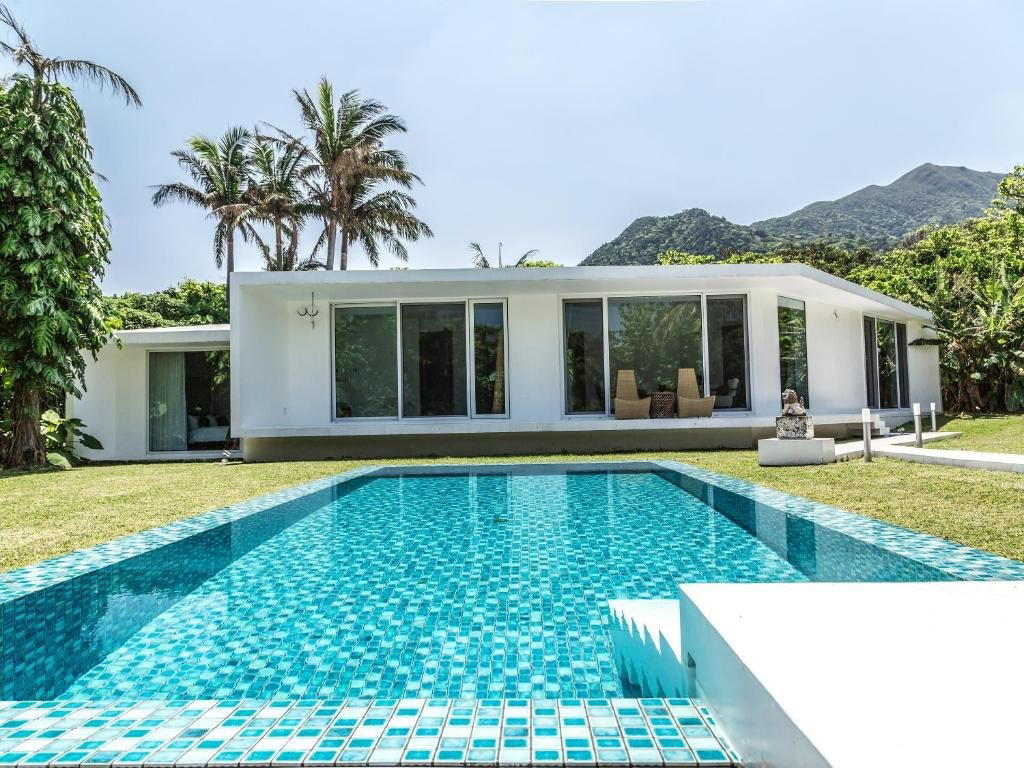
That context matters when reading the architecture. Hoshino Resorts did not import a generic luxury resort template. The buildings at HOSHINOYA Taketomi Island draw directly from Ryukyuan vernacular traditions: low-slung structures with terracotta-tiled roofs, surrounded by the same coral-limestone walls that define the village beyond the property boundary. The design decision to blend into rather than contrast against the island's built environment is what separates this property from the larger, more convention-resort-oriented options available to Okinawa visitors at, for example, Fusaki Beach Resort Hotel & Villas on Ishigaki or Miyakojima Tokyu Hotel & Resorts. This property asks you to understand its island before you can fully understand its rooms.
The Architecture as Argument
Japan's premium ryokan tradition has always understood that a building's relationship to its site is a hospitality proposition in itself. Properties like Gora Kadan in Hakone or Asaba in Izu use the thermal landscape or mountain forest as part of what the guest is being sold. HOSHINOYA Taketomi Island makes the same argument with coral and sea wind. The architecture at Taketomi is site-specific in a functional sense: the roof pitch and wall construction respond to typhoon conditions common to the Yaeyama chain, and the courtyard planning provides shelter while maintaining the open-air quality that defines island life at this latitude.
What distinguishes the HOSHINOYA approach here, relative to other high-end Okinawa properties, is the restraint in material palette. Where Halekulani Okinawa on the main island operates at a grander, more international-resort scale, and where Hyakuna Garan leans into dramatic clifftop positioning, HOSHINOYA Taketomi Island works at the village scale. The buildings do not exceed the height of the surrounding coral walls and vegetation. The effect, from a guest perspective, is one of immersion rather than elevation. You are not above the island; you are in it.
This design philosophy places HOSHINOYA Taketomi Island in a specific tier within Hoshino Resorts' portfolio and within Japan's broader luxury accommodation conversation. Compare it to Zaborin in Kutchan, which uses a forest setting and a similarly discipline-led material approach, or to Benesse House in Naoshima, where art infrastructure is the site-defining condition. Each of these properties makes legibility of place a core hospitality value. HOSHINOYA Taketomi Island belongs to that cohort.
Place in the Okinawa Luxury Circuit
Okinawa's premium accommodation market has developed unevenly across its island chain. The main island holds the largest concentration of high-end hotel infrastructure, including properties like The Terrace Club Wellness Thalasso at Busena, which targets a wellness-focused international clientele. The Yaeyama islands, by contrast, attract a smaller, more deliberate traveller. Getting to Taketomi requires a flight to Ishigaki followed by the ten-minute ferry crossing, and the island's own preservation rules mean density will never approach what you find on Okinawa proper. That access friction functions as a filter.
Within the Yaeyama group, Jusandi in Ishigaki occupies a different niche, positioned closer to the main island infrastructure of Ishigaki city. HOSHINOYA Taketomi Island's value proposition depends on the island's quiet being a genuine condition of the stay, not a marketing description. The coral roads, the absence of motorised vehicles in the village centre, and the operating hours of the island itself define the pace of a visit more than any hotel amenity list.
For travellers calibrating between properties in Japan's broader premium ryokan circuit, Sankara Hotel & Spa Yakushima offers an instructive parallel, another small-island setting where the natural environment is the primary programme. Amanemu in Mie and ENOWA Yufu in Yufu make similar site-specificity arguments in their respective thermal and forest contexts. What Taketomi Island offers, that few of those alternatives can, is the Ryukyuan cultural layer: an architecture, a cuisine tradition, and a social pace that are distinct from the Japanese mainland and from the broader pan-Asian resort aesthetic.
Planning and Access
Reaching HOSHINOYA Taketomi Island requires routing through Ishigaki Airport, which receives direct flights from Tokyo, Osaka, and Naha. The Ishigaki-to-Taketomi ferry runs frequently through the day but the island has no taxi infrastructure, so arrival logistics are worth confirming with the property directly. Peak booking pressure falls between late spring and early autumn, when Okinawa's ocean conditions are optimal and the Japanese domestic travel market moves heavily toward the islands. Anyone planning a summer stay should treat lead times of three to four months as a practical floor. The HOSHINOYA brand operates properties across Japan at HOTEL THE MITSUI KYOTO scale and above, so the reservations infrastructure is professional, but availability at Taketomi reflects the island's hard capacity ceiling.
Travellers who have prioritised urban luxury in Japan, say at Bvlgari Hotel Tokyo or Aman New York, should expect a significant mode shift. Taketomi Island operates on the island's schedule. The setting cannot be replicated by scale or budget alone. The island only has so many hours of quiet, and HOSHINOYA Taketomi Island is built to help you use them.
Quick Comparison
Comparable venues nearby, for context on price, style, and recognition.
| Venue | Awards |
|---|---|
| HOSHINOYA Taketomi IslandThis venue — the venue you are viewing | |
| Halekulani Okinawa | Michelin 2 Key |
| Hyakuna Garan | Michelin 1 Key |
| Sankara Hotel & Spa Yakushima | |
| The Terrace Club Wellness Thalasso at Busena | |
| Miyakojima Tokyu Hotel & Resorts |
Continue exploring
More in Okinawa
Hotels in Okinawa
Browse all →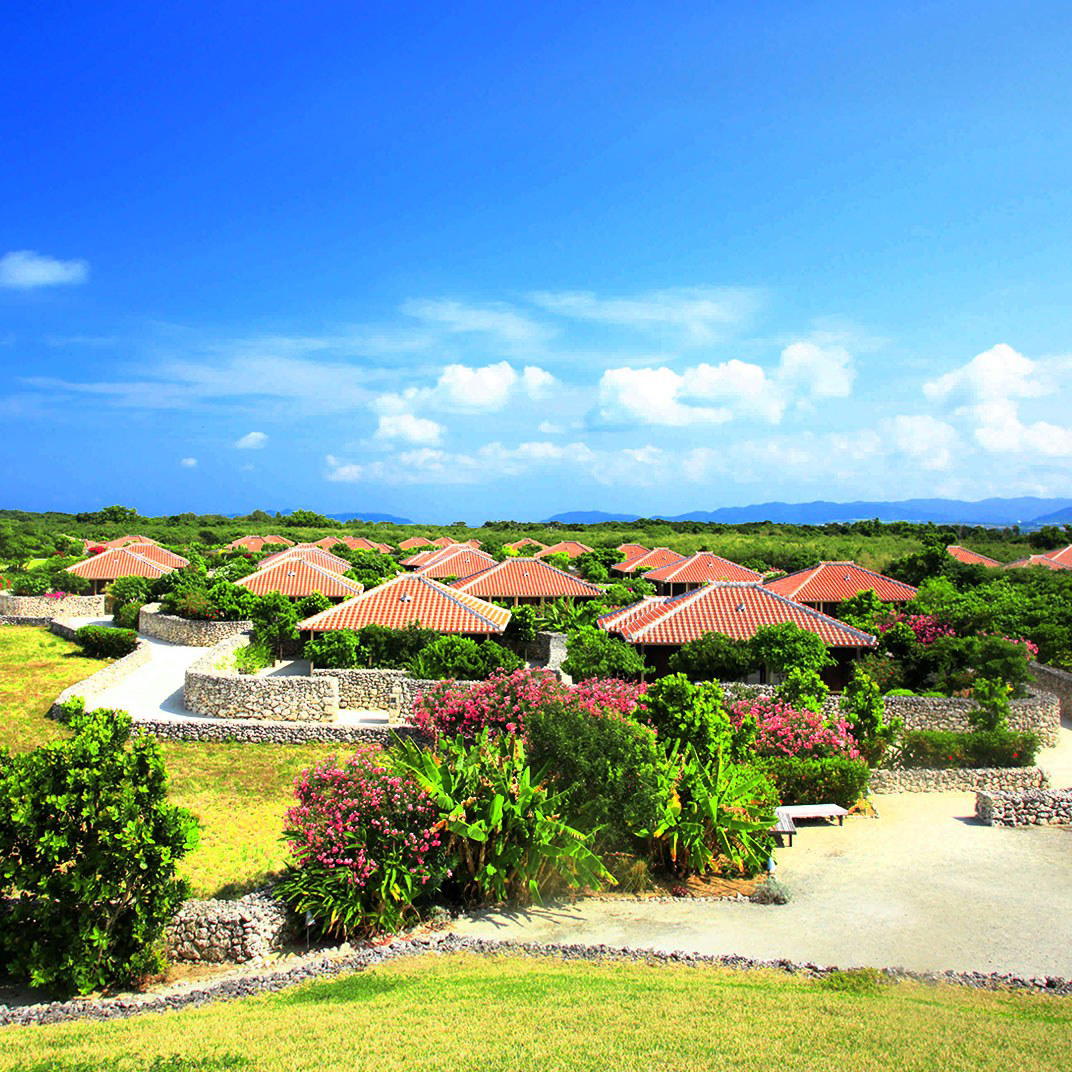

At a Glance
- Quiet
- Elegant
- Scenic
- Intimate
- Sophisticated
- Minimalist
- Honeymoon
- Romantic Getaway
- Wellness Retreat
- Weekend Escape
- Private Villa
- Panoramic View
- Garden
- Spa
- Outdoor Pool
- Wifi
- Concierge
- Garden
Tranquil and minimalist with natural light, cool breezes through open windows, and elegant island-inspired serenity.