Grand Hotel Plaza occupies a nineteenth-century palazzo on Via del Corso, placing guests at the geographic and historical centre of Rome. The property's Belle Époque interiors, including a celebrated glass-ceilinged reception hall, connect it to a longer tradition of grand European hotel-keeping that the city's newer luxury entrants are still trying to replicate. For travellers who read architecture as seriously as they read room counts, the address carries weight that no amount of contemporary redesign can manufacture.
Pearl is the En Primeur Club membership app — saves, bookings, and concierge access live there. Same editors, same standards.
- Address
- Via del Corso, 126, 00186 Roma RM
- Phone
- +39 06 6992 1111
- Website
- grandhotelplaza.com
- Directions
- Get directions
 Saves & bookings on Pearl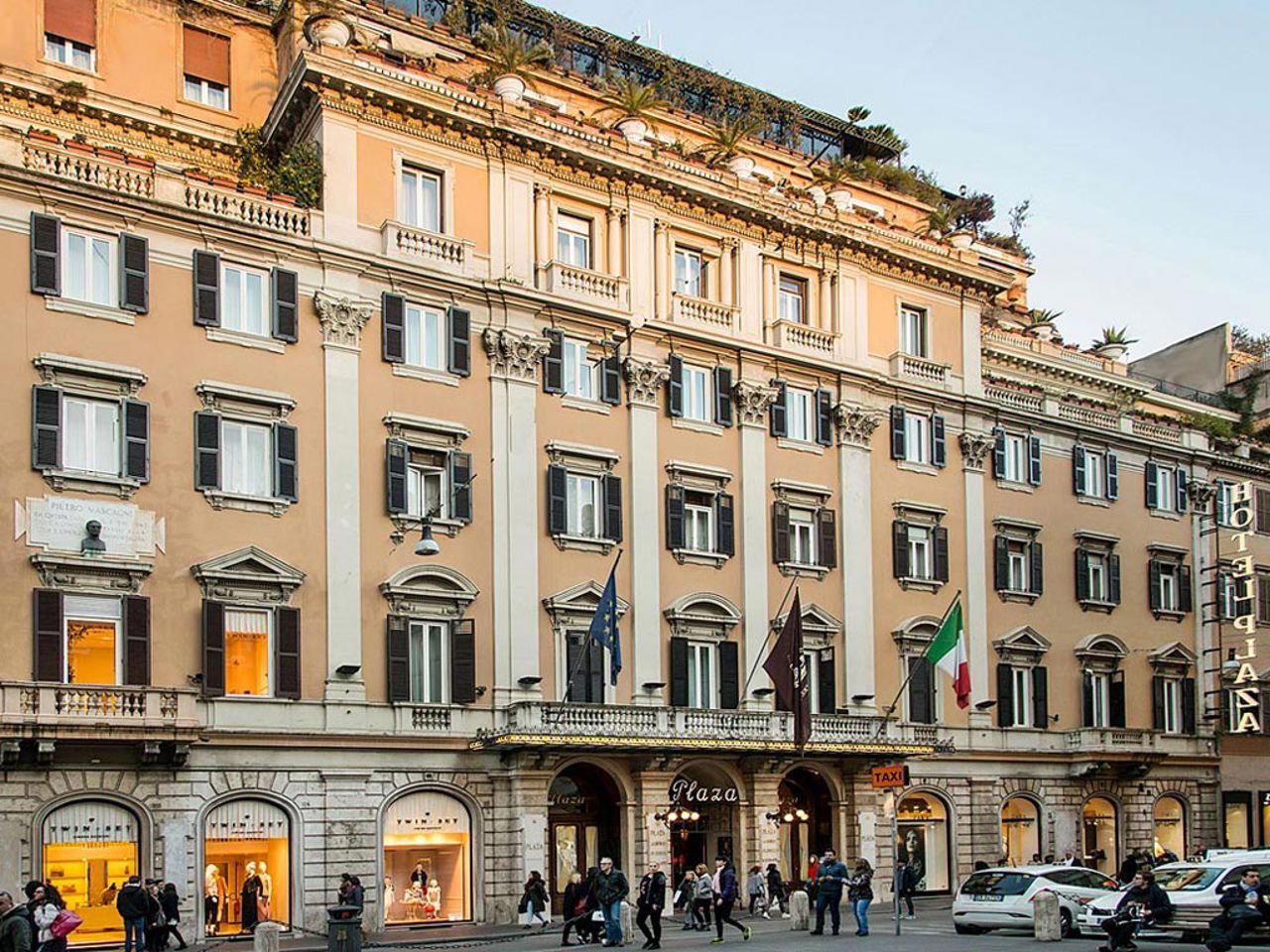
Via del Corso and the Archaeology of Roman Hospitality
Rome's hotel market has fractured along a familiar axis in recent years. On one side sit the design-forward new arrivals, properties like Bulgari Hotel Roma and Hotel Vilòn, where the architectural language is deliberately contemporary, a counterpoint to the city pressing in from outside. On the other side sits a smaller cohort of grand historic palazzi that predate the modern luxury category entirely. Grand Hotel Plaza is a 5-star hotel in Rome on Via del Corso, with about 200 rooms and rates from about $350 per night. Grand Hotel Plaza belongs to the latter group. Its address on Via del Corso, the long spine running from Piazza Venezia to Piazza del Popolo, places it at a street that Romans have used for processions, carnival races, and daily commerce since antiquity.
That distinction matters when you are deciding how a stay in Rome should feel. A property like JK Place Roma or Portrait Roma offers a considered residential register, a sense of curated calm assembled from scratch. Grand Hotel Plaza offers something that cannot be assembled: accumulated time. The building's nineteenth-century palazzo bones place it in a European hotel tradition that precedes the concept of boutique hospitality by several generations.
The Glass Ceiling and What It Signals
Approaching along Via del Corso, the hotel's façade reads as restrained relative to the operatic interiors waiting inside. The reception hall, covered by an elaborate glass ceiling, is one of the signature interior gestures in Rome's hotel stock. Glass-roofed atria of this type were engineering statements in the late nineteenth century, demonstrations of industrial craft applied to aristocratic space. In Rome, where most palazzo conversions involve frescoed ceilings or carved stone, the transparent roof of the hotel produces a different quality of light: diffuse, even, shifting through the day in ways that painted ceilings cannot replicate.
This is the kind of architectural detail that separates heritage properties from heritage-adjacent ones. Contemporary hotels that reference historical periods, and many of Rome's newer luxury entrants do exactly that, are translating a visual language. The hotel is still written in the original. The distinction is not sentimental; it affects the spatial experience of moving through the building, the ceiling heights, the proportions of corridors, the weight of materials.
Where the Plaza Sits in Rome's Heritage Tier
Rome's grand historic hotels cluster in two broad zones. The Spanish Steps area holds Hassler Roma at the summit of the staircase and Hotel Eden on the slope above Via Veneto, both properties with documented histories of hosting heads of state and cultural figures across the twentieth century. The hotel occupies a different node, positioned on Via del Corso closer to the historic centre's commercial axis, which gives it a distinct relationship to the city's pedestrian geography. Guests step out into daily Roman life rather than into the self-contained zone around the Steps.
That positioning aligns it with a particular kind of traveller: one who wants proximity to the Pantheon, the Campo de' Fiori, and Trastevere without the buffer of a neighbourhood that functions primarily as a luxury hotel enclave. For context on how other Italian cities approach this same tension between heritage and daily urban life, the palazzo conversion tradition is visible at Four Seasons Hotel Firenze in Florence and, further north, in the water-level intensity of Aman Venice. Each property negotiates the same question differently: how much of the city do you bring inside, and how much do you hold at arm's length.
The Italian Heritage Hotel Compared Across Formats
Italy's premium accommodation market now spans formats that range from converted rural estates to urban palazzi to purpose-built contemporary structures. Castello di Reschio in Lisciano Niccone and Rosewood Castiglion Del Bosco in Montalcino represent the rural castello end of the spectrum, where agricultural landscape and stone architecture are inseparable from the product. Passalacqua in Moltrasio and Il Pellicano in Porto Ercole hold the coastal and lake registers. The hotel sits firmly in the urban palazzo category, a format that requires the building to carry historical credibility in a context where the city itself is the competing presence.
Within Rome specifically, the comparison set also includes properties that have undergone significant renovation in recent years, bringing infrastructure up to contemporary standards while preserving historic envelopes. Maalot Roma and Hotel Locarno represent a slightly more intimate scale within the heritage category, both trading on period character at a lower room count than the grander palazzo properties. The hotel operates at the larger, more formal end of this spectrum.
Planning a Stay: Logistics and Timing
Via del Corso, 126 places the hotel within walking distance of most of Rome's central historic monuments, which makes it functional as well as atmospheric. The address is well-served by public transport connections and sits inside the ZTL restricted traffic zone, a practical consideration for guests arriving by car or private transfer. Rome's peak travel periods, spring and early autumn, apply standard pressure to availability across the heritage tier; the city's shoulder months of late autumn and early winter offer a different register entirely, with reduced crowds at the Pantheon, the Forum, and the museums that ring the centro storico.
For travellers building an Italian itinerary around historic properties rather than single destinations, the hotel connects logically to northward extensions toward Portrait Milano in Milan or southward toward the Amalfi properties such as Borgo Santandrea and Il San Pietro di Positano. For readers comparing the Roman heritage tier with international equivalents, the closest analogues in the European grand-hotel tradition appear in properties like The Fifth Avenue Hotel in New York City or Aman New York, both of which move through the same challenge of housing a contemporary stay inside a building that carries its own historical weight.
Comparable Spots
Comparable venues nearby, for context on price, style, and recognition.
| Venue | Cuisine | Price | Notes |
|---|---|---|---|
| Grand Hotel PlazaThis venue — the venue you are viewing | Historic 19th-century palace hotel blending original architectural grandeur with modern luxury amenities, positioned as one of Rome's most prestigious addresses. | $$$$ | Not listed |
| Corso 281 Luxury Suites | 18th-century palazzo restored into luxury suites | $$$$ | Trevi |
| Fendi Private Suites | Luxury residential suites in historic palazzo with contemporary Fendi design | $$$$ | Campo Marzio |
| Residenza Napoleone III | Historic palazzo apartment with private suites | $$$$ | Campo Marzio |
| The Goethe Hotel | Boutique luxury hotel evoking the Grand Tour era with modern comforts. | $$$$ | Campo Marzio |
| Palazzo Velabro | Historic 18th-century mansion remodeled as a design-forward boutique hotel blending timeless architecture with modern luxury. | $$$$ | Ripa |
Continue exploring
More in Rome
Hotels in Rome
Browse all →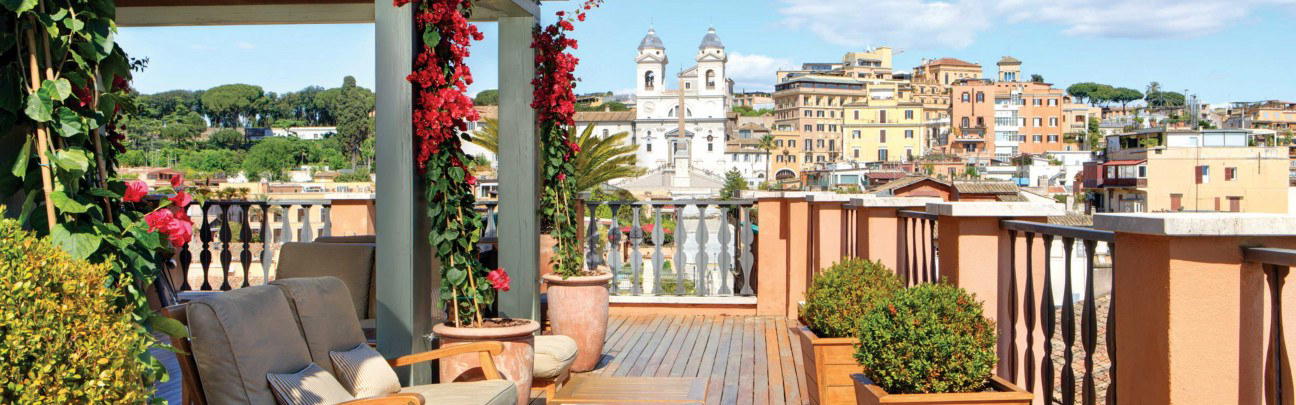
Bars in Rome
Browse all →
Restaurants in Rome
Browse all →

At a Glance
- Elegant
- Classic
- Well Known
- Romantic
- Sophisticated
- Romantic Getaway
- Business Trip
- Anniversary
- Weekend Escape
- Historic Building
- Panoramic View
- Terrace
- Garden
- Wi Fi
- Fitness Center
- Room Service
- Concierge
- Business Center
- Restaurant
- Bar
- Laundry Service
- Airport Transfer
- Street Scene
- Garden
- Skyline
- Wi Fi
- Fitness Center
- Room Service
- Concierge
- Business Center
- Restaurant
- Bar
- Laundry Service
- Airport Transfer
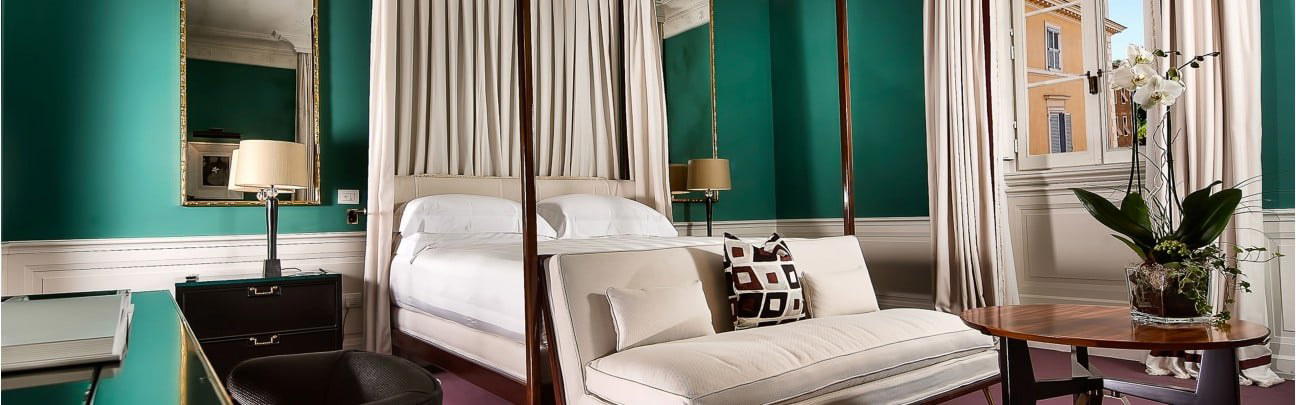
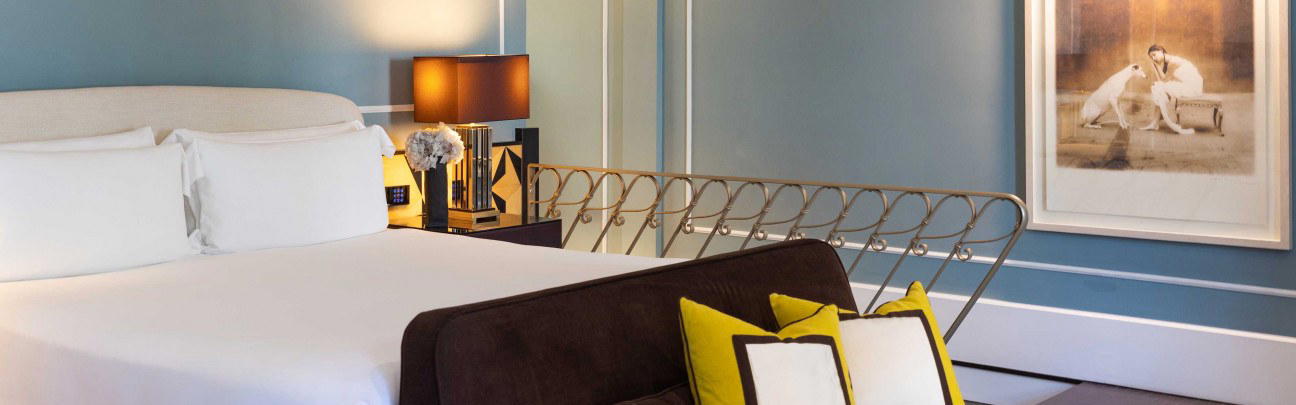
Elegant and refined with soaring Victorian ceilings, marble bathrooms, and period furnishings creating an atmosphere of understated luxury and timeless grandeur.