
Star Wine List
Conrad Urumqi sits at the intersection of Central Asia's old Silk Road corridors and contemporary Chinese hospitality infrastructure, making it the most recognizable international hotel address in Xinjiang's capital. For travelers arriving in Urumqi on business or as a staging point for wider regional exploration, the property offers a reliable foothold in a city that remains underserved by luxury hotel options relative to its commercial scale.

Pearl is the En Primeur Club membership app, where members save venues, book tables and use the concierge.
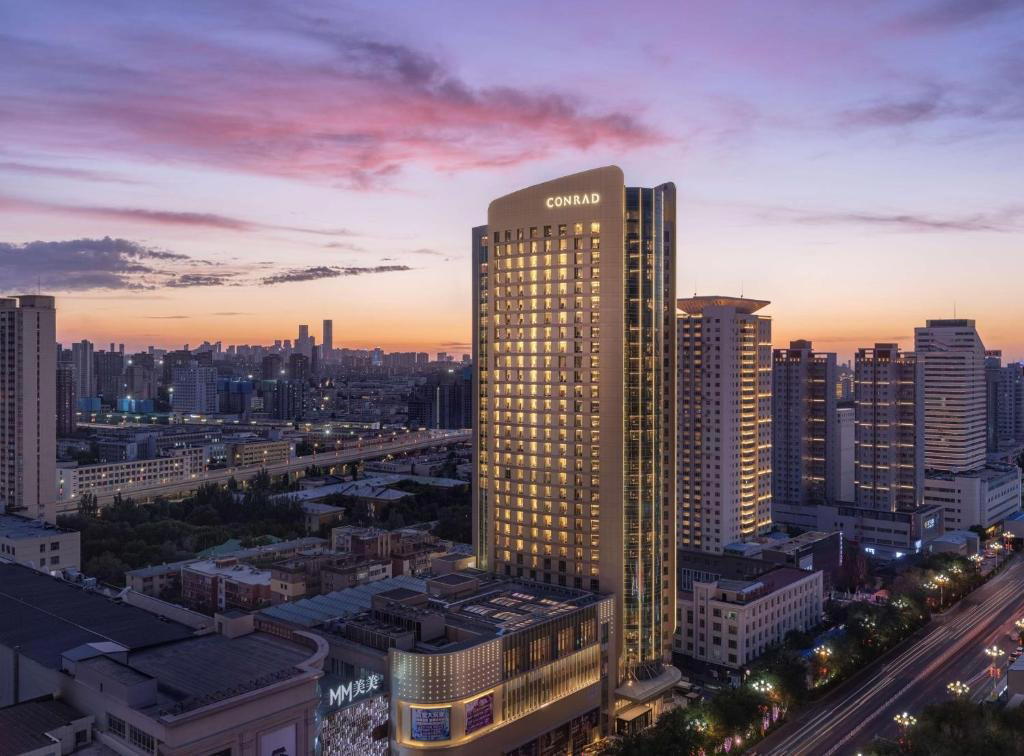
Where the Silk Road Meets the Modern Chinese Interior
Urumqi occupies a position that few cities in China can claim: it sits closer to Almaty, Tehran, and Moscow than it does to Beijing or Shanghai. That geographic reality has shaped the city's character across centuries, from its tenure as a waystation on the Silk Road trade routes to its current role as the industrial and administrative centre of Xinjiang. Arriving in Urumqi, you sense the layering immediately: Han Chinese commercial energy alongside Uyghur cultural presence, Soviet-inflected urban planning alongside contemporary tower blocks, desert plateau light that shifts across the Tian Shan range with unusual clarity. It is this compressed plurality that gives the city its particular atmosphere, and it is the context into which Conrad Urumqi places itself.
The property sits on Youhao North Road in the Shaybak District, which functions as one of Urumqi's primary commercial and civic corridors. For travellers arriving from China's coastal metros, the address signals institutional weight: this is where business delegations stay, where government-adjacent hospitality concentrates, and where international brand standards meet a city that remains, by Chinese luxury hotel metrics, underserved relative to its economic significance. The Conrad brand, within the Hilton portfolio, positions itself above the mid-market tier but operates with a business-hotel pragmatism that distinguishes it from the more architecturally experimental or leisure-oriented properties you find further east, compare the approach to, say, Andaz Shenzhen Bay in Shenzhen or Amanfayun in Hangzhou, both of which have stronger site-specific design narratives. Conrad Urumqi's value is not primarily aesthetic theatre; it is reliability of execution in a city where that reliability is not a given.
Design at the Intersection of Commerce and Context
Conrad properties across China share a design grammar that tends toward the monumental: tall lobby volumes, materials that read as formal from a distance, and a separation between public and private zones that suits the corporate travel market. In Urumqi, that grammar makes geographic and economic sense. The city's high-end hospitality stock is concentrated in towers that project the confidence of a city asserting its modernity, and Conrad Urumqi reads within that local visual language. What distinguishes the better rooms and suites in this tier of Chinese interior hotel is typically the framing of the surrounding geography: Urumqi's relationship with the Tian Shan mountains provides the kind of view that no amount of interior specification can replicate, and the hotel's position in the Shaybak District places it within reach of those sightlines.
For comparative reference within the Conrad China footprint, look at how Conrad Guangzhou and Conrad Tianjin handle the same brand standards in very different urban contexts, or how Conrad Jiuzhaigou adapts the framework to a landscape-driven leisure setting. Urumqi sits closer to the Tianjin model: a major Chinese city with serious business infrastructure, an international traveller base that skews toward corporate and government, and a luxury hotel market that rewards consistency over experimentation.
The Wine Program and What It Signals
A Star Wine List recognition for 2026 is the one externally verified credential in Conrad Urumqi's current public record, and it warrants more than passing mention. Star Wine List, which evaluates hotel and restaurant wine programs against international standards of depth, selection diversity, and pricing structure, does not distribute its recognition loosely. Its presence in Urumqi is a marker worth noting: the city is not a wine tourism destination, and Xinjiang's own wine production, while growing, is not yet the primary draw for visitors. A hotel in this position earning wine list recognition suggests a program built deliberately for an international business traveller who expects a serious list, not a program assembled as an afterthought.
Travellers with a serious interest in wine programming across China's luxury hotel tier will find a useful comparison set in properties like Mandarin Oriental Qianmen in Beijing and JW Marriott Hotel Shanghai at Tomorrow Square, both of which operate in markets where wine culture has deeper local roots. Conrad Urumqi's recognition is arguably more pointed precisely because it arrives in a market where the supporting infrastructure is thinner.
Urumqi as a Travel Context
The city itself demands some editorial honesty. Urumqi is not a leisure destination in the conventional sense, and positioning it otherwise would mislead readers planning trips. It functions as a gateway: to Xinjiang's more dramatic natural settings, including Tianchi Lake and the Tian Shan range; as a hub for overland routes toward Central Asia; and as a necessary stop for those with business in the region's energy, mining, and logistics sectors. The Silk Road framing that still appears in much writing about the city is historically grounded but experientially overstated. The city's ancient transit role has been succeeded by modern industrial and administrative functions, and the visitor who arrives expecting preserved caravanserai atmosphere will find instead a dense, working Chinese city with distinct cultural textures but limited conventional tourism infrastructure.
That context shapes what Conrad Urumqi is for. It is not the kind of property where leisure travellers arrive to extend a stay beyond what business requires. It is the kind of property where business travellers arrive wanting reliable sleep, a wine list that meets expectations, and a breakfast room that functions efficiently before early meetings. For travellers routing through Xinjiang toward more remote destinations, Mohe Youran Mountain Residence in Da Hinggan Ling offers a useful contrast as a property where the landscape relationship is primary. Similarly, Vanke Lake Songhua Yunlu Hotel in Jilin shows how Chinese luxury hospitality adapts when the natural setting takes precedence over urban infrastructure.
Planning a Stay: Practical Notes
Conrad Urumqi is located at No. 669, Youhao North Road in the Shaybak District, which places it within the city's primary commercial zone and within accessible distance of Urumqi's main transport and civic infrastructure. Walk-ins are accommodated at standard business hotels of this grade, though high-occupancy periods tied to regional trade events and government meetings can tighten availability quickly. Urumqi operates on Beijing Standard Time, and Xinjiang's actual solar time runs roughly two hours behind the official clock, which matters for travellers calibrating schedules arriving from Central Asia.
For broader Urumqi context and planning across the city's hospitality and dining options, see our full Urumqi restaurants guide. Travellers building itineraries across China's western interior may also find useful reference points in Green Lake Hotel Kunming and Xiamen Yunding Resort for contrast with how different Chinese regions approach the luxury tier. For those routing through China's international gateway cities on either end of a Xinjiang trip, Aman New York and The Fifth Avenue Hotel in New York City represent the kind of design-led urban luxury that operates in a very different register, while Aman Venice illustrates how the Aman model translates to a European heritage context.
Comparison Snapshot
| Venue | Price | Awards |
|---|---|---|
| Conrad UrumqiThis venue (the venue you are viewing) | Not listed | Star Wine List |
| Aman Summer Palace | $1,000–1,500 | Forbes 4-Star |
| Amanfayun | Not listed | Michelin Selected · La Liste Top Hotels |
| Amanyangyun | Not listed | 2 Michelin Keys · Vogue 2026 Vogue Best Hotels in Shanghai |
| Andaz Xintiandi, Shanghai | $100–200 | Michelin Selected · Forbes Recommended |
| Banyan Tree Hangzhou | $300–500 | Michelin Selected · Forbes 4-Star |
Recognition history
Dated appearances from independent guides and award organizations, with the underlying list record or original source where available.
Star Wine List
Star Wine List
Continue exploring
More in Urumqi
Restaurants in Urumqi
All restaurants in Urumqi →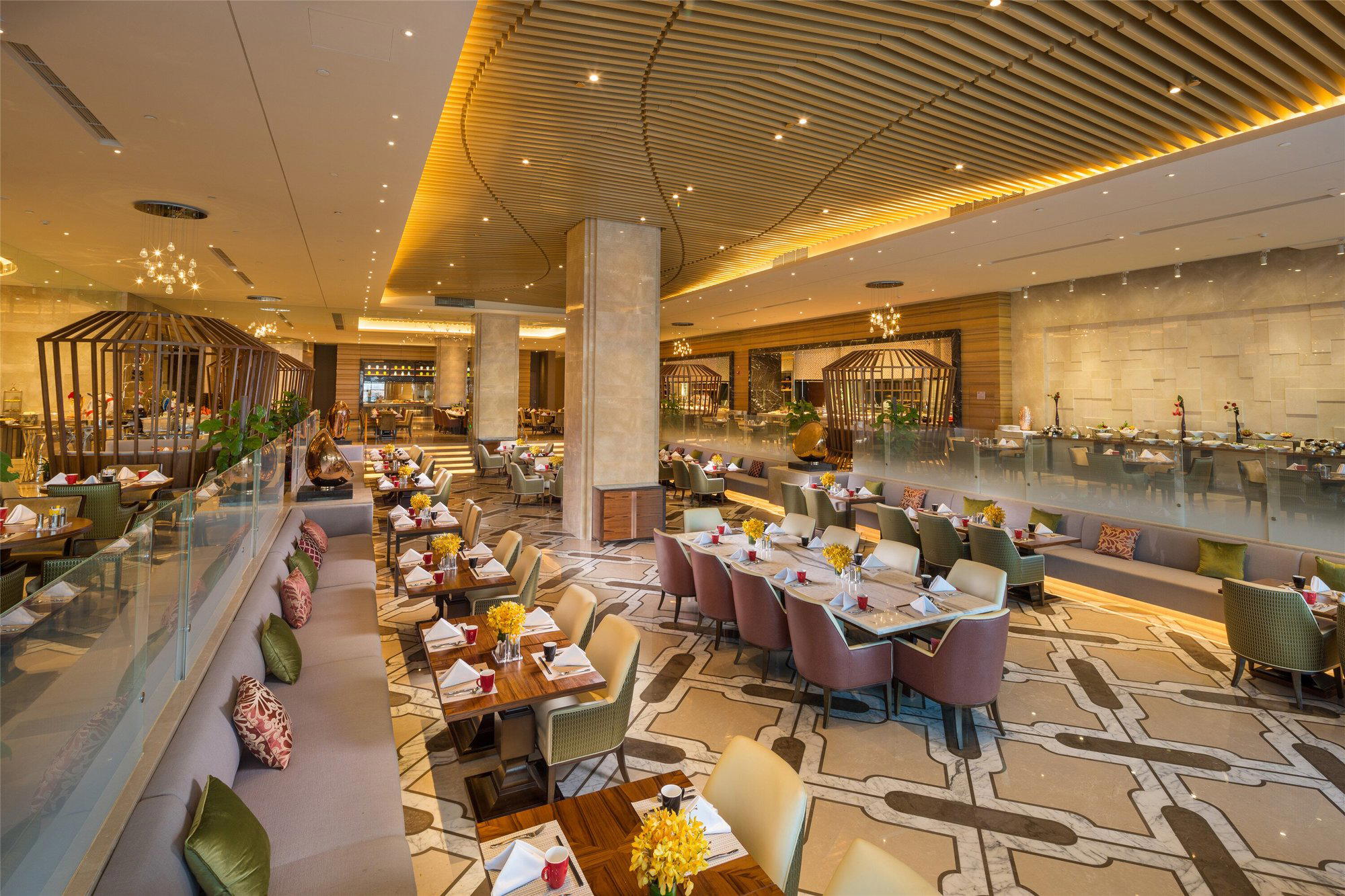
Details
- Modern
- Elegant
- Sophisticated
- Ornate
- Business Trip
- Family Vacation
- Weekend Escape
- Group Retreat
- Panoramic View
- Design Destination
- Wi Fi
- Pool
- Spa
- Fitness Center
- Room Service
- Concierge
- Business Center
- Bar
- Restaurant
- Meeting Rooms
- Parking
- Skyline
- Mountain
- Elevator
- Wheelchair Accessible
Luxurious and contemporary, with a bright sky-lobby feel, regional Xinjiang-inspired details, warm desert tones, and expansive city-and-mountain views.