Colle Alberti Country House

Colle Alberti Country House sits on a hillside outside Cerreto Guidi, in the Tuscan countryside between Florence and the Arno plain. Recognised by the Michelin Selected Hotels list for 2025, it belongs to the quieter tier of Tuscan rural accommodation: properties defined by agricultural setting and architectural restraint rather than resort infrastructure. For travellers prioritising landscape immersion over amenity density, the address makes a coherent case.
Pearl is the En Primeur Club membership app — saves, bookings, and concierge access live there. Same editors, same standards.
- Address
- Via Colle Alberti, 9, 50050 Cerreto Guidi FI, Italy
- Phone
- +39 0571 172 5457
- Website
- collealberti.com
- Directions
- Get directions
 Saves & bookings on Pearl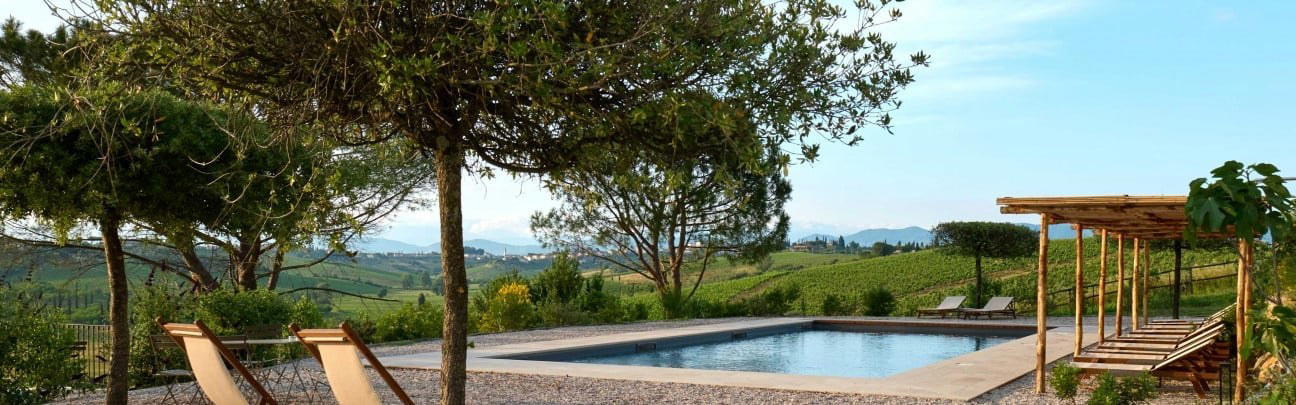
Stone, Silence, and the Tuscan Rural Tradition
The road to Colle Alberti Country House climbs away from the Arno plain through olive groves and cypress-lined tracks that are as much a signature of this corner of Tuscany as any building. Cerreto Guidi, a small hilltop town in the Città Metropolitana di Firenze, sits in a corridor between Florence to the east and the Montalbano ridge to the west, a position that gives it the agricultural quietude of deeper Chianti without the tourist density. Arriving at a country house in this zone means transitioning out of urban pace, and the physical approach sets that expectation before you step inside.
Colle Alberti belongs to a category of Tuscan accommodation that grew out of the region's agriturismo and country-house traditions: converted rural properties where the architecture is the primary offering, and the surrounding land defines the character of a stay. This model differs structurally from the grand villa hotels of Chianti Classico or the full-service resort properties on the Amalfi Coast. Rosewood Castiglion Del Bosco in Montalcino and Borgo Egnazia in Savelletri di Fasano occupy an altogether larger, more programmatic tier. Colle Alberti's proposition is simpler and more dependent on the integrity of the built environment and the quality of the setting.
Architecture as Context
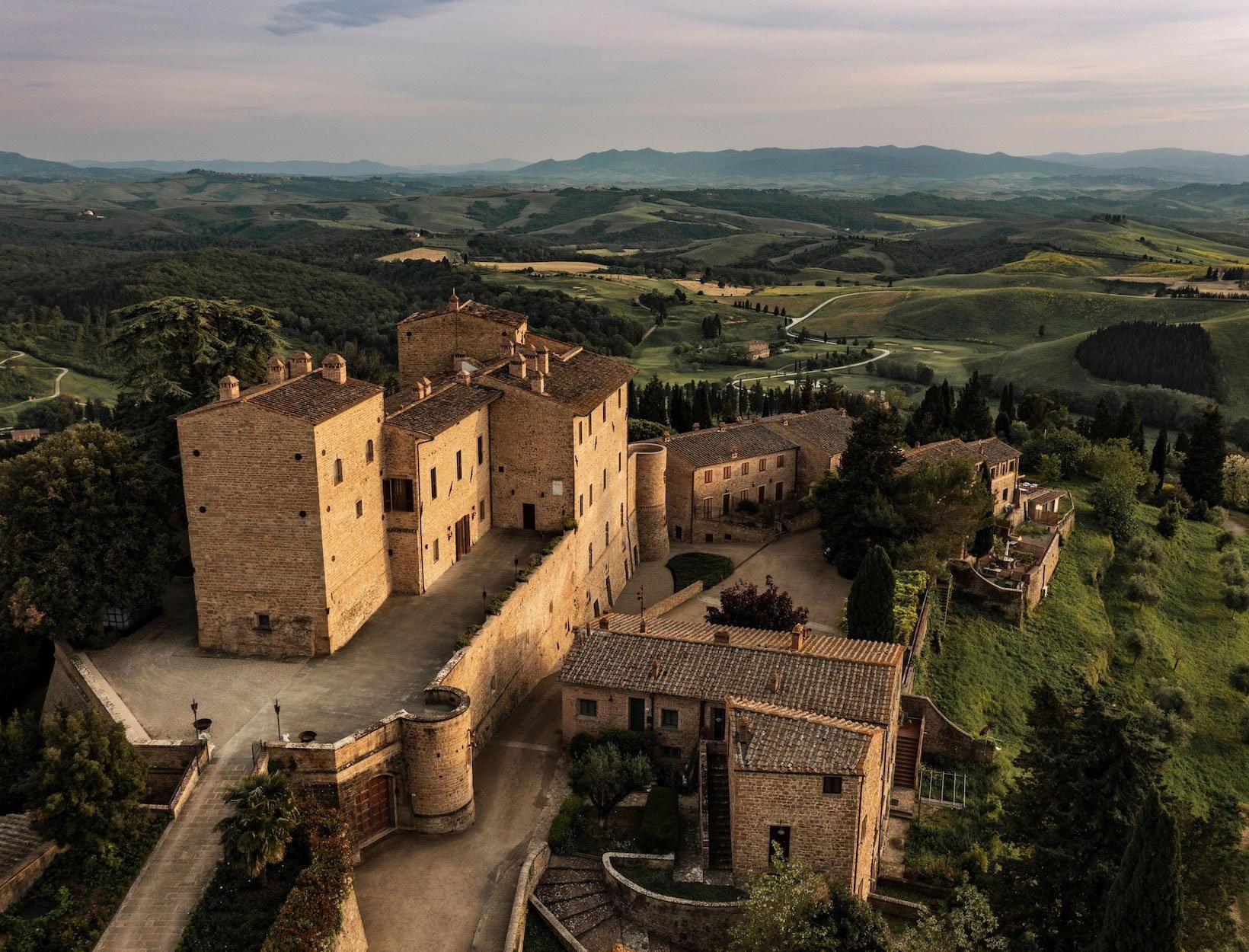
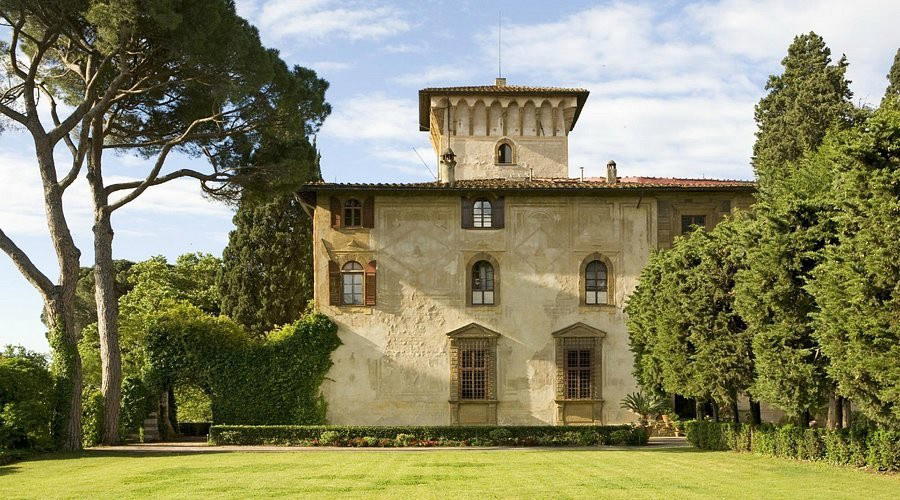
Country houses in the Florentine hinterland carry a specific architectural vocabulary. The farmhouse typology, stone or rendered masonry, terracotta roof tiles, thick walls that moderate summer heat, and interior proportions organised around function rather than display, is not purely aesthetic. It reflects centuries of agricultural building practice across the Arno and Elsa valleys. Properties that retain this language convincingly, rather than overlaying it with standardised hospitality interiors, read differently to guests who know the region. The patina of a well-maintained rural building carries information that a refurbished façade often strips away.
What the Michelin Selected designation for 2025 confirms is that the property meets a threshold of quality and presentation. Michelin's hotel selection does not carry the starred-restaurant hierarchy, but it does function as a curation signal within a crowded field of Tuscan rural accommodation. In a region where the conversion of historic farmhouses into lodging has produced results ranging from careful restoration to generic repositioning, inclusion in the Michelin Hotels list provides a calibration point. Villa Petriolo, also in Cerreto Guidi, represents a comparable tier of rural Tuscan property in the same area.
The Cerreto Guidi Setting
Cerreto Guidi is not a town that appears on most Tuscany itineraries, which is precisely what gives properties here a different quality of quiet. The town is best known architecturally for the Medici Villa and Hunting Lodge, a UNESCO World Heritage Site that forms part of the network of Medici villas across the Florentine territory. The surrounding agricultural land, planted with olives and vines in patterns established over generations, gives the area a worked, purposeful character that distinguishes it from the more theatrical scenery of southern Tuscany.
Florence is accessible within roughly 40 kilometres, placing Colle Alberti within day-trip range of the city's major museums and markets. Travellers using the property as a base can reach San Miniato, known for its white truffle market in autumn, in under 30 minutes. The Montalbano wine zone, producing the DOCG Carmignano, lies immediately to the east. For those who want to move between the Chianti wine country and Florence without anchoring to either, the Cerreto Guidi corridor offers a logical midpoint.
How It Sits in the Italian Country-House Market
Italy's country-house accommodation market has stratified considerably over the past decade. At the upper end, properties with Michelin-starred restaurants, extensive wellness infrastructure, and branded affiliations, such as Castello di Reschio in Lisciano Niccone and Castel Fragsburg in Merano, compete on a different axis than smaller, independently operated country houses. The mid-tier, where Colle Alberti operates, is defined less by amenity count and more by the quality of the physical fabric, the ratio of guests to space, and how closely the property's character tracks to its setting rather than to a hospitality formula.
This tier attracts a specific traveller: one who prefers fewer programmed activities and more unmediated access to the surrounding countryside. It is structurally distinct from urban luxury properties such as Four Seasons Hotel Firenze in Florence or Bulgari Hotel Roma in Rome, or from destination resort hotels such as Borgo Santandrea on the Amalfi Coast. Those properties ask guests to engage with a curated hospitality ecosystem. A Michelin Selected country house in rural Tuscany asks something different: patience with slower rhythms, interest in the immediate landscape, and comfort with a quieter physical vocabulary.
For guests who want to triangulate between lake-district properties and Tuscany, the contrast sharpens further. Il Sereno in Torno and Grand Hotel Tremezzo in Tremezzo represent the northern Italian lakefront register, where design-forward architecture and water views shape the offer. Colle Alberti is the inverse: inland, agricultural, and historically rooted in the working Tuscan plain.
Planning a Stay
Given the property's rural position, a car is necessary. The nearest major road connections run through Empoli and Fucecchio, both of which have rail links to Florence, but the final approach to Cerreto Guidi itself depends on road access. Spring and early autumn are particularly productive seasons for this area of Tuscany: the olive harvest runs through October and November, and the surrounding landscape is at its most legible when the vines are in colour. Summer weeks in July and August bring heat to the Arno plain, and the hilltop position of Cerreto Guidi provides some relief, though the region lacks the coastal breeze that moderates temperatures further south. For context on comparable Italian properties across different regions, Corte della Maestà in Civita di Bagnoregio and Casa Maria Luigia in Modena offer a useful reference for what the country-house format produces in different Italian settings.
A Quick Peer Check
Comparable venues nearby, for context on price, style, and recognition.
| Venue | Cuisine | Price | Awards | Notes |
|---|---|---|---|---|
| Colle Alberti Country HouseThis venue — the venue you are viewing | Renovated historic farmhouse on family-run wine estate | $$$ | Not listed | Not listed |
| Villa Petriolo | Historic Tuscan estate with modern luxury | $$$$ | Michelin 1 Key | Cerreto Guidi |
| Residenza B | Boutique affittacamere in historic palazzo | $$$ | Not listed | Trevi |
| La Locanda Di Pietracupa | Charming early 1900s bourgeois house in quintessential Chianti farmhouse style. | $$$ | Not listed | San Donato in Poggio |
| Masseria Narducci | Traditional Apulian masseria agriturismo | $$$ | Not listed | Speziale di Fasano |
| The Hoxton, Florence | Renaissance palazzo meets postmodern architecture | $$$ | Not listed | Piazza della Libertà |
Recognition history
Dated appearances from independent guides and award organizations, with the underlying list record or original source where available.
Mr & Mrs Smith Smith Seal of Approval
Mr & Mrs Smith
Michelin Selected
Michelin
Continue exploring
More in Cerreto Guidi
Hotels in Cerreto Guidi
Browse all →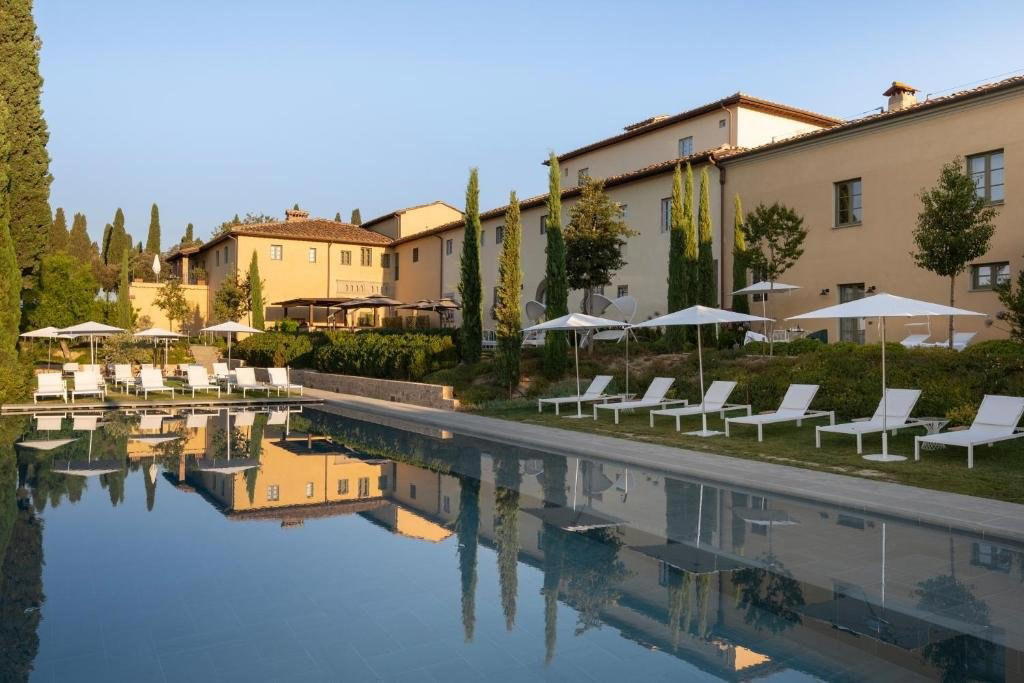
Bars in Cerreto Guidi
Browse all →

Restaurants in Cerreto Guidi
Browse all →


At a Glance
- Romantic
- Scenic
- Rustic
- Elegant
- Cozy
- Honeymoon
- Romantic Getaway
- Family Vacation
- Weekend Escape
- Garden
- Historic Building
- Panoramic View
- Pool
- Wi Fi
- Garden
- Tennis Court
- Vineyard
- Garden
- Pool
- Wi Fi
- Garden
- Tennis Court
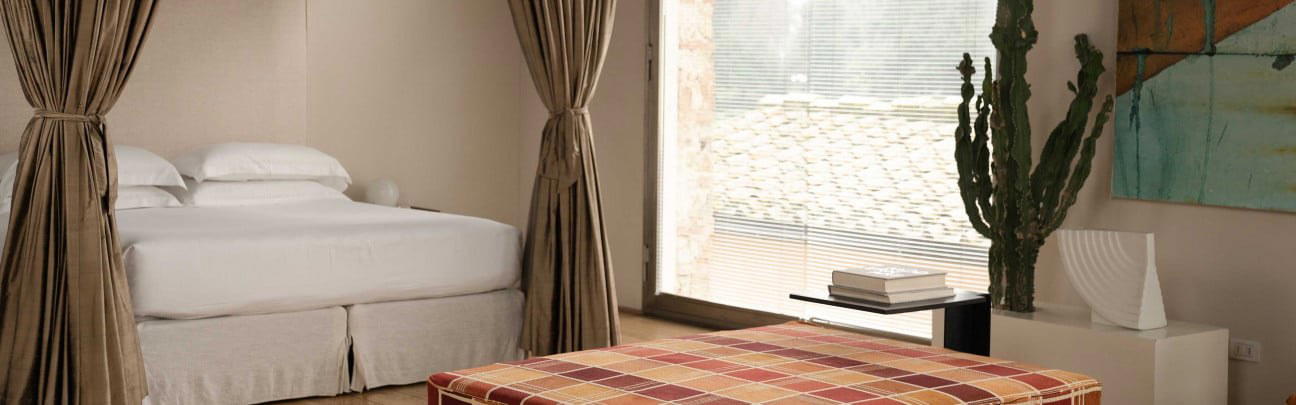
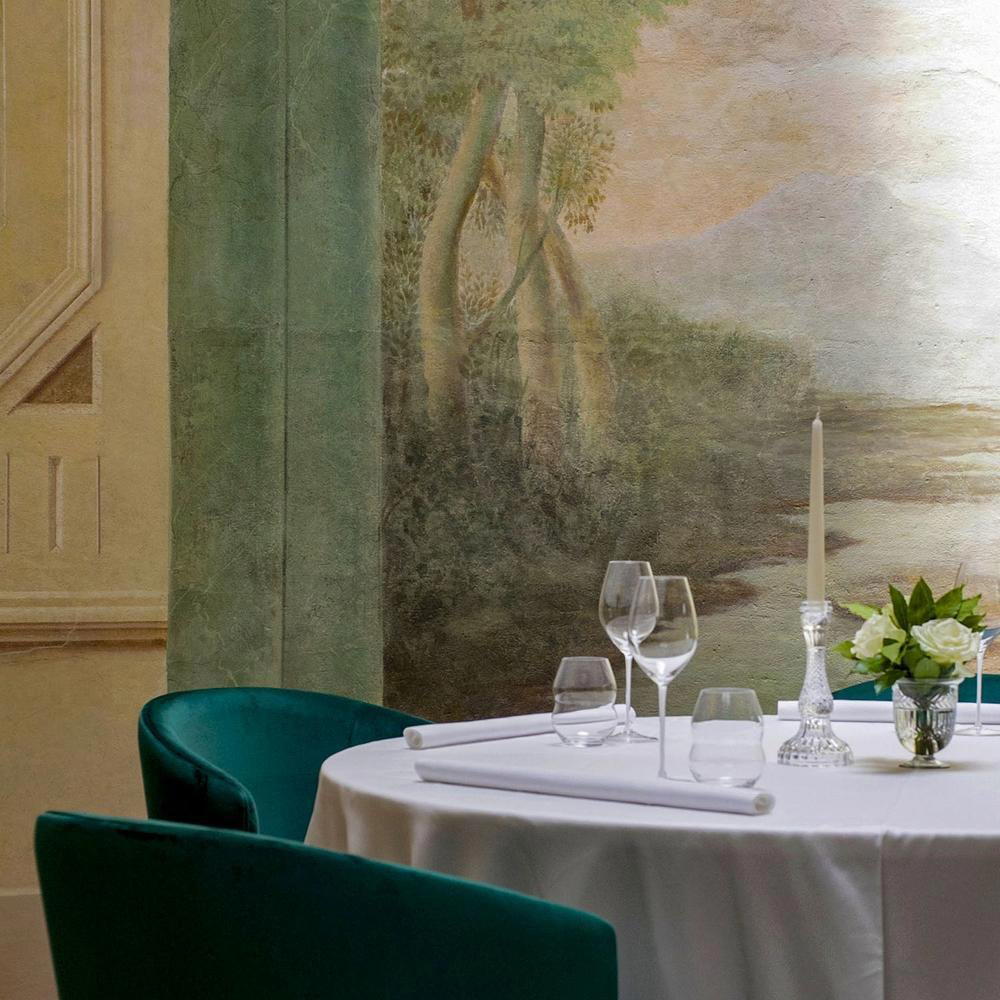
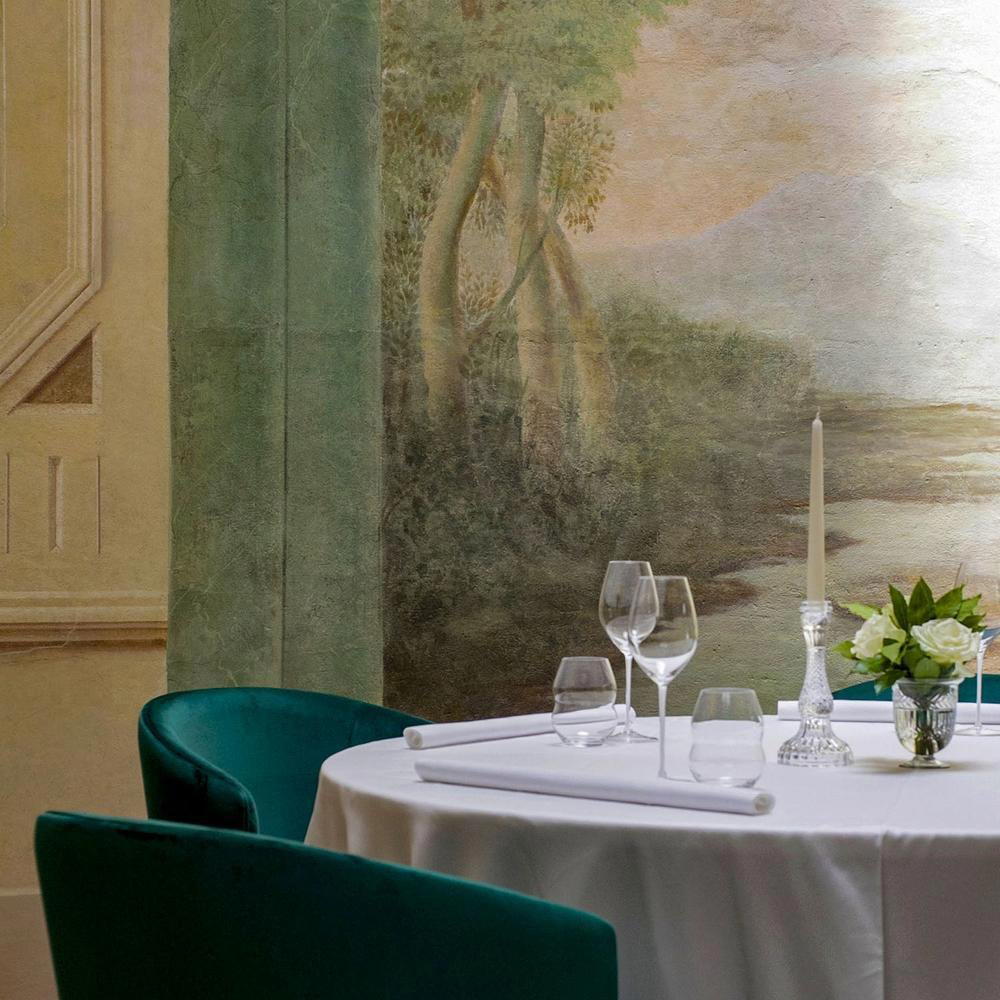
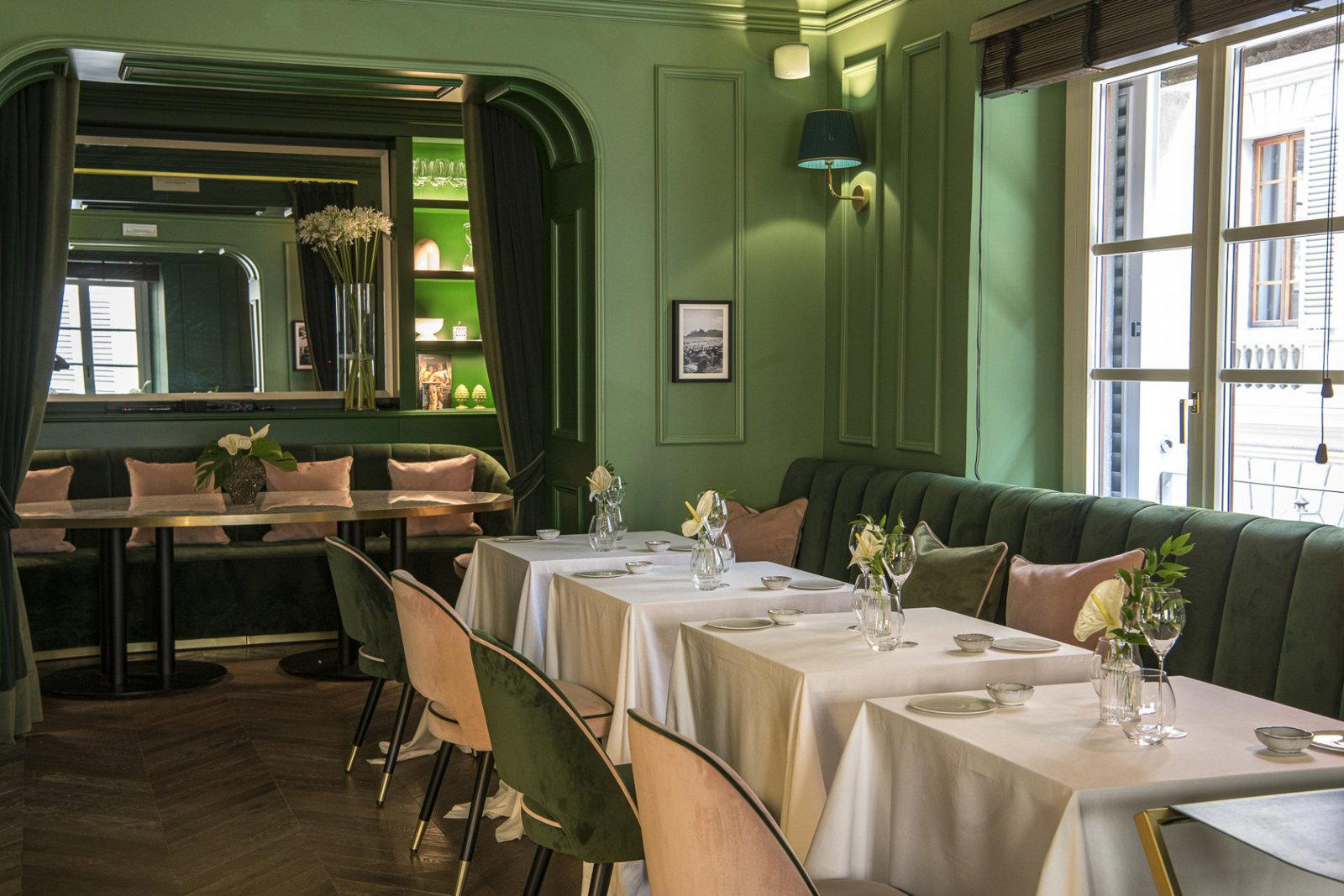
Serene and elegant with natural light, minimalist modern design blending warm neutral tones, natural materials, and rustic exposed beams in a peaceful countryside setting.