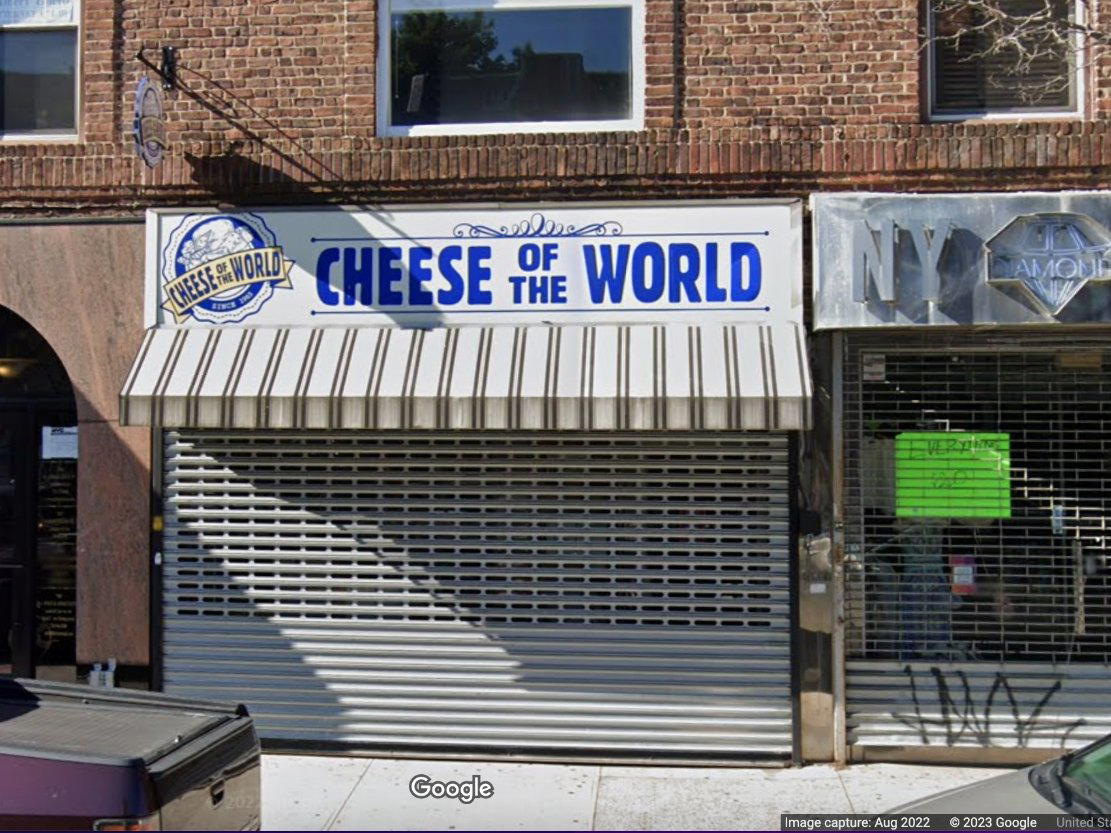
Cheese of the World
New York's specialty cheese shops occupy a distinct tier from the general deli counter, where provenance and affinage knowledge matter as much as selection. Cheese of the World operates in that specialist category, bringing an international selection to New York City's competitive artisan food scene. For those serious about sourced dairy, it represents the kind of focused retail experience the city's food culture has long supported.

Pearl is the En Primeur Club membership app, where members save venues, book tables and use the concierge.
Where Provenance Drives the Counter
New York's artisan food retail has always sorted itself into tiers. At the broad end sit the supermarket cheese sections and tourist-facing delis; at the narrow, specialist end sit the shops where the conversation begins with geography and season rather than price. Cheese of the World positions itself at that specialist end of the spectrum, where a name like that signals intent rather than mere variety. In a city that has sustained serious cheesemongers for decades, the operating premise here is that origin matters, and that a counter selling cheese from multiple countries requires real sourcing discipline to justify the premise.
The broader context is worth understanding. American cheese retail has shifted considerably since the early 2000s, when a generation of affinage-trained importers began introducing Neal's Yard-style curation to the U.S. market. Today, New York sits alongside San Francisco as one of the two cities where that culture has taken firmest root, supported by proximity to major air freight hubs and a consumer base willing to pay for properly aged product. A shop with international scope in this city isn't making an unusual claim; it's competing against some of the most knowledgeable cheese buyers on the continent.
The Sourcing Logic Behind an International Selection
Running a shop called Cheese of the World is a provenance argument made explicit. The name commits the business to a geographic breadth that most specialty cheese retailers deliberately avoid, precisely because sourcing across multiple countries means managing radically different supply chains, import regulations, and aging requirements simultaneously. Raw-milk cheeses from France face different FDA scrutiny than those from Switzerland or Spain. Wheels of Parmigiano-Reggiano require different humidity and temperature logistics than a washed-rind Taleggio or a bloomy-rind Vermont Creamery style. The fact that international specialty cheese retail exists and thrives in New York speaks to the city's infrastructure as much as its appetite.
For the consumer, an international selection means the ability to compare regional cheesemaking traditions side by side: the nutty, crystalline texture of a well-aged Comté against the buttery paste of a young Gouda, or the oceanic salinity of a proper Roquefort against a domestic blue aged in very different conditions. This kind of comparative tasting is where cheese knowledge actually develops, and it's why the leading specialty shops in New York tend to build their reputation on staff who can walk that comparison in real time. The counter becomes a teaching tool as much as a retail fixture.
New York as a Cheese City
To understand where a shop like this sits, it helps to understand what New York's cheese culture has built. The city's density means that within a few square miles, a serious buyer can access farmhouse American producers, direct importers of European PDO cheeses, and retailers who have invested in their own aging caves to finish wheels on-site. That last category, in-house affinage, has become a meaningful differentiator in the last decade, as shoppers have grown sophisticated enough to recognize the difference between a cheese purchased young and sold quickly versus one that has been cellared and monitored to peak condition.
New York's restaurant culture reinforces this. The city's better cheese programs, whether on a pre-dessert trolley at a fine dining room or a board at a wine bar, have trained diners to expect specific provenance information. That expectation flows back to retail: customers arrive at specialty shops having read the menu at their last dinner and wanting to replicate the experience at home. The shop that can supply that loop, from producer to importer to counter to informed customer, earns a durable place in the food ecosystem.
For visitors staying at properties like The Fifth Avenue Hotel, Aman New York, or The Carlyle, A Rosewood Hotel, building a specialty food itinerary around artisan producers is an established part of how the city's better-informed guests spend their time. The same applies to those based at The Mark, Casa Cipriani New York, or Crosby Street Hotel, all of which sit close enough to the city's specialty food corridors to make a cheese shop visit a natural extension of the day.
Planning a Visit
New York's specialty retail sector has seen meaningful flux since 2020, and hours and locations sometimes shift without wide press coverage. Checking via a current Google search or the shop's own channels before making a dedicated trip is the reliable approach. For those staying at properties like The Whitby Hotel or The Greenwich Hotel, the concierge desk is often the fastest source of current intelligence on specialty food addresses in the neighborhood.
For broader context on eating and drinking well across the five boroughs, our full New York City restaurants guide covers the categories and neighborhoods in more depth. Those planning trips that extend beyond New York might also consider the food and lodging programs at SingleThread Farm Inn in Healdsburg, where the sourcing logic runs from farm to inn to table in a way that rhymes with what the leading specialty retailers are doing at the counter level, or Auberge du Soleil in Napa for a wine-country parallel. Further afield, properties like Troutbeck in Amenia bring a farm-connected food sensibility to the Hudson Valley, within easy reach of the city.
For domestic travel beyond the Northeast, Amangiri in Canyon Point, Post Ranch Inn in Big Sur, Hotel Bel-Air in Los Angeles, and Four Seasons at The Surf Club in Surfside each represent the kind of food-forward hospitality that EP Club tracks in parallel with specialty retail. International equivalents worth noting include Aman Venice, Badrutt's Palace Hotel in St. Moritz, and Bvlgari Hotel Tokyo, all of which sit in cities with their own serious artisan food cultures worth mapping. Additional properties in the EP Club portfolio for future trip planning include Raffles Boston, Canyon Ranch Tucson, Kona Village, A Rosewood Resort, Little Palm Island Resort & Spa, Sage Lodge in Pray, and 1 Hotel San Francisco.
Cuisine and Recognition
A short peer table to compare basics side-by-side.
| Venue | Price | Awards |
|---|---|---|
| Cheese of the WorldThis venue (the venue you are viewing) | Not listed | Not listed |
| Aman New York | Not listed | 3 Michelin Keys · World's 50 Best #87 |
| The Carlyle, A Rosewood Hotel | $1,500–2,500 | 2 Michelin Keys · World's 50 Best #64 |
| Pendry Manhattan West | Not listed | 2 Michelin Keys · La Liste Top Hotels |
| Ace Hotel Brooklyn | $100–200 | 1 Michelin Key · Mr & Mrs Smith Seal of Approval |
| The Ludlow Hotel | $300–500 | 1 Michelin Key · Design Hotels Member |
Continue exploring