Casa Cipriani New York


Casa Cipriani New York occupies the Battery Maritime Building, a 1906 Beaux-Arts ferry terminal at the southern tip of Manhattan, earning Michelin 3 Keys recognition in 2024. The 47-room members' club and hotel combines Italian design restraint with river views of the Brooklyn Bridge and Statue of Liberty, a 15,000-square-foot wellness centre, and two distinct dining formats rooted in nearly a century of Cipriani hospitality.
Pearl is the En Primeur Club membership app — saves, bookings, and concierge access live there. Same editors, same standards.
- Address
- 10 South St, New York, NY 10004
- Phone
- +1 212-584-5801
- Website
- casaciprianinewyork.com
- Directions
- Get directions
 Saves & bookings on Pearl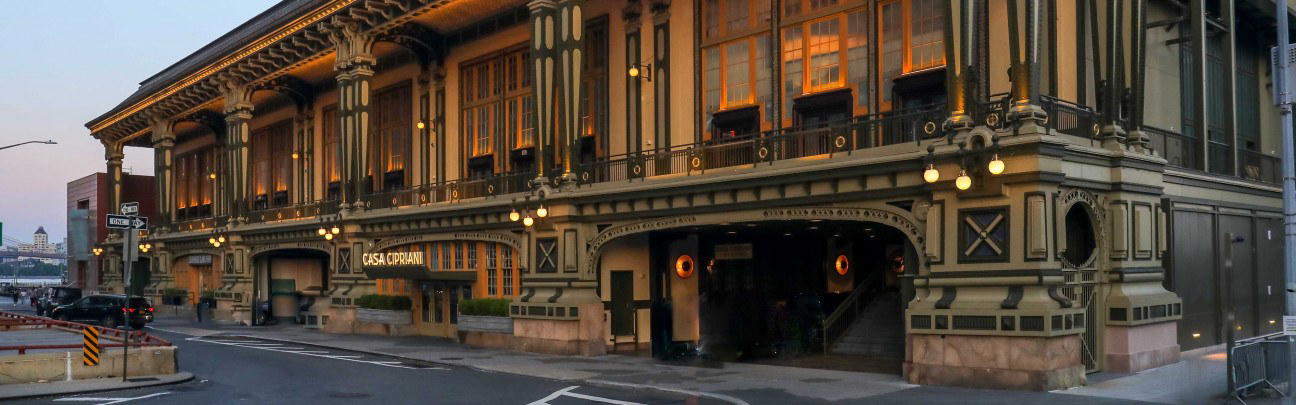
Where Lower Manhattan Meets Italian Restraint
The southern tip of Manhattan has always operated on a different register from the rest of the island. Down here, the financial district gives way to ferry terminals, open water, and a skyline that faces outward rather than inward. Approaching the Battery Maritime Building from South Street, what strikes you first is the scale of the Beaux-Arts facade: green copper cladding, arched colonnades, ornamental ironwork dating to 1906. The building was listed on the National Register of Historic Places in 1976, and it reads like something deposited from another century onto the edge of the East River. That the same structure now houses Casa Cipriani, a private members' club with 47 hotel rooms and a 15,000-square-foot spa, is either a notable act of preservation or an equally notable act of reinvention. Probably both.
In the broader context of New York luxury hospitality, Casa Cipriani sits in a small and specific niche. Properties like Aman New York and The Carlyle, A Rosewood Hotel define the upper tier of Manhattan's hotel market through different means, Aman through its spa-forward minimalism and near-private scale, The Carlyle through decades of Upper East Side cultural cachet. Casa Cipriani's position is anchored differently: by a building with genuine protected-heritage status, a hospitality lineage stretching back to Harry's Bar in Venice in 1931, and a Michelin 3 Keys award received in 2024, placing it among a handful of New York hotels to achieve that designation in the guide's inaugural Keys year.
The Wellness Programme in Context
Urban wellness has undergone a significant repositioning over the past decade. What was once a floor of hotel gym equipment and a handful of treatment rooms has, at the upper end of the market, become a primary amenity rather than a secondary one. The 15,000 square feet of spa and wellness facilities at Casa Cipriani represent one of the larger dedicated wellness footprints of any boutique hotel in Manhattan, a city where square footage is especially constrained resource. For comparison, destination-focused wellness properties like Canyon Ranch Tucson or Amangiri in Canyon Point are built around the retreat premise from the ground up, with programming depth and landscape immersion that a city hotel cannot replicate. What Casa Cipriani offers instead is the possibility of genuine restoration within a dense urban context, a different proposition, aimed at a different kind of guest.
The retreat mindset that drives travellers to isolated properties like Post Ranch Inn in Big Sur or Little Palm Island Resort and Spa increasingly informs how urban properties are expected to perform. Casa Cipriani's spa scale suggests that the property is designed to absorb extended stays rather than one-night transits, a point reinforced by the members' club structure, which creates a consistent, returning community rather than a rotating door of short-stay guests. The private membership layer also affects the wellness experience: facilities are not open to the general public, which keeps utilisation rates controlled in a way that hotel-only wellness spaces rarely achieve.
Rooms and the River
The 47 rooms and suites occupy a building whose exterior vocabulary is emphatically ornate, which makes the interior restraint more deliberate. Contemporary Italian design at this tier tends toward clean material choices, stone, linen, muted wood tones, where the architecture and the view are allowed to carry the atmosphere rather than furniture or decorative layering. River-facing rooms look across the East River toward Brooklyn Bridge and the Statue of Liberty, a sightline that no other hotel in Manhattan can quite replicate given Casa Cipriani's position at the southern edge of the island. Rooms at this rate bracket, in a high price tier, sit in the same pricing tier as properties like The Fifth Avenue Hotel and The Mark, where the premium reflects both location specificity and a curated amenity set rather than sheer room size.
For guests weighing downtown positioning against midtown or Upper East Side alternatives, the tradeoff is clear. Lower Manhattan is quieter at night, better connected to financial district transit, and significantly removed from the pedestrian density of midtown. Properties like The Beekman and The Greenwich Hotel occupy a similar downtown niche, each in a protected heritage building, each targeting a guest who is choosing neighbourhood character alongside hotel quality. Casa Cipriani's waterfront position adds a dimension that neither of those comparators can match.
Dining: Two Formats, One Lineage
The Cipriani name carries specific dining associations that go beyond brand recognition. The original Harry's Bar in Venice, opened by Giuseppe Cipriani in 1931, now in its fourth generation of family operation, established a template of technically simple Italian food executed with precision and served in a setting where the room and the service are as much the point as the plate. That template has been exported across continents, and the Club restaurant at Casa Cipriani operates within it: classic Cipriani format, consistent with the broader Cipriani hospitality identity. The Jazz Café takes a different reference point, modelled on the prewar supper club tradition with live music programming, a format that connects the venue to New York's own entertainment history rather than its Italian hospitality roots. Guests looking for the fuller context of the Cipriani lineage might also consider Aman Venice, which operates in the same city where Harry's Bar first opened in 1931.
Planning Your Stay
Casa Cipriani operates as a private members' club with a hotel component, which affects how access works in practice. Hotel guests have access to the facilities as part of their stay. The property sits at 10 South Street, Lower Manhattan, directly on the waterfront near Whitehall Ferry Terminal, which provides direct connections to Staten Island and, via subway, to the broader city network. Water taxi access from Midtown is also possible, which given the building's ferry terminal origins is a fitting approach. Rates from approximately $1,620 per night position this firmly at the upper end of the New York market, comparable to what guests pay at Raffles Boston or Four Seasons at The Surf Club in Surfside for similarly heritage-anchored properties with comprehensive wellness amenities.
Travellers for whom wellness programming is the primary driver, and who are open to a non-urban setting, might weigh Casa Cipriani against alternatives like Sage Lodge in Pray or Kona Village, A Rosewood Resort in Kailua Kona, where the retreat premise extends to the surrounding landscape. For those whose itinerary is centred on New York, the 15,000-square-foot spa, the Michelin 3 Keys recognition, and the irreplaceable building make a compelling case on their own terms.
Comparable Venues
Comparable venues nearby, for context on price, style, and recognition.
| Venue | Cuisine | Price | Awards | Notes |
|---|---|---|---|---|
| Casa Cipriani New YorkThis venue — the venue you are viewing | Historic waterfront members' club transformed into luxury hotel | $$$$ | Michelin 3 Key | Not listed |
| Crosby Street Hotel | Contemporary English luxury boutique hotel with playful design elements and artistic flair in a historic SoHo location. | $$$$ | Michelin 3 Key | SoHo-Little Italy-Hudson Square |
| The Whitby Hotel | Contemporary tower with Kit Kemp’s signature colorful-modern English design | $$$$ | Michelin 3 Key | Midtown-Times Square |
| The Greenwich Hotel | luxury boutique in historic brick building | $$$$ | Michelin 1 Key | Tribeca-Civic Center |
| The Fifth Avenue Hotel | luxury boutique in historic NoMad building | $$$$ | Michelin 2 Key | Midtown South-Flatiron-Union Square |
| Hotel Barrière Fouquet's New York | Parisian luxury transplanted to Manhattan with Art Deco sensibility and contemporary refinement; apartment-style accommodations emphasizing light, space, and high ceilings. | $$$$ | Michelin 2 Key | Tribeca-Civic Center |
Recognition history
Dated appearances from independent guides and award organizations, with the underlying list record or original source where available.
Mr & Mrs Smith Smith Seal of Approval
Mr & Mrs Smith
Virtuoso Luxury Hotel Partner
Virtuoso
Michelin 3 Keys
Michelin
Michelin 3 Keys
Michelin
Continue exploring
More in New York City
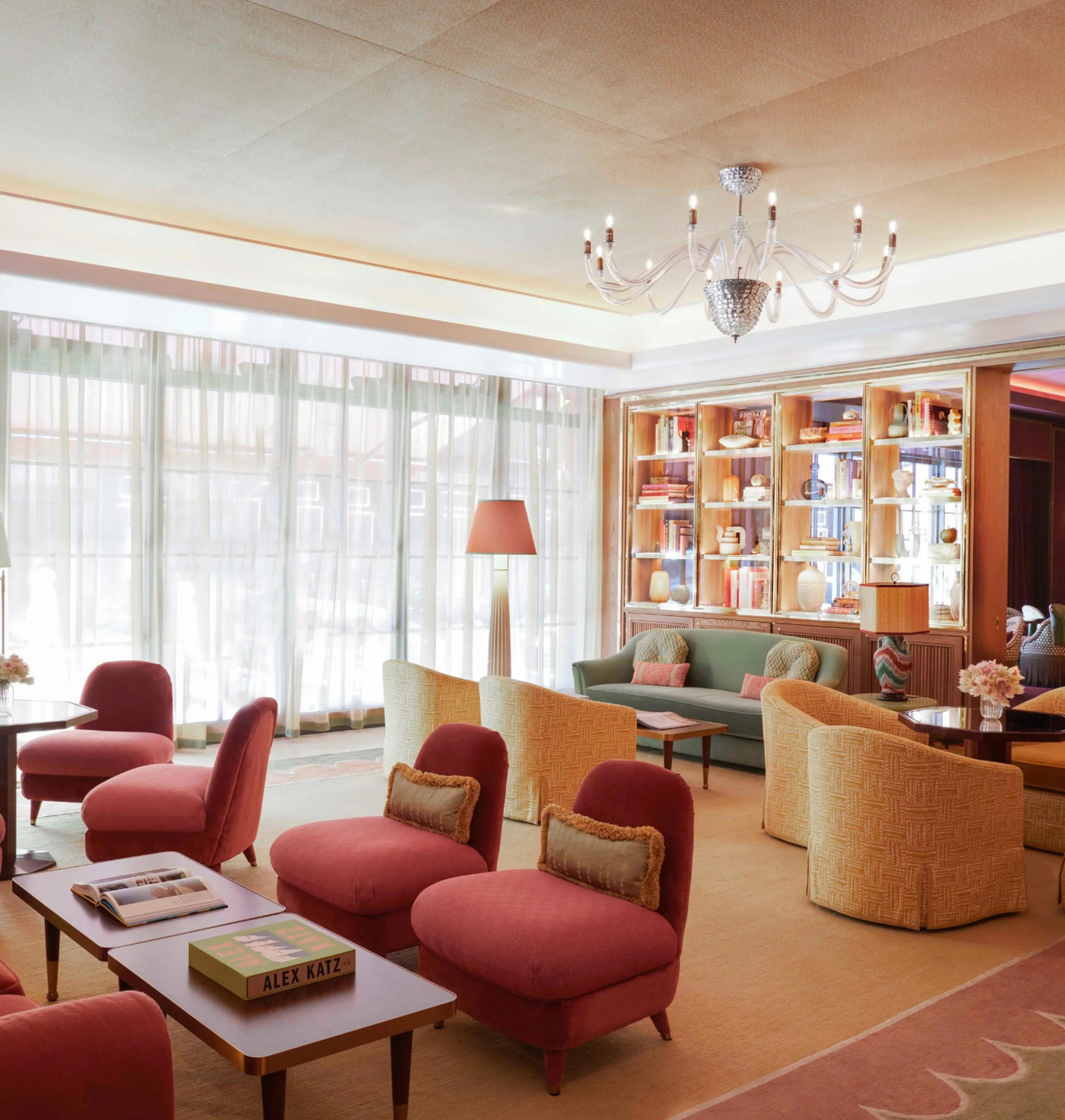
Hotels in New York City
Browse all →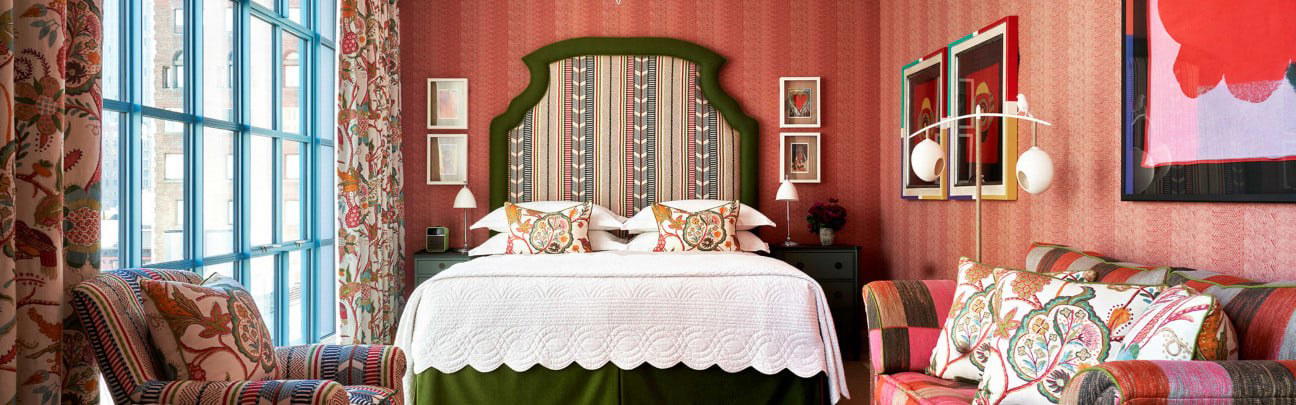



Bars in New York City
Browse all →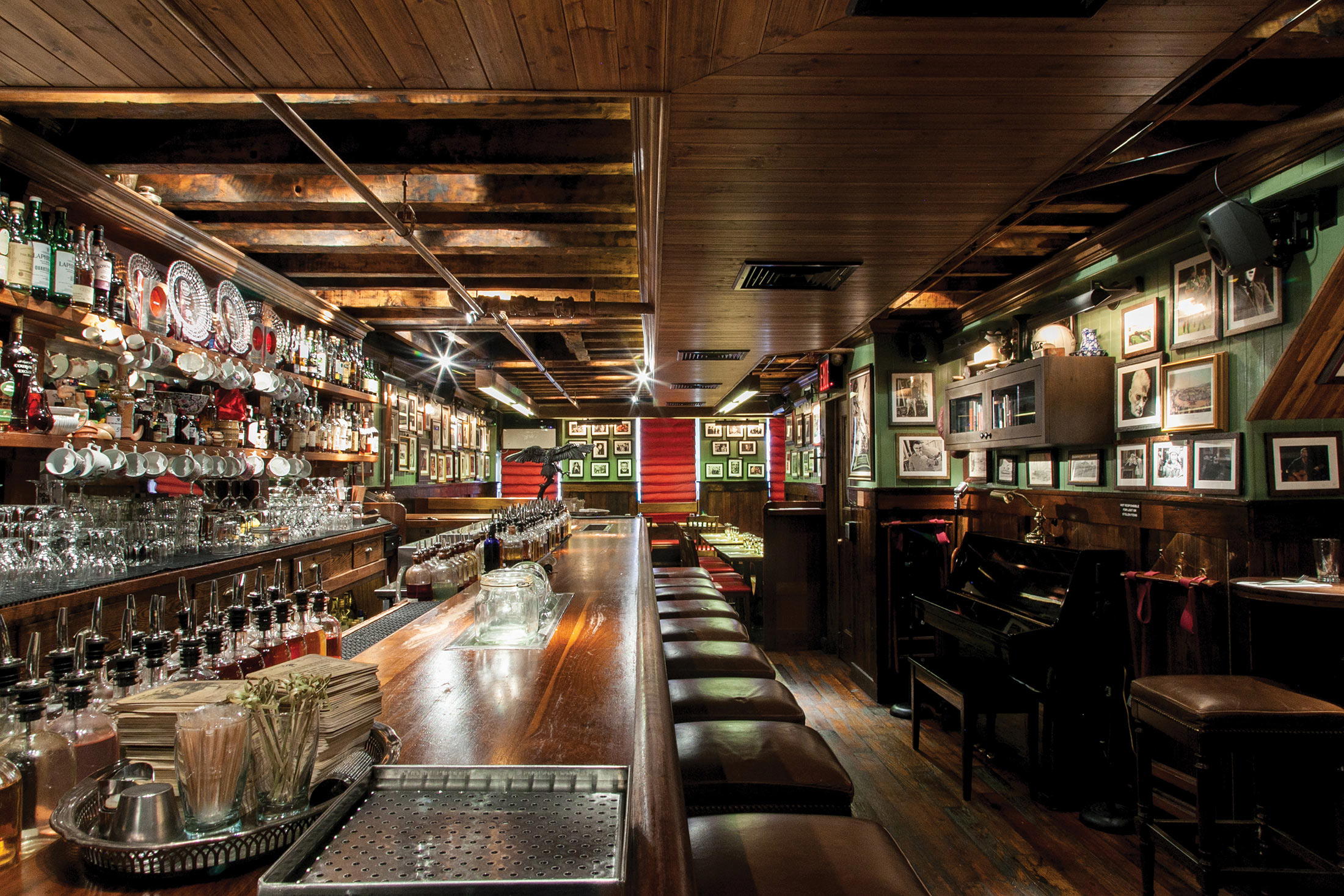

Restaurants in New York City
Browse all →






At a Glance
- Elegant
- Sophisticated
- Ornate
- Classic
- Well Known
- Romantic Getaway
- Anniversary
- Business Trip
- Waterfront
- Terrace
- Historic Building
- Panoramic View
- Spa
- Fitness Center
- Room Service
- Concierge
- Wi Fi
- Sauna
- Waterfront
- Skyline
- Spa
- Fitness Center
- Room Service
- Concierge
- Wi Fi
- Sauna
Discreet, elegant atmosphere with dimmable lighting, soundproofed rooms, and luxurious Italian furnishings creating a quiet, glamorous retreat.