The Four Horsemen









1 Michelin Star · World's 50 Best #15 · Star Wine List
Our verdict
A Williamsburg wine bar and restaurant built around natural wine and seasonal New American plates, The Four Horsemen holds a 2022 James Beard Award for Outstanding Wine Program and ranks #26 on Opinionated About Dining's 2025 Casual North America list. With 40 seats and a list spanning over 750 bottles, it operates in a tier where the wine program and the cooking carry equal weight.

Pearl is the En Primeur Club membership app, where members save venues, book tables and use the concierge.
The menu
What to order
- Veal_sweetbread_skewers
- House_bread
- Butter_beans
Forty Seats, Seven Hundred Bottles, and a Decade of Proof
When The Four Horsemen opened on Grand Street in Williamsburg in 2015, "natural wine bar" was still a phrase that divided opinion sharply. A decade later, the format has spread across every major American city, but the restaurant that helped establish its credibility in New York remains the reference point. The 40-seat room holds a 2022 James Beard Award for Outstanding Wine Program, ranks #26 on Opinionated About Dining's Casual North America list for 2025, and earned a Star Wine List #1 position in 2023.
The broader shift that The Four Horsemen represents, fine dining chefs operating within accessible, casual formats rather than formal tasting-menu structures, has reshaped how serious restaurants think about accessibility. At venues like Craft and ABC Kitchen, the same philosophy of ingredient discipline applies across a less ceremonial format. The Four Horsemen takes that logic further: the cooking under chef Nick Curtola is precise and technically grounded, but the room operates without the apparatus of fine dining, no tasting menu, no tableside theatre, no dress code signals. What you get instead is a 40-seat space where the wine list and the food pull at the same level.
The Wine Program as the Organizing Principle
Natural wine programs in New York have multiplied considerably since 2015, but few operate at the depth that The Four Horsemen established. The list, originally built by the late wine director Justin Chearno, now spans more than 750 bottles. Its range covers cult grower Champagnes, Jura savagnins, classic Burgundy, and producers from emerging regions that most wine bars would not touch. The selection rotates constantly, tracking organic, biodynamic, and low-intervention producers alongside cult bottlings and older vintages.
What distinguishes a program at this level is not just the range but the service intelligence behind it. Staff here are trained to move fluidly between casual and serious registers, equally comfortable recommending a pét-nat for a table that wants something easy and locating a rare vintage for someone who came in specifically to drink old Burgundy. That double-register fluency is harder to maintain than it looks, and it explains why the James Beard committee recognized the program specifically for outstanding achievement rather than simply range.
For comparison, the wine programs at New York's formal tasting-menu rooms, the $$$$ tier occupied by Per Se, Le Bernardin, and Eleven Madison Park, operate within a service architecture that is inherently more controlled. The Four Horsemen runs a program of comparable seriousness inside a format where the guest controls the pacing, which places it in a distinct competitive position.
The Cooking: Seasonal and Ingredient-Led
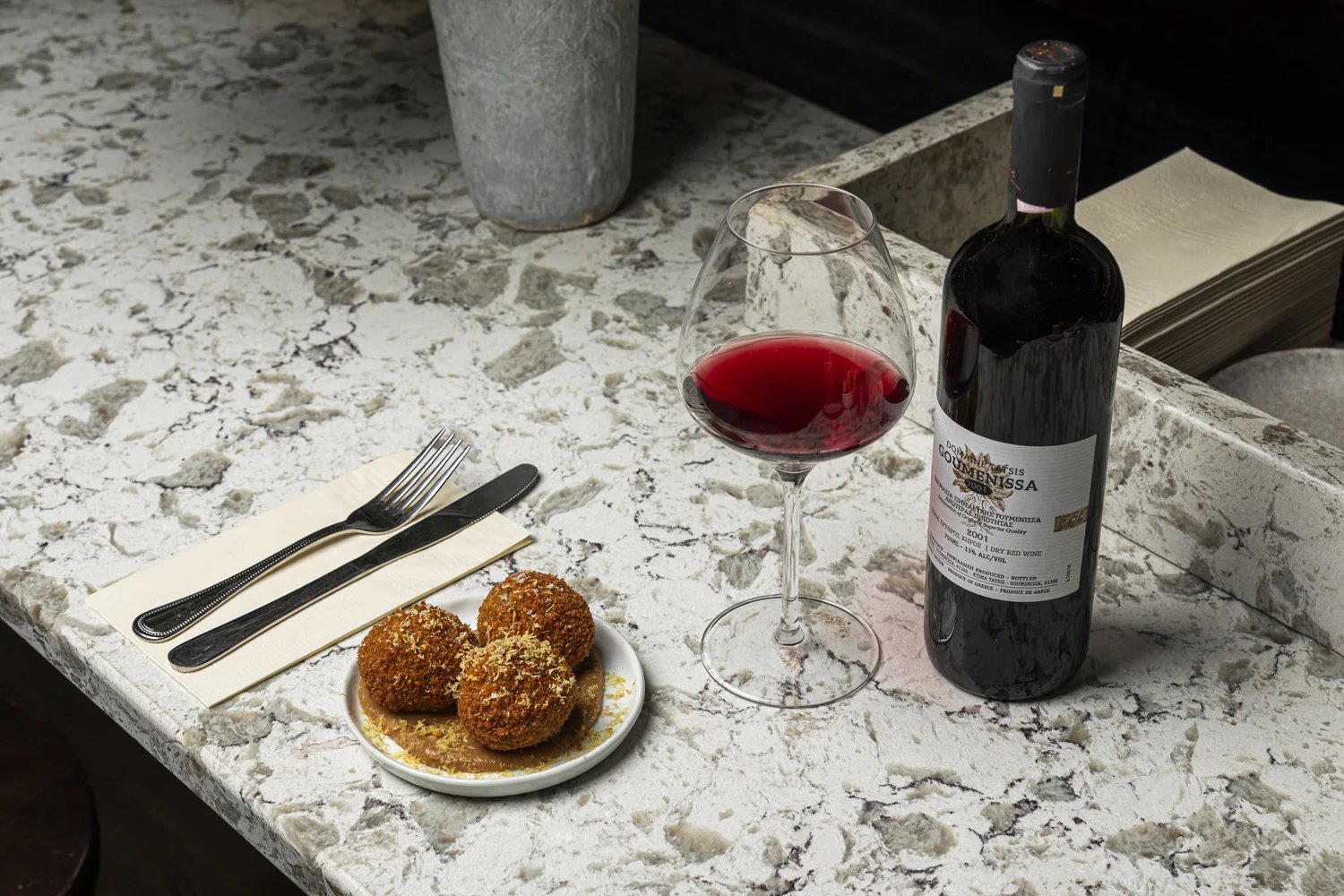
Chef Nick Curtola's approach to the menu reflects the same logic as the wine program: technical competence worn without formality. The food is described across multiple sources as seasonal, with North Atlantic-sourced ingredients carrying a global flavor vocabulary. Dishes documented across review records include razor clams with fish sauce and lime, yakitori-style sweetbreads, chicken schnitzel with peak-summer tomatoes, and veal sweetbread skewers with soy-cured egg yolk. The menu changes regularly, and portions are designed for sharing, a format that makes pairing across multiple bottles genuinely practical rather than just theoretical.
The sharing format also reinforces the wine-forward logic of the room. When plates are designed to rotate and the list spans 750+ bottles, the meal becomes a tasting exercise rather than a conventional three-course progression. That structural decision separates The Four Horsemen from New American restaurants that use seasonal ingredients but remain organized around a conventional dining sequence, such as The Dutch or Beauty & Essex, where the kitchen is the primary draw and the bar program is secondary.
The editorial angle on this kitchen is the same one that applies to the broader trend of technically trained chefs operating in casual formats: the cooking at The Four Horsemen would not look out of place at a considerably more expensive address. What Curtola has chosen instead, a menu that changes, portions sized for sharing, a room where the wine comes first, is a deliberate positioning decision, not a constraint. That same philosophy informs American restaurants like Lazy Bear in San Francisco and distinguishes them from the fixed-format precision of places like Alinea in Chicago or The French Laundry in Napa.
The Room and the Booking Reality
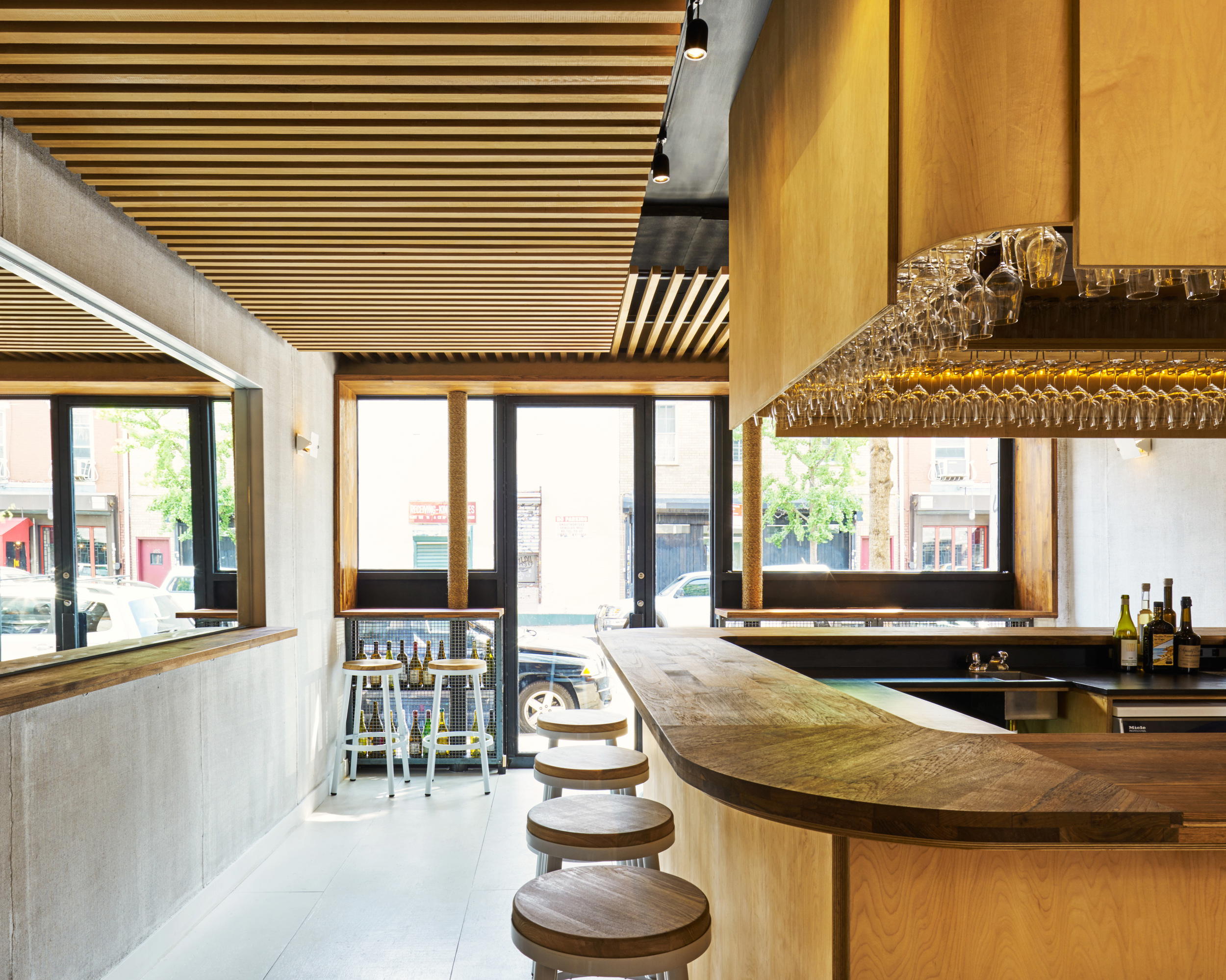
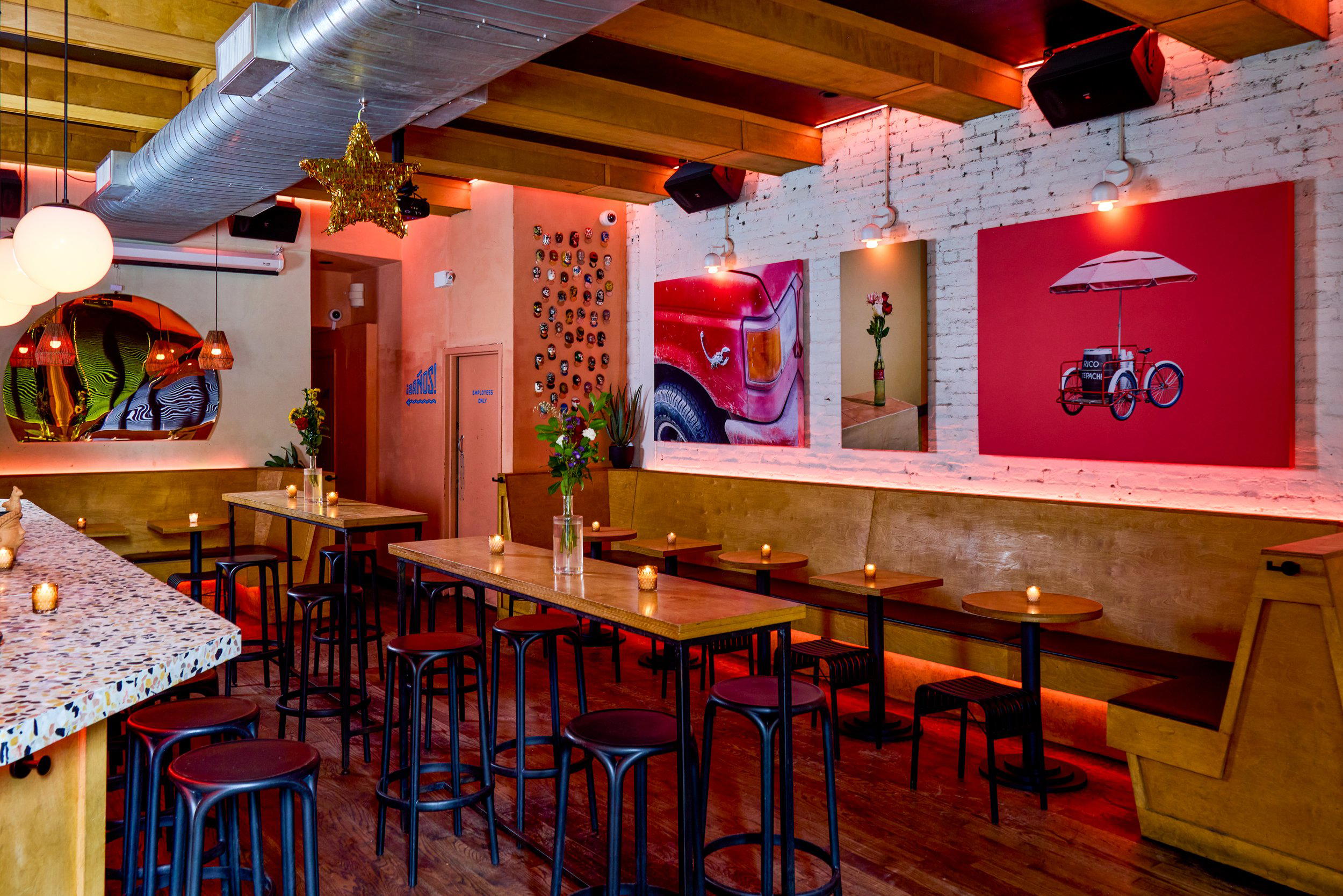
Four Horsemen operates 40 seats, with 10 of those at the bar. Reservations open 30 days in advance and disappear quickly. The practical intelligence here matters: bar seats are not reservable, and arriving 45 minutes before the 5:30 PM opening on weekdays is the established approach for walk-in access. Friday through Sunday service extends to lunch from 11 AM, which gives a slightly wider window for less competitive entry.
Room's sound design is part of the experience in a way that is specific to its ownership. Co-owner James Murphy, known as the frontman of LCD Soundsystem, has applied the same attention to audio that defines his recording work. The playlist and acoustic environment operate at a different standard than most restaurant spaces, which typically treat sound as an afterthought. That detail is not incidental to the venue's character: it reflects a founding sensibility where every element of the room was considered deliberately, which is the same logic that produced the wine list and the kitchen.
Four Horsemen's Williamsburg address places it in a neighborhood that has become one of the denser concentrations of serious wine bars and ingredient-focused restaurants in New York. That context matters for planning: the area rewards an evening that moves between venues rather than a single destination dinner. For a full picture of what the city offers across restaurant formats, see our full New York City restaurants guide.
Where It Sits in the New American Conversation
New American cuisine as a category has expanded far enough that the label now covers everything from The Inn at Little Washington's formal country-house format to Bayona in New Orleans and Emeril's operating within very different registers. On the West Coast, Providence in Los Angeles and Single Thread Farm in Healdsburg represent the maximalist, ingredient-obsessed end of that tradition. The Four Horsemen sits at none of those poles.
On Opinionated About Dining's Casual North America ranking, the movement from #66 in 2023 to #31 in 2024 to #26 in 2025 reflects a consistent trajectory rather than a single good year. That consistency in a casual format is rarer than it looks: the category generates high turnover, and the combination of a sustained wine program, a kitchen that evolves, and a 40-seat room that remains in demand represents a specific operational achievement.
The team's follow-up project, I Cavallini, opened directly across the street and takes an Italian direction. The proximity makes Grand Street in Williamsburg a two-stop evening in a way that concentrates the group's identity into a single block. For those planning around the wine program specifically, the New York City bars guide and wineries guide provide additional context for building an itinerary around serious drinking. For hotel options nearby, the New York City hotels guide covers the full range, and the experiences guide maps what else the city offers beyond the table.
Know Before You Go
- Address: 295 Grand St, Brooklyn, NY 11211 (Williamsburg)
- Hours: Monday to Thursday, 5:30 PM to 10:45 PM; Friday to Sunday, 11 AM to 10:45 PM
- Seats: 40 total, including 10 bar seats
- Reservations: Open 30 days in advance; fill immediately. Bar seats are walk-in only.
- Walk-in strategy: Arrive 45 minutes before the 5:30 PM opening for the leading chance at a bar seat
- Wine list: 750+ bottles; natural, organic, biodynamic, and low-intervention producers
- Awards: James Beard Award, Outstanding Wine Program (2022); Star Wine List #1 (2023); Opinionated About Dining Casual North America #26 (2025)
- Nearby: I Cavallini (the team's Italian follow-up) is directly across the street
What Should I Eat at The Four Horsemen?
The menu at The Four Horsemen changes regularly, so specific dishes vary by season. Based on documented review records, the kitchen's recurring strengths include sweetbread preparations (both yakitori-style and as skewers with soy-cured egg yolk), fried skate wing, and seasonal sharing plates built around North Atlantic ingredients with global flavor accents. The menu is designed for sharing across multiple dishes, which aligns with the wine-pairing logic of the room. The approach across Opinionated About Dining and New York Magazine coverage consistently flags the cooking as precise without being fussy, and the staff as knowledgeable enough to guide both wine and food selections for the full table. The Clocktower offers a useful point of comparison for those who want similar ingredient discipline in a more formal setting.
Cuisine Context
| Venue | Cuisine | Price | Awards | Notes |
|---|---|---|---|---|
| The Four HorsemenThis venue (the venue you are viewing) | Seasonal American Small Plates & Natural Wine Bar | $50–100 | 1 Michelin Star · World's 50 Best #15 | Not listed |
| Le Bernardin | French Seafood Fine Dining | $300–500 | 3 Michelin Stars · World's 50 Best #13 | French, Seafood |
| Atomix | Modern Korean Tasting Menu | $300–500 | 2 Michelin Stars · World's 50 Best #7 | Modern Korean, Korean |
| Masa | Seasonal Hokkaido Tempura Omakase | $150–200 | Tabelog 100 #34 | Sushi, Japanese |
| Per Se | French Fine Dining Tasting Menu | $300–500 | 3 Michelin Stars · World's 50 Best #40 | French, Contemporary |
| Eleven Madison Park | Contemporary Plant-Based Fine Dining | $300–500 | 3 Michelin Stars · World's 50 Best #4 | French, Vegan |
Recognition history
Dated appearances from independent guides and award organizations, with the underlying list record or original source where available.
Michelin 1 Star
Michelin
World's 50 Best North America's Best Restaurants #15
World's 50 Best
Star Wine List
Star Wine List
James Beard Award Semi Finalist
James Beard Award
Eater 38 #31
Eater
Full recognition history (18 entries)
James Beard Award Nominee
James Beard Award
New York Times Best Restaurants in New York City #20
New York Times
Opinionated About Dining Casual in North America Ranked #19
Opinionated About Dining
James Beard Award Semi Finalist
James Beard Award
New York Magazine The 43 Best Restaurants in New York
New York Magazine
New York Times Best Restaurants in New York City
New York Times
Opinionated About Dining Casual in North America Ranked #26
Opinionated About Dining
Opinionated About Dining Casual in North America Ranked #31
Opinionated About Dining
Opinionated About Dining Casual in North America Ranked #66
Opinionated About Dining
Opinionated About Dining Gourmet Casual Dining in North America Recommended
Opinionated About Dining
Star Wine List
Star Wine List
James Beard Award Outstanding Wine Program
James Beard Award
Robb Report 100 Greatest American Restaurants of the 21st Century #33
Robb Report
Continue exploring
More in New York City
Restaurants in New York City
All restaurants in New York City →
Bars in New York City
All bars in New York City →




The Four Horsemen
The wine
- Wine program
- Deep wine list
- Sommelier-led
- Natural wine
Details
- Cozy
- Intimate
- Trendy
- Sophisticated
- Date Night
- Special Occasion
- Open Kitchen
- Wine Cellar
- Natural Wine
- Sommelier Led
- Natural Wine
- Small Plates
- A La Carte
- Natural Wine
- Vegetarian Friendly
- Gluten Free Options
Current opening hours
- Monday
- 5:30–10:45 PM
- Tuesday
- 5:30–10:45 PM
- Wednesday
- 5:30–10:45 PM
- Thursday
- 5:30–10:45 PM
- Friday
- 11 AM–10:45 PM
- Saturday
- 11 AM–10:45 PM
- Sunday
- 11 AM–10:45 PM
Hours can change for holidays and private events. Hours as of .
Cozy and welcoming with candlelight, subdued lighting, warm atmosphere, and an open kitchen view that fosters intimacy without being overly noisy.