




1 Michelin Key · Vogue 2026 Vogue Best Hotels in Provence · Mr & Mrs Smith Seal of Approval
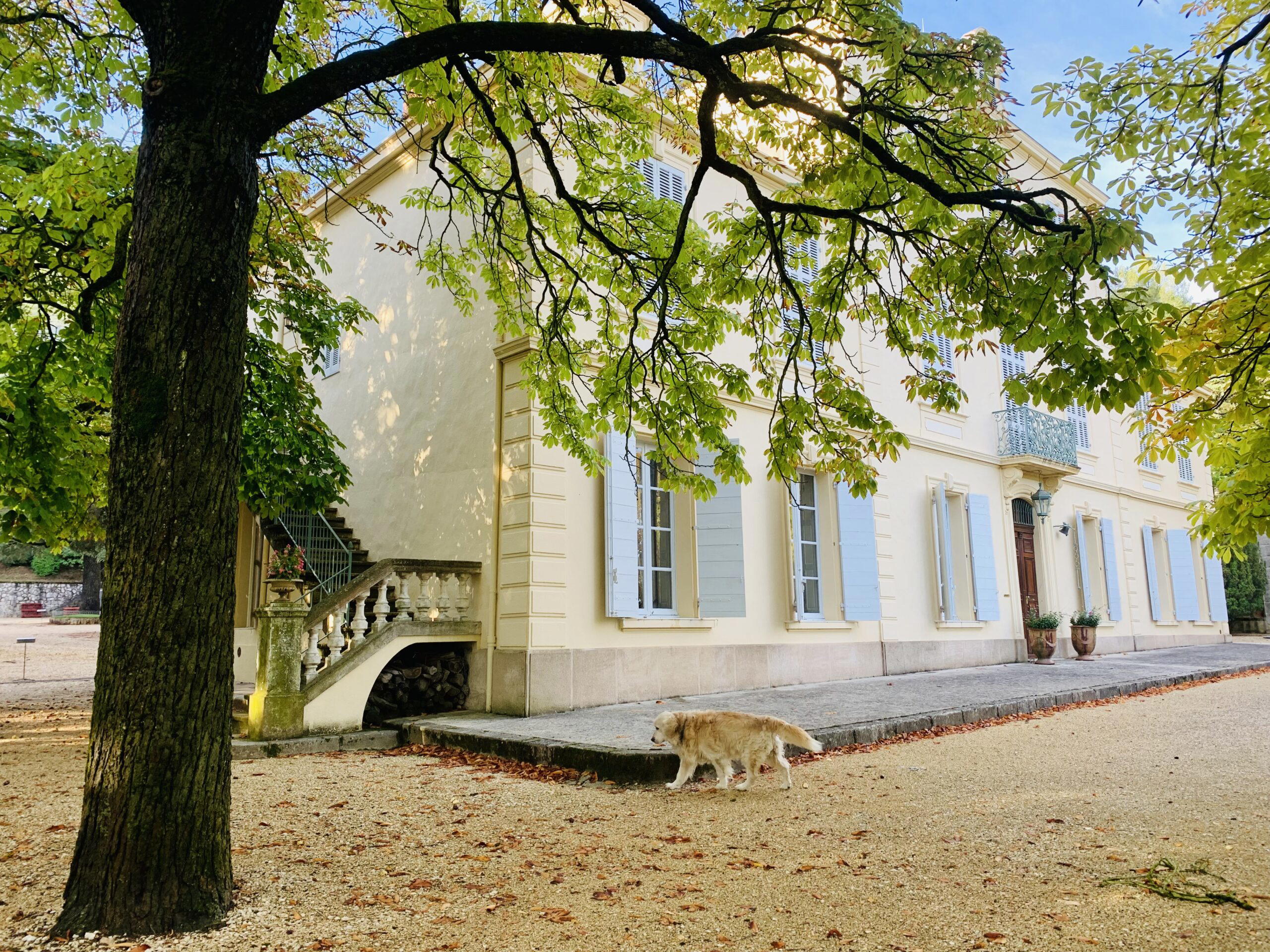
Positioned above the hilltop village of Bonnieux, Capelongue is a 57-room Beaumier property that reads as a serious argument for purpose-built Provençal hospitality. Designed by studio JAUNE and decorated by A.S.L., it holds a Michelin Key (2024) and a Gault & Millau Exceptional Hotel designation (2025), with a Michelin-starred restaurant and a spa with Roman-style bath on the same estate.

Pearl is the En Primeur Club membership app — saves, bookings, and concierge access live there. Same editors, same standards.
- Address
- Les Claparèdes, 550 Chem. des Cabanes, 84480 Bonnieux
- Phone
- +33 4 90 75 89 78
- Website
- beaumier.com
- Directions
- Get directions
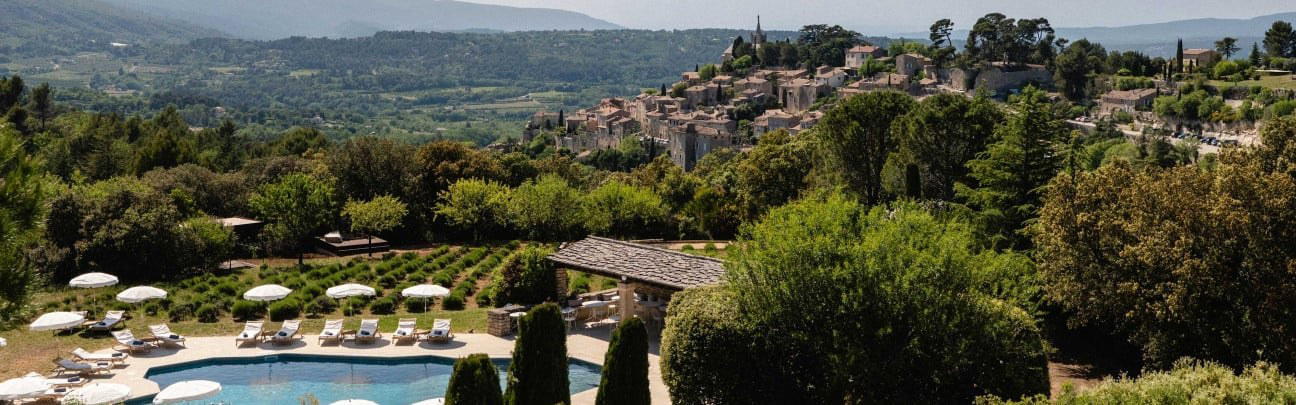
Where the Luberon Becomes Architecture
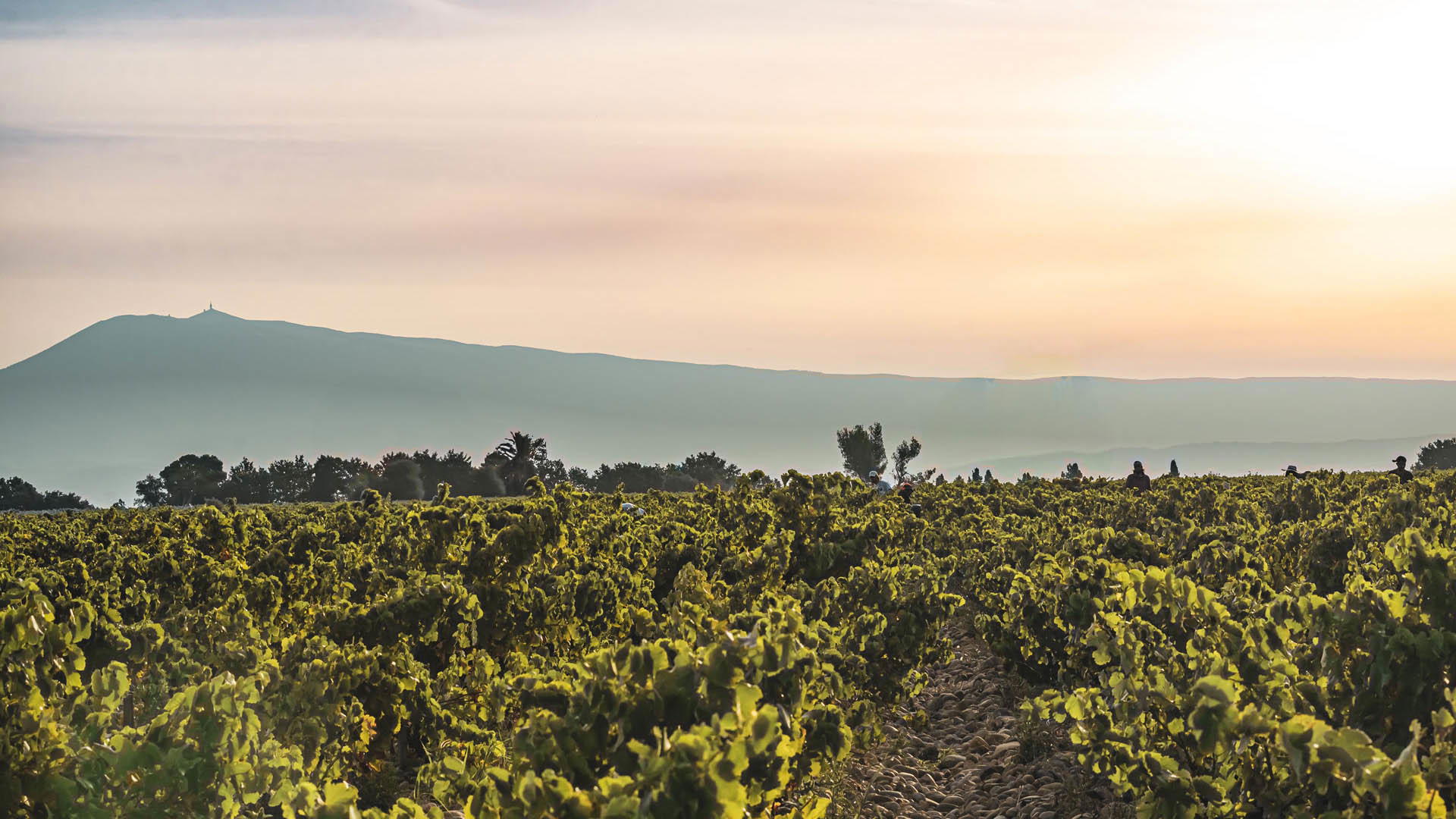
The approach to Bonnieux prepares you for something. Winding roads cut through garrigue, past dry stone walls and cypress alleys, past olive groves that spread across the valley floor and eventually give way to the ramparts of the village itself. By the time Capelongue comes into view, the Petit Luberon stretching out behind it and the silhouette of Mont Ventoux visible on a clear day to the north, the landscape has already done a significant part of the hotel's work. What the building adds to that context is the more interesting question.
Across the Luberon, the conversion of Provençal farmhouses into luxury retreats has become a well-established format. Properties from La Bastide de Gordes to Château de Montcaud have built strong reputations on authentic stone foundations. Capelongue operates in the same regional tradition but from a different structural starting point: it was conceived as a hotel rather than adapted from agricultural or aristocratic heritage, and that distinction shapes how it uses its site. At 57 rooms, it operates at a scale that allows genuine estate breadth, with pools, gardens, a spa, a bookstore, a café, and two distinct dining formats on the same grounds, without feeling institutional.
The Design Logic of JAUNE and A.S.L.
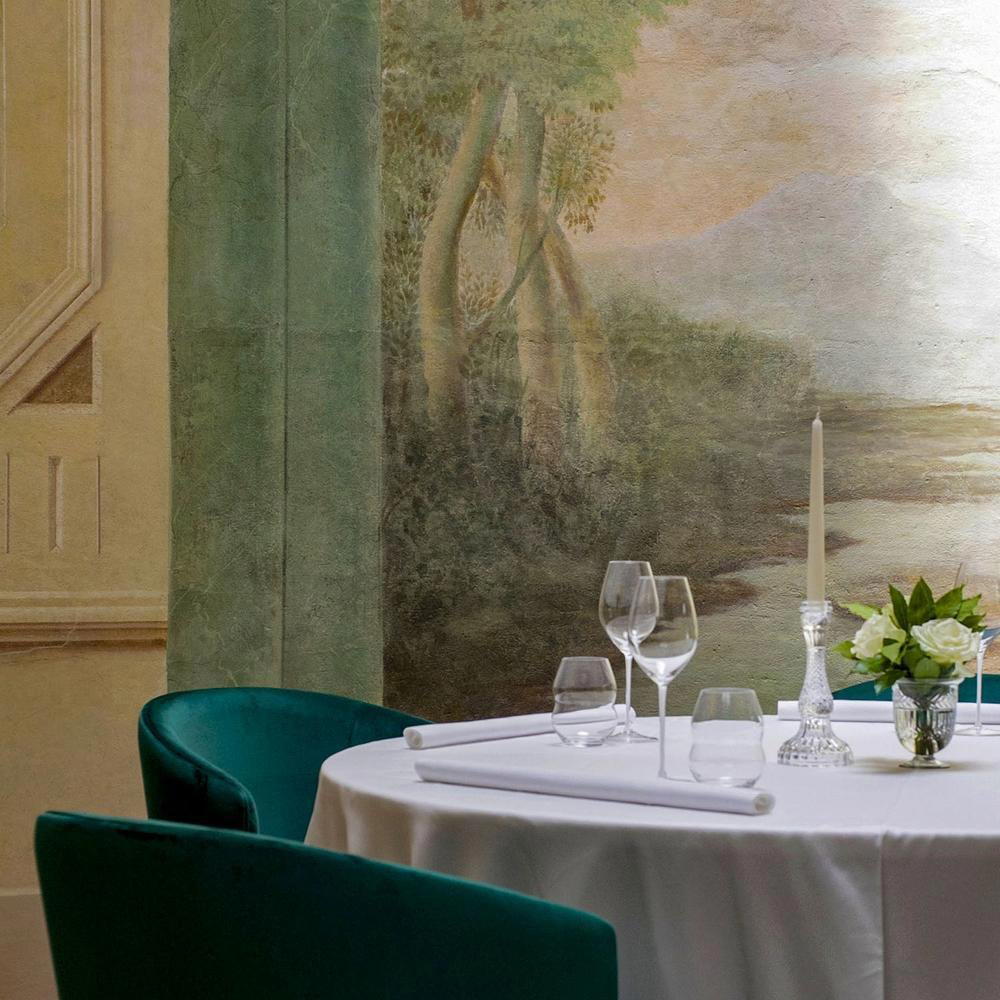
The recent renovation, carried out by architects JAUNE, defines how the property reads today. The brief appears to have been restraint: the interiors reflect regional character without reproducing it as pastiche. A focused color palette draws from the muted ochres and cool whites of traditional Provençal building, and the material vocabulary, glazed earthenware, stone, linen, contemporary Provençal seating, reads as a deliberate edit rather than a collection. Interior direction by A.S.L. brings decorative detail, including Arlesian photography, crowns of dried wheat and rice flowers, that anchors the aesthetic to a specific geography and season rather than a generalised Mediterranean mood.
That calibration matters in this part of France. The southern hotel market, from Hotel Du Cap-Eden-Roc on the Côte d'Azur to La Réserve Ramatuelle further west, tends to compete on either grandeur or minimalism. Capelongue claims a third register: a place where the hinterland is reflected in the spaces without sentimentality. The hotel holds a Michelin Key (2024), a recognition that now serves as a formal shorthand for properties where design and hospitality are considered together, and a Gault & Millau Exceptional Hotel designation for 2025, which places it in the top tier of French hotels assessed by that guide. These are credentials that sit alongside properties like Villa La Coste and Château de la Gaude in the broader Provence premium tier.
The Beaumier Context
Capelongue operates under the Beaumier group, a French collection that positions itself around properties with strong site identity rather than brand uniformity. Within that logic, Bonnieux is a sensible anchor: the village is among the Luberon's most coherent and least over-touristed, a cluster of colourful facades and century-old plane trees that functions as a proper working community rather than a set piece. That grounding gives the hotel a kind of borrowed authenticity, which the renovation appears to have worked to earn rather than assume.
The Beaumier model contrasts with the approach of larger French luxury groups. Where Cheval Blanc Paris or Cheval Blanc Courchevel build a recognisable brand language across very different contexts, Beaumier properties are designed to read as local first. The trade-off is that each property carries more individual risk, and more individual character. Capelongue, with its vegetable gardens, fruit trees, and vineyards contributing to both the kitchen and the visual logic of the grounds, demonstrates that character clearly.
Two Dining Registers, One Estate
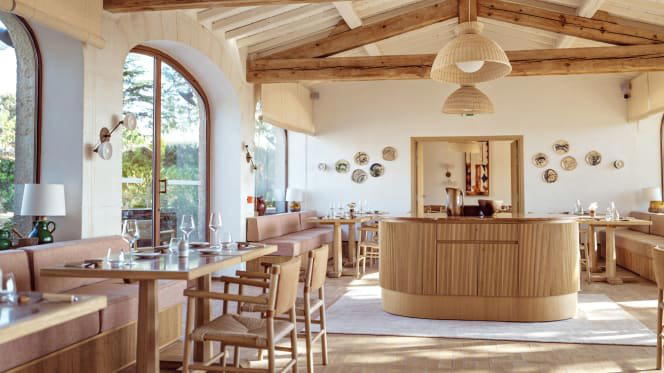
The estate runs two distinct food and beverage formats. The gourmet restaurant holds a Michelin star, placing it in a competitive set that includes Baumanière Les Baux-de-Provence and Domaine Les Crayères among hotel-restaurants operating at that recognition level in France. The second format is a wood-fired restaurant, which functions as a lower-key counterpart: more casual, with the productive grounds offering a direct local supply line. Breakfast, described as abundant and locally sourced, completes the picture of a property that treats food as integral to the stay rather than supplementary.
That dual structure, one formal and recognised, one relaxed and rooted, reflects a broader shift in how serious French hotel restaurants operate. The all-or-nothing model, in which a single Michelin-starred dining room defines the property's culinary identity, has given way in several properties to a range of options that match different guest moods and meal occasions. Capelongue's estate scale, with its own growing infrastructure, supports that range credibly. For comparison, Les Sources de Caudalie near Bordeaux and Hôtel & Spa du Castellet in Le Castellet apply similar dual-format logic within estate properties of comparable scale.
The Grounds and Spa
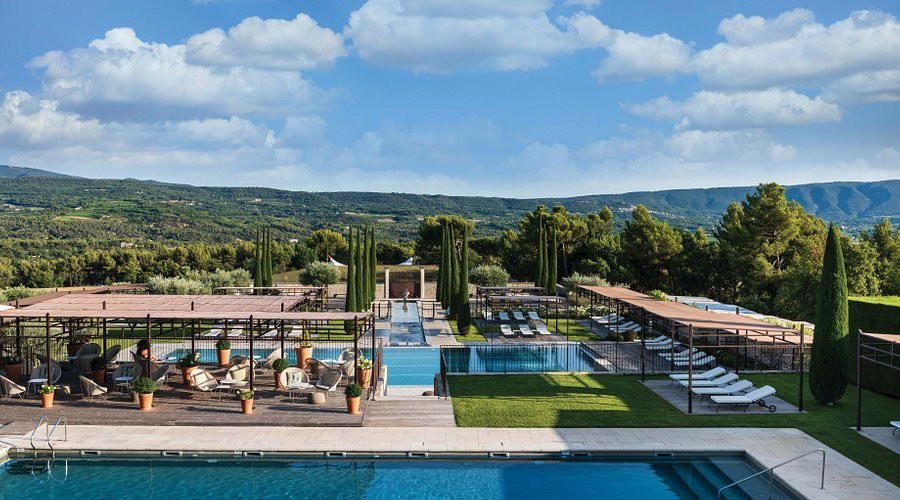
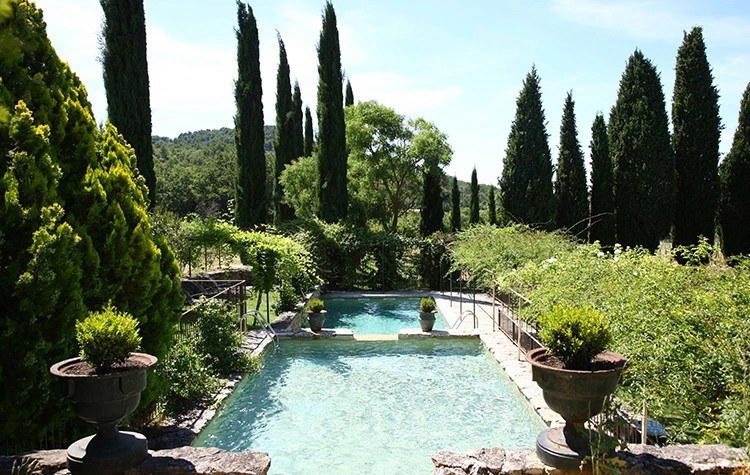
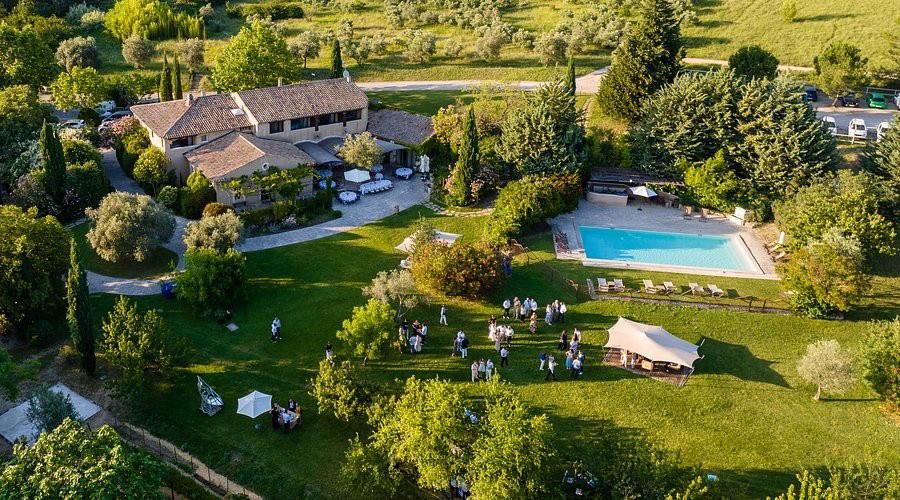
The outdoor infrastructure at Capelongue is extensive for a property of its size. Swimming pools, yoga sessions held in the gardens, and a spa with Roman-style bath represent a programme that goes beyond the standard wellness amenity. Oaks, jasmine, almond, tamarisk, pistachio, and rosemary structure the grounds, and the property's own vegetable gardens and vineyards give the estate a productive quality that distinguishes it from purely decorative resort landscaping.
Comparable wellness-led Provence properties, such as La Bastide de Gordes, tend to integrate spa facilities into historic stone structures, where the architecture itself carries much of the atmosphere. At Capelongue, where the building was purpose-designed, the outdoor spaces carry more of that weight. The result is a property whose identity shifts depending on where you are on the grounds: more formal and considered inside the renovated interiors, more loosely Provençal once you move into the gardens and terraces.
Rooms: Range and Character
Across 57 rooms, the property offers a range from classic categories to named suites at the upper end. The distinction between tiers is meaningful here. Classic rooms are finished to a standard that holds its own against equivalent categories at regional competitors, while the named suites approach a register that the property describes as bordering on extravagance while retaining composure. For the region, that upper suite tier competes with properties including The Maybourne Riviera and Château de la Chèvre d'Or for guests seeking both serious views and serious design in the South of France, even if the character of each property differs considerably.
The view question is not incidental at Capelongue. Rooms, suites, restaurants, pools, gardens, and the spa are all positioned to engage with the surrounding countryside. The combination of the Petit Luberon, the village rooftops, and the distant ramparts visible from multiple points on the estate makes aspect a consistent feature of the stay rather than a premium variable available only in certain categories.
Planning a Stay
Bonnieux sits in the Luberon Natural Regional Park, roughly equidistant between Apt and Ménerbes, with Aix-en-Provence accessible in under an hour by car. The village itself offers markets, local restaurants, and the kind of functional daily rhythm that separates it from more tourist-facing Luberon villages. For guests arriving by air, Marseille Provence Airport is the standard gateway. The property's address on the Chemin des Cabanes, above the village centre, means arrival by car is effectively necessary; the estate grounds absorb that requirement by making the property self-sufficient for most of the stay. Nearby, Le Mas les Eydins offers an alternative Bonnieux base at a different scale and register. For broader context on eating and staying in the area, the full Bonnieux guide covers the village's key options in detail. Guests with a longer southern France itinerary might position Capelongue alongside Airelles Saint-Tropez or Casadelmar in Corsica for a sequence of design-forward properties at varying price points and coastal or inland registers.
Comparison Snapshot
Comparable venues nearby, for context on price, style, and recognition.
| Venue | Cuisine | Price | Awards | Notes |
|---|---|---|---|---|
| Capelongue, a Beaumier hotelThis venue — the venue you are viewing | Restored 17th-18th century Provençal hamlet with modern luxury. | Not listed | 1 Michelin Key · Vogue 2026 Vogue Best Hotels in Provence | Not listed |
| Le Mas les Eydins | Intimate 18th-century Provençal mas with panoramic countryside views and luxurious, personalized hospitality. | $100–200 | 1 Michelin Key | Bonnieux |
| Domaine des Andeols | Artistic Provençal country estate with independent maisons | Not listed | 1 Michelin Key · Design Hotels Member | Saint-Saturnin-lès-Apt |
| La Réserve de Beaulieu | Classic Florentine Renaissance-style luxury hotel with pink and white facade dating from 1880. | $750–1,000 | 2 Michelin Keys · La Liste Top Hotels | Beaulieu-sur-Mer |
| Royal Riviera | Belle Époque luxury beachfront hotel with modern updates | Not listed | 1 Michelin Key · Virtuoso Luxury Hotel Partner | Saint-Jean-Cap-Ferrat |
| Le Petit Nice | Neo-Greek villa with contemporary interiors | $300–500 | 1 Michelin Key · Relais Chateaux Award | Endoume |
Recognition history
Dated appearances from independent guides and award organizations, with the underlying list record or original source where available.
Michelin 1 Key
Michelin
Mr & Mrs Smith Seal of Approval
Mr & Mrs Smith
Virtuoso Luxury Hotel Partner
Virtuoso
Vogue 2026 Vogue Best Hotels in Provence
Vogue
Gault & Millau Exceptional Hotel
Gault & Millau
Full recognition history (7 entries)
Michelin 1 Key
Michelin
Michelin 1 Key
Michelin
Continue exploring
More in Bonnieux
Hotels in Bonnieux
Browse all →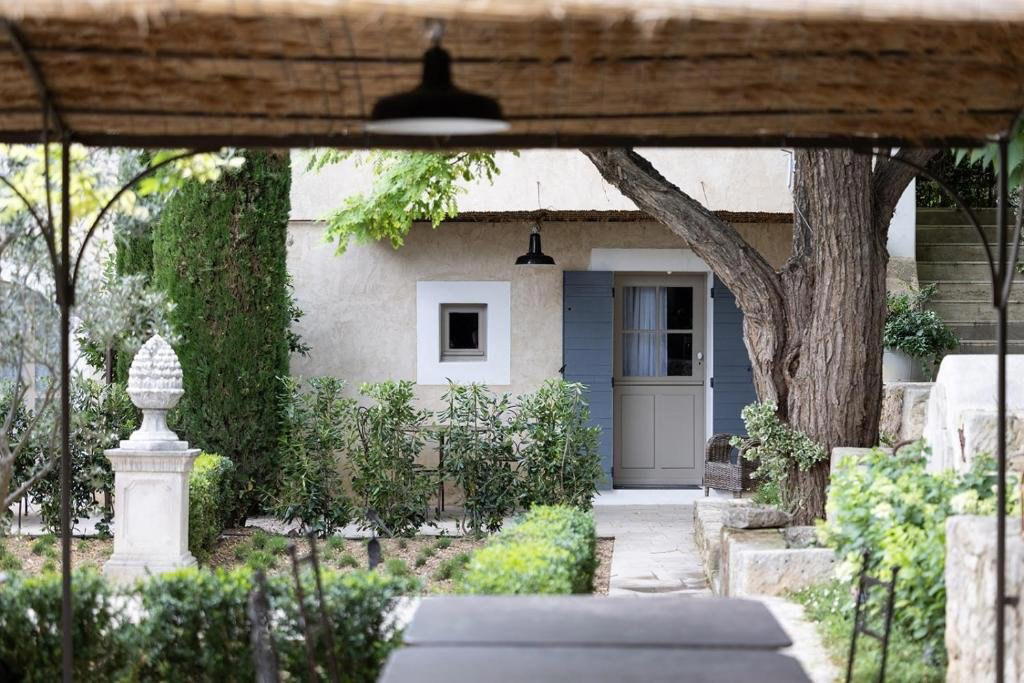
Bars in Bonnieux
Browse all →
Restaurants in Bonnieux
Browse all →
Details
- Romantic
- Elegant
- Scenic
- Quiet
- Sophisticated
- Rustic
- Honeymoon
- Romantic Getaway
- Wellness Retreat
- Anniversary
- Weekend Escape
- Panoramic View
- Garden
- Terrace
- Pool
- Spa
- Sauna
- Restaurant
- Room Service
- Wi Fi
- Concierge
- Fitness Center
- Mountain
- Garden
Relaxing and inviting with elegant Provençal charm, warm lighting in convivial spaces like the wood-fired restaurant, and tranquil natural surroundings praised for disconnection and peace.