



A four-generation family estate at the foot of Les Baux-de-Provence's limestone cliffs, Baumanière holds three Michelin stars at L'Oustau de Baumanière and a Michelin Green Star, alongside five Relais & Châteaux classification across 53 rooms spread through farmhouse buildings dating to the sixteenth century. Rooms start from USD 464 per night, and reservations at both the hotel and its starred restaurant should be secured at the time of booking.
Pearl is the En Primeur Club membership app — saves, bookings, and concierge access live there. Same editors, same standards.
- Address
- Baumanière D27, Mas de, 13520 Les Baux-de-Provence
- Phone
- +33 4 90 54 33 07
- Website
- baumaniere.com
- Directions
- Get directions
 Saves & bookings on Pearl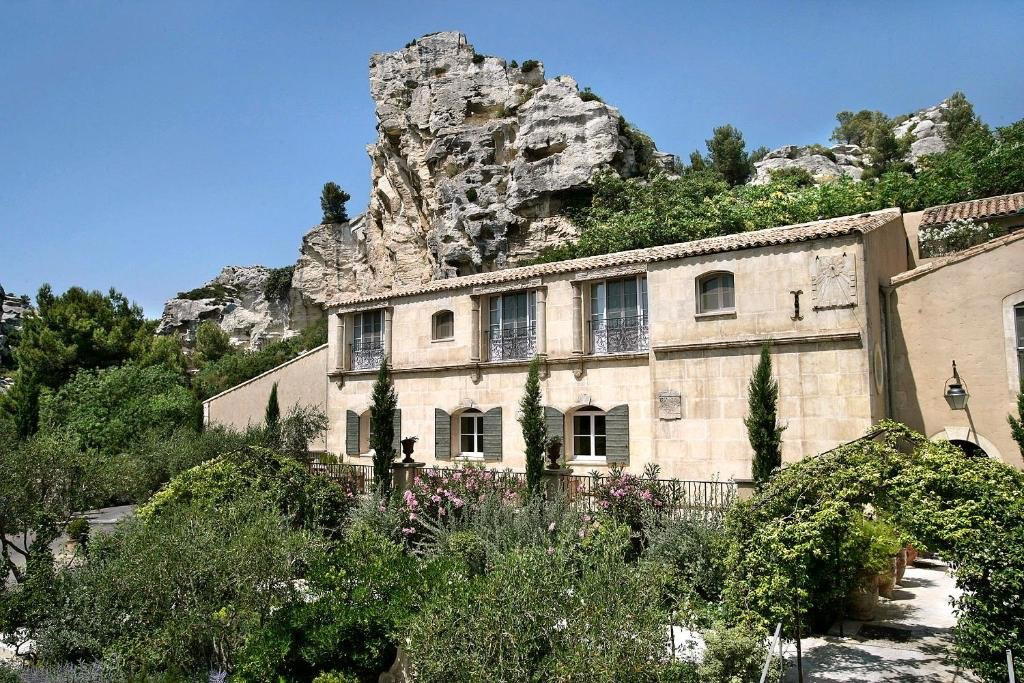
Stone, Light, and the Architecture of a Provençal Estate
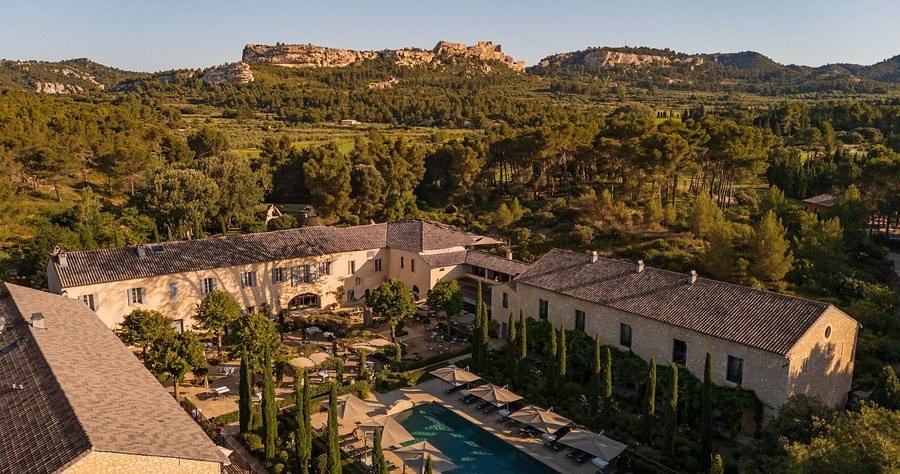
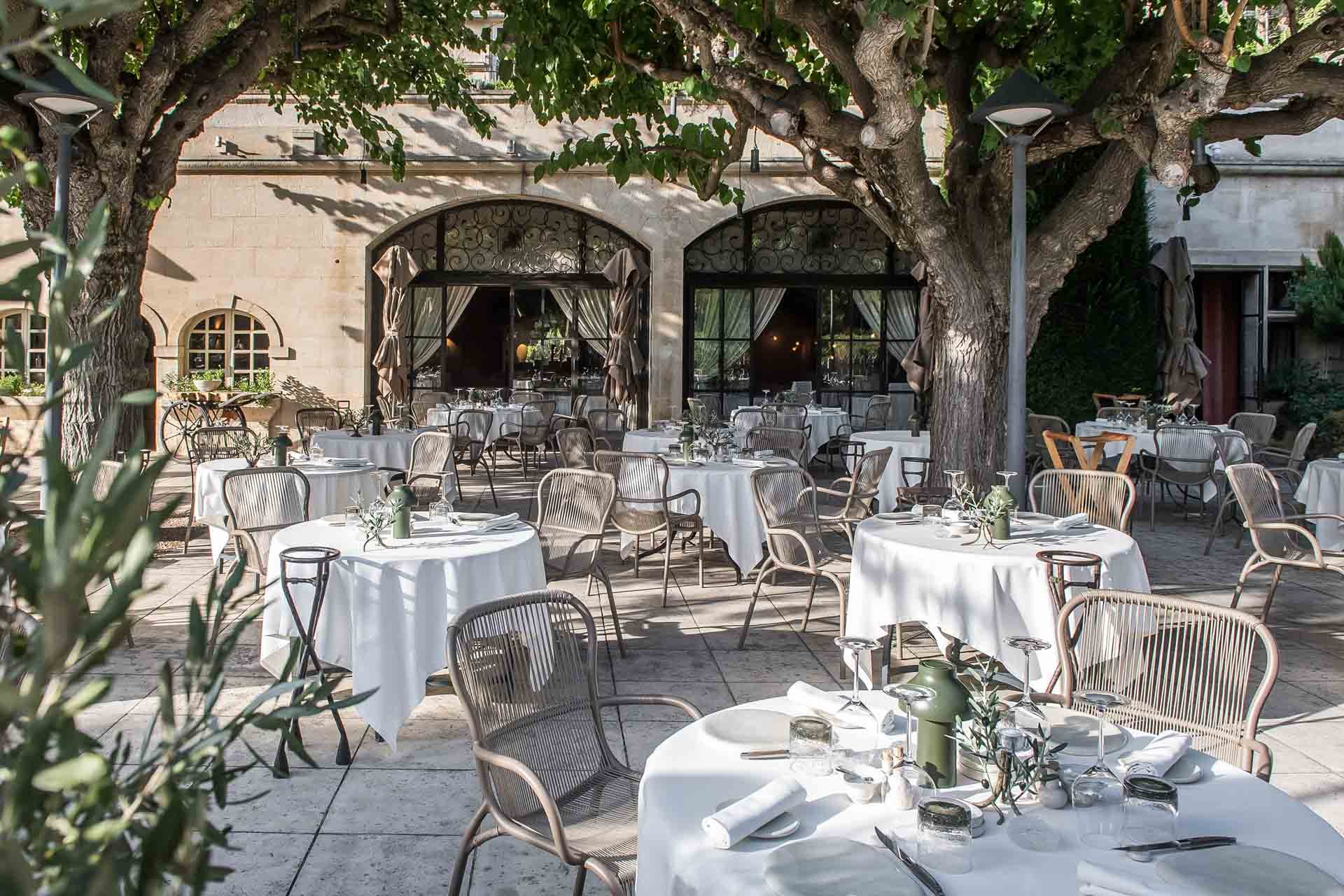
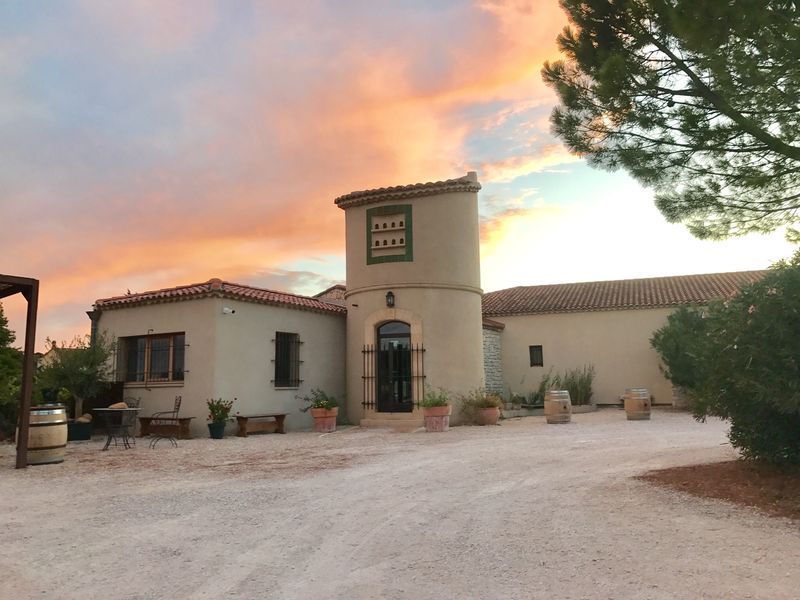
There is a particular quality of arrival that belongs to properties in the Alpilles. The D27 road narrows as the white limestone massif of Les Baux closes in on both sides, and the estate announces itself not through a formal gate but through a shift in atmosphere: the cliffs above, the wisteria on sun-warmed stone facades, the sense that the landscape has been arranged, over centuries, to frame exactly this kind of place. Baumanière sits at the foot of that geology, and the architecture responds to it honestly. The five buildings that house the 53 rooms were not designed to compete with the cliff face, they defer to it, their sixteenth-century farmhouse bones and flagstone floors reading as extensions of the terrain rather than impositions on it.
For our full Les Baux restaurants and hotels guide, this estate represents the clearest example of how southern French luxury has historically worked: not through grand interior statements but through the calibrated relationship between built structure and natural setting. The rooms demonstrate that principle across a deliberately varied palette. Some spaces are modern and luminous, with clean furniture lines that put the outdoor light on display; others lean into the logic of their original construction, with small openings, cool interiors, and the kind of heavy-walled stillness that sixteenth-century builders knew to build into thick stone for summer comfort.
The Dining Architecture: Two Rooms, Two Registers
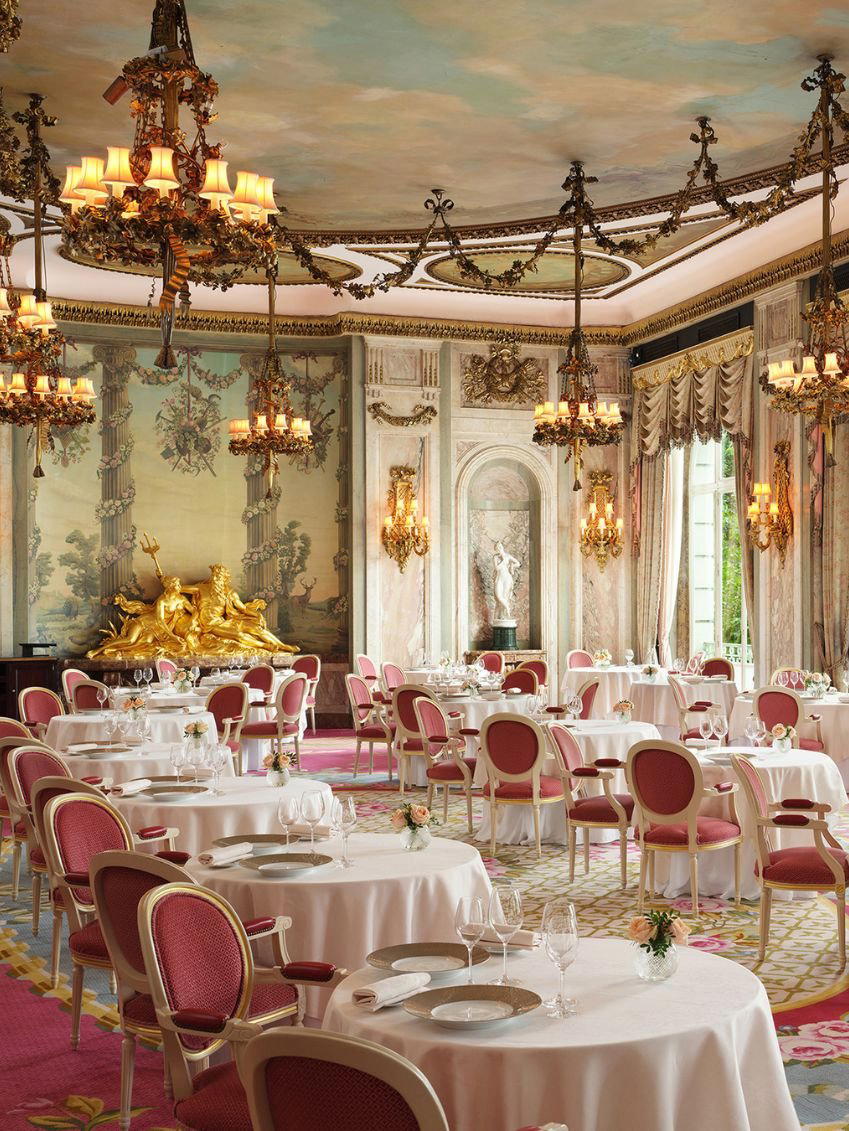
The property operates two restaurants, and the distinction between them is architectural as much as culinary. L'Oustau de Baumanière, which carries three Michelin stars and a Green Star as of the 2025 guide, occupies a dining room with cathedral ceilings and wrought iron chandeliers, a room built to read as austere but animated in practice by the quality of service and the direct sightline onto the Baux cliffs. Those windows are not a decorative afterthought: in the evening, the limestone flushes red as the sun drops, then shifts to a lit gold as the houses in the village above switch on for the night. Few dining rooms in Provence offer that kind of environmental theatre without engineering it.
L'Oustau de Baumanière has held its position in that category for decades, and the 2025 Michelin Green Star signals an additional layer of recognition around sustainability practices, which aligns with the estate's relationship to the agricultural Alpilles it sits within.
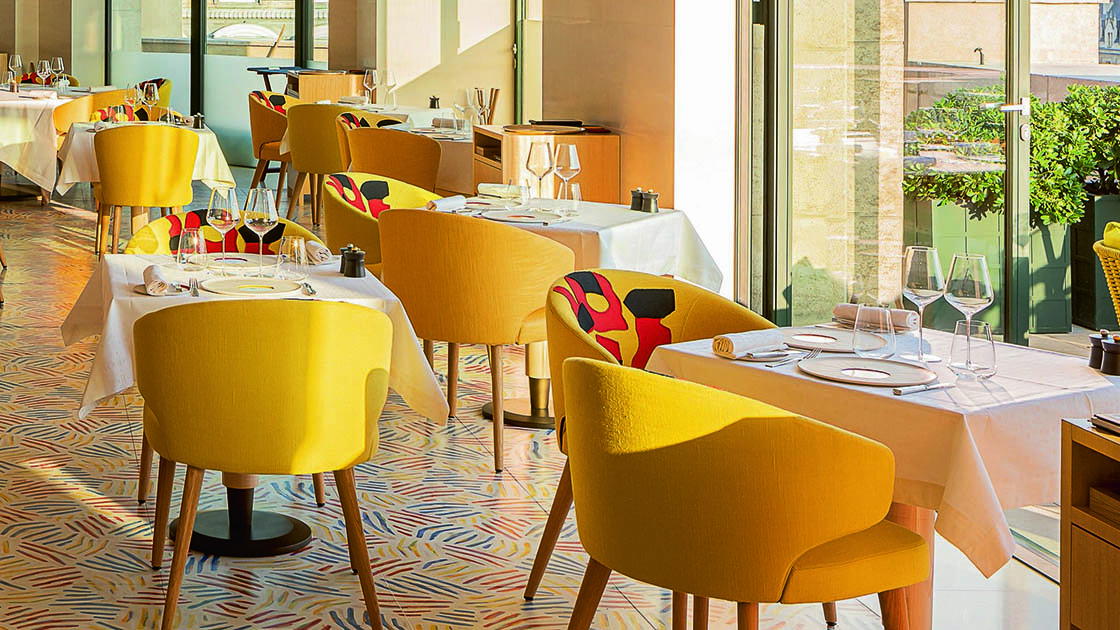
La Cabro d'Or operates as the property's second restaurant, pitched at local and regional gastronomy rather than the grand occasion format of L'Oustau. That two-restaurant structure, with one room handling the three-star format and another providing a lower-pressure entry point to the estate's cooking, is a model seen across a small number of Relais & Châteaux properties in France, compare the approach taken at Domaine Les Crayères in Reims, where multiple dining formats coexist under one luxury hotel roof. It gives guests staying multiple nights a genuine choice of register rather than obliging a repeat of the same formal experience.
Seventy-Plus Years of Family Ownership in the Relais & Châteaux Model
Baumanière opened in 1945 and has been family-run across four generations, the current operation continuing the line from founder Raymond Thuillier through Jean-André Charial. That continuity of ownership is now a meaningful differentiator in French luxury hospitality, where many historic properties have transitioned to group ownership or brand management. The Relais & Châteaux classification, which the property holds at five-star level, is a framework designed precisely for this kind of independent, owner-operated estate, it sits outside the major hotel group structures of properties like Cheval Blanc Paris or Cheval Blanc Courchevel, and positions Baumanière within a comparable set defined by character and culinary seriousness rather than brand scale.
The Gault & Millau 2025 rating of five points with Exceptional Hotel designation adds a second independent quality signal alongside the Michelin recognition. That pairing, Michelin recognition, Gault & Millau's hotel designation, and Relais & Châteaux classification for the overall property, places Baumanière among a small group of French estate properties carrying simultaneous recognition across all three frameworks. For context in the southern France comparable set, properties like La Bastide de Gordes and Villa La Coste operate in the same Provençal luxury tier but with different ownership models and kitchen profiles.
The Rooms: Distributed Across Five Buildings
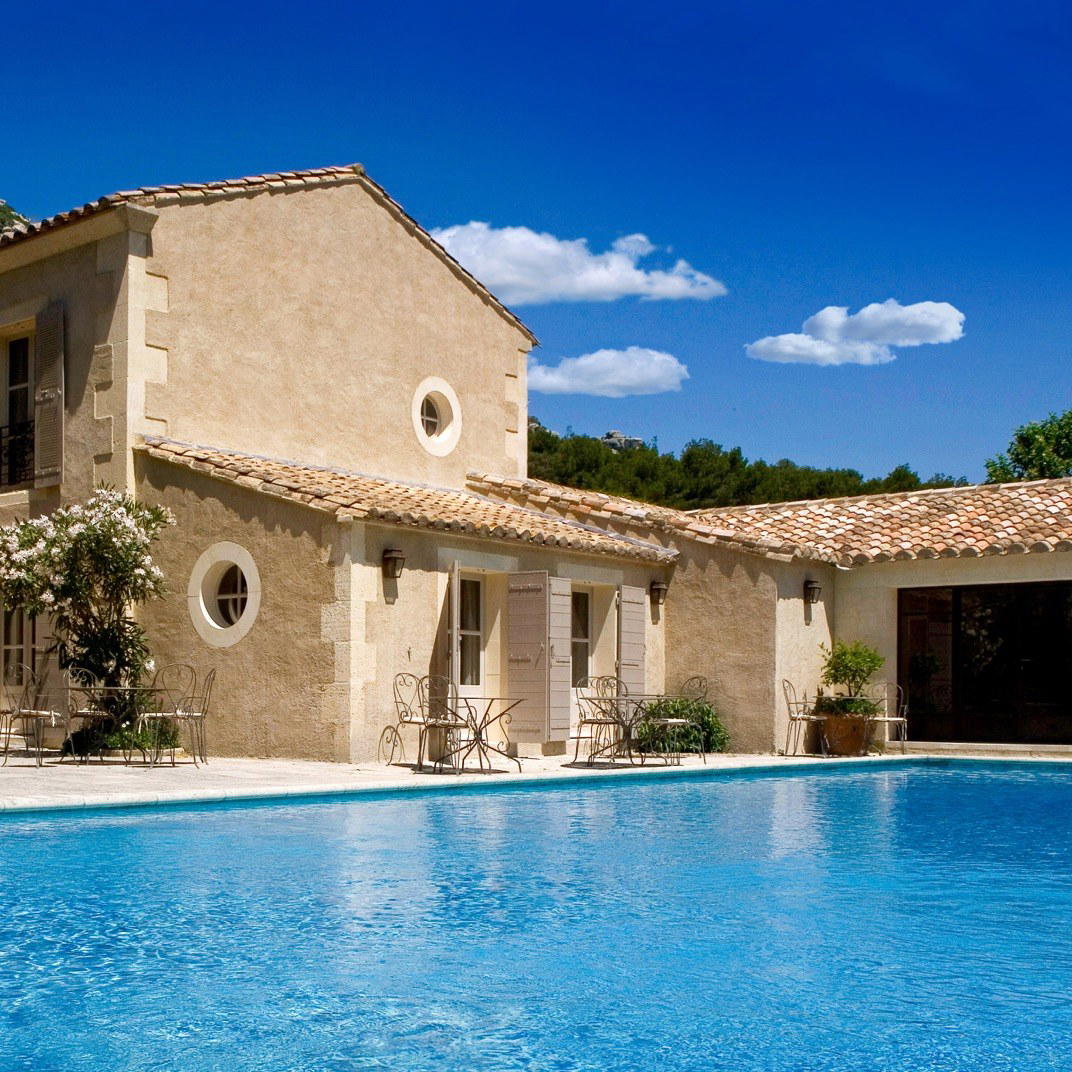
The 53 rooms are spread across five separate buildings rather than concentrated in a single hotel block, which shapes the guest experience more than any individual interior design choice. That distribution means the estate feels like a working agricultural compound rather than a resort, guests move between buildings, through landscaped grounds fragrant with the herbs and flowers that define the Alpilles in season, and the sense of private retreat is correspondingly stronger than it would be in a centralized structure. Some buildings have lifts; others operate on stairs only, which the property flags as a consideration for guests with mobility requirements and addresses through its reservations team at the planning stage.
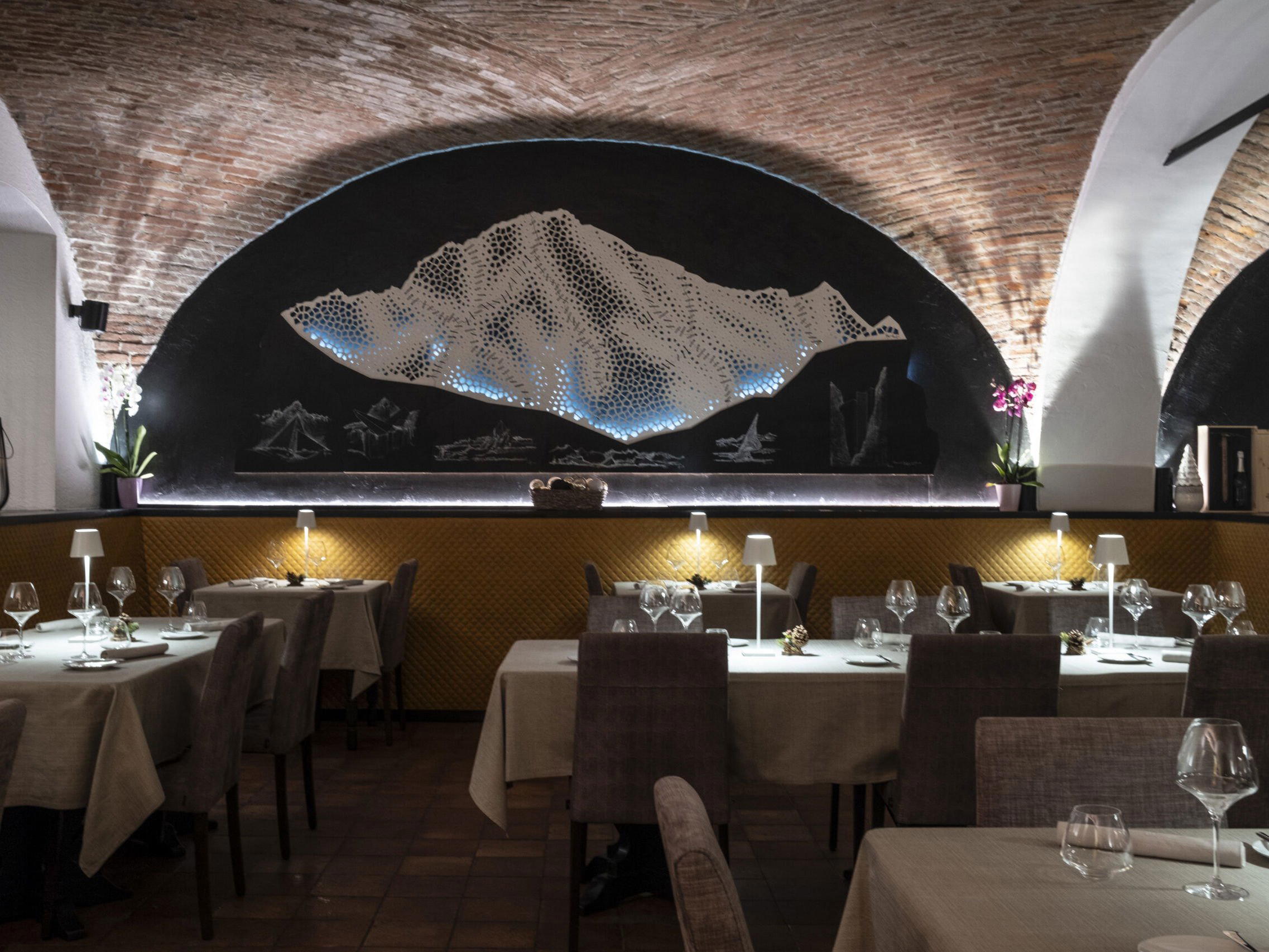
Room character splits between modern and luminous configurations, where large openings and contemporary furniture put the outdoor light to work, and the cooler, thicker-walled farmhouse rooms where small windows and stone floors create a different relationship with the Provençal summer. The sixteenth-century fabric of some buildings means that original fireplaces and flagstone floors are present, not as decorative restoration but as structural elements that have simply been preserved. That physical continuity with the pre-modern building tradition of the region is not something that can be replicated by any new-build property, however well-designed. Compare the approach at Domaine de Manville, the nearest peer property in Les Baux, which operates on a converted mas framework but with a different ownership history and room profile.
In the broader southern French luxury context, the Baumanière room approach contrasts with the more design-forward residential aesthetic of properties like La Réserve Ramatuelle or the coastal positioning of Hotel Du Cap-Eden-Roc. Baumanière's identity is agricultural and inland, grounded in the Alpilles rather than the Riviera. That distinction matters when choosing between southern France's luxury properties: the sensory register here is limestone dust, wild herbs, and the specific quiet of a valley that closes off road noise from the surrounding massif, not the blue-water spectacle of the coast.
Planning a Stay: Logistics and Reservations
Baumanière is approximately a sixty-minute drive from Marseille Provence Airport on the D27, which makes it accessible as a destination stay without requiring a Côte d'Azur transit point, unlike coastal peers such as The Maybourne Riviera or Airelles Saint-Tropez, which require either Nice or Toulon as the arrival point. Rooms start from USD 350 per night. Reservations at L'Oustau de Baumanière should be made at the time of hotel booking. Guests with specific accommodation needs, mobility requirements, room configuration preferences, are encouraged to communicate directly with the reservations team before arrival, given the variability in room layout across the five buildings.
For travellers building a southern France itinerary around estate properties and gastronomy, pairing Baumanière with Château de la Gaude in Aix-en-Provence, Hôtel & Spa du Castellet in Le Castellet, or Château de Montcaud in Sabran creates a coherent regional circuit without overlapping the coastal Riviera properties. Those planning wine-focused extensions can add Les Sources de Caudalie in Bordeaux or Château Lafaurie-Peyraguey to the routing.
At-a-Glance Comparison
Comparable venues nearby, for context on price, style, and recognition.
| Venue | Cuisine | Price | Awards | Notes |
|---|---|---|---|---|
| Baumanière Les Baux-de-ProvenceThis venue — the venue you are viewing | A Provence institution combining 17th-century noble heritage with contemporary luxury, featuring traditional Provençal architecture set on a rocky plateau with expertly maintained botanical grounds. | $$$$ | Michelin 3 Key | Not listed |
| Domaine de Manville | Historic Provençal manor on a 100-acre estate blending authenticity and modern luxury | $$$$ | Michelin 1 Key | Les Baux de Provence |
| Grand-Hôtel du Cap-Ferrat, A Four Seasons Hotel | Historic Art Deco palace reimagined as a contemporary luxury resort, blending Belle Époque architecture with modern amenities and design-forward interiors by Pierre-Yves Rochon. | $$$$ | Michelin 3 Key | Saint-Jean-Cap-Ferrat |
| Le Negresco | Belle Époque palace hotel with individually curated design elements and period furnishings reflecting French Riviera heritage. | $$$$ | Michelin 1 Star, Michelin 2 Key | Cœur de Nice |
| La Bastide de Gordes | Historic Provençal palace with modern luxury renovations | $$$$ | Michelin 3 Key | Gordes |
| Hôtel du Couvent | Renovated historic convent blending monastic serenity with luxury | $$$$ | Michelin 1 Key | Nice Historique |
Recognition history
Dated appearances from independent guides and award organizations, with the underlying list record or original source where available.
Virtuoso Luxury Hotel Partner
Virtuoso
Gault & Millau Exceptional Hotel
Gault & Millau
Michelin 3 Keys
Michelin
Relais Chateaux Award
Relais Chateaux
Michelin 3 Keys
Michelin
Continue exploring
More in Les Baux
Hotels in Les Baux
Browse all →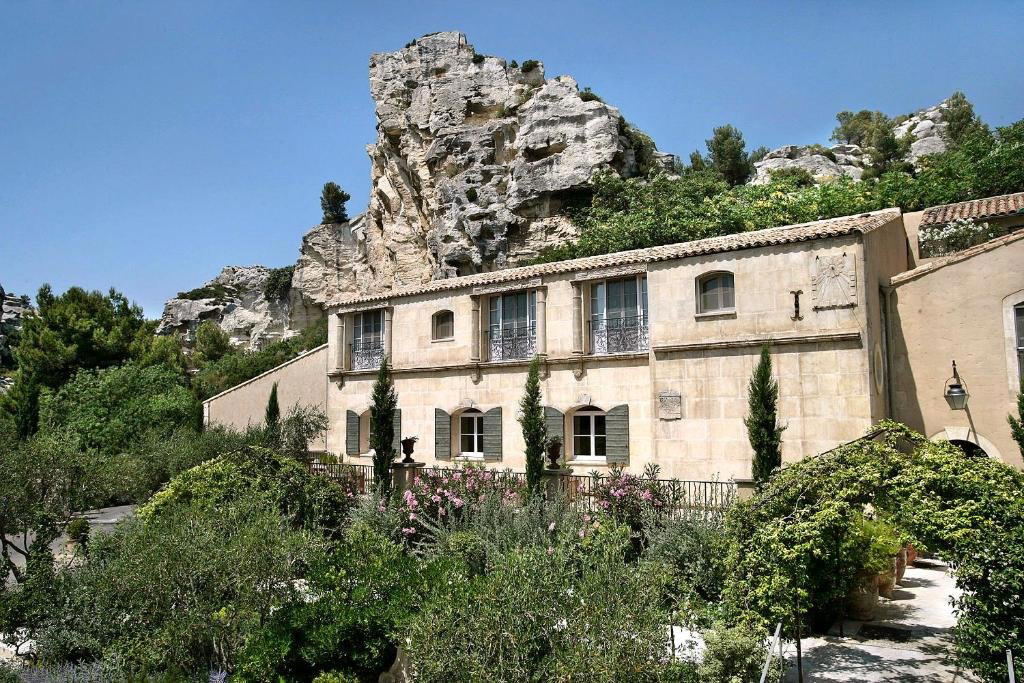
Bars in Les Baux
Browse all →
Restaurants in Les Baux
Browse all →
At a Glance
- Romantic
- Elegant
- Scenic
- Sophisticated
- Classic
- Romantic Getaway
- Anniversary
- Honeymoon
- Celebration
- Destination Wedding
- Garden
- Terrace
- Historic Building
- Panoramic View
- Destination Spa
- Private Dining
- Wi Fi
- Pool
- Spa
- Fitness Center
- Room Service
- Concierge
- Valet Parking
- EV Charging
- Restaurant
- Tennis Court
- Sauna
- Bicycle Rental
- Garden
- Mountain
- Wi Fi
- Pool
- Spa
- Fitness Center
- Room Service
- Concierge
- Valet Parking
- EV Charging
- Restaurant
- Tennis Court
- Sauna
- Bicycle Rental
Enchanting and serene with warm, attentive service; guests praise the spotless cleanliness, spacious rooms with subtle blend of authentic and modern décor, and the tranquil gardens with fountains and pools that create an atmosphere of refined relaxation.