




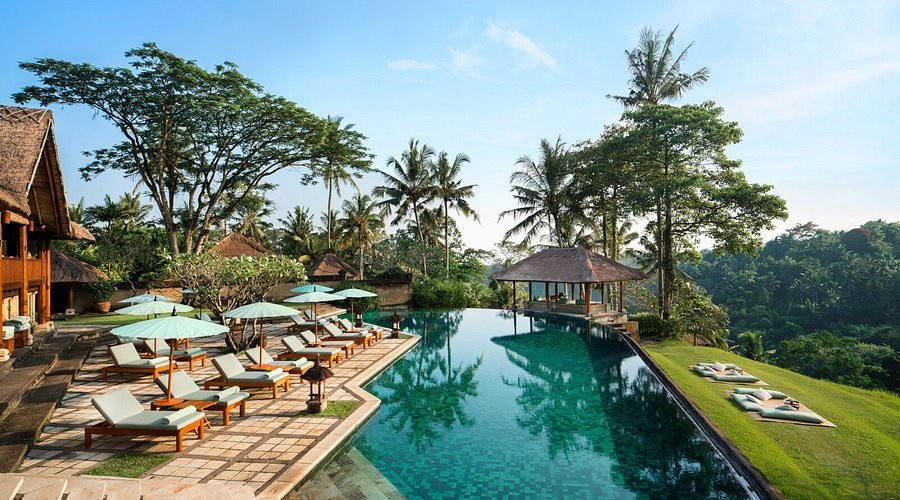
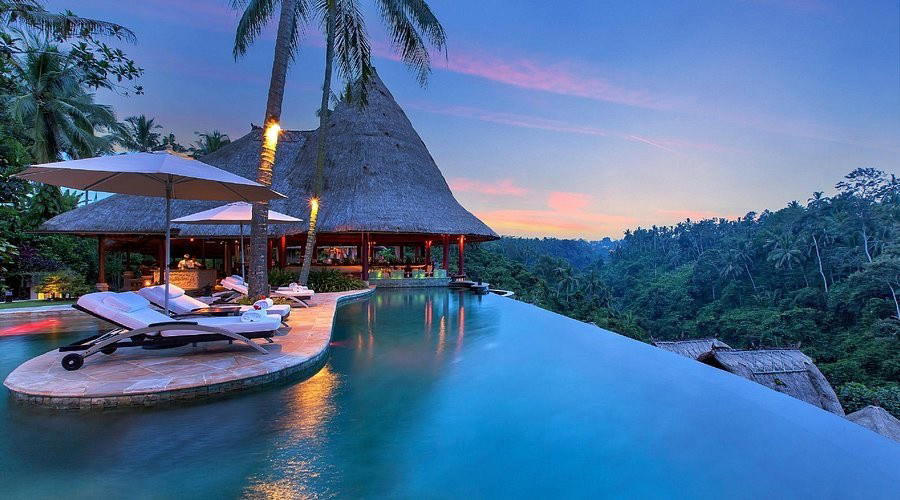
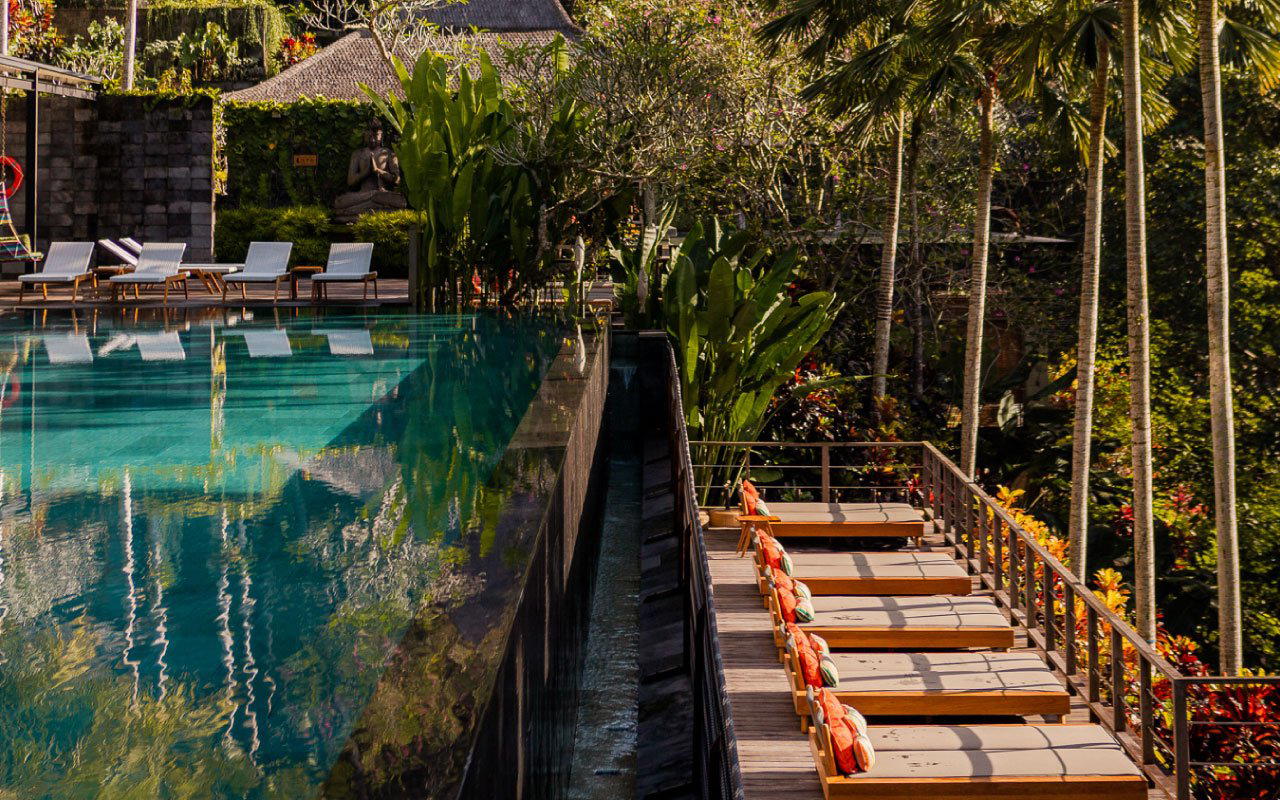
Positioned in the jungle highlands above Ubud near Payangan, Buahan is Banyan Tree's most architecturally radical property: 16 open-air villas with no walls or doors, set against views of seven mountain peaks and the Ayung River gorge. Recognised by Condé Nast Traveler (#13 Best Resorts 2025) and La Liste (92 points, 2026), it operates at $858 per night and sits in a distinct tier of nature-immersion resorts that prioritises structural openness over conventional luxury enclosure.
Pearl is the En Primeur Club membership app — saves, bookings, and concierge access live there. Same editors, same standards.
- Address
- Banjar Selat, Buahan Kaja, Kec. Payangan, Kabupaten Gianyar, Bali 80572
- Phone
- +62 361 6208181
- Website
- banyantree.com
- Directions
- Get directions
 Saves & bookings on Pearl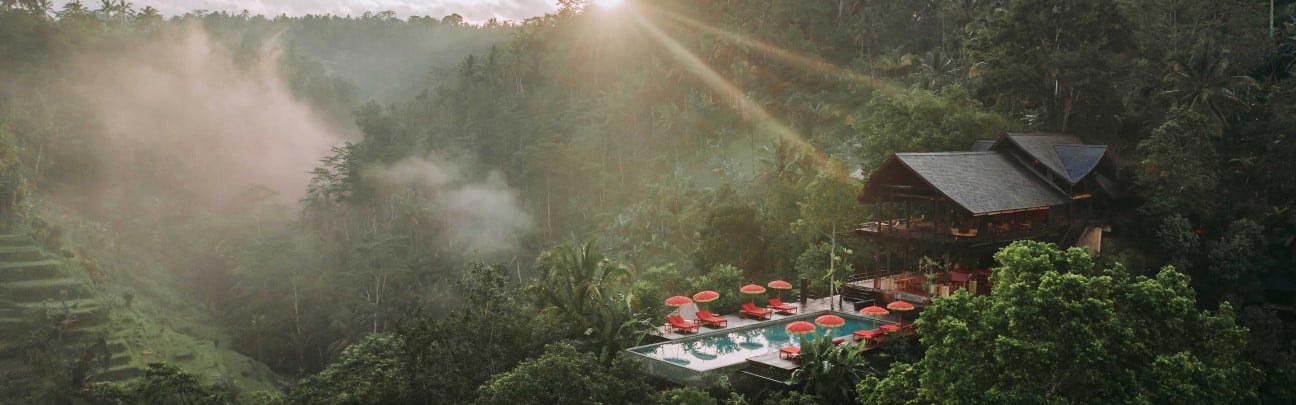
Where the Architecture Is the Experience
The approach to Buahan tells you what to expect before you arrive at your villa. The road north from Ubud through Payangan narrows through rice terraces and dense jungle canopy, and the resort does not announce itself with a grand entrance or a lobby designed to impress. What you find instead is a clearing in the forest above the Ayung River gorge, where the boundary between building and landscape has been deliberately dissolved. This is the structural logic of the entire property.
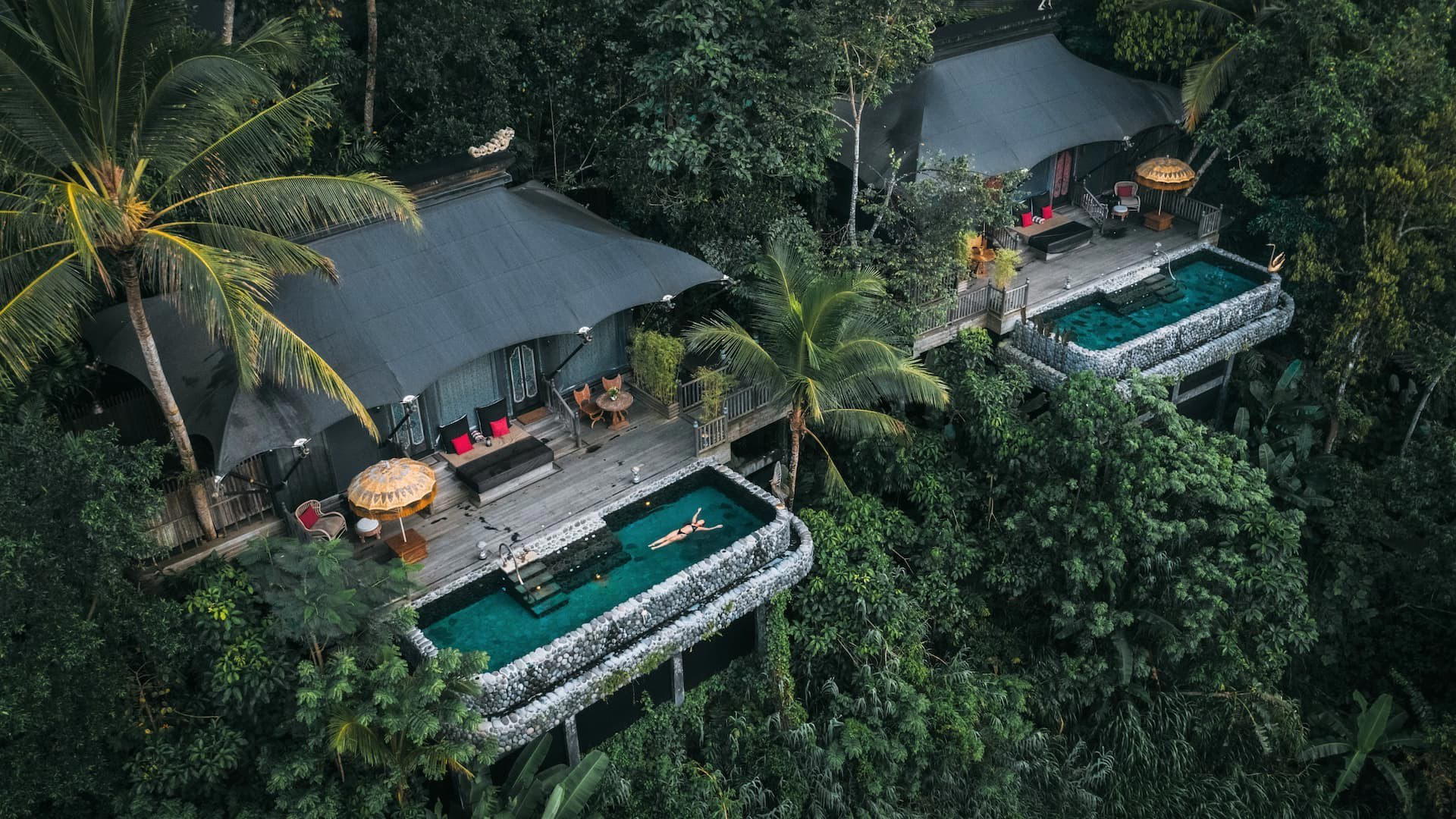
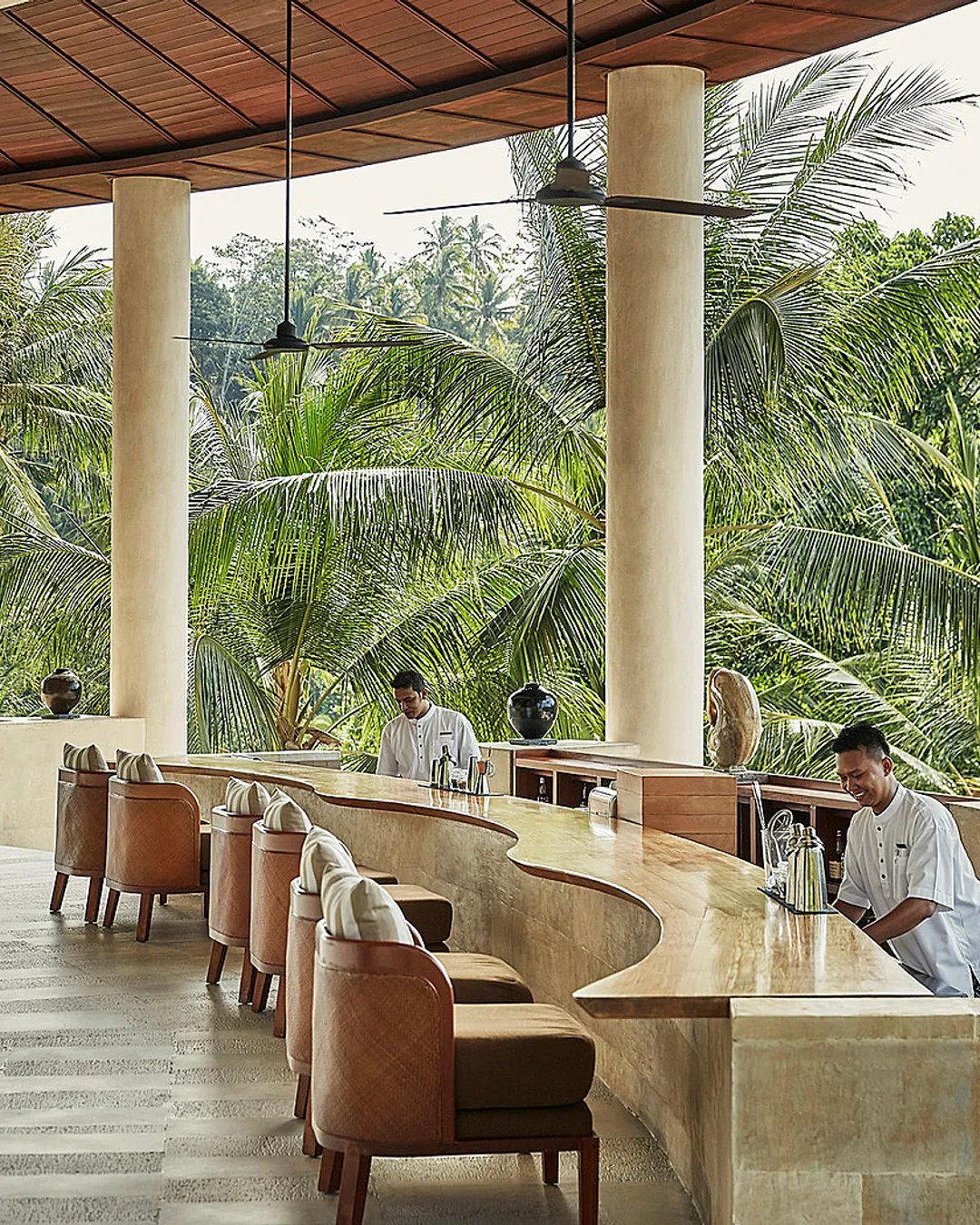
Buahan, a Banyan Tree Escape operates on what the brand calls a "no walls, no doors" concept. The 16 villas open directly onto forest and mountain panoramas, with seven rugged peaks visible across the Gianyar highlands and the Ayung River threading through the valley below. In a regional market where nature-immersion has become a frequently used but loosely applied marketing category, this property makes the claim structurally: the architecture physically removes the separation between interior and exterior. Rain, birdsong, and the temperature shift of altitude are not ambient features, they are the room.
Where This Sits in Bali's Design-Led Resort Tier
Bali's premium accommodation market has spent the past two decades splitting between large-footprint resort complexes and smaller, architecturally specific properties that trade scale for spatial intensity. Buahan sits firmly in the latter group, alongside properties like Bambu Indah in Banjar Badung and Desa Seni in Tabanan, which each occupy a specific design position within Bali's wider hospitality range. At 16 keys, Buahan is notably smaller than the flagship Banyan Tree format, and that compression is intentional, it allows a degree of privacy and immersion that larger properties structurally cannot offer.
The comparison set for this property is not straightforwardly Banyan Tree's own estate portfolio. It competes more directly with properties like Mandapa, a Ritz-Carlton Reserve in Ubud, and further afield with Nihi Sumba, places where the physical setting and architectural stance carry as much weight as service delivery. The Aman properties on Bali, including Amankila, have long defined what low-density luxury looks like in an Indonesian context; Buahan positions itself within that tradition while pushing further on structural openness than most of those properties attempt.
The "Naked Experience" in Practice
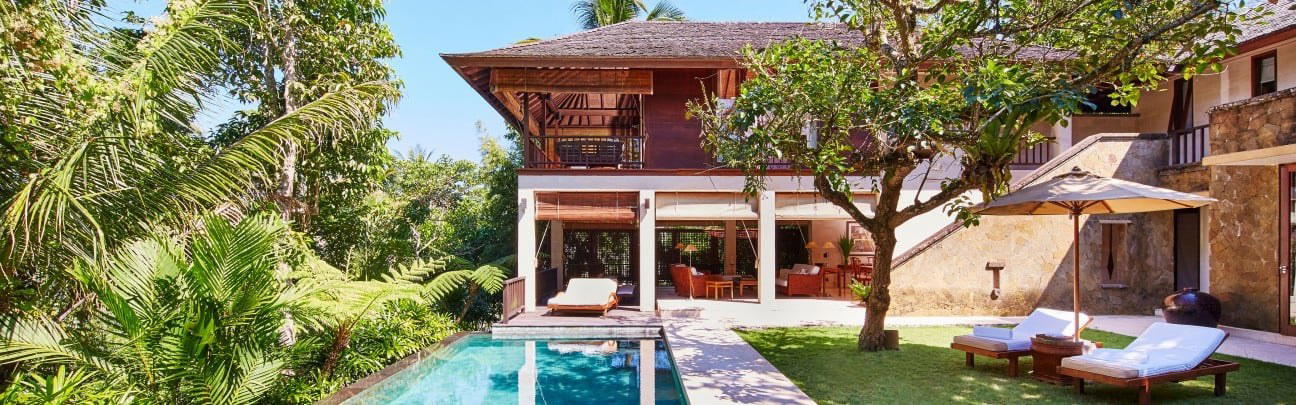
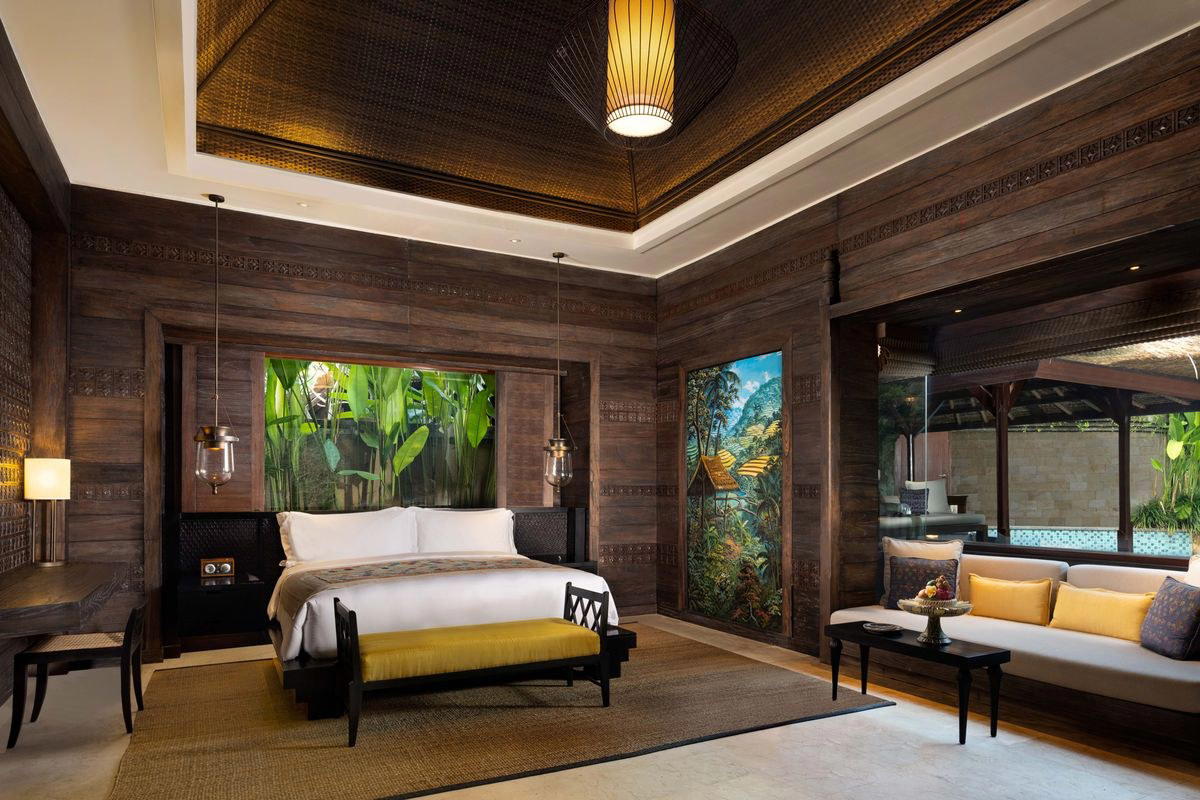
The resort's stated concept, which it markets as a "naked experience", is not a wellness programme in the conventional sense. It refers, architecturally and philosophically, to the removal of barriers: between guest and nature, between private space and the surrounding environment. The villas do not offer enclosed rooms in the traditional sense. What you have instead is covered living space without walls, oriented toward the forest and the river gorge, with the Ayung River audible from the property's edge.
At an entry rate of $858 per night, Buahan prices into the upper tier of Bali's design-led resort market. That figure needs to be understood in context: for a 16-villa property with this degree of spatial specificity and recognition from Condé Nast Traveler as the 13th Leading Resort globally in 2025, and La Liste's 92-point rating in 2026, the positioning is coherent rather than aggressive. Travellers considering this tier should also look at Alila Villas Uluwatu for a different expression of Balinese design-led luxury, or AYANA Resort Bali in Jimbaran for a larger-footprint alternative on the southern coast.
Setting, Access, and What the Highlands Offer
Payangan sits in the Gianyar Regency, in Bali's lush interior to the north of Ubud, a location that functions quite differently from the resort corridors of Seminyak, Nusa Dua, or Uluwatu. The altitude brings cooler temperatures than the coast, and the agricultural range of the highlands, rice terraces, river valleys, dense tropical vegetation, has a character that is more rural and less curated than the Ubud gallery-and-spa circuit. The Ayung River, which forms the western boundary of much of this area, is the same river that runs through the gorge below properties like Mandapa; further north, approaching Buahan's elevation, the valley becomes more enclosed and the forest denser.
For guests coming from elsewhere in Indonesia's wider archipelago, the distance from Bali's main airport at Ngurah Rai is roughly 50 to 60 kilometres depending on the route, which translates to approximately 90 minutes to two hours in typical traffic conditions through Ubud. This is not a convenient drop-in property; it is designed for guests who intend to stay. Our full Payangan guide covers the surrounding area in more detail, including what the highlands offer beyond the resort boundary.
The Restaurant and Spa
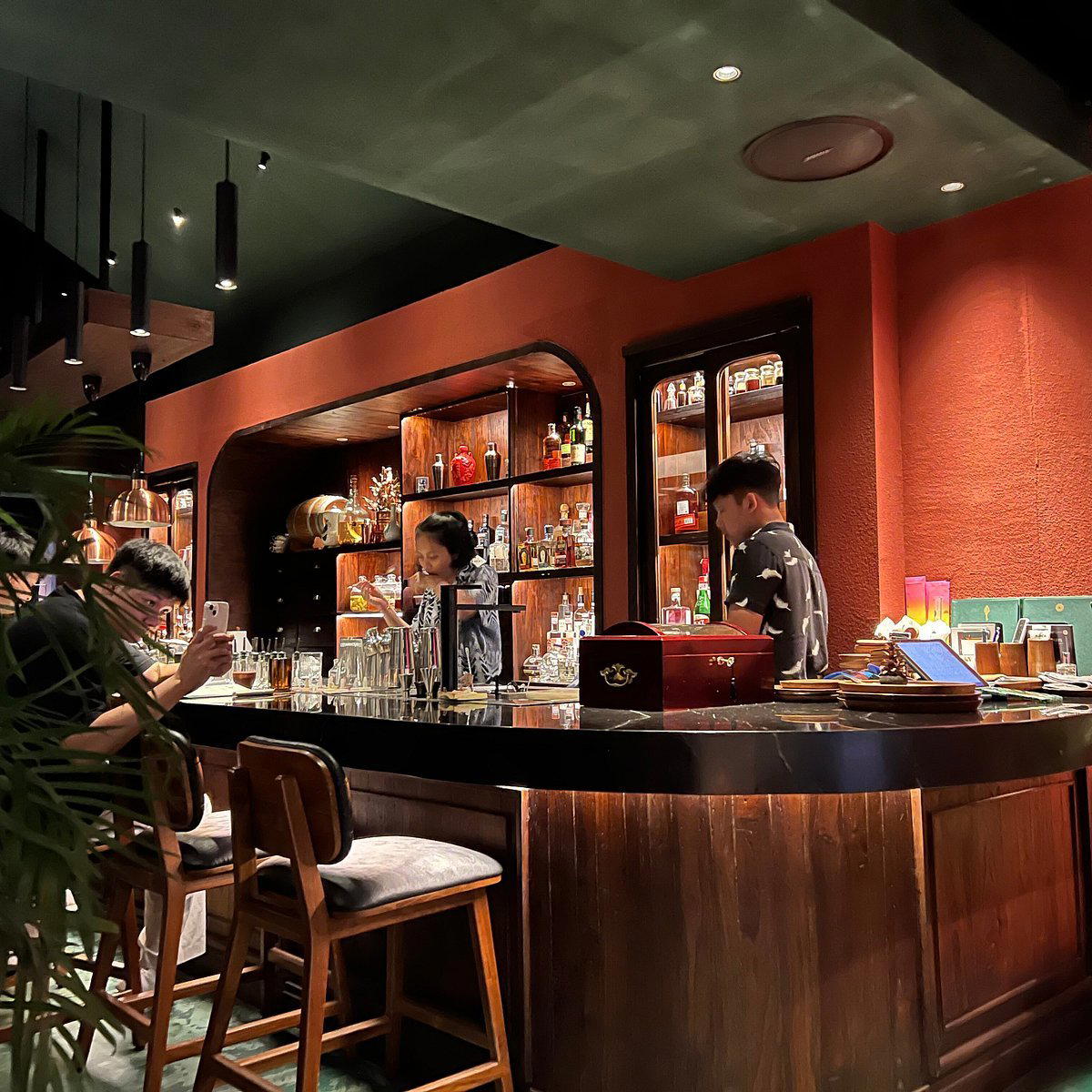
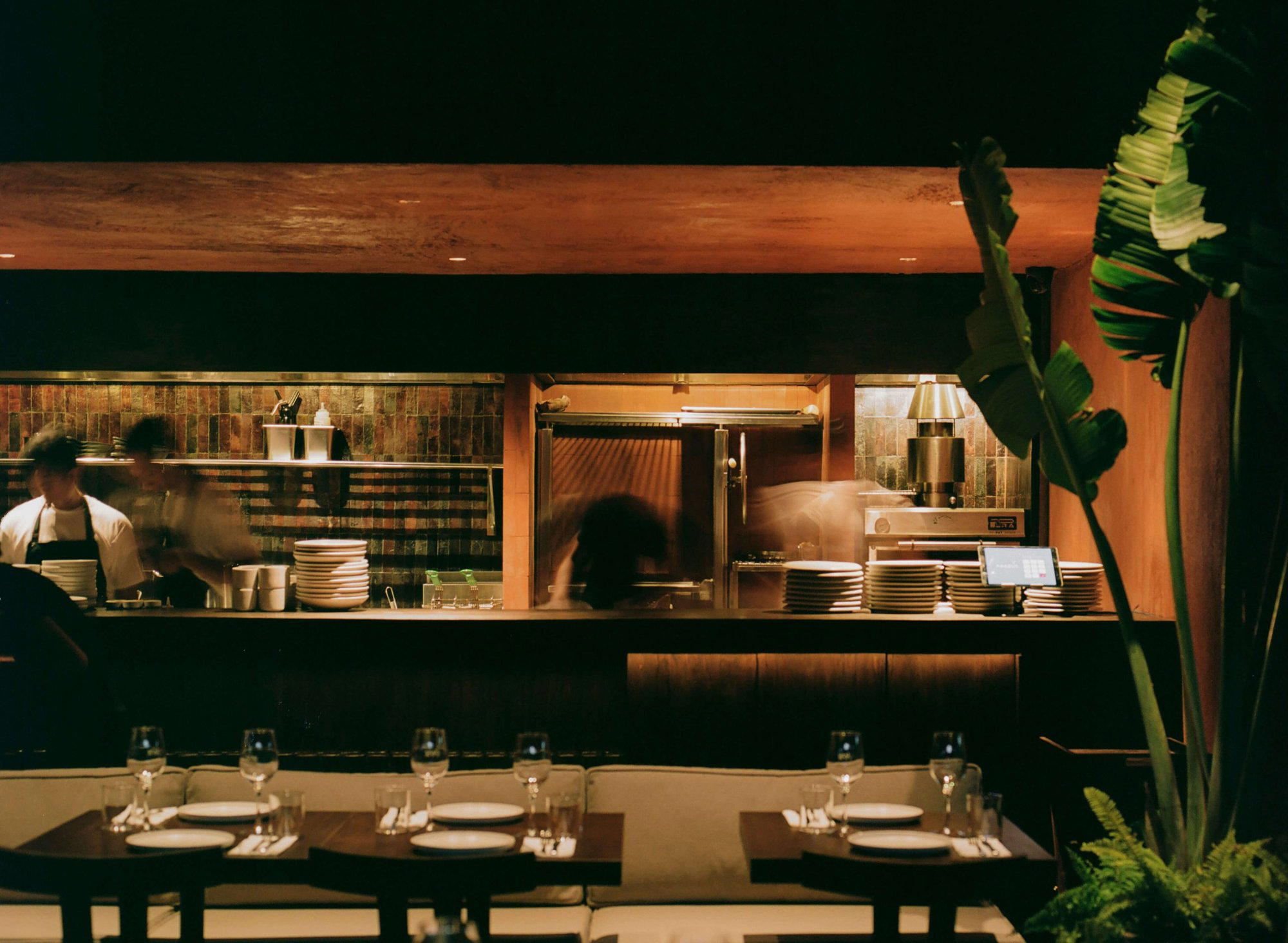
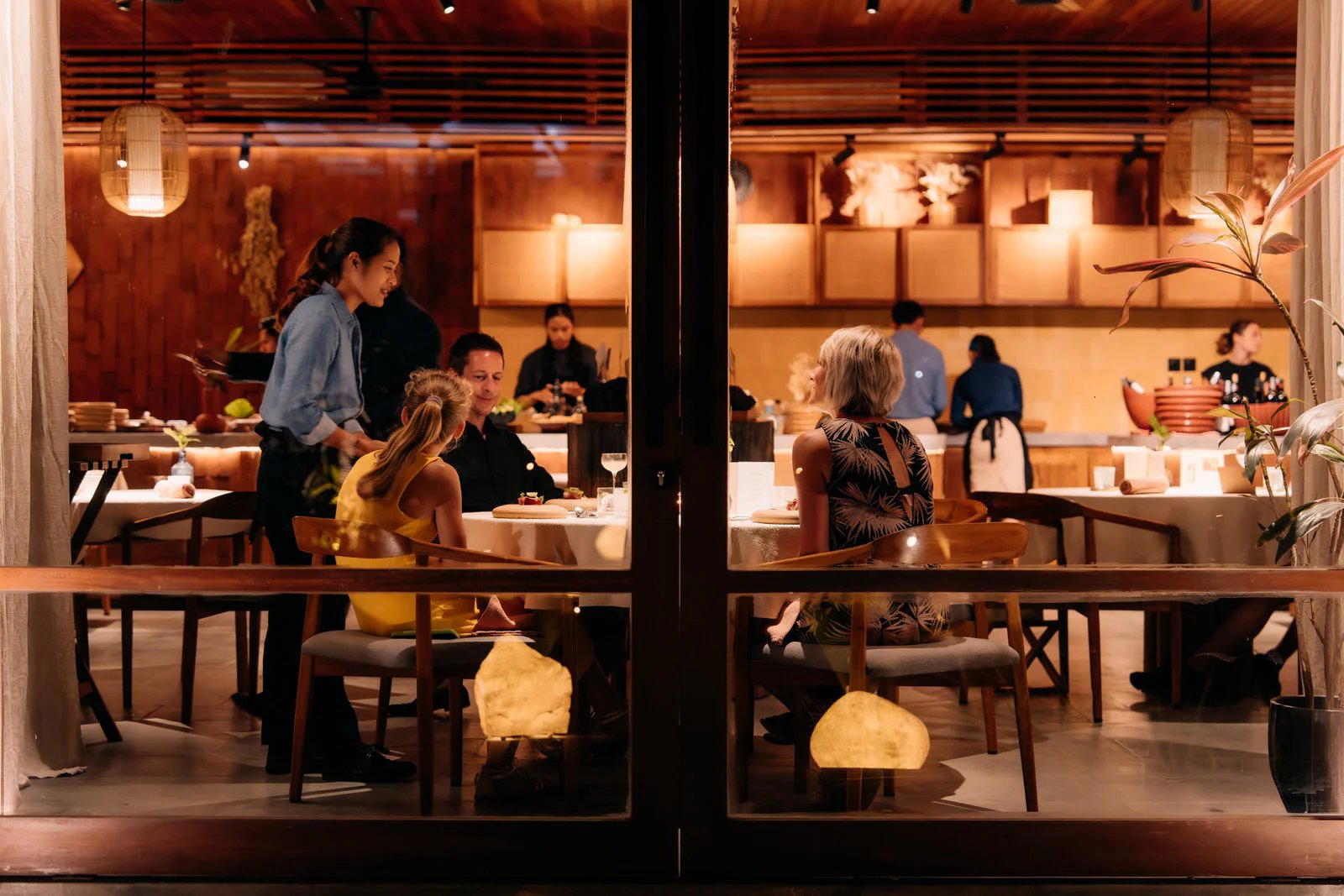
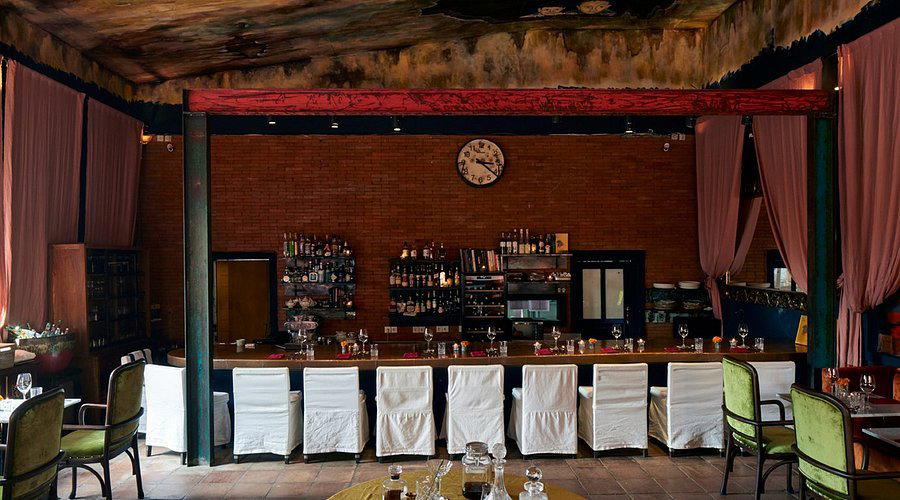
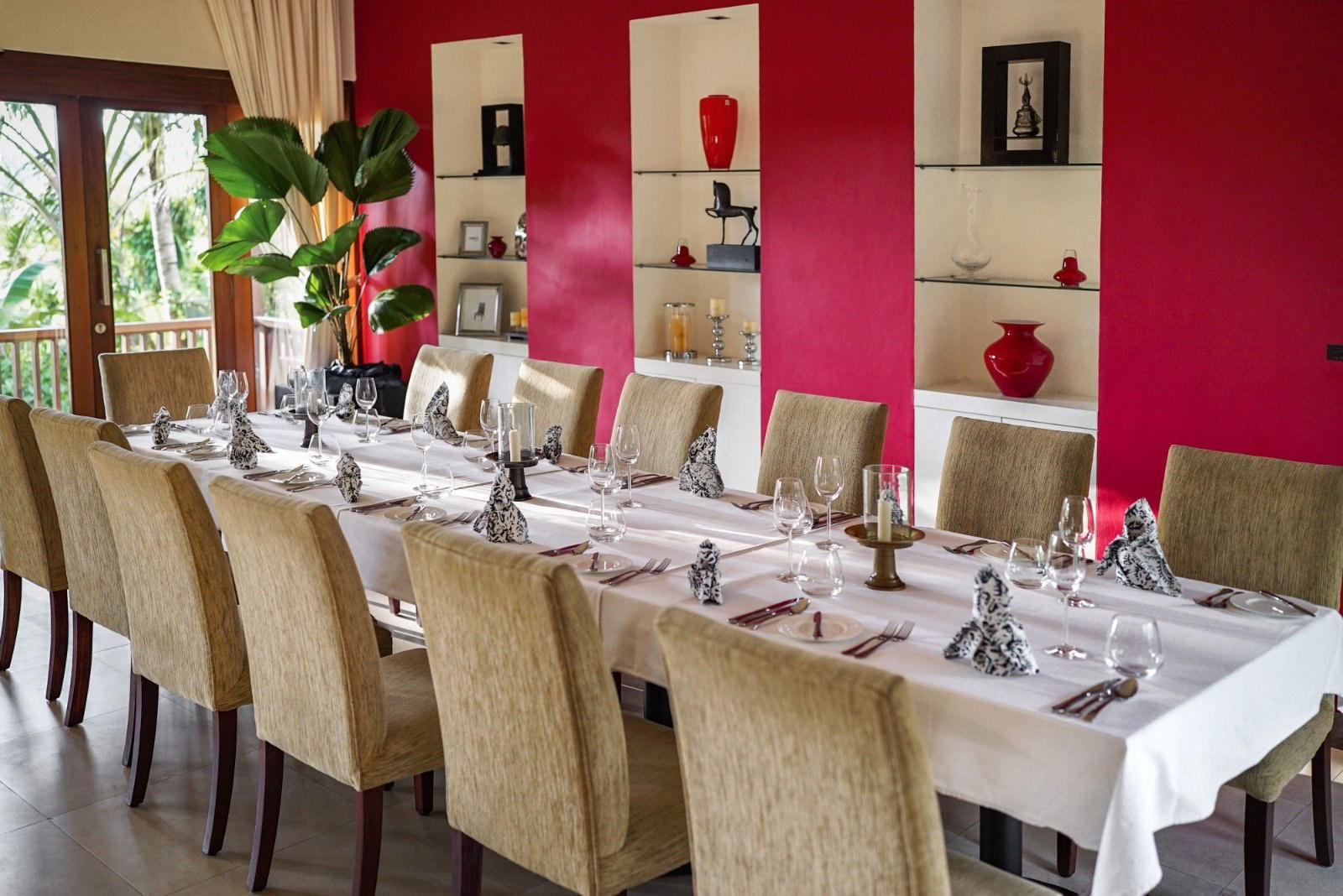
The on-site restaurant is described as intimate and of notable quality within its format. In properties of this scale and concept, the dining experience typically reflects the wider architectural logic: small capacity, local sourcing emphasis, and a menu oriented toward the setting rather than international breadth. The spa follows the same immersive model, operating within the broader philosophy of nature-connected wellness that the resort's design already establishes structurally. These are better understood as components of the stay rather than standalone destinations.
Guests seeking a comparison for the wellness and spa dimension might consider Kampung Sampireun Resort and Spa in Garut, which occupies a similar nature-immersion register in West Java, or Batur Natural Hot Spring in Kintamani for a geothermally grounded Balinese alternative at a different price point.
Planning a Stay
Buahan is part of Banyan Tree's Escape sub-brand, which positions these properties explicitly as departures from the group's main resort format. The dry season (May to September) offers particularly reliable conditions for an open-air property of this kind. At $858 per night, the nightly rate should be considered a base figure; properties in this format typically carry additional charges for dining and activities.
For broader Bali planning at different positions on the design and price spectrum, see Potato Head Suites and Studios in Seminyak, Desa Potato Head in Denpasar, Hotel Komune and Beach Club Bali in Gianyar, VOUK Hotel and Suites in Nusa Dua, Bliss Sanctuary for Women in Canggu, and Amarterra Villas Resort in Nusa Dua. For those extending travel to other Indonesian islands, Amanwana on Moyo Island offers a comparable nature-first philosophy in a more remote context. For reference properties outside Indonesia at a similar luxury register, Amanjiwo in Magelang and Aman New York illustrate the range of the broader design-led luxury tier across contexts.
A Quick Peer Check
Comparable venues nearby, for context on price, style, and recognition.
| Venue | Cuisine | Price | Awards | Notes |
|---|---|---|---|---|
| Buahan, a Banyan Tree EscapeThis venue — the venue you are viewing | Open-air jungle escape with naturally sourced materials and no doors or walls for complete immersion in nature | $$$$ | Michelin 2 Key | Not listed |
| Amankila | Architectural masterpiece featuring freestanding thatched-roof suites staggered on a clifftside with interconnected stilted walkways, blending contemporary luxury with traditional Balinese design. | $$$$ | Michelin 2 Key | Manggis |
| Raffles Bali | refined barefoot luxury all-villa resort | $$$$ | Michelin 2 Key | Jimbaran |
| Desa Potato Head | Sustainable creative village resort with beach club and art installations | $$$$ | World's 50 Best #18, 5-Star | Seminyak |
| Bvlgari Resort Bali | Italian-Balinese fusion luxury resort perched on cliffs | $$$$ | Michelin 1 Key | Uluwatu |
| Four Seasons Resort Bali at Sayan | Contemporary Balinese resort with dramatic cantilevered design | $$$$ | Michelin 1 Key | Sayan |
Recognition history
Dated appearances from independent guides and award organizations, with the underlying list record or original source where available.
Conde Nast Gold List
Conde Nast
La Liste Top Hotels
La Liste
Mr & Mrs Smith Smith Seal of Approval
Mr & Mrs Smith
Virtuoso Luxury Hotel Partner
Virtuoso
Conde Nast Best Resorts #13
Conde Nast
Michelin 2 Keys
Michelin
Tatler Listed in Best Hotels Asia-Pacific
Tatler
At a Glance
- Quiet
- Scenic
- Intimate
- Elegant
- Romantic
- Sophisticated
- Honeymoon
- Romantic Getaway
- Wellness Retreat
- Anniversary
- Weekend Escape
- Private Villa
- Infinity Pool
- Panoramic View
- Destination Spa
- Spa
- Pool
- Massage
- Wi Fi
- Room Service
- Concierge
- Mountain
- Garden
- Spa
- Pool
- Massage
- Wi Fi
- Room Service
- Concierge
Serene and immersive natural atmosphere with jungle sounds, soft natural lighting, and a profound sense of tranquility and connection to nature.