Amanwana


The only resort on Moyo Island, Amanwana occupies a protected corner of the Flores Sea as a twelve-tent wilderness camp within a government-designated nature reserve. Coral-stone decks, hardwood interiors, and direct access to wall dives and jungle waterfalls define its register. For travellers who measure remoteness in hours of travel and absence of other guests, it sits in a category of its own within the Aman portfolio.
Pearl is the En Primeur Club membership app — saves, bookings, and concierge access live there. Same editors, same standards.
- Address
- Moyo Island, Labuan Aji, Labuhan Badas, Kabupaten Sumbawa, Nusa Tenggara Bar. 84313
- Phone
- +62 371 22233
- Website
- aman.com
- Directions
- Get directions
 Saves & bookings on Pearl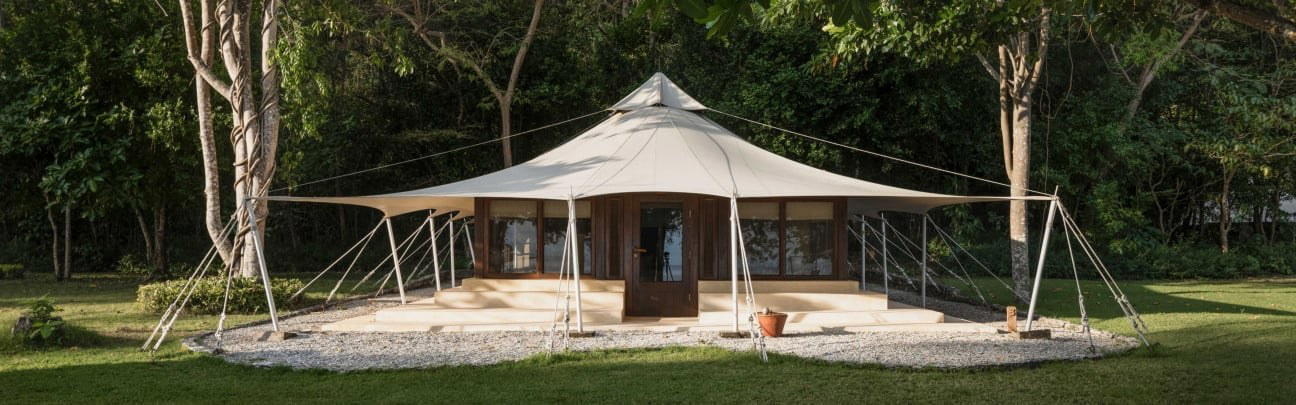
An Island With One Address
Most of Indonesia's premium accommodation clusters where infrastructure already exists: around Bali's airport corridors, along Lombok's coastal strips, or within reach of established ferry routes. Moyo Island operates on a different logic. A government-designated nature reserve east of Bali on the western edge of the Nusa Tenggara chain, Moyo has no villages, no competing resorts, and no public accommodation of any kind. Amanwana's 20 tents are the island's only lodging, which means the calculus of privacy here is absolute rather than relative. Guests do not share a beach with other properties; they share an island with wildlife. That structural condition shapes everything about how the camp functions and what kind of traveller it suits.
The Architecture of Impermanence
Aman's design philosophy across its Indonesian portfolio tends toward deep site-specificity. Amanjiwo in Magelang mirrors the geometry of Borobudur; Amankila in Manggis steps down a Balinese hillside in terraced stone. Amanwana takes that site-responsiveness further by choosing a material vocabulary that reads as intentionally provisional: canvas over coral stone, soft waterproof roofing over solid walls, jungle canopy over engineered shelter. Each of the twelve tents measures 58 square metres, anchored by a partial solid wall and a coral-stone deck that meets the forest floor at its edges. The construction language signals that the landscape, not the structure, is the primary architectural element.
Inside, the language shifts. Hardwood floors run throughout, banks of louvred windows manage equatorial airflow, and Indonesian island artwork grounds each tent in its regional context. A king-size bed, facing divans, and a writing desk complete the interior without over-furnishing it. The air conditioning is present but not the dominant feature, the more persuasive climate control comes from the tent's orientation within the tree canopy. This is a design approach that several eco-luxury operators have attempted across Southeast Asia, but few execute at the material quality Aman applies here. Comparable tent-format properties in the region often compromise on bathroom specification or structural integrity; Amanwana's large bathrooms and hardwood construction do not.
The Marine Environment as the Programme
The Flores Sea surrounding Moyo Island sits within one of Indonesia's most biodiverse marine corridors. Wall dives operate directly offshore, accessible without the boat transfers that most Indonesian dive operations require. The dive programme runs from beginner to advanced certification levels, and Amanwana's fleet of sea-going vessels extends the range to sites across the protected bay and beyond. Snorkelling, game fishing, and cruising are available through the same operation. For comparison, properties like Nihi Sumba in Sumba have built strong reputations around single-activity specialisation (surfing, in that case); Amanwana's marine programme covers a broader spectrum, which reflects the reef topography of the Flores Sea rather than any programmatic preference.
On land, jungle treks lead to waterfalls and limestone pools within the nature reserve. The camp's position inside a protected area means the trail network is not shared with day visitors or independent guides. The Music Pavilion, positioned at the far end of the camp a few metres from the shoreline, functions as an informal retreat point: picnic lunches, afternoon tea, and sunset cocktails are available there without the formality of the main dining room.
Dining at the Edge of the Forest
The Dining Room and Bar occupy an open-air pavilion facing the sea, built on Indonesian hardwood flooring supported by solid coconut pillars. The structure is deliberately porous: the Flores Sea is the view on one axis, the jungle on the other. Asian and Western dishes are served at breakfast, lunch, and dinner. In season, alfresco barbecues and campfire dinners extend the programme outdoors. The full-board format, standard for Amanwana, removes the decision architecture of à la carte dining and integrates meals into the rhythm of the day's activities rather than treating them as separate occasions. Properties operating in this remote category, where guests cannot easily leave for dinner, tend to treat full board as a necessity; Amanwana treats it as part of the camp experience design.
Within the broader Aman Indonesia network, which also includes Amankila and Amanjiwo, Amanwana's dining is especially informally structured. That informality is appropriate: a candlelit campfire dinner on a protected island in the Flores Sea operates by different conventions than a clifftop restaurant in Bali. For Bali-anchored alternatives with more structured dining programmes, Mandapa, a Ritz-Carlton Reserve in Ubud and Alila Villas Uluwatu represent the dominant template. Amanwana sits at a different point on that spectrum.
Positioning Within the Aman Portfolio
Aman operates five resorts in Indonesia. The group's global expansion, now including Aman New York and Aman Venice, has moved the brand into urban contexts where the wilderness proposition is absent. Amanwana represents the other end of that range: twelve tents, one island, no other guests. Beginning at Aman Villas at Nusa Dua before transferring to Moyo stages the arrival as a transition from accessible Bali luxury into genuine remoteness. Groups booking five or more tents for three or five nights can secure the island on an exclusive basis, extending full-board accommodation, jungle treks, massages, snorkelling, and waterfall visits across the property without other guests present.
For travellers whose Indonesia itinerary includes Bali before or after Moyo, the full range of property types within reach spans from design-led urban hotels like Desa Potato Head in Denpasar and Potato Head Suites and Studios in Seminyak to more immersive eco-cultural properties like Bambu Indah in Banjar Badung and Buahan, a Banyan Tree Escape in Payangan. Each occupies a clearly differentiated position; none replicates Amanwana's particular combination of inaccessibility and material quality.
Planning a Stay
Access to Moyo Island requires a flight to Sumbawa Besar followed by a transfer to the resort by boat, making the journey a multi-stage commitment. The 20-tent capacity means the camp fills before high season demand peaks, and guests planning around the island's dive conditions or dry-season weather (roughly April through October) should treat three to six months as a reasonable planning horizon. The full-board structure, combined with the activity programme, means that once on-island, additional costs outside of the base rate are limited primarily to spa treatments and equipment hire for activities beyond those included in group bookings. For travellers considering other Indonesian wilderness formats before finalising this itinerary, Nihi Sumba and Hotel Komune and Beach Club Bali in Gianyar offer instructive points of comparison on the activity-led luxury spectrum.
Quick Comparison
Comparable venues nearby, for context on price, style, and recognition.
| Venue | Cuisine | Price | Awards | Notes |
|---|---|---|---|---|
| AmanwanaThis venue — the venue you are viewing | luxury tented camp in a nature reserve | $$$$ | 5-Star | Not listed |
| Six Senses Uluwatu Bali | Cliffside Balinese-inspired luxury resort integrated with nature. | $$$$ | 5-Star | Pecatu |
| Kanvaz Resort Seminyak | Upscale boutique resort with lagoon pools and wellness facilities | $$$$ | 4-Star | Seminyak |
| Villa Tokay | Contemporary art deco with sustainable luxury positioning, merging minimalist design with tropical elegance and eco-conscious operations. | $$$$ | 5-Star | Gili Air |
| TA’AKTANA, a Luxury Collection Resort & Spa, Labuan Bajo | Luxury resort blending Indonesian heritage with contemporary design across 16 hectares waterfront hillside | $$$$ | 5-Star | Labuan Bajo |
| Regent Bali Canggu | Modern luxury resort blending traditional Balinese inspirations with contemporary architecture. | $$$$ | 5-Star | Canggu |
Recognition history
Dated appearances from independent guides and award organizations, with the underlying list record or original source where available.
Mr & Mrs Smith Smith Seal of Approval
Mr & Mrs Smith
Virtuoso Luxury Hotel Partner
Virtuoso
Michelin Selected
Michelin
At a Glance
- Romantic
- Quiet
- Elegant
- Scenic
- Intimate
- Sophisticated
- Ornate
- Honeymoon
- Romantic Getaway
- Wellness Retreat
- Weekend Escape
- Beachfront
- Private Villa
- Destination Spa
- Panoramic View
- Wi Fi
- Pool
- Spa
- Room Service
- Concierge
- Beach Access
- Waterfront
- Wi Fi
- Pool
- Spa
- Room Service
- Concierge
- Beach Access
Relaxed and peaceful with dramatic sunsets, warm staff attentiveness, and a nature-immersed atmosphere in open-air pavilions and beachside settings.