


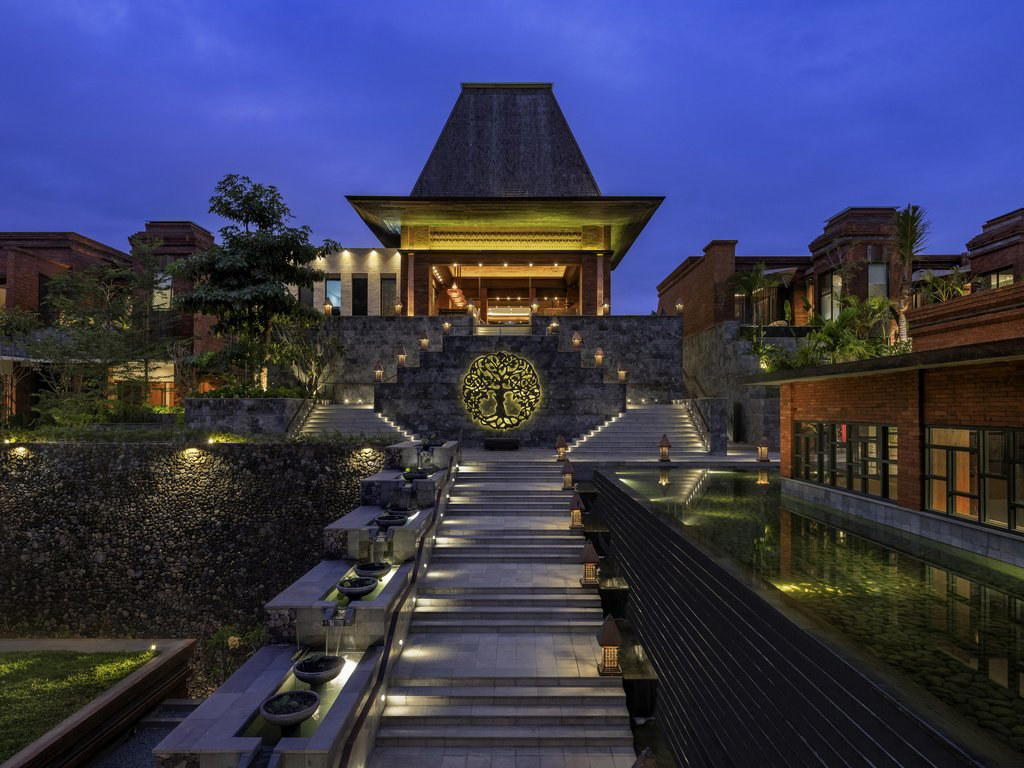
Amanjiwo occupies a natural amphitheatre in Central Java's Kedu Plain, its limestone domes and colonnaded architecture drawn directly from Borobudur, the 1,300-year-old Buddhist monument it faces. Thirty-one suites, fifteen with private pools, sit within view of four volcanoes. Named to Tatler Best Hotels Asia-Pacific 2025, it is among the more architecturally deliberate properties in the Aman portfolio.
Pearl is the En Primeur Club membership app — saves, bookings, and concierge access live there. Same editors, same standards.
- Address
- 9692+78, Sawah, Majaksingi, Borobudur, Magelang Regency, Central Java 56553
- Phone
- +62 293 788333
- Website
- aman.com
- Directions
- Get directions
 Saves & bookings on Pearl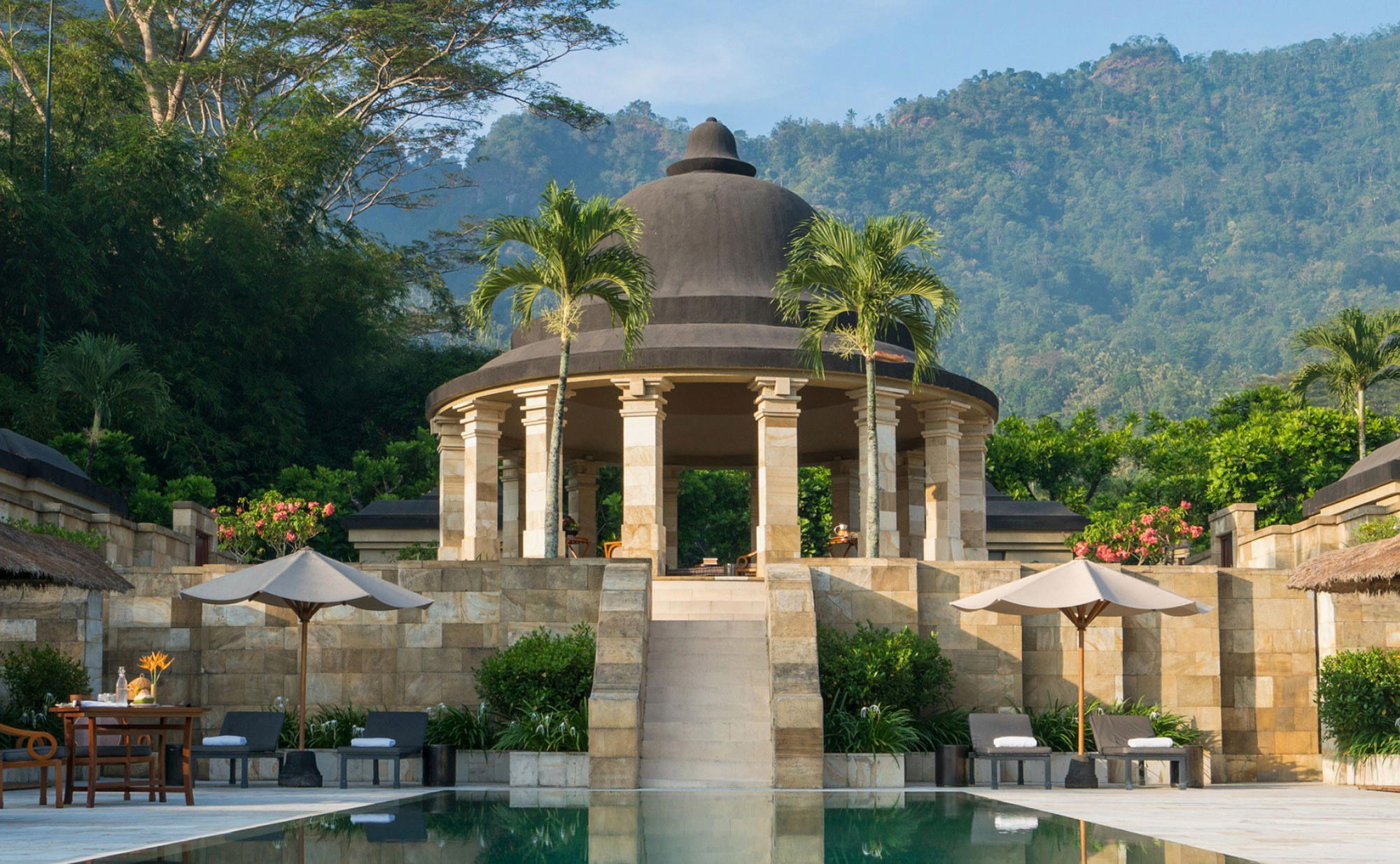
Stone, Sky, and a Sanctuary Built to Face the World's Largest Buddhist Monument
Approaching Amanjiwo from the valley road, the geometry arrives before the detail does. Limestone domes rise above the rice fields of the Kedu Plain, their circular profiles echoing the stupas of Borobudur, the 1,300-year-old Buddhist monument standing roughly two kilometres ahead. The resemblance is deliberate. The resort's architecture, conceived around concentric stone forms, domed pavilions, and colonnaded walkways, was designed to exist in dialogue with Borobudur rather than simply to face it. That architectural intention shapes everything that follows: how suites are positioned, how the main building opens, how the 40-metre infinity pool aligns with the horizon where Mount Merapi sits.
Amanjiwo holds a particular position: it is one of the few properties where the landscape is not a backdrop but a structural co-author of the design. The Menoreh Hills close in directly behind. Sumbing, Sundoro, Merbabu, and Merapi ring the wider horizon. The Kedu Plain, among the more fertile and historically significant agricultural zones in Java, fills the middle ground. At Amanjiwo, the architecture does not compete with any of this. It defers to it.
The Design in Detail
Indonesian design hotels tend to split between two modes: the tropical modernism of Bali, where open-air pavilions and natural materials are deployed around water features, and a more archaeological approach, where vernacular craft traditions and historical site proximity shape the physical language of a property. Amanjiwo belongs firmly to the second category. The resort's 31 suites are arranged along stone walkways in a crescent formation that mirrors the curved plan of Borobudur's upper terraces. The materials throughout are limestone, terrazzo, sungkai wood, and rattan, all drawn from the Central Javanese building tradition rather than imported or cosmetically applied.
Inside the suites, terrazzo floors anchor four-poster beds on raised platforms, with coconut wood screens and traditional glass paintings layering in craft references that are specific to the Yogyakarta region. Batik pillows in classic Yogyakarta patterns sit alongside rattan furniture that references local weaving traditions. Each suite includes a thatched-roof balé, the Javanese open pavilion, fitted with a daybed for outdoor lounging or private dining. Fifteen suites include private swimming pools, and every suite has a large sunken stone outdoor bathtub, positioned to catch views of either Borobudur or the surrounding farmland.
The domed rooflines and high ceilings that define the suite architecture become more elaborated in the communal spaces. The Dining Room is organised around a double row of stone columns beneath a silver-leaf ceiling worked in muted, swirling tones. The circular rotunda Bar features columns, drop fans, a coconut-wood bar, and acid-etched bronze-drum tables that continue the archaeological material vocabulary of the wider property. These are not decorative choices applied to a conventional hotel plan. They are structural decisions that place the resort in a specific cultural and historical lineage.
Among comparable properties in the region, the architecture at Amanjiwo occupies a narrower niche than design hotels in Bali's Seminyak or Ubud circuits. Where properties like Mandapa in Ubud or Alila Villas Uluwatu draw on broader Balinese vernacular forms, Amanjiwo's reference set is tightly bounded: Central Javanese temple architecture, Kedu Plain craft traditions, and the specific material palette of the Borobudur complex itself. The result is a property that reads as contextually singular within Indonesia's premium hotel set, which is why it continues to appear on lists like Tatler Leading Hotels Asia-Pacific 2025.
Access to Borobudur and What That Actually Means
Borobudur receives hundreds of thousands of visitors each year and is managed under timed entry protocols. For Amanjiwo guests, the access terms are different: the resort provides arrangements for dawn visits, when the site is closed to general public entry and the stone corridors, bas-relief panels, and upper bell-shaped stupas can be walked without crowds. The light at that hour, rising across the Kedu Plain with the volcanoes in silhouette, is the experiential premise the entire property is built around. It is not incidental.
The resort also offers a train experience connecting Jakarta and Yogyakarta. An in-house anthropologist accompanies the journey, providing cultural and historical commentary on the sites passed during the route. For travellers approaching Central Java from Jakarta rather than Bali, this format allows the transition into the property to begin well before arrival.
Dining, Spa, and the Wider Programme
Javanese cuisine and Western dishes are served in the Dining Room and, more casually, at the colonnaded Pool Club, which stretches out into the rice fields with views toward Mount Merapi. The 40-metre green-stone pool runs alongside the rice paddies rather than above them, a horizontal integration rather than an refined platform. The Terrace, positioned for direct sightlines to Borobudur, functions as the evening focal point, particularly at dawn and twilight when the views across the plain are sharpest.
Spa treatments at Amanjiwo draw on the jamu tradition, the ancient Javanese herbal healing system that predates European pharmaceutical approaches to wellness by centuries. Treatments can be taken in the privacy of guest suites or in the purpose-designed spa suite, which includes twin massage tables and a separate outdoor gubuk for post-treatment rest. The spa programme at Amanjiwo sits within a broader pattern across the Aman network, where wellness formats are grounded in local ritual and ingredient traditions rather than generic international wellness menus. Sister properties elsewhere in the archipelago, including Amankila in Manggis and Amanwana on Moyo Island, operate from the same principle.
For those considering the wider Indonesian range of destination hotels, the reference set around Amanjiwo includes properties as varied as Nihi Sumba in East Nusa Tenggara, Buahan in Payangan, and Bambu Indah in Banjar Badung. Each occupies a different position in terms of scale, design register, and site specificity. Amanjiwo is the only one among them built in direct architectural conversation with a UNESCO World Heritage monument.
Planning Your Stay
Amanjiwo is a 75-minute drive from Yogyakarta Adisutjipto Airport, approximately 31 miles. Solo Adi Soemarmo Airport is around two hours away. Both airports operate regular connections to Bali, Jakarta, Kuala Lumpur, and Singapore. Rates begin from $1,250 per night across 31 suites, fifteen of which include private pools. The resort is bookable by phone at +62 293 788333. Advance booking is advisable, particularly during the dry season between May and September when visibility across the Kedu Plain is at its clearest.
How It Stacks Up
Comparable venues nearby, for context on price, style, and recognition.
| Venue | Cuisine | Price | Awards | Notes |
|---|---|---|---|---|
| AmanjiwoThis venue — the venue you are viewing | Limestone resort echoing Borobudur temple architecture, cascading down hillside into rice paddies. | $$$$ | Michelin 3 Key | Not listed |
| Plataran Borobudur Resort and Spa | Javanese-inspired luxury villas blending traditional Indonesian architecture with modern comfort | $$$$ | 5-Star | Tanjungan Village |
| Villa Borobudur Resort | Traditional Javanese joglo pavilions with modern comforts | $$$$ | 5-Star | Borobudur |
| Hotel Le Temple Borobudur | Traditional temple-inspired resort with luxurious villas | $$$ | 5-Star | Borobudur |
| Four Seasons Hotel Jakarta | Contemporary luxury all-suite hotel designed as an intimate urban oasis with curated local art and prime central location positioning. | $$$$ | Michelin 2 Key | Kuningan Barat |
| Amankila | Architectural masterpiece featuring freestanding thatched-roof suites staggered on a clifftside with interconnected stilted walkways, blending contemporary luxury with traditional Balinese design. | $$$$ | Michelin 2 Key | Manggis |
Recognition history
Dated appearances from independent guides and award organizations, with the underlying list record or original source where available.
Virtuoso Luxury Hotel Partner
Virtuoso
Michelin 3 Keys
Michelin
Tatler Listed in Best Hotels Asia-Pacific
Tatler
Continue exploring
More in Magelang
Hotels in Magelang
Browse all →
At a Glance
- Quiet
- Elegant
- Scenic
- Sophisticated
- Ornate
- Honeymoon
- Romantic Getaway
- Wellness Retreat
- Anniversary
- Destination Wedding
- Infinity Pool
- Private Villa
- Panoramic View
- Private Dining
- Historic Building
- Pool
- Spa
- Wi Fi
- Room Service
- Concierge
- Tennis Court
- Fitness Center
- Garden
- Mountain
- Garden
- Pool
- Spa
- Wi Fi
- Room Service
- Concierge
- Tennis Court
- Fitness Center
- Garden
Tranquil and serene with natural light, open-air settings overlooking rice fields and temples, evoking peaceful harmony with the cultural landscape.