Amber Pure Hill Hotels & Resorts Jeju

Michelin Selected
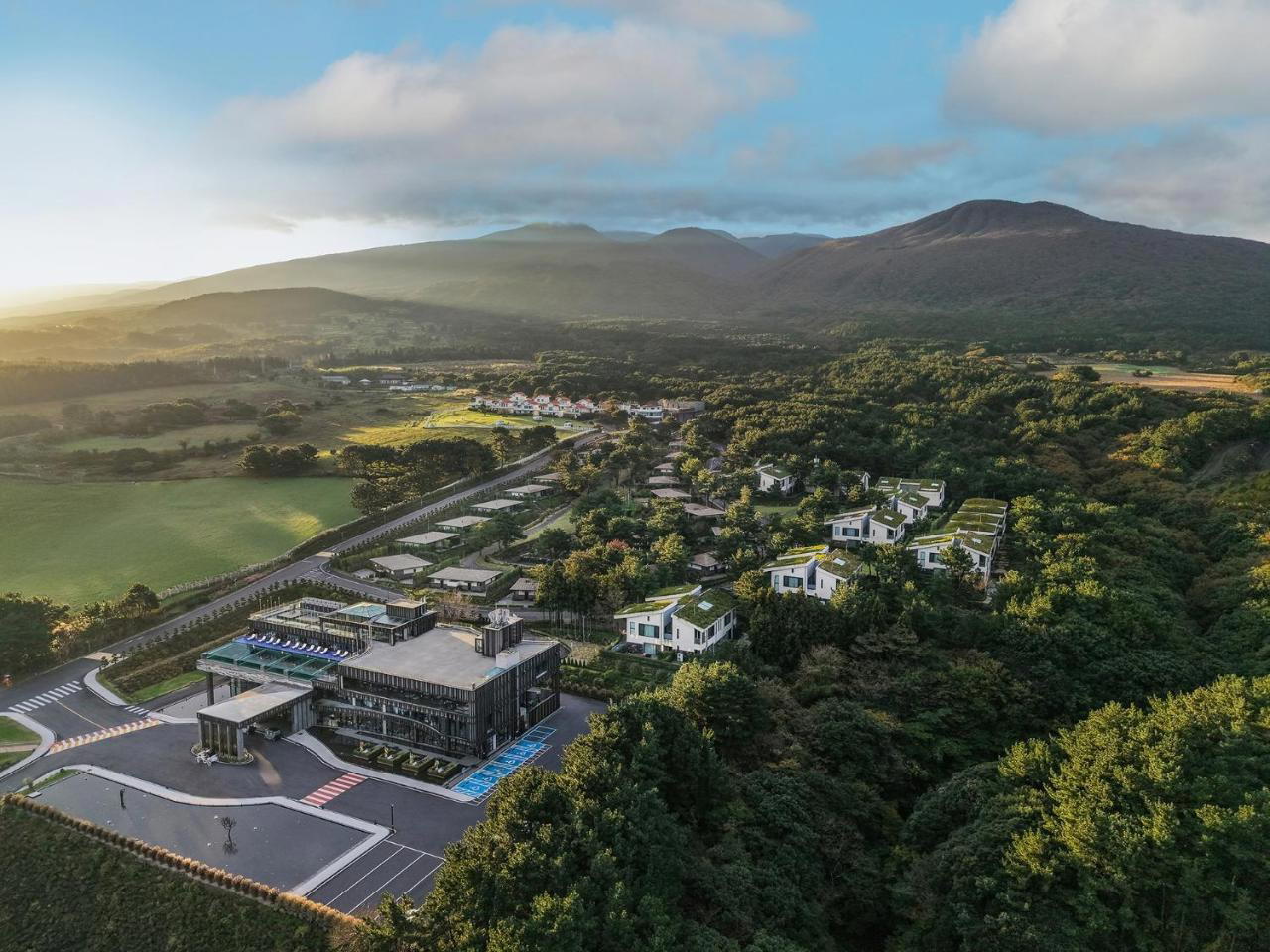
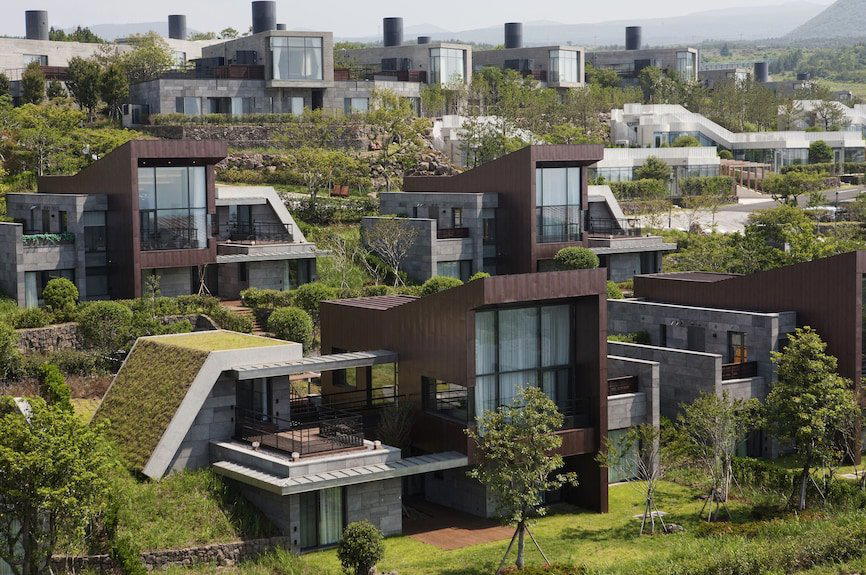
Amber Pure Hill Hotels & Resorts Jeju sits along the 1100-ro mountain road, earning Michelin Selected recognition in 2025 for a retreat that reads more like a considered hill-country escape than a conventional resort. The property positions itself within Jeju's smaller, design-attentive tier of accommodation, where scale is kept deliberate and the surrounding volcanic landscape does much of the work.

Pearl is the En Primeur Club membership app — saves, bookings, and concierge access live there. Same editors, same standards.
Where Jeju's Hill Country Meets Considered Hospitality
The road that climbs toward Hallasan's interior — the 1100-ro, one of the island's two cross-mountain highways — passes through a different Jeju than the coastal resort corridor most visitors default to. The temperature drops. The oreum-dotted plateau opens up. Pine and cedar take over from the hotel towers visible near the airport. It is along this stretch, at address 2671-30, that Amber Pure Hill Hotels & Resorts Jeju makes its case for a particular kind of stay: quieter, higher in elevation, and oriented toward the island's interior character rather than its coastline spectacle.
Jeju's accommodation has separated into two fairly distinct tiers in recent years. The southern and northern coasts concentrate the large-scale resort operators, properties like Grand Hyatt Jeju and The Shilla Jeju sit within that coastal, amenity-heavy category. The second tier, smaller and harder to find, trades beach access and convention facilities for atmosphere, distinctiveness, and a tighter guest-to-staff ratio. Amber Pure Hill belongs to that second group. Its Michelin Selected designation in the 2025 Michelin Hotels guide places it on a shortlist of Korean properties the guide considers worth tracking beyond the major city and resort brands.
The Michelin Selected Signal and What It Means Here
Michelin's hotel selection process does not award stars in the same way as its restaurant guide, but the Selected designation is not a consolation category. In the 2025 edition, the Korean list skews toward properties with distinct positioning, places that offer something the broader market does not replicate at volume. For a hill-country property on Jeju's interior mountain road to appear on that list points to a set of qualities the inspectors weight consistently: environmental setting, standard of finish, and the character of service delivery. On the Korean mainland, comparable Michelin-selected properties include Hotel Onoma Daejeon, Autograph Collection in Daejeon and JW Marriott Hotel Seoul, though those operate at considerably different scale and urban context.
Service as the Organising Principle
Among Korea's smaller design-led retreats, the most consistent differentiator is not architecture or views, both can be replicated with sufficient budget, but the quality and attentiveness of the service model. Properties at this scale, where guest numbers stay manageable, have the structural capacity to deliver something the larger resort operators cannot: anticipatory service where staff have genuine familiarity with each guest's patterns and preferences rather than managing throughput across several hundred rooms.
This is the register in which Amber Pure Hill positions itself. The hill retreat format in Korea has developed its own grammar over the past decade: arrival as a decompression ritual rather than a check-in transaction, food that references local Jeju produce and volcanic-soil agriculture rather than importing a generic hotel F&B program, and a pace of engagement that assumes the guest came specifically to slow down. Comparable approaches are visible at properties like The Ananti Namhae on the southern coast or South Cape Owners Club in Namhae, both of which operate within the same high-touch, low-volume philosophy. The difference with Amber Pure Hill is the interior mountain setting, which removes ocean-view expectations from the equation entirely and asks guests to reorient around elevation, forest, and silence instead.
Korea's mountain retreat category has expanded significantly since 2018, with properties from the Gangwon-do highlands, including U Retreat in Hongcheon Gun and SEAMARQ Hotel in Gangwon Do, establishing what guests now expect from a premium inland Korean stay. Amber Pure Hill applies that template to Jeju specifically, where the volcanic plateau environment creates a microclimate and visual palette distinct from anything on the mainland.
The 1100-ro Context
Reaching Amber Pure Hill on the 1100-ro is itself a transition rather than merely a transfer. The road crosses the island at altitude, reaching its highest point near 1,100 metres at the Eorimok plateau before descending toward Seogwipo on the south coast. Visitors approaching from Jeju City on the north take roughly 30 to 40 minutes depending on conditions, passing through the 1100 Altitude Wetland, a protected ecological zone. That journey frames the arrival in a way a coastal property cannot manufacture. The question of what to do around the property answers itself partly through proximity to the Hallasan hiking network, the mountain is a UNESCO World Natural Heritage Site, and partly through the kind of deliberate inactivity that a well-run hill retreat is designed to support. For those visiting the wider island, JW Marriott Jeju Resort & Spa in Seogwipo covers the south coast resort option, while the broader restaurant and experience landscape across the island is covered in our full Jeju restaurants guide.
Internationally, the format of a mid-sized mountain or hill-country property earning independent curatorial recognition is well-established: Badrutt's Palace Hotel in St. Moritz and Hôtel de Paris Monte-Carlo anchor their respective markets through setting and service pedigree rather than scale alone. Amber Pure Hill operates at a different price register and visibility level, but the curatorial logic that earns Michelin Selected status follows a similar axis: distinctiveness, finish, and service coherence rather than amenity volume.
Planning Your Stay
The property sits at 2671-30, 1100-ro, in Jeju's interior highlands. No website or direct booking contact is published in available data; the most reliable booking routes for this category of Michelin-selected Korean property are typically through the major international OTAs or a travel specialist with Korean hotel access. Given Michelin Selected status and the limited capacity implied by the hill retreat format, advance planning is advisable, particularly for stays during Jeju's peak autumn foliage window, late October through mid-November, and the spring cherry blossom period in April. For broader Korea context, comparable boutique-tier properties across the country include KOSMOS ULLEUNGDO in Ulleung-gun and Camptong Forest in Gapyeong, both of which offer reference points for what this style of Korean retreat delivers at its finest.
Cuisine Context
Comparable venues nearby, for context on price, style, and recognition.
| Venue | Cuisine | Price | Awards | Notes |
|---|---|---|---|---|
| Amber Pure Hill Hotels & Resorts JejuThis venue — the venue you are viewing | Luxury mountain resort designed on principles of architectural subtraction and harmony with nature, blending contemporary minimalism with Korean aesthetic traditions. | Not listed | Michelin Selected | Not listed |
| Grand Hyatt Jeju | vertical resort embodying modern Korean lifestyle | $200–300 | Michelin Selected · La Liste Top Hotels | Noyeon-ro |
| The Shilla Jeju | Mediterranean-style luxury resort | $100–200 | Michelin Selected · La Liste Top Hotels | Jungmun |
| Podo Hotel | Contemporary boutique hotel with charming design inspired by traditional Jeju architecture and natural volcanic landscape. | $200–300 | Not listed | Jungmun |
| Sheraton Grand Incheon Hotel | Large, international 5-star convention hotel serving as a flagship in Songdo’s business district. | $100–200 | Not listed | Songdo, Yeonsu-gu |
| Paradise City Incheon | Contemporary luxury resort with artistic mood and integrated entertainment. | Not listed | Michelin Selected | Jung-gu |
Recognition history
Dated appearances from independent guides and award organizations, with the underlying list record or original source where available.
Michelin Selected
Michelin
Continue exploring
More in Jeju
Hotels in Jeju
All hotels in Jeju →
Bars in Jeju
Browse all →
Details
- Quiet
- Modern
- Scenic
- Elegant
- Minimalist
- Romantic Getaway
- Wellness Retreat
- Anniversary
- Destination Wedding
- Infinity Pool
- Rooftop Pool
- Panoramic View
- Private Dining
- Garden
- Terrace
- Design Destination
- Wi Fi
- Pool
- Spa
- Fitness Center
- Room Service
- Sauna
- Hot Tub
- Restaurant
- Mountain
- Garden
- Wheelchair Accessible
- Elevator
- Accessible Restroom
- Step Free Entrance
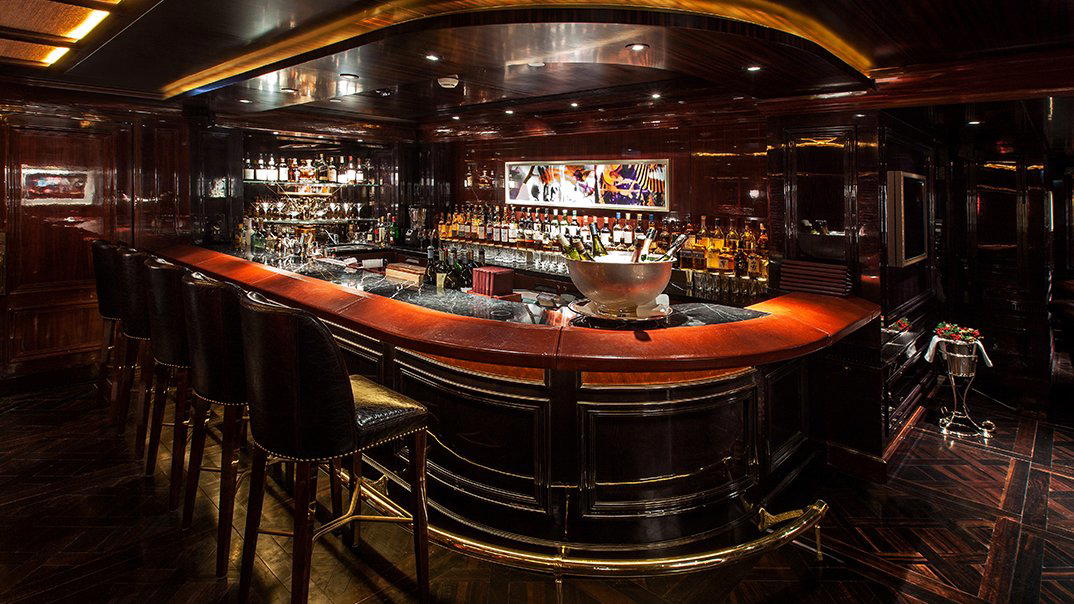
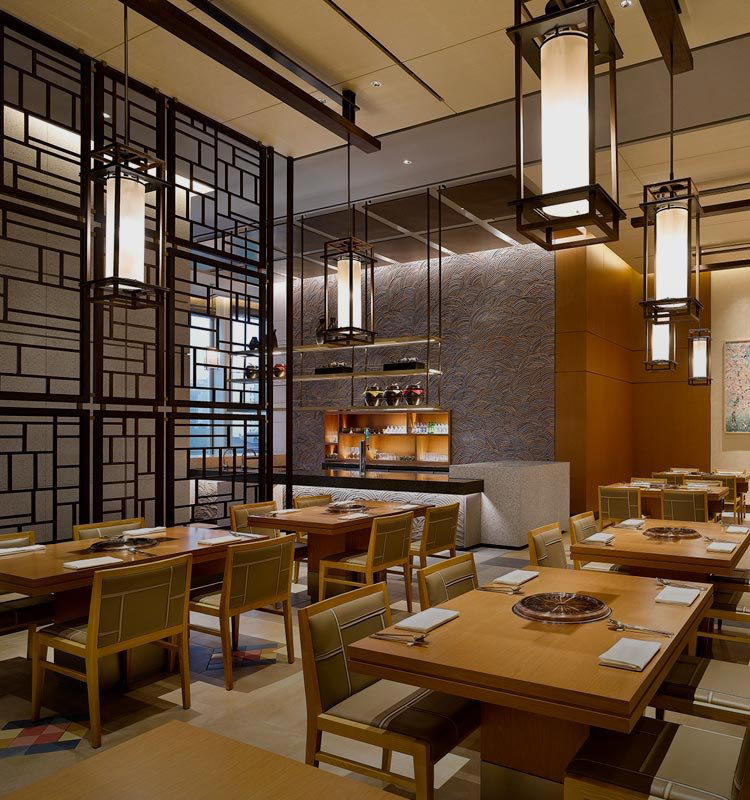
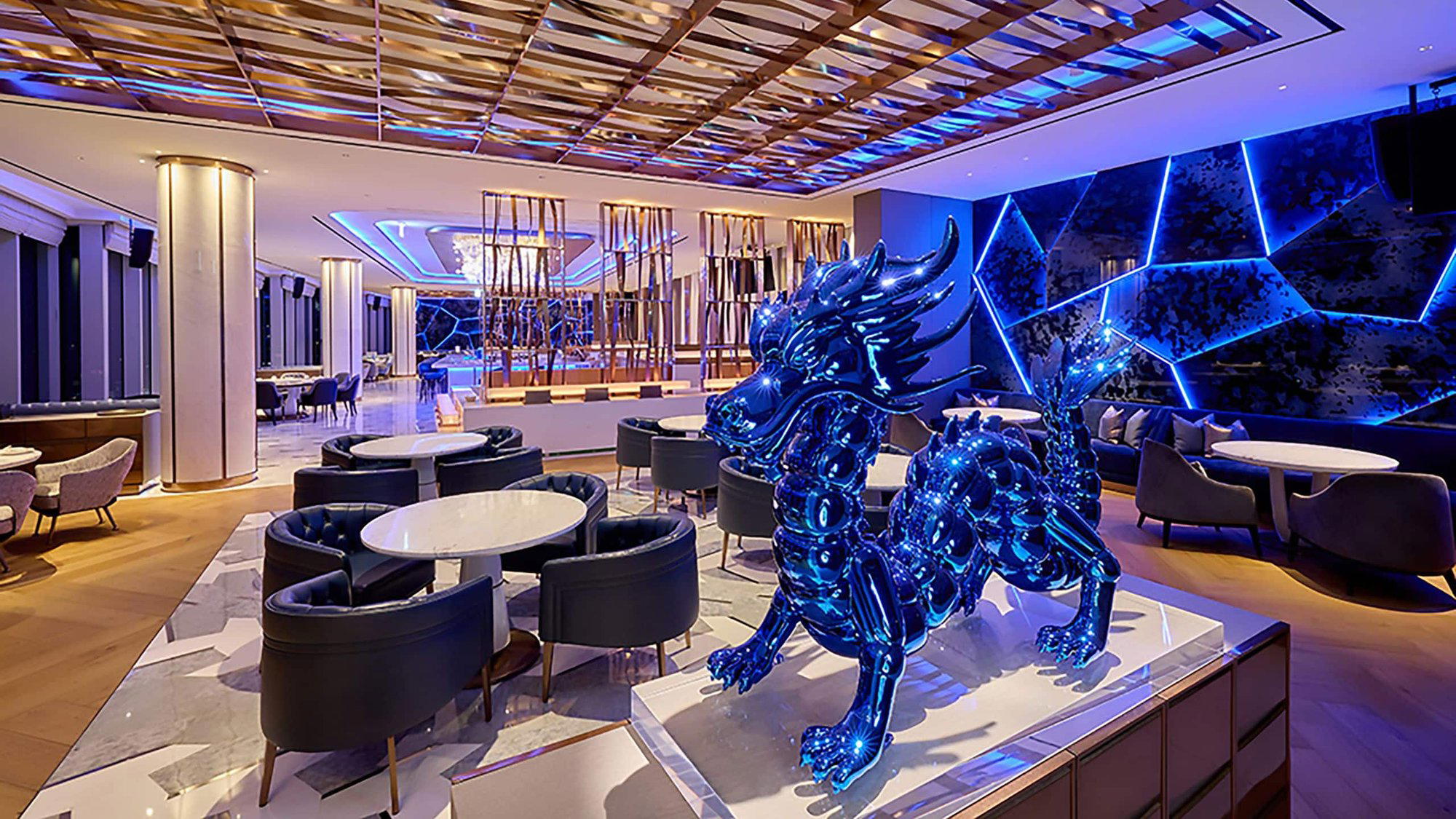
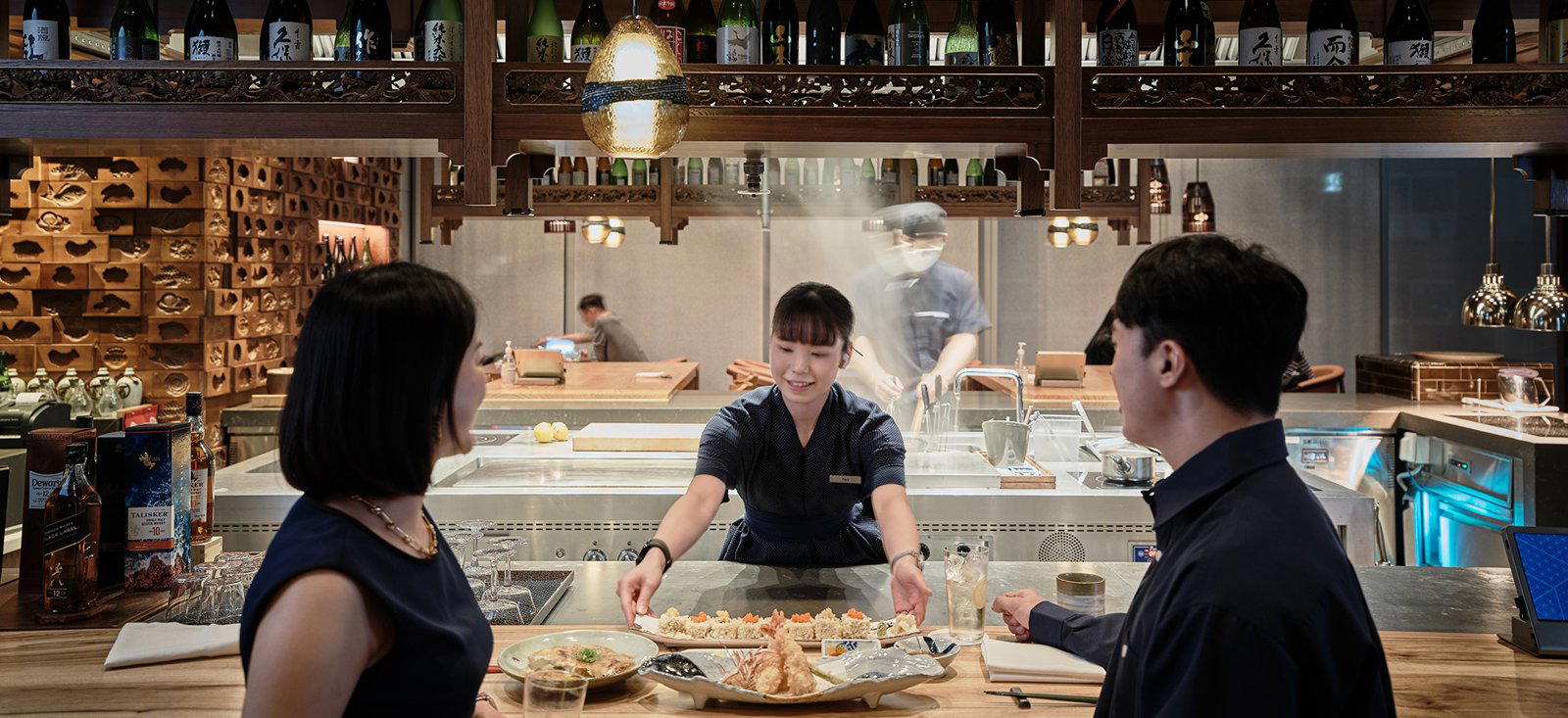
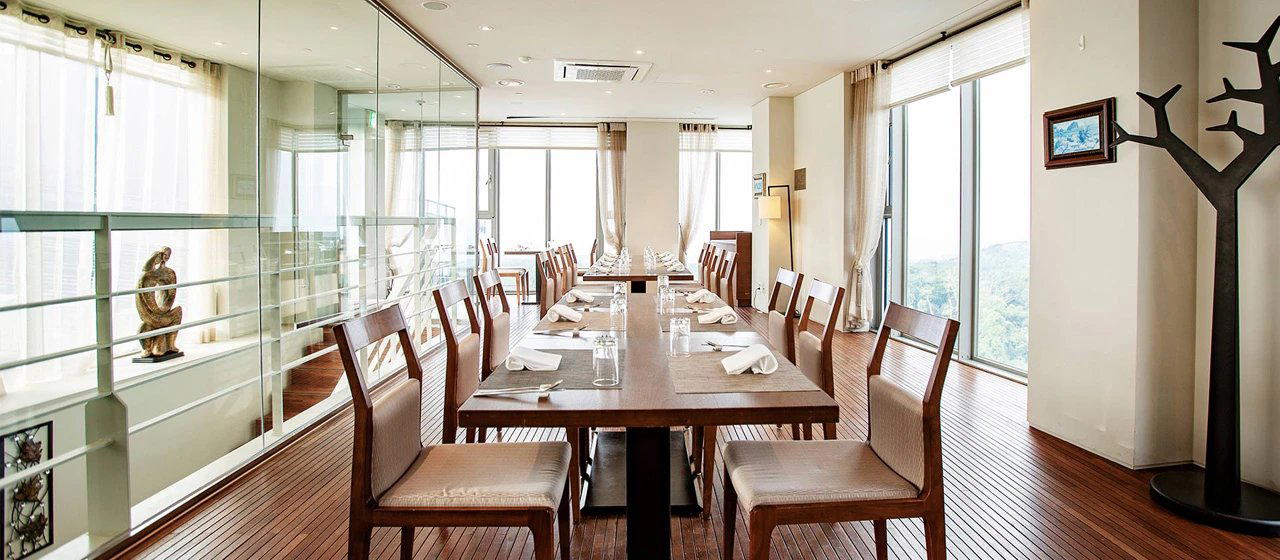
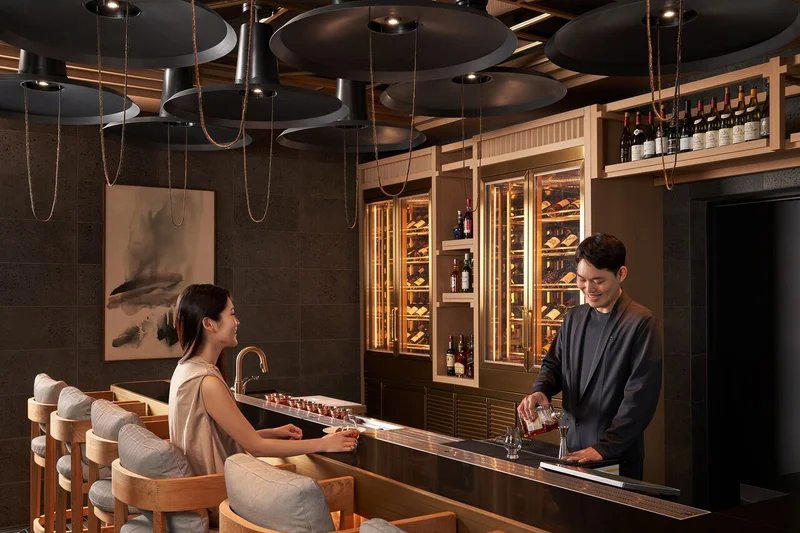
Modern, serene, and nature-integrated with emphasis on quiet contemplation; stone fireplaces, contemporary design, and carefully framed natural vistas create an intimate luxury atmosphere.