SEAMARQ Hotel

Michelin Selected
Selected by the Michelin Guide Hotels 2025, SEAMARQ Hotel sits on the Gangwon coast near Gangneung, where the East Sea meets a stretch of coastline that has drawn architects and travelers in equal measure. The property occupies a position in South Korea's coastal luxury tier that owes more to design rigor than resort convention, making it a reference point for the region's shift toward architecture-led hospitality.

Pearl is the En Primeur Club membership app — saves, bookings, and concierge access live there. Same editors, same standards.
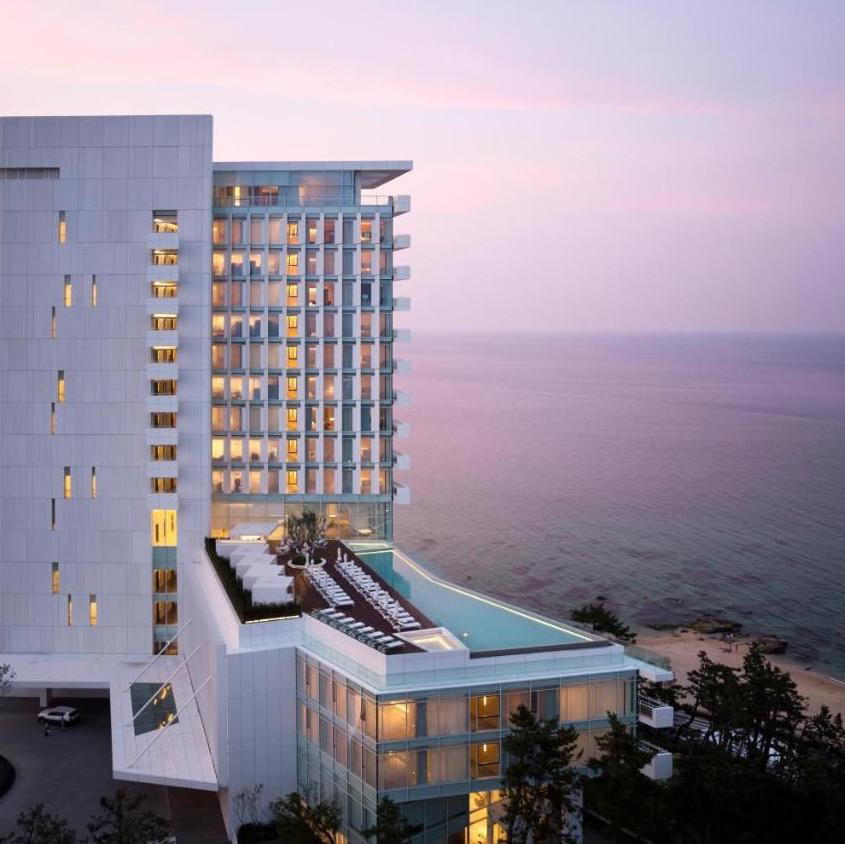
Where the East Sea Sets the Architectural Agenda
Along the Gangwon coast, the relationship between building and landscape is not decorative — it is structural. The East Sea arrives without warning at this latitude: flat, wide, and in winter months, stripped of the softening haze that blurs southern coastlines. Properties that try to compete with that view tend to lose. The ones that endure are those designed to frame it. SEAMARQ Hotel, addressed at 2 Haean-ro 406beon-gil in Gangmun-dong, belongs to the latter category. Its position within the Michelin Selected Hotels 2025 list confirms a level of hospitality execution that the guide reserves for properties meeting consistent standards across service, comfort, and physical environment. For the Gangwon coast, that recognition carries weight: this is not a region where international hospitality infrastructure concentrates.
A Coastline That Selects Its Architecture
The Gangwon coast has spent the past decade recalibrating. The 2018 PyeongChang Winter Olympics accelerated infrastructure investment across the province, and the KTX line connecting Seoul to Gangneung brought the East Sea within two hours of the capital for the first time. What followed was a wave of hospitality development that sorted quickly into tiers. At the lower end, pension-style accommodation and resort compounds occupied the cheaper inland parcels. At the upper end, a smaller cohort of properties competed on design and setting, targeting travelers for whom the journey from Seoul was an investment worth protecting with a considered place to stay. SEAMARQ sits inside that upper cohort, and the Michelin recognition in 2025 formalises what the local market has signalled for longer.
The hotel's address in Gangmun-dong places it near Gyeongpo Beach, one of the most referenced stretches of coastline in the province and a site with cultural associations that predate the modern tourism infrastructure by centuries. The Gyeongpodae Pavilion, a Joseon-era structure overlooking Gyeongpo Lake, sits nearby — a reminder that this landscape has been valued for its compositional qualities across very different eras. That continuity gives properties in this location a context that purely resort-oriented development cannot manufacture.
Design as the Primary Credential
South Korea's premium hotel tier has bifurcated in a way that mirrors broader regional patterns. On one side sit the major international-flag properties concentrated in Seoul, the JW Marriott Hotel Seoul, the GRAVITY Seoul Pangyo, Autograph Collection, and comparable city-centre addresses where brand infrastructure and business travel demand reinforce each other. On the other side, a growing number of design-forward properties in secondary and coastal locations have emerged, competing not on flag recognition but on physical experience and setting.
The architecture at SEAMARQ has been designed to read from the water and from the road as a considered horizontal mass rather than a stacked resort block. That formal discipline is not common at this price point in Korea, where the temptation to maximise floor-area-ratio in high-demand coastal zones often produces buildings that extract views rather than compose them. The Michelin Hotels programme, which evaluates physical environment alongside service and F&B, tends to recognise properties where these decisions have been made with consistency. Selection in 2025 as a new entry suggests the property met those criteria at the point of assessment rather than accumulating recognition gradually.
The Gangwon Region in Context
Gangwon-do is Korea's largest province by area and its least densely populated. The combination of high mountain terrain to the west and an uninterrupted eastern coastline produces a regional character that resists easy categorisation. For domestic travelers, it functions as the country's primary nature-oriented escape, accessible from Seoul by car via the Yeongdong Expressway or by KTX to Gangneung Station. For international visitors, it remains a secondary destination, though one with growing infrastructure. The Intercontinental Alpensia Pyeongchang Resort anchors the mountain accommodation tier inland, while Kensington Hotel Seorak holds a long-established position in the Seoraksan area to the north. The coastal strip around Gangneung is a different proposition: flatter, more open, and increasingly shaped by the design-conscious domestic travel market that emerged after the Olympic infrastructure upgrades.
Properties in this corridor compete on a set of criteria that differs from mountain resort logic. Proximity to the beach and to Gangneung's growing food and coffee culture, the city has developed a nationally recognised specialty coffee scene, partly as a legacy of Olympic-era investment in public amenities, matters as much as room count or facilities. SEAMARQ's location in Gangmun-dong positions it within reach of both the coastline and the city without being absorbed by either. For an overview of what the wider province offers, see our full Gangwon Do guide.
Comparable design-and-setting properties elsewhere in Korea include the Ananti Namhae on the southern coast and South Cape Owners Club in Namhae, both of which operate in the architecture-led coastal tier. Within Gangwon itself, the comparison set includes U Retreat in Hongcheon and Oakwood Lagoon Town Gangneung, the latter sharing the same coastal city without competing directly on positioning or format.
Planning a Stay
Gangneung Station, served by KTX from Seoul in approximately two hours, is the practical entry point for most visitors arriving without a car. From the station, Gangmun-dong is a short taxi or ride-share journey east toward the coast. The Gangwon coast has defined seasonal patterns: summer weekends from late July through August bring the highest domestic demand and the shortest booking windows, while the shoulder months of May, June, and September offer the same coastline with considerably less competition for accommodation. Winter on the East Sea has its own logic, the light is harder, the beach is empty, and the combination of cold air and open water is the kind of thing that rewards properties with architecture confident enough to hold the room's attention when the outdoors retreats. For travelers comparing the Gangwon coast against other Korean coastal options, the Lotte Resort Jeju Art Villas and Parnas Hotel Jeju represent the island alternative, while Park Hyatt Busan anchors the southeast coast option. Further afield, properties like Badrutt's Palace Hotel in St. Moritz and Hôtel de Paris Monte-Carlo illustrate the international standard against which Michelin's hotel programme benchmarks selected properties across all markets.
Quick Comparison
Comparable venues nearby, for context on price, style, and recognition.
| Venue | Cuisine | Price | Awards | Notes |
|---|---|---|---|---|
| SEAMARQ HotelThis venue — the venue you are viewing | Avant-garde high-rise tower in harmony with the East Sea coastline. | Not listed | Michelin Selected | Not listed |
| Sofitel Ambassador Seoul Hotel | Modern luxury French-inspired sanctuary with serviced residences | $200–300 | Michelin Selected · Forbes Recommended | Jamsil |
| Casino Hotel Seoul | Luxury integrated resort with Art Deco design elements and contemporary gaming facilities | $300–500 | Not listed | Gwangjin-gu |
| Mondrian Seoul Itaewon | Modern lifestyle hotel with bold, sculptural design capturing lively city culture. | Not listed | Michelin Selected | 이태원동 |
| Paradise Hotel & Resort | Luxury integrated resort with entertainment and wellness. | Not listed | Forbes 4-Star | Jung-gu |
| Hotel Onoma Daejeon, Autograph Collection | Contemporary lifestyle hotel with sustainable and balanced design ethos | Not listed | Michelin Selected | Yuseong-gu |
Recognition history
Dated appearances from independent guides and award organizations, with the underlying list record or original source where available.
Michelin Selected
Michelin
Continue exploring
More in Gangwon Do
Hotels in Gangwon Do
All hotels in Gangwon Do →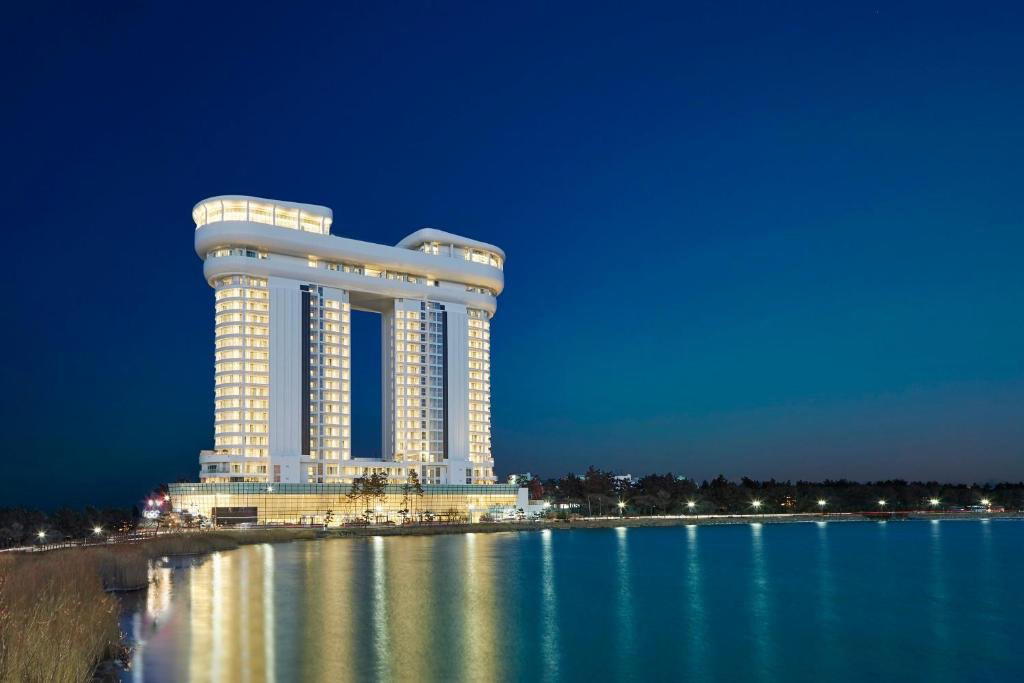
Restaurants in Gangwon Do
Browse all →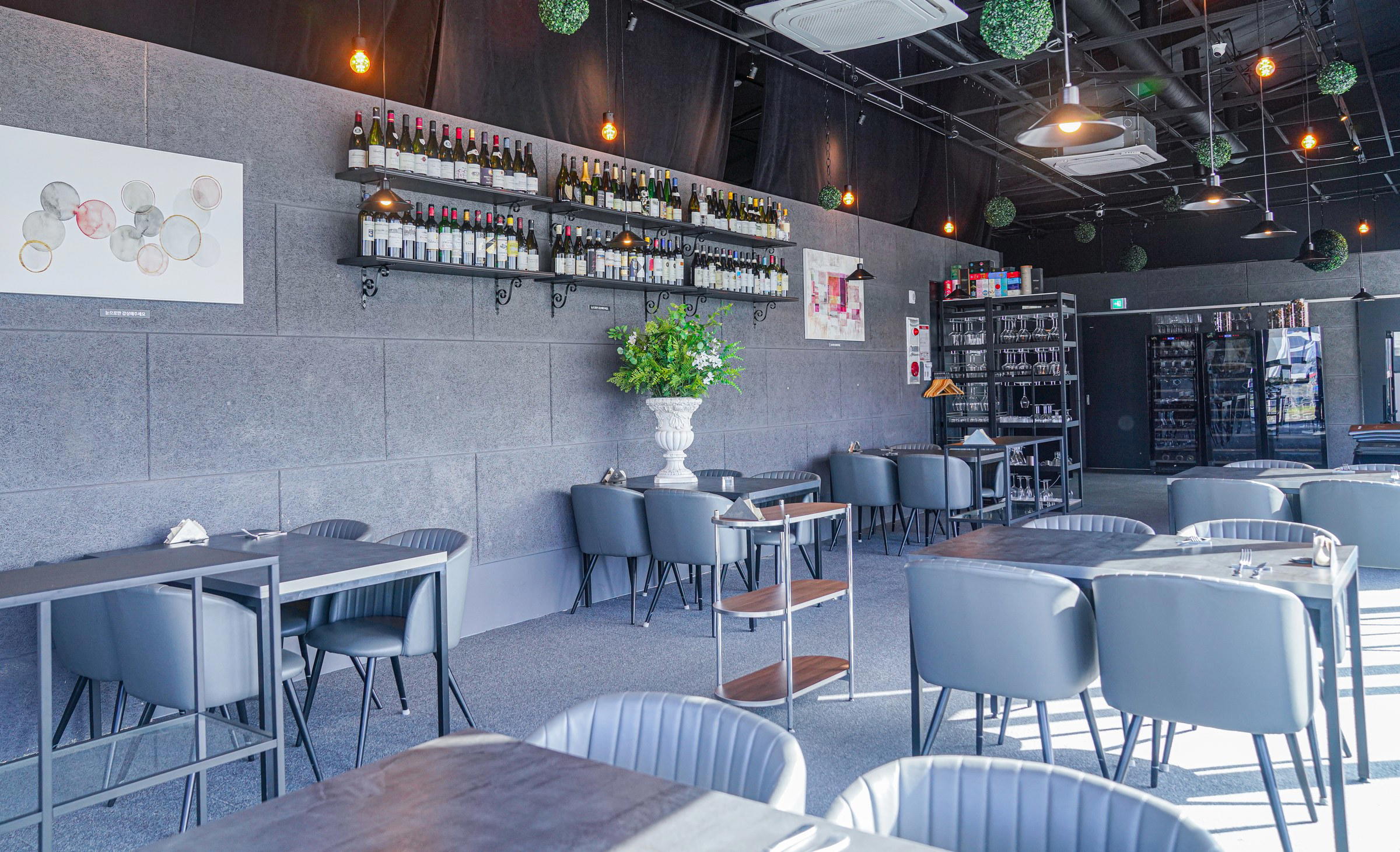
Details
- Modern
- Scenic
- Elegant
- Sophisticated
- Minimalist
- Romantic Getaway
- Weekend Escape
- Honeymoon
- Infinity Pool
- Rooftop Pool
- Panoramic View
- Waterfront
- Pool
- Spa
- Fitness Center
- Sauna
- Restaurant
- Wi Fi
- Elevator
- Waterfront
- Mountain
- Elevator
Abundant natural light floods minimalist interiors with floor-to-ceiling windows, polished stone, and timber veneer creating a bright, open, and lively coastal atmosphere.