Wynand Fockink Proeflokaal and Spirits
One of Amsterdam's oldest surviving spirits houses, Wynand Fockink has operated from Pijlsteeg 31 since 1679, serving Dutch genever and liqueurs in a narrow, barrel-lined proeflokaal just steps from Dam Square. The format is deliberately stripped back: stand at the bar, fill your glass to the brim, and drink it down before you lift it. A living document of Dutch distilling tradition.
Pearl is the En Primeur Club membership app — saves, bookings, and concierge access live there. Same editors, same standards.
- Address
- Pijlsteeg 31, 1012 HH Amsterdam, Netherlands
- Phone
- +31 20 639 2695
- Website
- wynand-fockink.nl
- Directions
- Get directions
 Saves & bookings on Pearl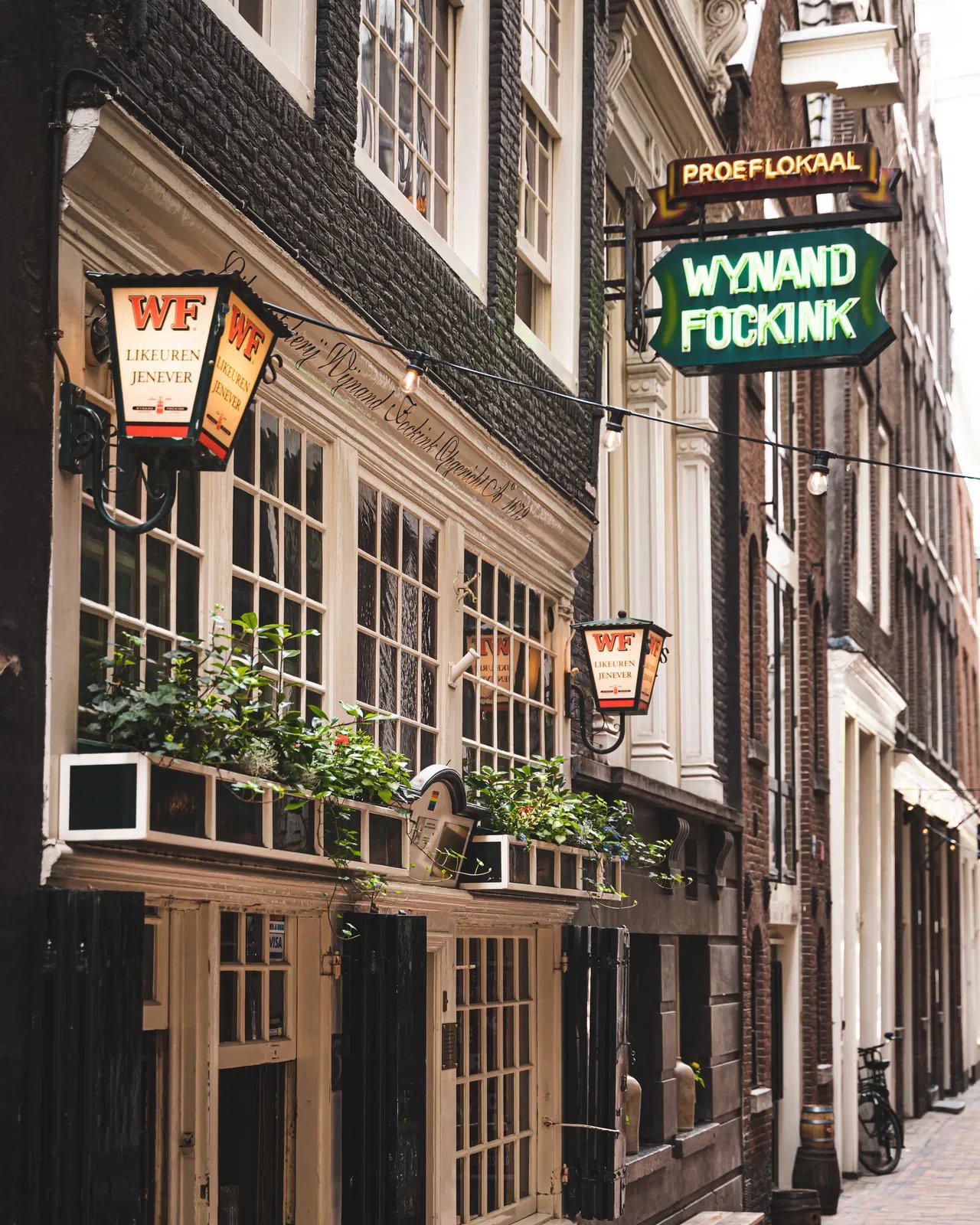
A Three-Century Archive of Dutch Spirits
The alley off Damrak that leads to Pijlsteeg 31 is easy to miss, which is part of the point. Wynand Fockink Proeflokaal and Spirits occupies a space that has functioned as a tasting house since 1679, and the interior makes no concessions to that having changed. Low ceilings, dark wood shelving stacked with numbered bottles, and a counter narrow enough that two people standing side by side are already a crowd. Amsterdam's spirits tradition was built in rooms like this one, and Wynand Fockink is among the last places in the city where that tradition has not been repackaged for contemporary consumption.
The proeflokaal format itself is worth understanding before you arrive. These tasting houses were originally attached to distilleries, allowing buyers to sample before purchasing in bulk. The retail transaction has long since separated from the tasting ritual, but the physical format survives: no seating, no cocktail menu, no table service. You stand at the bar and drink. The custom of filling a tulip glass so full that you must bend to take the first sip without touching the glass is not affectation — it is the house rule, and it predates most of the bars that currently call themselves traditional.
The Spirits Collection as Primary Document
Depth of what Wynand Fockink holds on its shelves is the reason the venue functions as more than a heritage set piece. Dutch genever and the wider category of traditional Dutch liqueurs sit at the centre of the collection, with dozens of distinct expressions available by the glass. Jonge genever, the lighter post-war style, sits alongside oude genever with its malt wine base and fuller body — the two represent genuinely different drink categories, not just age statements, and few bars in the Netherlands make that distinction as legible as it is here.
Beyond genever, the house produces and stocks a range of traditional Dutch liqueurs, advocaat, parfait amour, and herbal bitters among them, that map the full breadth of Dutch distilling prior to the twentieth century's homogenisation of the category. These are not novelty labels. They represent production choices that were standard before the spirits industry consolidated around a handful of dominant styles. For anyone tracking the revival of pre-industrial spirits categories, a movement that has shaped craft distilling in Amsterdam and beyond, Wynand Fockink's collection reads as primary source material rather than nostalgia.
Internationally, genever has attracted renewed attention from bartenders at technically serious programs like Door 74 and Tales & Spirits, both of which have incorporated Dutch spirits into serious cocktail lists. Wynand Fockink occupies a different position in that ecosystem: it is the source context rather than the application layer.
Where Wynand Fockink Sits in Amsterdam's Bar Scene
Amsterdam's bar spectrum runs from neighbourhood brown cafés to internationally recognised cocktail bars. Wynand Fockink does not compete in either category. The proeflokaal format positions it as a category of its own, a spirits-specialist venue with a historical mandate rather than a contemporary program. Venues like Amsterdam Roest represent the city's industrial-creative register, while Bakers & Roasters anchors the neighbourhood-casual end. Wynand Fockink operates in none of those registers. It is closer, in function, to a specialist wine merchant that also sells by the glass: the purpose is education and access to depth, not ambience-led socialising.
That distinction matters practically. If you arrive expecting a cocktail bar experience, you will find a short counter and a focused list of spirits served neat or in simple traditional forms. If you arrive understanding the proeflokaal tradition, you will find one of the most coherent spirits collections in the Netherlands presented in its original delivery format.
For context on how the Netherlands handles spirits more broadly, the bar programs at Florin Utrecht in Utrecht and Bowie in The Hague show how Dutch bar culture has evolved in secondary cities, while Brasserie Lalou in Delft and Café Barolo in Eindhoven illustrate the range of drink programming outside Amsterdam. None of those venues are attempting what Wynand Fockink does; they are not trying to.
The Collection in Context: Genever's Longer Story
Genever's decline as an everyday Dutch drink during the twentieth century is well documented. The rise of lighter, more neutral spirits, gin, vodka, and blended whisky, displaced malt-wine-based genever from mainstream consumption across Western Europe. What survived in Dutch proeflokalen is effectively a pre-homogenisation archive: styles, botanicals, and production methods that did not travel into the dominant commercial spirits categories.
That historical context explains why venues like Wynand Fockink carry particular weight in the current conversation around spirits provenance. The craft distilling revival has created demand for exactly what traditional Dutch spirits represent: documented heritage, regional character, and production continuity over centuries rather than decades. The collection at Pijlsteeg 31 is relevant to that conversation in ways that purpose-built craft operations, however serious, cannot replicate. Age of operation is, in this case, a form of credential.
For comparison, consider how whisky heritage venues in Scotland or cognac houses in Charente function: the age of the stock and the continuity of the method are part of what is being sold. Wynand Fockink operates on the same logic, applied to a category that has received less international attention but is no less historically grounded.
Planning Your Visit
Wynand Fockink sits on Pijlsteeg, a narrow alley running parallel to Damrak, placing it within a short walk of Dam Square and the central station end of the city. The location is central enough that it fits naturally into a broader Amsterdam itinerary covered in our full Amsterdam restaurants and bars guide. The proeflokaal is typically busiest in the late afternoon and early evening, when the tourist flow from Dam Square peaks; arriving earlier in the afternoon gives more space at the counter and more time to work through the spirits list without pressure.
No booking is required or possible, the stand-up format does not accommodate reservations. Prices for individual glasses of genever and liqueurs sit at the accessible end of Amsterdam's drinks market, consistent with the house's role as a tasting venue rather than a premium bar. The physical space is small; on busy evenings, overflow drinkers stand in the alley outside, which is neither uncomfortable nor unusual for a venue of this type.
For those building a broader Netherlands spirits itinerary, Espressobar Kopi Soesoe in Rotterdam and Boode Foodbar in Bathmen offer points of contrast in different cities and registers. Internationally, the intimate counter-service model at Bar Leather Apron in Honolulu shares some structural similarities with the proeflokaal format, even if the drink category is entirely different.
Continue exploring
More in Amsterdam
Bars in Amsterdam
Browse all →
Restaurants in Amsterdam
Browse all →
Hotels in Amsterdam
Browse all →
Wineries in Amsterdam
Browse all →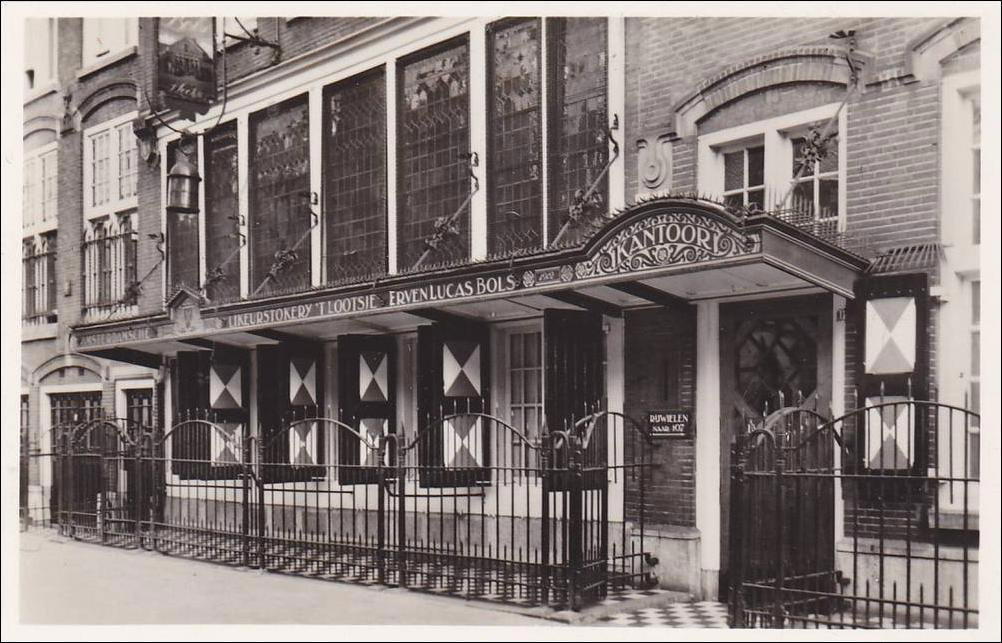
At a Glance
- Classic
- Cozy
- Historic
- Intimate
- Casual Hangout
- Solo
- Historic Building
- Counter Only
- Standing Room
- Gin
Current opening hours
- Monday
- 2–9 PM
- Tuesday
- 2–9 PM
- Wednesday
- 2–9 PM
- Thursday
- 2–9 PM
- Friday
- 2–9 PM
- Saturday
- 2–9 PM
- Sunday
- 2–9 PM
Hours can change for holidays and private events. Last verified .
Historic wooden interior with old casks and atmospheric tasting room evoking Amsterdam's distilling heritage.
Know Before You Go
- Getting there
- Pijlsteeg 31, 1012 HH Amsterdam, Netherlands