Google: 4.6 · 815 reviews
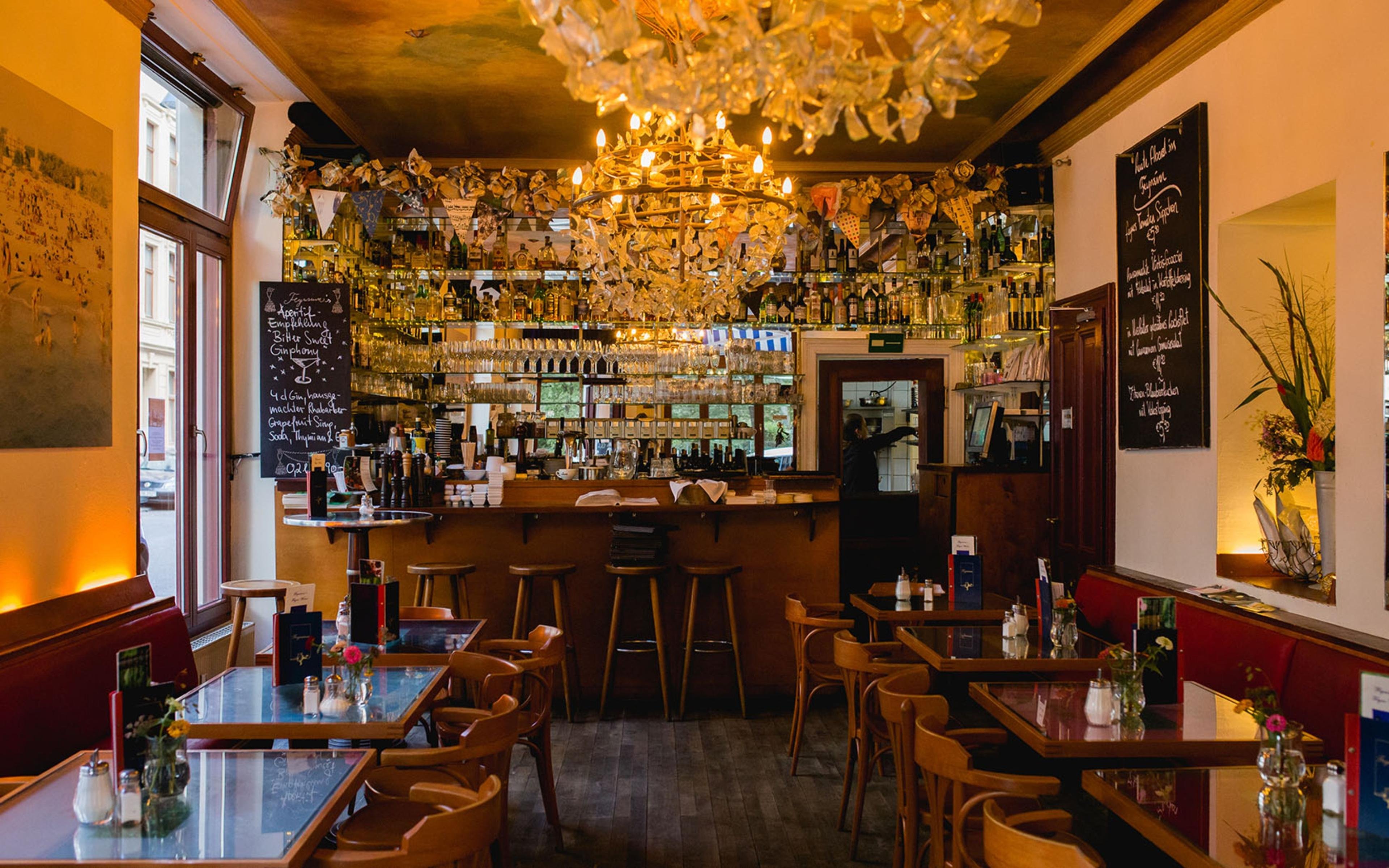
Café Franck occupies a quiet residential stretch of Ehrenfeld, Cologne's most restless creative district, where it functions as a neighbourhood anchor rather than a destination import. The address on Eichendorffstraße places it closer to the local rhythm than the tourist circuit, making it a reference point for how Cologne's bar scene operates at street level, outside the Old Town's louder claims.
 Discover on Pearl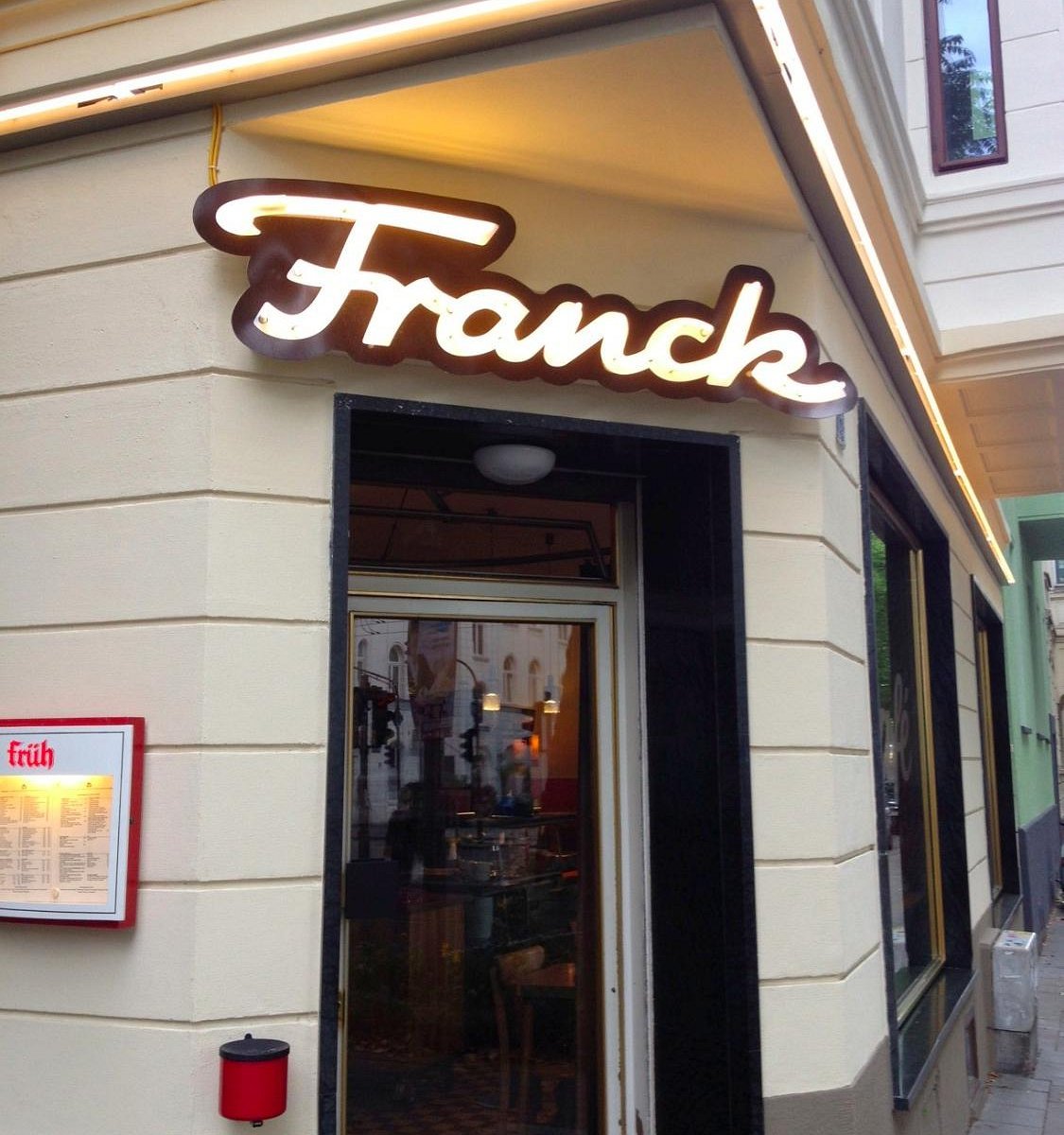
Ehrenfeld's Street-Level Bar Logic
Cologne's bar geography divides cleanly between the Altstadt circuit, which absorbs tourist volume and operates on spectacle, and the western neighbourhoods, which run on a slower, more considered cadence. Ehrenfeld sits firmly in the second category. The district built its reputation on studio spaces, independent retail, and a density of small venues where regulars outnumber passersby. Café Franck, at Eichendorffstraße 30, belongs to this pattern: a neighbourhood address that earns its place through consistency rather than positioning.
Approaching from the street, the format reads immediately as local. There is no signage arms race here, no queue management theatre. The kind of bar that operates on Eichendorffstraße tends to assume its audience already knows where it is, which is itself a signal about who the audience is. Ehrenfeld's venue density means that foot traffic flows from within the district rather than being bussed in from elsewhere, and the bars that survive here do so by holding the trust of a geographically specific crowd over time.
For context on how Cologne's bar scene distributes across the city, our full Cologne restaurants and bars guide maps the key neighbourhoods and the venues that define them.
The Ehrenfeld Peer Set
Germany's bar culture has never moved in a single direction. Berlin's Buck and Breck operates as a technically rigorous cocktail counter with a hard cap on covers; Hamburg's Le Lion Bar de Paris leans into a European grand café register; Munich's Goldene Bar anchors itself to a heritage building with institutional weight. Frankfurt's The Parlour positions itself within a hospitality hotel format. These are all deliberate, programme-led operations where the concept drives the room.
Cologne's Ehrenfeld venues tend to work differently. The district's bars often resist explicit concept statements, preferring a format that can hold multiple functions across a single evening: coffee in the afternoon, drinks after dark, conversation at close. This is a European café-bar tradition with a specifically German inflection, where the pressure to perform a single identity is lower than in cities where the bar scene is more internationally legible. Within Cologne itself, venues like Bar Rix and Bar Trattoria Celentano occupy adjacent territory in the city's broader bar map, each anchoring a particular neighbourhood register.
The Ehrenfeld address also puts Café Franck in conversation with the district's other fixtures. Bei Oma Kleinmann and Barracuda Bar represent different points on the neighbourhood spectrum, from deeply traditional Kölsch-and-schnitzel operations to venues with a harder late-night edge. Café Franck sits somewhere in the middle register of this range, which in Ehrenfeld is where the most durable venues tend to position themselves.
What the Address Tells You
Eichendorffstraße is a residential street, not a commercial strip. That distinction matters more than it might in other cities because Cologne's residential-bar culture has a specific texture: these venues function as extensions of domestic life in a way that high-street bars rarely do. The regular at a residential-street bar in Ehrenfeld is often within walking distance of home, which shapes the atmosphere, the pace, and the implicit contract between venue and guest.
This is not a model that exports easily to tourist districts, which is precisely what keeps venues on streets like Eichendorffstraße calibrated to local use. The comparison point here is less Uerige in Düsseldorf, which operates as a regional institution with substantial tourist draw, and more the kind of corner bar that sustains a neighbourhood's social infrastructure without ever becoming a destination in the conventional sense.
For reference on how this neighbourhood-bar format plays out in other German cities, Kieler Brauerei am Alten Markt in Kiel offers a useful parallel: a venue where local function and civic identity are more central than programme innovation. Internationally, Bar Leather Apron in Honolulu demonstrates how the opposite end of the spectrum — technically ambitious, programme-forward cocktail bars — operates in a very different register entirely.
Planning a Visit
Café Franck's location on Eichendorffstraße puts it within the walkable core of Ehrenfeld, which is well-served by the city's U-Bahn network; the Ehrenfeld and Venloer Straße stops place the district within direct reach of central Cologne. Because precise hours, booking policies, and contact details are not confirmed in our current record, visitors should verify current opening times directly before travelling. The venue's residential-street format suggests the kind of operation that rewards a walk-in approach over advance planning, though this should be confirmed on arrival. Ehrenfeld's general character means the surrounding blocks offer further options if the evening calls for it, making the neighbourhood itself a reliable frame for an evening rather than a single stop.
Compact Comparison
A quick peer check to anchor this venue’s price and recognition.
| Venue | Notes | Price |
|---|---|---|
| Café Franck | This venue | |
| Bar Rix | ||
| Frohnatur | ||
| Seiberts Bar | ||
| Bar Trattoria Celentano | ||
| Café Storch |
Continue exploring
More in Cologne
Bars in Cologne
Browse all →
Restaurants in Cologne
Browse all →
Hotels in Cologne
Browse all →
At a Glance
- Cozy
- Retro
- Casual Hangout
- Late Night
- Terrace
- Lounge Seating
- Outdoor Terrace
- Street Scene
Retro atmosphere with cozy terrace seating.