Bei Oma Kleinmann on Zülpicher Strasse sits inside Cologne's densest strip of student bars and late-night haunts, yet it operates with a warmth and neighbourhood specificity that separates it from the surrounding volume trade. The name alone signals the register: Oma Kleinmann, Grandma Kleinmann, a domestic reference in a city that prizes its Kneipe culture above almost any imported bar format.
 Discover on Pearl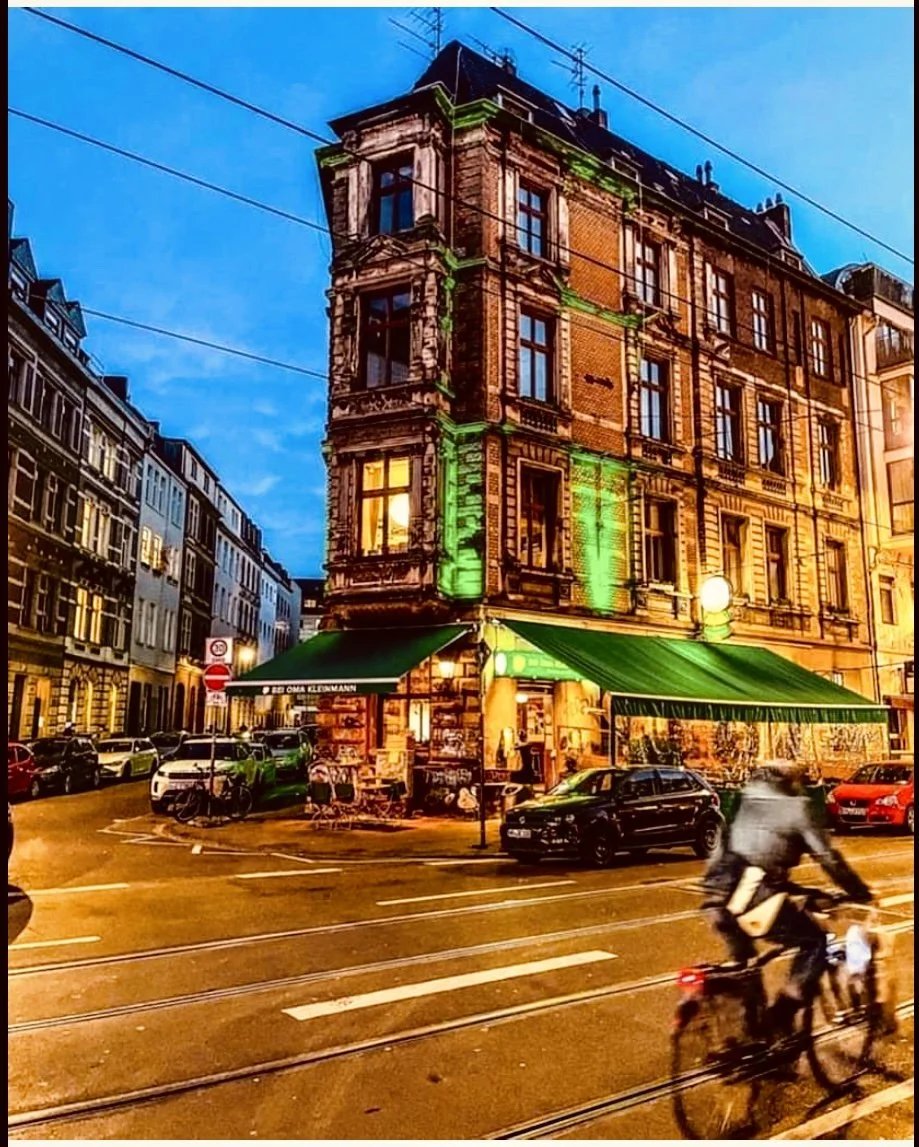
The Zülpicher Strip and Where Bei Oma Kleinmann Fits Within It
Zülpicher Strasse is one of the more instructive streets in Cologne if you want to understand how German bar culture stratifies by function rather than prestige. The strip runs through the student quarter of the Kwartier Latäng, and on any given evening it moves through several registers at once: loud, high-turnover spots aimed at university crowds, older Kneipe formats that have survived multiple cycles of neighbourhood change, and a smaller tier of places that build regulars through personality and consistency rather than footfall. Bei Oma Kleinmann, at number 9, belongs to that third category. Its address puts it at the heart of the action, but its name sets a different expectation. Oma means grandmother in German, and the domestic register is not accidental. It signals a particular kind of hospitality: familiar, unflashy, built around the bar as a social anchor rather than a destination product.
For context on how Cologne's bar scene positions itself against other German cities, the spectrum runs from the technical cocktail programs at places like Le Lion Bar de Paris in Hamburg and Buck & Breck in Berlin at one end, to neighbourhood Kneipe formats deeply embedded in local identity at the other. Bei Oma Kleinmann sits closer to that second pole, operating within a tradition where the bar itself functions as a form of civic infrastructure, not just a place to drink.
The shortlist, unlocked.
Hard-to-book tables, cellar releases, and concierge-planned trips.
Get Exclusive Access →The Person Behind the Bar in German Kneipe Tradition
In Germany's Kneipe culture, the person behind the bar carries a weight that goes beyond service. They are the institutional memory of the room: who orders what, which table fills first on a Tuesday, where the conversation usually lands. This is distinct from the bartender-as-showman model that has come to define cocktail-forward venues in cities like Hamburg or Munich. At places like Goldene Bar in Munich or The Parlour in Frankfurt, the craft behind the bar is deliberate, technical, and visible. In the Kneipe format that Bei Oma Kleinmann represents, the craft is just as real but it operates differently. It is measured in the consistency of poured Kölsch, the speed of recognition when a regular walks in, and the ability to hold a room across multiple hours and moods without the evening ever feeling managed.
The name Oma Kleinmann functions as a character reference for this style of hospitality. It implies a particular disposition: attentive without being performative, opinionated without being difficult, generous in a way that feels habitual rather than designed. Whether the current operation matches that implication is a question of visiting and forming your own view, but the framing is deliberate and the tradition it invokes is one with deep roots in Cologne's bar culture specifically. Cologne takes its Kneipe identity seriously in a way that, say, Düsseldorf takes its Altbier houses seriously, and the two cities have competed on exactly that register for decades. For the Altbier side of that argument, Uerige in Dusseldorf makes the case as well as anywhere.
Kölsch, the Bar, and Why the Drink Shapes the Room
Any bar on Zülpicher Strasse that takes its local identity seriously will pour Kölsch, and the way it pours it says something. Kölsch is a protected designation: it can only be brewed in the Cologne region, served in the straight 0.2-litre glass called a Stange, and replaced continuously by the waiter, or Köbes, until the coaster is placed over the glass. This is not merely ritual. It is a service architecture that keeps the pace of the evening and creates a particular kind of social rhythm. You do not nurse a Kölsch in the way you might a glass of wine. The format assumes engagement, movement, and refill.
Bars in the Kwartier Latäng that handle Kölsch service well build a certain momentum in a room that is hard to replicate with other formats. The continuous pour, the small glass, and the obligation to signal when you are done rather than when you want more all work together to create a specific atmosphere. It is worth noting how this compares to the biergarten format that also does well in Cologne: Biergarten Rathenauplatz Veedelstreff handles the outdoor, seasonal version of this social contract, while Bei Oma Kleinmann occupies the interior, year-round register.
The Surrounding Bar Ecosystem on and Around Zülpicher Strasse
Part of what defines Bei Oma Kleinmann is what surrounds it. The Kwartier Latäng has enough bar density that a single venue rarely operates in isolation. Regulars often move across multiple spots in an evening, and the strip functions almost as a single extended social space. Within that context, bars differentiate through a combination of music level, price point, format, and the particular crowd that coheres around them over time.
The nearby Bar Rix and Bar Trattoria Celentano each represent slightly different positions within the local bar spectrum. The Barracuda Bar Köln pushes toward a different energy register again. Bei Oma Kleinmann's positioning within this cluster matters: the name signals accessibility and a lack of pretension, which in a student-heavy area like this one functions as both a practical and a philosophical statement about what the bar is for.
For those working through Cologne's bar scene more systematically, the full Cologne restaurants and bars guide maps the city's distinct neighbourhoods and how the drinking culture shifts between them.
Planning a Visit: What to Know Before You Go
Bei Oma Kleinmann sits at Zülpicher Strasse 9 in the 50674 postcode, squarely in the Kwartier Latäng. The area is walkable from Rudolfplatz U-Bahn station in under ten minutes, and the strip is most active from Thursday through Saturday evenings when the university population is at its densest. The format is drop-in rather than reservation-based, consistent with the Kneipe model, so timing matters more than advance planning. Arriving earlier in the evening gives you a different experience from arriving after midnight. Both are legitimate ways to see what the bar is. If you are using the visit to move across several bars in the neighbourhood, it works well as a first or second stop before the energy on the strip peaks.
Visitors interested in how German bar craft operates at a more technically ambitious level may want to use a Cologne evening as a base and compare against what is happening in cities with more pronounced cocktail programs. Kieler Brauerei am Alten Markt in Kiel and Bar Leather Apron in Honolulu both represent what happens when the bar craft question gets answered with considerably more technical apparatus. Bei Oma Kleinmann answers it differently, and for what it is, that answer is worth taking seriously on its own terms.
Frequently Asked Questions
- What should I try at Bei Oma Kleinmann?
- The format here aligns with the Cologne Kneipe tradition, which means Kölsch is the anchor drink. Order it in a Stange, let the Köbes keep the refills coming, and use the format the way it is intended rather than treating it as a single drink. The social logic of continuous small pours is the point as much as the beer itself.
- Why do people go to Bei Oma Kleinmann?
- It operates inside a specific register of Cologne bar culture where the draw is familiarity, neighbourhood belonging, and the particular atmosphere that a well-run Kneipe produces over time. On Zülpicher Strasse, a street with significant bar competition, returning visitors tend to be those who value that consistency over novelty. The Kwartier Latäng has no shortage of louder, flashier alternatives; Bei Oma Kleinmann persists because it offers something those places do not.
- Is Bei Oma Kleinmann a good first bar to visit in Cologne's student quarter?
- For visitors trying to understand how Cologne's Kneipe culture actually functions, Zülpicher Strasse 9 is a practical starting point. The name-as-character-reference approach gives you an immediate sense of the hospitality register, and the location puts you within walking distance of several adjacent bars that each represent a different position on the neighbourhood spectrum. Arriving early in the evening and moving along the strip afterward is the most efficient way to build a comparative picture of how the Kwartier Latäng operates as a whole.
The Minimal Set
A quick context table based on similar venues in our dataset.
| Venue | Notes | Price |
|---|---|---|
| Bei Oma Kleinmann | This venue | |
| Bar Rix | ||
| Frohnatur | ||
| Seiberts Bar | ||
| Bar Trattoria Celentano | ||
| Café Storch |
Need a Table?
Our members enjoy priority alerts and concierge-led booking support for the world's most difficult bars and lounges.
Get Exclusive AccessThe shortlist, unlocked.
Hard-to-book tables, cellar releases, and concierge-planned trips.
Get Exclusive Access →