
Tabelog 100 #40
Our verdict
Yoshoku no Fuji belongs to Kobe’s everyday Western-style Japanese dining tradition, where omurice, hamburger steak, and other post-Meiji comfort dishes sit closer to neighbourhood ritual than luxury theatre. Its Tabelog 100 Yoshoku WEST 2025 selection gives it a clear trust signal in a category built on regulars, small rooms, and precise execution rather than ceremony.

Pearl is the En Primeur Club membership app, where members save venues, book tables and use the concierge.
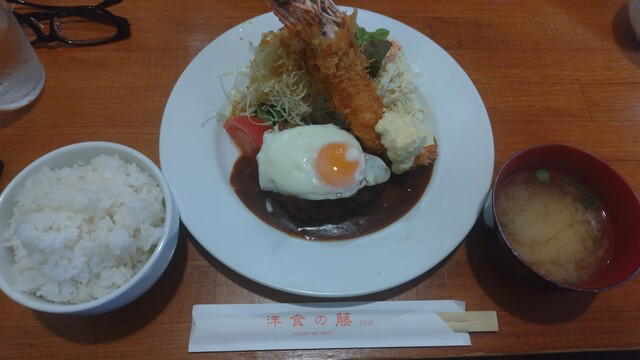
Approaching a yoshoku restaurant in Kobe is rarely about spectacle. The cues are practical: familiar dishes, direct cooking, and the expectation that Western-derived plates will feel Japanese in rhythm, portioning, and purpose. Yoshoku no Fuji sits inside that tradition: a Kobe address tied to omurice, hamburger steak, and plates that explain why yoshoku has remained part of Japan’s urban dining grammar for generations.
Yoshoku is often mistranslated as simply “Western food.” In practice, it is Japanese cuisine with borrowed vocabulary: demi-glace, omelette rice, croquettes, cutlets, gratin, hamburger steak. The category took shape as European techniques entered Japanese public dining, then settled into department-store restaurants, port cities, family-run grills, and station-area counters. Kobe, with its port history and appetite for hybrid foodways, gives that lineage a natural setting. The city’s beef culture may dominate visitor imagination, but everyday yoshoku tells a quieter story about trade, adaptation, and the domestication of foreign forms.
Kobe yoshoku works because it treats Western dishes as local food
The appeal of Kobe’s yoshoku scene is not novelty but fluency. A good omurice is not an imitation of a French omelette; hamburger steak is not a concession to American dining; demi-glace has its own Japanese afterlife. The pleasure comes from translation, not strict origin. Yoshoku no Fuji is listed in the Tabelog 100 Yoshoku WEST 2025 selection, placing it within a regional conversation rather than a generic comfort-food bracket. That matters because the WEST list filters for a cuisine whose strengths are hard to judge from outside Japan: consistency, sauce work, timing, and value.
Kobe’s competitive set is unusually dense. Fumi, Fuji, Place de Pasto, Yoshokuya Yuuki, and Grill Ippei Shinkaiti honten all sit in the same accessible yoshoku conversation, showing the category’s local role. It does not need luxury signalling to be taken seriously. Like ramen, curry, or kissaten culture, locals build habits around it. The difference is port-city memory: Japan looking outward, then folding those influences back into lunch counters and family tables.
For travellers building a Kobe dining itinerary, that distinction helps. The city’s premium meat narrative is only one part of the picture; a yoshoku stop belongs to the everyday civic one. A serious Kobe food plan should not be built only around wagyu. The city’s table culture is broader, and Western-style Japanese cooking is one of the clearest ways to read it.
The format rewards focused execution, not tasting-menu theatre
Yoshoku no Fuji belongs to the scale of everyday Kobe cooking rather than grand dining. That format suits the cuisine. Omelette rice and hamburger steak depend on timing, heat, and sauce rather than elaborate sequencing. In this kind of meal, pacing shapes the experience: orders are familiar, categories are direct, and attention stays on execution.
The Tabelog score of 3.57 is more informative than it may look to visitors used to inflated review platforms. In Japan, mid-three ratings can signal a well-supported local favourite, especially in categories with repeat diners and narrow expectations. The 2025 Tabelog 100 selection gives the stronger signal: regional recognition within yoshoku, not general popularity. For everyday cuisine, that distinction matters. Awards in this lane reward reliability and category fidelity over luxury ingredients.
The menu categories clarify the point. Omurice and hamburger steak are not fallback dishes; they are core yoshoku benchmarks. Omurice tests egg handling, rice seasoning, and the relationship between sauce and sweetness. Hamburger steak tests texture, browning, and the concentration of gravy or demi-glace. A diner who understands those dishes as benchmarks will read the meal differently from someone expecting Western restaurant conventions.
Kobe’s casual-dining map frames the visit. Other local dining rooms point toward kissaten culture, everyday meals, and the port city’s international appetite. Yoshoku sits between those worlds: imported in origin, domestic in feeling, and especially legible in a city shaped by exchange.
How to place it in a Kobe itinerary
Yoshoku works as a corrective to over-planned dining. Kobe visitors often anchor meals around beef, sake, bakeries, Chinatown, or waterfront shopping, then miss the small Western-style Japanese restaurants locals use without ceremony. Yoshoku no Fuji is best understood as a category stop, not a destination built on theatrics. Its value is showing how Kobe eats when it is not performing luxury for visitors.
That does not make it careless casual. The 2025 Tabelog 100 Yoshoku WEST recognition signals a competitive regional field, and the format means timing and execution matter. Treat the meal as a focused stop, not a long evening built around wine service or multi-course pacing. For a fuller city plan, use our full Kobe restaurants guide alongside our full Kobe hotels guide, our full Kobe bars guide, our full Kobe wineries guide, and our full Kobe experiences guide.
Readers comparing Japanese comfort-food traditions across cities can look beyond a single meal and think about how imported or adapted forms settle into Japanese city life. Kobe offers a particularly clear version of that pattern because yoshoku here feels connected to port-city exchange while remaining everyday, familiar, and local.
The reason to care about Yoshoku no Fuji is cultural as much as culinary. Kobe’s yoshoku is not a side note to the city’s dining identity. It is one way the city explains itself: port openness, domestic appetite, familiar dishes, and execution that rewards repeat dining more than spectacle.
Frequently asked questions
What's the price range at Yoshoku no Fuji?
Pricing at Yoshoku no Fuji is listed as JPY 1,000 - JPY 1,999 JPY 1,000 - JPY 1,999.
Where is Yoshoku no Fuji located?
Kobe.
Do they take walk-ins at Yoshoku no Fuji?
Plan for Yoshoku no Fuji as an approachable Kobe yoshoku stop, and check current operating details before visiting.
What is Yoshoku no Fuji known for?
Yoshoku no Fuji is known for yoshoku, including omurice and hamburger steak, and is listed in the Tabelog 100 Yoshoku WEST 2025 selection.
Price and Recognition
Comparable venues at the same tier for side-by-side context.
| Venue | Cuisine | Price | Awards | Notes |
|---|---|---|---|---|
| Yoshoku no FujiThis venue (the venue you are viewing) | Yoshoku (Japanese-style Western cuisine) | $10–20 | Tabelog 100 #40 | Not listed |
| Kyuan | Traditional Soba Noodle Shop | $10–20 | Tabelog 100 #92 | Hyōgo, Traditional Soba Noodle Shop |
| ENISHI | Tantanmen ramen specialist | $10–20 | Tabelog 100 #49 | Nada, Tantanmen ramen specialist |
| Kobe Onsen Sosaku Dining So | Creative Japanese set meals in an onsen complex | $10–20 | Tabelog 100 #14 | Kita, Creative Japanese set meals in an onsen complex |
| Gyoza Senmon Ten Akaman Sannomiya ten | Gyoza specialty shop | $10–20 | Tabelog 100 #52 | Chūō, Gyoza specialty shop |
| Yaoki | Traditional Soba & Japanese Small Plates | $30–50 | Tabelog 100 #66 | Chūō, Traditional Soba & Japanese Small Plates |
Recognition history
Dated appearances from independent guides and award organizations, with the underlying list record or original source where available.
Tabelog 100 #40 · No. 40
Tabelog · Tabelog 100 - Yoshoku - WEST - 2025
Continue exploring
More in Kobe
Restaurants in Kobe
All restaurants in Kobe →
Bars in Kobe
Browse all →



Details
- Classic
- Cozy
- Family
- Solo
- Casual Hangout
- Standalone
- A La Carte
- Set Menu
- Vegetarian Friendly
A small, casual, counter-friendly neighborhood restaurant with a simple, no-frills feel suited to quick, relaxed yoshoku meals.