Skip to Main Content
← Collection
Tokyo, Japan

YŌSHOKU BISTRO TŌYAMA

CuisineYoshoku
Price¥¥
Michelin

A Michelin Plate-recognised yoshoku bistro in Nishiazabu, YŌSHOKU BISTRO TŌYAMA interprets Western-influenced Japanese cooking through a French lens, with a menu structured around wine pairing. The ¥¥ price point makes it one of the more accessible addresses in Minato-ku for serious cooking. Expect warm wood interiors, a blackboard menu, and dishes that span the full arc from classical yoshoku to French technique.

Pearl is the En Primeur Club membership app — saves, bookings, and concierge access live there. Same editors, same standards.

Plan your visit on PearlPlan Your Visit
Address
1-11-13 Nishiazabu, Minato-ku, Tokyo, 106-0031, Japan
Phone
+81 3-6804-3969
YŌSHOKU BISTRO TŌYAMA restaurant in Tokyo, Japan
About

If you eat one meal in Nishiazabu, make it yoshoku

The instinct in Tokyo's Minato-ku is to head toward the ¥¥¥¥ tier: the kaiseki counters, the sushi rooms, the Franco-Japanese tasting menus that dominate the conversation around this city's dining reputation. Venues like Harutaka (Sushi) and L'Effervescence (French) operate at the upper register of what Tokyo can offer, and they are serious addresses. But the yoshoku bistro occupies a different and increasingly important position in the city's food culture, one that the ¥¥ category has historically done better than any other price tier at sustaining. YŌSHOKU BISTRO TŌYAMA, on a quiet Nishiazabu block, is a restaurant in Tokyo's Minato-ku, recognized with Michelin Plate awards in 2024 and 2025. That combination is rarer than it sounds.

What yoshoku actually means, and why sourcing defines it

Yoshoku is the category of Japanese cooking built around Western ingredients and techniques adapted, refined, and eventually claimed as distinctly Japanese over the course of roughly a century and a half. The tradition emerged from the Meiji-era appetite for Western foods, and by the twentieth century it had developed its own canon: omurice, hayashi rice, menchi katsu, doria, korokke. These dishes use Western raw materials, but they are filtered through Japanese sensibilities around seasoning precision, ingredient quality, and presentation discipline.

That sourcing dimension is where yoshoku distinguishes itself from direct Western cooking. The genre depends on Japanese pantry logic applied to European-origin ingredients: domestic eggs with deep golden yolks for omurice, Japanese-farmed beef processed with the same care as wagyu cuts, breadcrumbs that behave differently from their Western equivalents because the bread beneath them starts from a different place. The quality of the ingredient is not incidental to yoshoku; it is the argument. A korokke made with indifferent potato and loosely seasoned meat is a different dish from one built on precisely cooked domestic potato and well-sourced filling. The category rewards attention to raw material at least as much as technique, which is why the better yoshoku addresses in Tokyo tend to have strong supplier relationships even if those relationships go undiscussed on menus.

At YŌSHOKU BISTRO TŌYAMA, that tradition is extended through a French training lens. The menu is oriented explicitly around wine pairing, which shifts the sourcing logic further: dishes need to carry enough structure to hold against wine, which means fat, acidity, and seasoning calibrated differently from the bowl-food register of more casual yoshoku. This is not fusion in the approximate sense. It is a specific argument about what yoshoku can become when the chef's reference frame includes French culinary discipline alongside the Japanese base.

The room and the format

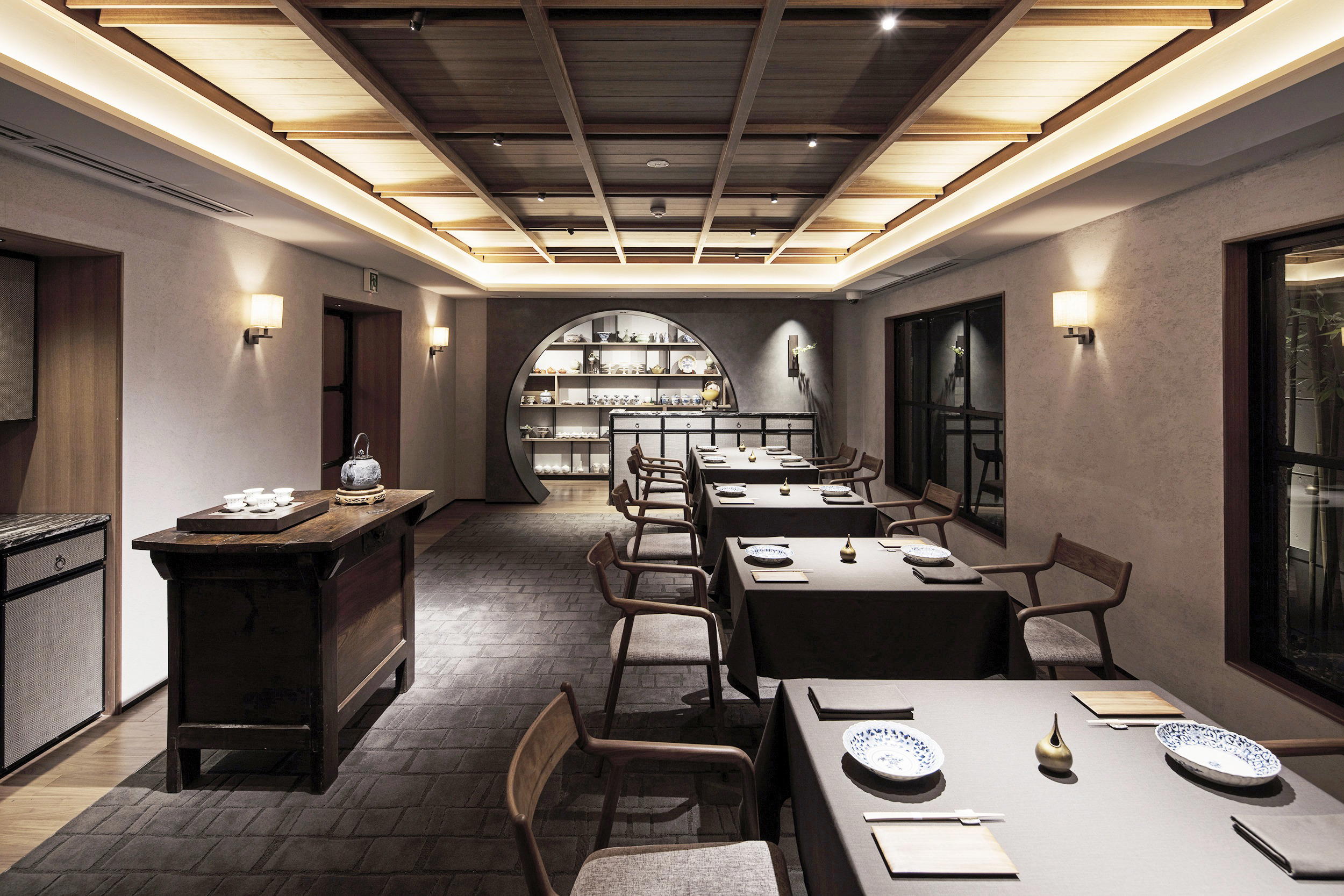
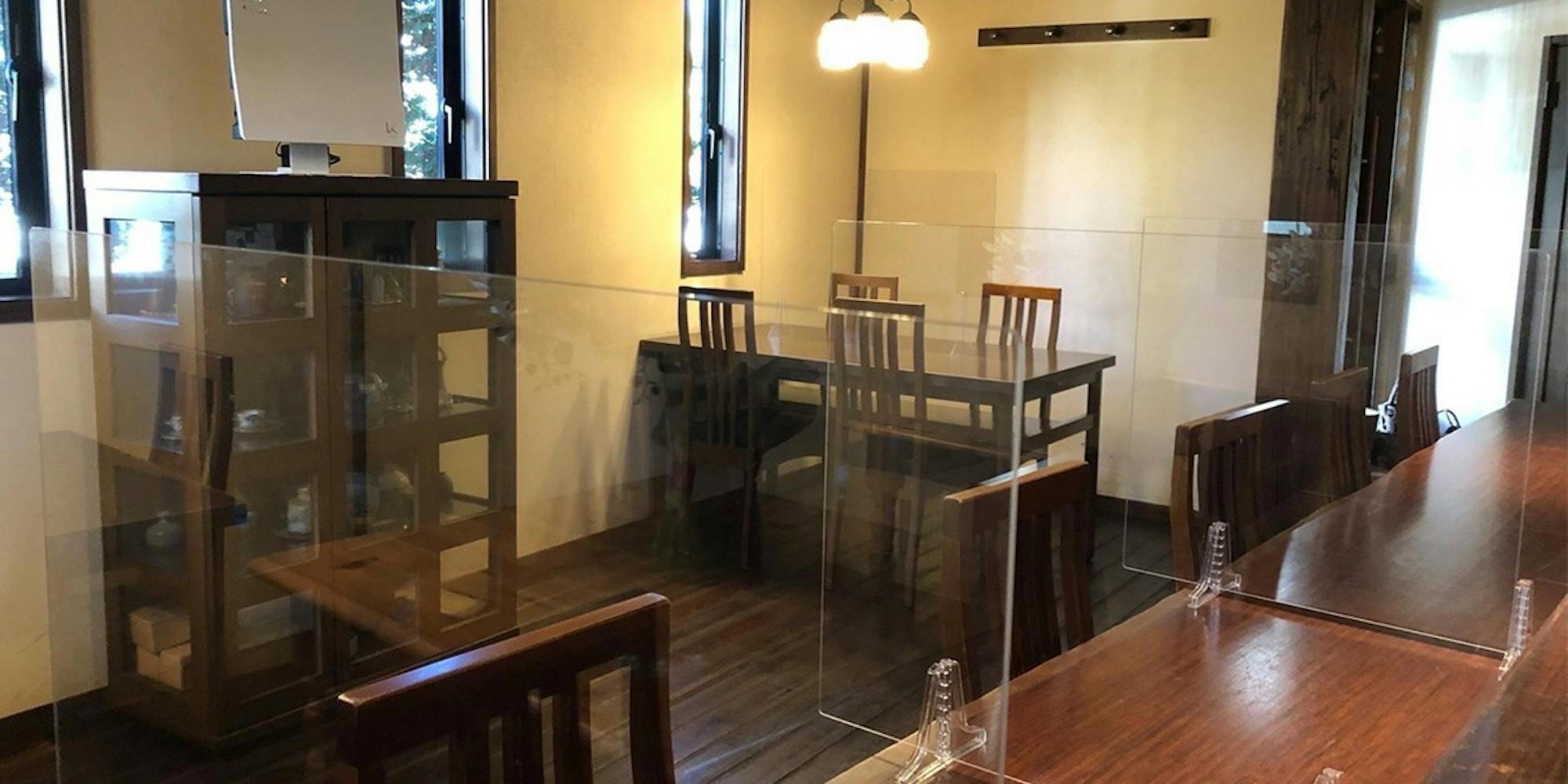
The interior at YŌSHOKU BISTRO TŌYAMA is wood-panelled and warm, with a blackboard menu that signals the bistro orientation directly. A mural of Chef Tadayoshi Toyama at work anchors the space visually, functioning less as decoration and more as a statement of attribution. The bistro format sits between the formality of a kaiseki room and the informality of an izakaya, which makes it well-suited to the wine-pairing structure the kitchen is working with. You can eat at a pace that lets the food and wine interact.

The blackboard menu is worth noting as a format choice. That is a different operating philosophy from a printed menu that fixes the offering across months. Among Tokyo yoshoku addresses, the combination of bistro informality, wine focus, and seasonal menu flexibility puts YŌSHOKU BISTRO TŌYAMA in a specific niche. For comparison, KORISU in Kyoto and Yoshoku Izumi in Osaka represent the yoshoku tradition in the Kansai context, where the category has its own regional flavour. The Tokyo version, particularly in a neighbourhood like Nishiazabu, tends to sit closer to the French influence.

Where it sits in the Tokyo dining picture

Nishiazabu is not the highest-profile dining address in Tokyo, which works in the neighbourhood's favour. The area carries a reputation for serious, often chef-driven restaurants that operate without the footfall pressure of Ginza or the see-and-be-seen energy of parts of Shibuya. Venues here tend to build their audiences through word of mouth and repeat custom rather than tourist throughput. The Michelin Plate, awarded in both 2024 and 2025, signals that the quality register at YŌSHOKU BISTRO TŌYAMA has been evaluated and found consistent, without the three-month-ahead booking anxiety of a starred address.

That positions the bistro usefully in a Tokyo trip. The city's fine-dining tier, represented by addresses like grill GRAND and Mejiro Shunkotei, demands planning well in advance and budgeting at the ¥¥¥¥ level. YŌSHOKU BISTRO TŌYAMA offers a different proposition: Michelin-recognised cooking at ¥¥ pricing, in a room that encourages lingering over wine, with a menu that changes. For visitors who want to eat across the city's range rather than concentrating the entire budget on one high-end counter, this is where yoshoku earns its place in the itinerary. The same logic applies to classical washoku alternatives like Ponta Honke, which operates in a different tradition but at a comparable level of culinary seriousness relative to its price tier.

For those planning broader Japan itineraries, the yoshoku tradition is worth tracking across cities. HAJIME in Osaka, Gion Sasaki in Kyoto, akordu in Nara, Goh in Fukuoka, 1000 in Yokohama, and 6 in Okinawa each represent a different regional approach to the intersection of Japanese cooking and Western influence. The Tokyo version, as seen at YŌSHOKU BISTRO TŌYAMA, is arguably the most French-inflected of the main urban centres, which reflects the city's historical appetite for that particular lineage.

Planning your visit

Location: 1-11-13 Nishiazabu, Minato-ku, Tokyo 106-0031. Awards: Michelin Plate 2024 and 2025. Menu format: Blackboard menu, wine-pairing orientation.

Frequently asked questions

Cost and Credentials

Comparable venues nearby, for context on price, style, and recognition.