
Tabelog Bronze #529
Our verdict
A six-seat innovative restaurant in rural Hitachiomiya, YOSHIKI FUJI draws on French and Basque technique to present Ibaraki's agricultural produce in a counter format that earned Tabelog Award Bronze 2026 and placement in the Tabelog French EAST Top 100 for 2025. Dinner is by reservation only; lunch runs Wednesday through Sunday from noon, all guests seated simultaneously.

Pearl is the En Primeur Club membership app, where members save venues, book tables and use the concierge.
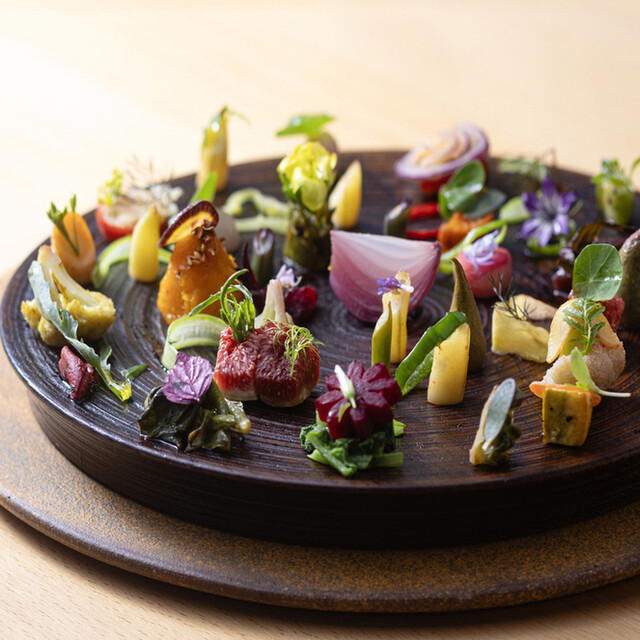
Where Ibaraki's Fields Meet a French-Basque Counter
The drive into Hitachiomiya tells you something important before you arrive. Ibaraki's interior is agricultural country, rice paddies, forest, and the wide Naka River basin, and the further north you move from the prefecture's coastal corridor, the more the landscape asserts itself. Hitachiomiya sits roughly 1,200 metres from its nearest station, and the address in Ishizawa places YOSHIKI FUJI at a remove from anything resembling an urban dining district. That distance is the point. The restaurant's premise rests on proximity to the produce itself, applying French and Basque structural thinking to a larder that most Tokyo diners encounter only secondhand, mediated by wholesalers and Tsukiji-adjacent markets.
This is a well-established template in Japanese fine dining, the rural counter that draws from its immediate agricultural context rather than importing prestige ingredients, but it remains a minority format, more common in Hokkaido or the Tohoku interior than in Ibaraki, which tends to funnel its better produce toward the capital. YOSHIKI FUJI's placement in this tradition, opened in May 2024, makes it one of the newer examples, and its recognition in less than two years of operation signals rapid critical traction.
Six Seats and a Particular Kind of Attention
The counter runs to six seats, which situates YOSHIKI FUJI in the smallest tier of Japanese omakase and tasting-menu dining. At this scale, the kitchen's choices are visible in a way that larger tables obscure. You are not one diner in a room of thirty; the format carries an implicit understanding that the pacing, the sequencing, and the sourcing decisions are part of what you are there to observe. Comparable counters at this price tier, think the kind of intimate progressive dining rooms that have proliferated in regional Japan since the mid-2010s, tend to operate on exactly this logic: small capacity as a statement about attention to detail, not merely about scarcity.
The JPY 20,000 to JPY 29,999 price range applies to both lunch and dinner, which is worth noting because the lunch and dinner formats appear to function differently. Lunch runs Wednesday through Sunday with a noon start, all guests seated simultaneously, the kind of coordinated service that signals a single extended menu rather than à la carte ordering. Dinner operates by reservation only. For regional Ibaraki fine dining, this pricing places YOSHIKI FUJI well above the prefecture's Italian mid-market (Nonna Nietta, for instance, sits in the JPY 10,000–14,999 range), and in a tier where Tokyo visitors are likely to be benchmarking against urban omakase rather than local casual dining.
French-Basque Technique in a Japanese Agricultural Prefecture
Tabelog description positions the restaurant at the intersection of French and Basque sensibilities, applied to Ibaraki's gastronomy. That framing is specific in ways worth unpacking. Basque culinary influence in Japan tends to signal a preference for product-forward cooking where saucing and technique serve rather than dominate, a philosophy that aligns logically with showcasing regional ingredients rather than importing a European pantry. French structure provides the organisational grammar: courses, reductions, the discipline of mise en place. Together, these references describe a kitchen working in the mode of Japan's better regional progressive restaurants, where European training vocabulary is applied to Japanese agricultural material.
Ibaraki holds genuine agricultural credentials. The prefecture ranks among Japan's leading producers of several vegetables, and its proximity to both mountain and coastal sources gives a kitchen working this way meaningful range. The logic of opening this kind of restaurant here, rather than in Tokyo, is not eccentric, it reflects a broader pattern visible in venues like akordu in Nara or Goh in Fukuoka, where strong regional produce bases have supported ambitious European-influenced cooking outside the major urban centres. Compared to the more metropolitan innovative format at MAZ in Tokyo, YOSHIKI FUJI's proposition is explicitly territorial: the restaurant's identity is inseparable from where it is.
Recognition Within a Competitive National Field
For a restaurant that opened in May 2024, the award record at YOSHIKI FUJI is rapid. The Tabelog Award 2026 Bronze places it at rank 529 nationally with a score of 3.94, alongside selection for the Tabelog French EAST Top 100 for 2025. Tabelog's French EAST list covers the Kanto, Tohoku, and surrounding regions, a competitive field that includes many of Tokyo's stronger French and innovative restaurants. Being selected for that list from a six-seat counter in rural Ibaraki, within eighteen months of opening, indicates the kitchen is generating significant reviewer attention relative to its geographic context.
For comparison, the Tabelog Bronze tier and Top 100 regional lists represent the second tier of national recognition on that platform, below Gold and Silver but well above the general restaurant pool. Venues that reach this level in comparable innovative categories nationally include operations with considerably more exposure by virtue of location alone. Across Japan, other awarded innovative counters recognised editorially include HAJIME in Osaka, Gion Sasaki in Kyoto, and Harutaka in Tokyo, each representing a distinct regional interpretation of high-commitment tasting-menu dining.
The Ibaraki Dining Scene and YOSHIKI FUJI's Place in It
Ibaraki's fine dining profile is thinner than neighbouring prefectures, Tochigi and Fukushima have each developed clearer fine-dining identities around specific regional products, and the prefecture's restaurant culture tilts toward neighbourhood dining rather than destination formats. Within that context, the arrival of a venue operating at the JPY 20,000-plus level in a non-urban setting represents a structural shift worth watching. Alongside La Stalla and Yoshicho, YOSHIKI FUJI is part of a small group of Ibaraki restaurants that position themselves for visitors travelling with a dining purpose rather than convenience. For broader context on where fine dining sits within the prefecture's hospitality mix, our full Ibaraki restaurants guide maps the wider field. Those planning a longer stay can also reference our Ibaraki hotels guide, Ibaraki bars guide, Ibaraki wineries guide, and Ibaraki experiences guide.
The regional innovative format is also worth comparing against examples elsewhere in Japan. alla prima in Seoul and 1000 in Yokohama represent similar commitments to territory-specific progressive cooking in different geographic contexts, while 6 in Okinawa demonstrates how extreme geographic specificity can itself become the organising principle of an innovative tasting format. Nonna Nietta offers a more accessible Ibaraki dining option for those whose itinerary includes multiple meals at different price points.
Planning Your Visit
YOSHIKI FUJI is open Wednesday through Sunday, closed Monday and Tuesday. Lunch service begins at noon, with all guests seated simultaneously, arrive on time or risk disrupting a format designed for synchronised pacing. Dinner is by reservation only, with no publicly listed hours, meaning the kitchen's schedule is set around confirmed bookings rather than walk-in availability. Given the six-seat capacity, advance reservation is not optional at any realistic planning horizon; the combination of small covers and growing national recognition means availability tightens well ahead. The restaurant accepts major credit cards (Visa, Mastercard, JCB, Amex, Diners), though electronic money and QR code payments are not accepted. Private rooms are available and the full space can be reserved for private use. Parking is on site, which matters given the rural address and the near-absence of public transport options at this distance from Hitachi Omiya Station.
Frequently asked questions
Should I book YOSHIKI FUJI in advance?
Yes, and early. The counter holds only six seats, dinner runs by reservation only, and lunch seats all guests simultaneously at noon, meaning the room fills in a single sitting. The restaurant opened in May 2024 and already holds a national Tabelog ranking of 529 Bronze, so demand relative to capacity is significant. Reservations can be made via the website at yoshiki-fuji.jp.
What do critics highlight about YOSHIKI FUJI?
Tabelog's editorial recognition focuses on two things: the French and Basque sensibility brought to Ibaraki's local gastronomy, and the speed of the restaurant's rise, selected for Tabelog French EAST 'Tabelog 100' 2025 and awarded Bronze in 2026, less than two years after opening in May 2024. For a six-seat counter in a prefecture without a dense fine-dining infrastructure, that trajectory is notable.
The Quick Read
Comparable venues nearby, for context on price, style, and recognition.
| Venue | Cuisine | Price | Awards | Notes |
|---|---|---|---|---|
| YOSHIKI FUJIThis venue (the venue you are viewing) | Innovative French / Basque | Not listed | Tabelog Bronze #529 | Not listed |
| Nonna Nietta | Italian Regional Cuisine with Ibaraki Terroir | $100–150 | Tabelog Bronze #326 | Namiki, Tsukuba, Italian Regional Cuisine with Ibaraki Terroir |
| La Stalla | Modern Italian Fine Dining | $500+ | Tabelog Bronze #235 | Matsushiro, Tsukuba, Modern Italian Fine Dining |
| Yoshicho | Seasonal Ibaraki Omakase | $500+ | Tabelog Bronze #525 | Tsuchiura, Seasonal Ibaraki Omakase |
| Gion Kon | Traditional Japanese Seasonal Cuisine | Not listed | Not listed | Gion, Kappo Japanese Cuisine |
| Miyachiku | Miyazaki Beef Teppanyaki | $100–150 | Not listed | Shinbeppu-cho, Miyazaki Beef Teppanyaki |
Recognition history
Dated appearances from independent guides and award organizations, with the underlying list record or original source where available.
Tabelog Bronze #529
Tabelog
Full recognition history (2 entries)
Tabelog 100 #72 · No. 72
Tabelog · Tabelog 100 - French - EAST - 2025
Continue exploring
More in Ibaraki
Details
- Intimate
- Sophisticated
- Modern
- Date Night
- Special Occasion
- Private Event
- Standalone
- Local Sourcing
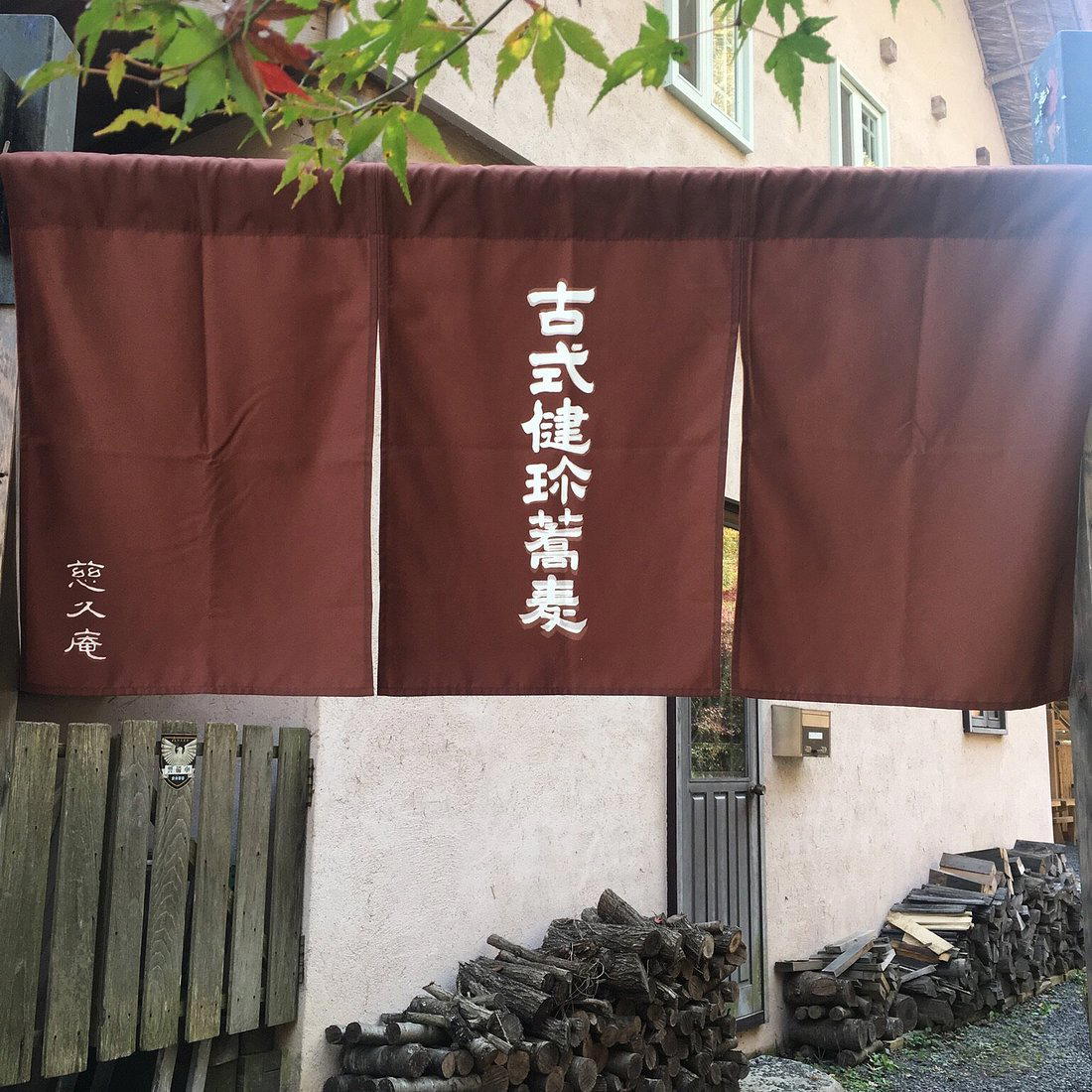
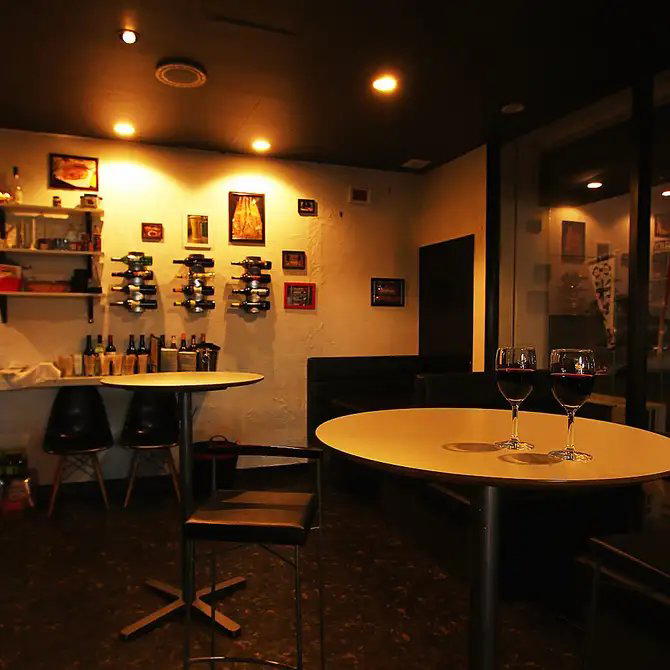
Quiet, intimate, destination-style atmosphere in a renovated traditional Japanese home.