

Tabelog Bronze #326
Our verdict
Nonna Nietta gives Ibaraki’s Italian dining scene a small-format, regional-minded counterpoint to Tokyo’s louder restaurant economy. The draw is not spectacle but discipline: an eight-seat house restaurant in Tsukuba, listed for Italian and pasta, with Tabelog Award 2026 Bronze recognition and a place in Tabelog Italian EAST 100 for 2025.

Pearl is the En Primeur Club membership app, where members save venues, book tables and use the concierge.
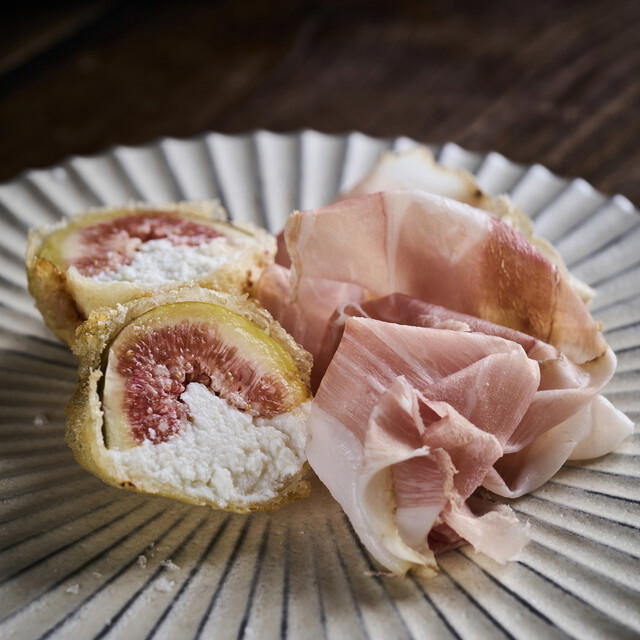
The menu
What to order
- Homemade Prosciutto and Cheese
- Hitachi Beef
- Wild Duck with Wood-Fired Oven
- Ibaraki Vegetables
Approaching a house restaurant in Tsukuba changes the tempo before the meal begins. The city’s research-campus order, residential streets and low-rise rhythm create a different frame for Italian cooking than the urban theatre of Ginza or Aoyama. Here, the expectation is quieter: a room scaled to a handful of diners, a kitchen working within close range, and a menu language that reads Italian without trying to mimic a trattoria postcard.
That setting matters because Italian cuisine in Japan has long split into several lanes. One lane chases luxury through imported ingredients and French-service polish. Another treats Italy as a set of regional habits: pasta as structure, vegetables and seafood as season markers, wine as conversation rather than display. Nonna Nietta belongs to the latter conversation. The restaurant is categorized around Italian and pasta, but the more useful reading is regional discipline translated through Ibaraki’s produce culture.
Ibaraki Italian with pasta at the centre, not as an afterthought
Italian regional cooking is never a single cuisine. Roman cooking leans on salt, pecorino, offal and pasta grammar; Tuscan cooking is grounded in bread, beans, grill work and olive oil; Neapolitan cooking carries tomato, seafood and dough into a different register; Milanese tradition brings rice, butter and northern restraint. Japanese Italian restaurants often borrow from all of these, but the serious ones avoid turning the menu into a tour of clichés. The test is whether pasta functions as a course with logic rather than a comfort interlude.
In Ibaraki, that question has a particular edge. The prefecture’s food identity is agricultural before it is cosmopolitan: rice fields, vegetables, freshwater and coastal supply, soy culture, and a practical relationship with seasonality. Italian cooking can fit that environment when it uses regional technique as a framework rather than a costume. Nonna Nietta’s recognition in Tabelog Italian EAST 100 for 2025 and its Tabelog Award 2026 Bronze placement put it in a selective Japanese-Italian bracket, but the more interesting point is what that bracket now rewards: small restaurants outside the capital that can compete on coherence, not scale.
The eight-seat format reinforces that reading. At this size, pacing and menu progression become part of the craft; there is little room for a sprawling carte or a dining room built around anonymity. Pasta-led Italian in this register is closer to a controlled sequence than a casual plate-by-plate meal. For diners used to Tokyo’s premium Italian rooms, Tsukuba offers a useful contrast: less urban gloss, more pressure on the cooking to justify the trip.
A small room in Tsukuba changes the stakes
Tsukuba is not an obvious shorthand for Italian dining, and that is precisely why the category feels sharper here. The city is better known for science institutions, planned avenues and access from Tokyo than for restaurant mythology. That makes a recognised Italian table in Namiki more than a local curiosity; it signals how Japan’s restaurant culture keeps decentralising. Serious dining no longer needs a metropolitan address to earn national attention, though it does need a reason for diners to leave the usual circuits.
The house-restaurant format also carries a different social contract. In a large dining room, service can absorb indecision; in an eight-seat room, the meal asks for commitment. That suits Italian regional cooking when the kitchen is working with a fixed rhythm and a narrow culinary thesis. The experience is less about choosing from abundance than entering a sequence where pasta, wine and seasonal produce have already been arranged into an argument.
There is no named chef biography to build the story around, which is not a weakness. Too much contemporary restaurant writing turns Italian cooking into a personality study. The more useful lens is tradition: how a Japanese kitchen interprets Italian regional form without flattening it into tomato, cheese and nostalgia. In that sense, the room’s restraint helps. The focus stays on category, pacing and the fit between local ingredients and Italian technique.
How to place it within an Ibaraki itinerary
For travellers building a dining-led route through the prefecture, Nonna Nietta is a specialist stop rather than a casual add-on. Its appeal is strongest for diners who already understand the difference between Italian as comfort cuisine and Italian as a regional system of technique. The Tabelog score of 3.98 and Bronze award supply useful external validation, but the stronger editorial case is geographic: Tsukuba gives the meal a context that Tokyo cannot replicate.
That context pairs well with a wider look at Ibaraki’s dining range. The local circuit stretches from Italian rooms such as La Stalla to Japanese addresses including Yoshicho and more contemporary formats such as YOSHIKI FUJI (Innovative). For a broader map, use Our full Ibaraki restaurants guide, then layer in sleep, drinking and regional context through Our full Ibaraki hotels guide, Our full Ibaraki bars guide, Our full Ibaraki wineries guide and Our full Ibaraki experiences guide.
Readers comparing Japan’s wider dining spectrum may also want to look beyond Ibaraki: -Grilled beef Sukiyaki- KAMAKURA TANUKIAN 鎌倉 たぬき庵 in Kamakura. 鮪と炭火焼き うお炭 秋葉原店 in Tokyo.cafe in Osaka.know in Kumamoto, (Shoku) Vietnam in Kawasaki, [Curry Senmon Ten] Maruyama Kyoju. in Sapporo, [ki:] in Kyoto, #肉といえば松田 奈良本店 in Kashihara, Jōdo Saké Bar in Los Angeles and Onigiri Time in Pasadena.
The verdict is clear without needing theatrics: this is Ibaraki Italian for diners who care about format, regional translation and the tension between a small room and national recognition. It is not the address for a loose, last-minute pasta craving. It is the address to read Tsukuba’s dining seriousness through an Italian grammar that values restraint over volume.
Frequently asked questions
Is Nonna Nietta good for families?
Yes, if children can eat the same course as adults. The restaurant accepts children without an age restriction, but it is a reservation-only room with 8 seats in Tsukuba, so it suits families who want a seated, formal meal.
What's the vibe at Nonna Nietta?
It is a reservation-only house restaurant in Tsukuba with 8 seats, so the room reads intimate rather than casual. The listed setup is non-smoking, BYO drinks, and wine-led, which suits a slower dinner in the JPY 10,000–JPY 14,999 range.
What style of cooking does Nonna Nietta do?
Nonna Nietta serves Italian, Pasta cuisine.
What's the pricing like at Nonna Nietta?
Pricing at Nonna Nietta is listed as JPY 10,000 - JPY 14,999 JPY 10,000 - JPY 14,999.
Cost and Credentials
Comparable venues nearby, for context on price, style, and recognition.
| Venue | Cuisine | Price | Awards | Notes |
|---|---|---|---|---|
| Nonna NiettaThis venue (the venue you are viewing) | Italian Regional Cuisine with Ibaraki Terroir | $100–150 | Tabelog Bronze #326 | Not listed |
| YOSHIKI FUJI | Innovative French / Basque | Not listed | Tabelog Bronze #529 | Basque French |
| La Stalla | Modern Italian Fine Dining | $500+ | Tabelog Bronze #235 | Matsushiro, Tsukuba, Modern Italian Fine Dining |
| Yoshicho | Seasonal Ibaraki Omakase | $500+ | Tabelog Bronze #525 | Tsuchiura, Seasonal Ibaraki Omakase |
| Vino della Pace | Classic Regional Italian with Extensive Wine Pairings | $100–150 | Star Wine List | Nishiazabu, Classic Regional Italian with Extensive Wine Pairings |
| En Boca | Karuizawa, Wood-Fired Vegetable Pizza | Not listed | Not listed | Not listed |
Recognition history
Dated appearances from independent guides and award organizations, with the underlying list record or original source where available.
Tabelog Bronze #326
Tabelog
The Japan Times Destination Restaurants Destination Restaurants Selection #3
The Japan Times Destination Restaurants
Full recognition history (3 entries)
Tabelog 100 #45 · No. 45
Tabelog · Tabelog 100 - Italian - EAST - 2025
Continue exploring
More in Ibaraki
Restaurants in Ibaraki
All restaurants in Ibaraki →

Bars in Ibaraki
Browse all →



Details
- Romantic
- Cozy
- Elegant
- Rustic
- Intimate
- Date Night
- Special Occasion
- Celebration
- Open Kitchen
- Standalone
- Garden
- Extensive Wine List
- Farm To Table
- Local Sourcing
- Organic
- Tasting Menu
- Prix Fixe
- Wine
- Allergy Accommodating
Current opening hours
- Monday
- Closed
- Tuesday
- 6–9:30 PM
- Wednesday
- 6–9:30 PM
- Thursday
- 6–9:30 PM
- Friday
- 6–9:30 PM
- Saturday
- 12–2:30 PM, 6–9:30 PM
- Sunday
- 12–2:30 PM, 6–9:30 PM
Hours can change for holidays and private events. Last verified .
Intimate country-home atmosphere with Italian furnishings, window frames, and linens brought from the chef's wife's family home; warm, nostalgic lighting in a quiet residential setting.