Our verdict
Miyachiku operates within Miyazaki's compact but serious dining scene, where locally raised Miyazaki beef and regional produce define the kitchen's priorities. The menu architecture here reflects a broader trend in provincial Japanese fine dining: hyper-local sourcing presented through a structured, coursed format. For travellers reaching Kyushu's quieter eastern coast, it represents a substantive case for Miyazaki as a culinary destination in its own right.

Pearl is the En Primeur Club membership app — saves, bookings, and concierge access live there. Same editors, same standards.
- Address
- 新別府町前浜1401-255, 宮崎市, 宮崎県, 880-0834
- Directions
- Get directions
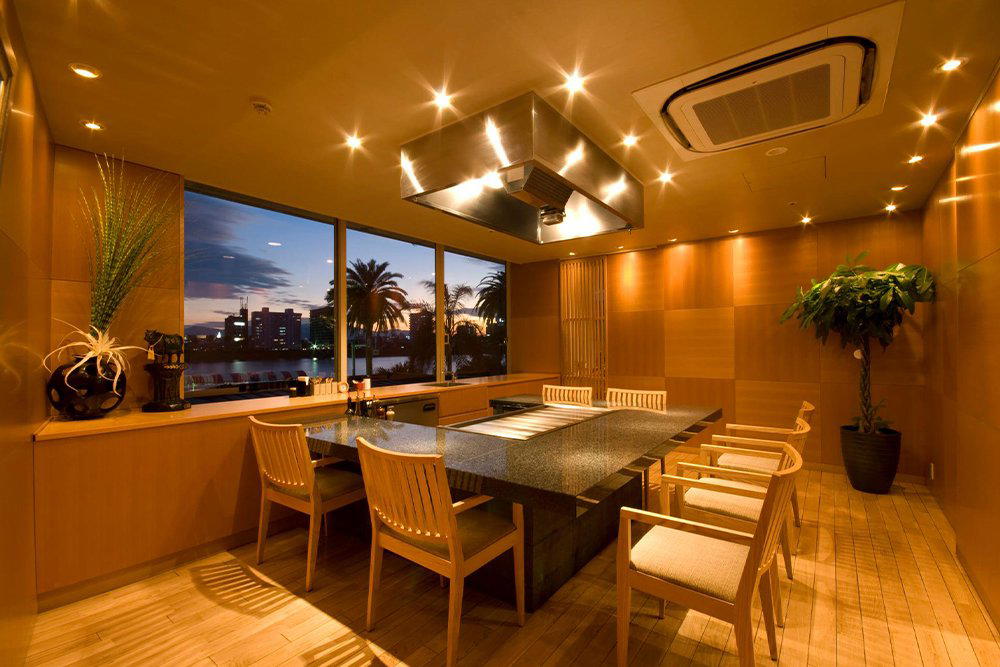
The menu
What to order
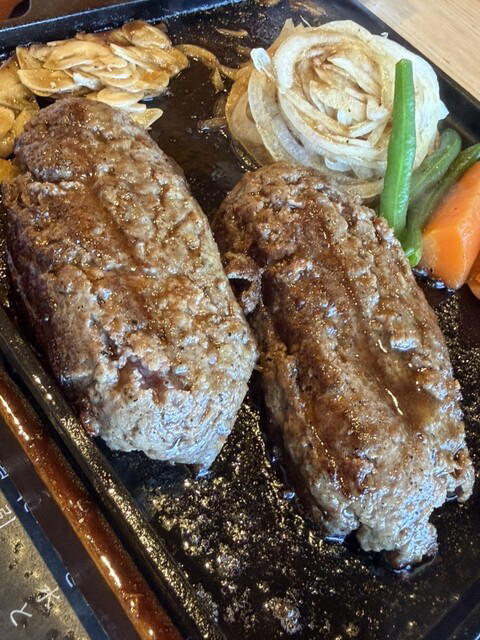
- Miyazaki beef steak
- Miyazaki beef teppanyaki
Miyazaki's Dining Identity and Where Miyachiku Sits Within It
Miyazaki Prefecture occupies an unusual position in Japan's dining conversation. It produces some of the country's most prized agricultural output — Miyazaki Wagyu has topped national beef competitions, and the prefecture's pork, chicken (jidori), and subtropical produce are referenced at restaurants far beyond Kyushu — yet the city itself rarely appears in the same sentence as Tokyo, Osaka, or Kyoto when travellers plan a serious eating itinerary. A small number of restaurants have begun building menus that take the local larder seriously as a structural proposition, not simply as a marketing footnote. Miyachiku belongs to that group.
Within Miyazaki's restaurant scene, the top tier is thin but coherent. Venues like Isshinzushi Koyo and Hitotsu occupy distinct format positions, sushi counter and intimate kaiseki-adjacent dining respectively, while Il Sorriso and Chinese Sen demonstrate that the city supports serious European and Chinese cooking alongside Japanese traditions.
The Menu as an Argument for Provenance
In Japanese fine dining outside the major metropolitan centres, menu architecture tends to follow one of two models: the broad kaiseki progression that moves through seasonal courses without a single dominant protein, or the focused approach that builds an entire meal around one ingredient category and treats variation within that category as the main source of interest. Miyachiku operates closer to the second model, with Miyazaki beef serving as the structural spine around which the menu is organised.
This is a meaningful editorial choice. When a kitchen in a beef-producing region commits to showcasing that beef through a coursed format rather than simply offering it as a main, it signals that the menu is designed to teach, to move the diner through cuts, preparations, and textures in a sequence that builds cumulative understanding of the ingredient. The approach places Miyachiku in a broader tradition of prefecture-specific fine dining that has gained ground across Japan's regional cities over the past decade, where the argument is essentially geographical: the leading version of this product exists here, and the ideal way to experience it is in a structured format designed around it.
Comparable arguments are being made at restaurants across provincial Japan. Goh in Fukuoka frames Kyushu's seafood and produce through a creative kaiseki lens, while Gion Sasaki in Kyoto remains one of the clearest demonstrations of how seasonal produce can anchor a formal progression. Miyachiku is making a quieter version of the same case, from a city that still sits below the radar of most international visitors.
Reading the Room: Format, Atmosphere, and What to Expect
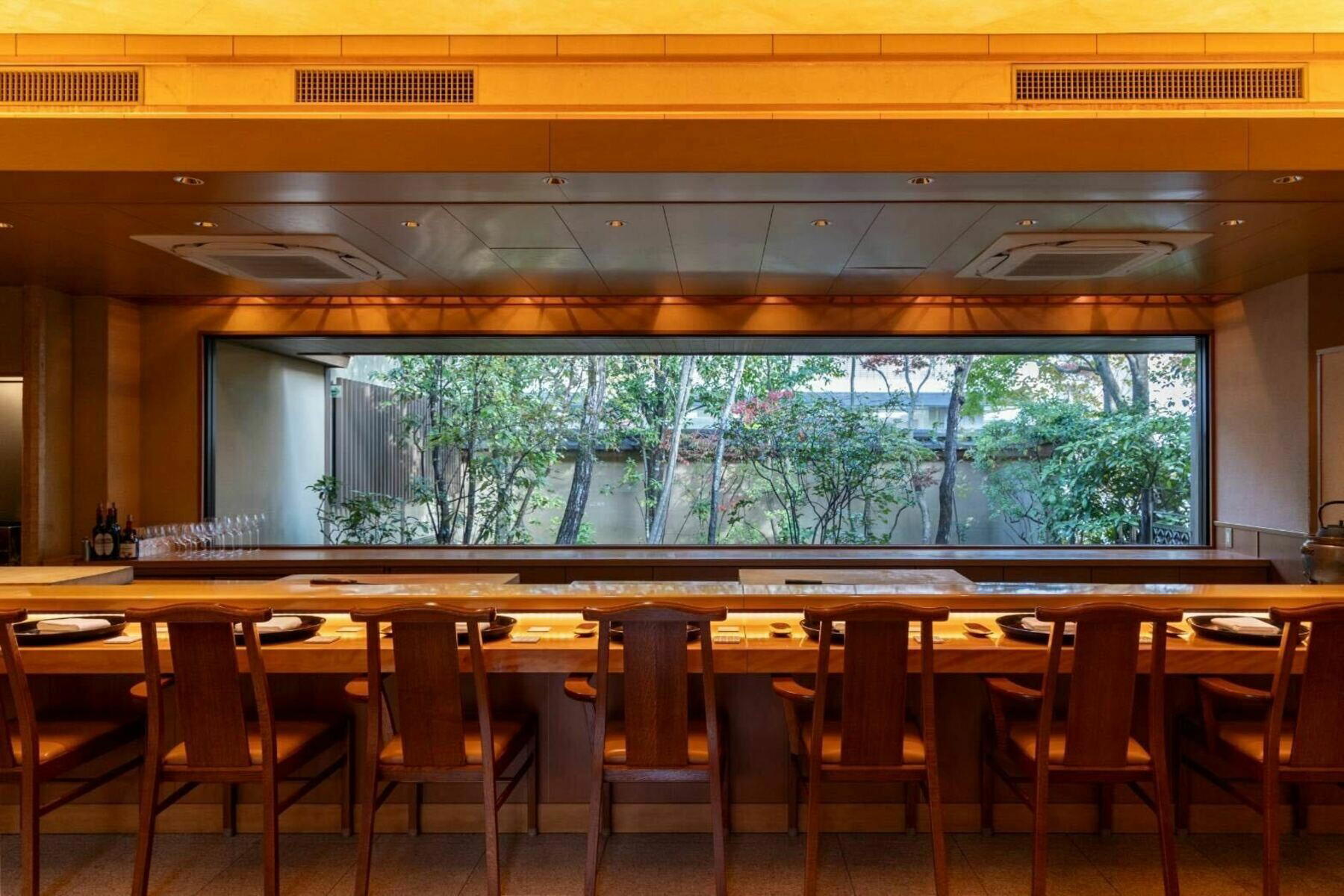
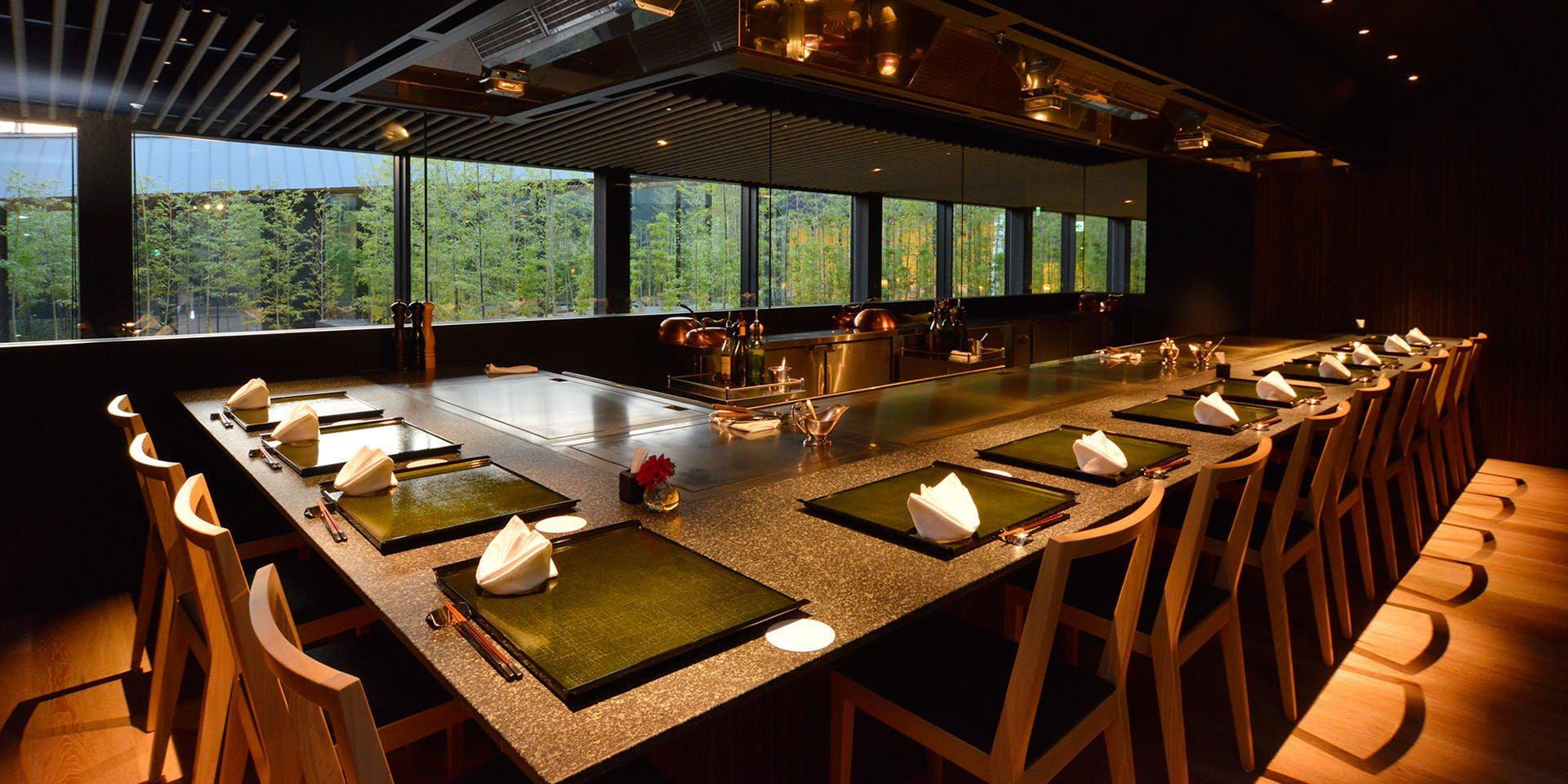
The physical environment at restaurants that take this coursed, provenance-led approach in Japanese provincial cities tends toward restraint. Spare interiors, natural materials, and service that explains without lecturing are characteristic of the format. This is not the theatrical spectacle of a large-city tasting counter; it is closer to the ethos that has made smaller regional rooms in Japan compelling to the kind of traveller who visits akordu in Nara or makes time for 湖隣荘 in Takashima specifically because those rooms are doing something local that cannot be replicated in a larger city.
The dining experience at Miyachiku is shaped by that same logic. Miyazaki beef is not merely a luxury add-on here; it is the reason the menu exists in its current form. Understanding that going in recalibrates expectations usefully: this is a room where the menu is structured to deliver depth on a single regional subject, and where the sequence of courses is the main event rather than a backdrop to a broader social occasion.
Miyachiku in the Context of Japanese Regional Fine Dining
Across Japan, the past decade has produced a measurable shift in where serious culinary ambition is located. Michelin's expansion into prefectural guides, and the subsequent recognition of restaurants in cities like Fukuoka, Kanazawa, and Nara, has accelerated a process already underway: the decentralisation of Japanese fine dining away from the three-city axis of Tokyo, Osaka, and Kyoto. HAJIME in Osaka and Harutaka in Tokyo represent the metropolitan tier at its most formal; the regional conversation is different in register but not necessarily in ambition.
Miyazaki sits at an earlier stage of that recognition curve than Fukuoka or Kanazawa. The infrastructure of international food tourism, English-language booking platforms, concierge relationships, guide coverage, is thinner here, which means the restaurants that are doing interesting work are less crowded and less subject to the reservation arms race that defines dining in the better-known cities. For context, comparable rooms in Nara or Kanazawa now book weeks or months ahead; Miyazaki's leading tables are not yet at that level of demand, which is a practical advantage for travellers willing to plan an itinerary that includes Kyushu's eastern coast.
Other venues across Japan that operate in analogous register, focused, provenance-led, regionally specific, include 羽根屋 in Nishikawa Machi and 三本木 石川製 in Nanao, both of which demonstrate that serious dining outside the major cities follows its own internal logic rather than simply mirroring what is happening in Tokyo.
Planning a Visit
Miyazaki city is served by Miyazaki Airport, with direct connections to Tokyo Haneda, Osaka Itami, and Nagoya, making it accessible as a stand-alone destination or as part of a broader Kyushu circuit. The city's dining scene is compact enough that a two-night stay covers the serious options; pairing Miyachiku with a meal at Fujiyama Pudding Miyazaki for a lighter, more casual counterpoint gives a reasonable cross-section of what the city offers. For travellers building a longer Japan itinerary, our full Miyazaki restaurants guide maps the scene in more detail. For international comparison points in the coursed tasting format, Le Bernardin in New York City and Atomix in New York City illustrate how a focused ingredient philosophy can anchor a formal progression at the highest level. Miyachiku is operating in the same conceptual territory, at a regional scale and price point that reflects Miyazaki's position in the market rather than metropolitan tariffs.
Given the venue's format and the limited number of comparable options in Miyazaki, advance reservation is advisable. Specific booking details are best confirmed directly with the restaurant, as policies and availability in smaller provincial rooms can shift without notice on public platforms.
Frequently asked questions
How does Miyachiku compare to dining options in Fukuoka or Kumamoto on a Kyushu trip?
Miyazaki sits on Kyushu's eastern coast, separate from the Fukuoka-Kumamoto-Nagasaki circuit that most Kyushu itineraries follow. The distinction matters because Miyazaki's dining identity is built on agricultural output, specifically Miyazaki Wagyu, rather than the ramen and street-food culture that defines Fukuoka's reputation. Treating Miyazaki as a dedicated detour, rather than a stop on a standard loop, is the more honest framing.
What's the must-try dish at Miyachiku?
The beef courses are the clearest expression of what the kitchen is doing. Miyazaki Wagyu has topped Japan's national wagyu competition multiple times, giving it a documented claim as the country's premier beef prefecture. Any coursed menu here is structured around that agricultural fact.
Should I book Miyachiku in advance?
Yes. Miyazaki sits below the international reservation pressure of Tokyo or Kyoto, but focused rooms with limited seating fill quickly among domestic diners who treat the city as a Wagyu destination. Booking ahead is practical rather than precautionary, particularly if your travel dates are fixed around a Kyushu itinerary.
What's Miyachiku best at?
The strongest case for Miyachiku is its grounding in Miyazaki's agricultural identity. Miyazaki Wagyu has topped Japan's national beef rankings, and a menu anchored to that produce makes a more specific argument than generalist fine dining in a larger city. The kitchen's focus is provenance rather than breadth.
Can Miyachiku adjust for dietary needs?
Dietary requirements at coursed restaurants in Japan's regional cities are best raised directly with the venue at the time of booking. Menu flexibility at this format tends to be limited by the kitchen's sourcing logic, which in Miyachiku's case is built around Miyazaki beef as a central element. Early communication gives the kitchen the best chance of accommodating genuine restrictions.
Is Miyachiku worth it?
For a traveller whose interest in Japanese dining extends beyond Tokyo, Osaka, and Kyoto, Miyazaki makes a substantive case. The prefecture produces beef that has won Japan's national wagyu competition, and Miyachiku positions itself as a direct expression of that regional output. The question is less whether the food justifies the trip, and more whether Miyazaki fits your broader Kyushu routing.
Accolades, Compared
| Venue | Cuisine | Price | Awards |
|---|---|---|---|
| MiyachikuThis venue — the venue you are viewing | Miyazaki Beef Teppanyaki | $100–150 | Not listed |
| Chinese Sen | Chinese with Miyazaki Ingredients | Not listed | Tabelog Bronze #394 |
| Hitotsu | Kyushu Seasonal Sushi Omakase | $100–150 | Tabelog Bronze #121 |
| Isshinzushi Koyo | Traditional Japanese Sushi Omakase | $200–300 | Tabelog Bronze #139 |
| iwanaga | Yoshoku (Japanese-Style Western Cuisine) | $100–150 | Tabelog 100 #67 |
| Ranpu Tei | Yoshoku (Japanese-style Western) | $30–50 | Tabelog Bronze #237 |
Continue exploring
More in Miyazaki
Details
- Elegant
- Scenic
- Sophisticated
- Special Occasion
- Date Night
- Group Dining
- Open Kitchen
- Sake Program
- Local Sourcing
- Street Scene
- A La Carte
- Counter Dining
Serene and magical atmosphere with live piano during dinner, scenic river views, and illuminating surroundings.