
Yashima sits on Avinguda de Josep Tarradellas in Les Corts, a residential stretch of Barcelona that earns its dining reputation quietly, away from the tourist corridors of the Eixample. The address places it within a neighbourhood where locals eat seriously and without theatre, which sets the register for what arrives at the table. Japanese cooking in Barcelona has grown into a credible category, and Yashima holds a position in that conversation that regulars treat as settled.
Pearl is the En Primeur Club membership app — saves, bookings, and concierge access live there. Same editors, same standards.
- Address
- Av. de Josep Tarradellas, 145, Les Corts, 08029 Barcelona, Spain
- Phone
- +34934190697
- Website
- yamashitagroup.com
- Directions
- Get directions
 Saves & bookings on Pearl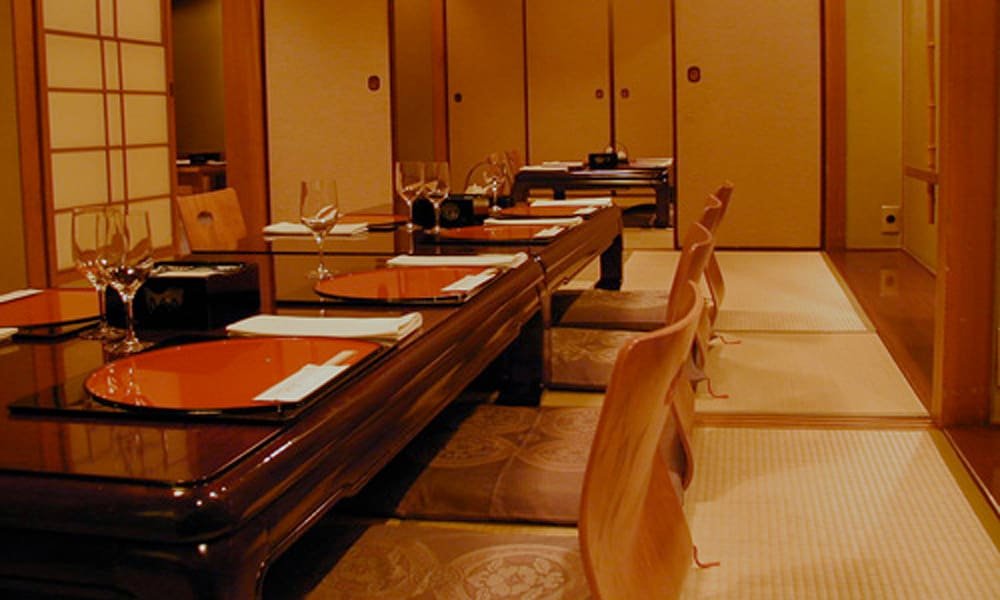
Les Corts and the Quiet End of Barcelona's Japanese Scene
Barcelona's restaurant geography has always had a secondary layer that operates below the Michelin-starred circuit. The Eixample earns the column inches: Disfrutar, Lasarte, and Enigma anchor the high-end creative bracket there. Les Corts sits west of that circuit, a residential district where the dining rooms are smaller, the clientele more local, and the restaurants earn loyalty through consistency rather than press attention. Yashima operates on Avinguda de Josep Tarradellas, a broad avenue that connects the commercial density of Plaça de Francesc Macià with the quieter residential blocks running toward the old FC Barcelona stadium. It is not a tourist address. That is precisely the point.
Japanese cooking in Spain has tracked an interesting trajectory. In the late 1990s and through the 2000s, the country's avant-garde movement, centred in the Basque Country and Catalonia at restaurants like El Celler de Can Roca in Girona and Mugaritz in Errenteria, absorbed Japanese technique and aesthetic as a major reference point. That cross-pollination filtered into the broader dining culture, making Spanish diners more attentive to precision, restraint, and the logic of a short, well-executed menu. Neighbourhood Japanese restaurants in Barcelona now operate inside that inherited literacy. The city's diners know what good fish handling looks like, and they notice when something is off.
The Collaboration at the Counter
The editorial angle that makes Yashima worth examining is not any single dish or any single person, but the way a small Japanese restaurant in a European city depends on team coherence more than almost any other format. Traditional Japanese hospitality, the idea that service and kitchen operate as a single expression of care toward the guest, is harder to sustain in an immigrant restaurant context than in Tokyo, where the cultural scaffolding supports it by default. In Barcelona, that alignment has to be constructed deliberately.
The formats that sustain this leading are counter-oriented, where kitchen and front-of-house share sight lines and timing cues in real time. When a restaurant operates at the intersection of Japanese service philosophy and a Catalan neighbourhood's expectations, the front-of-house role becomes interpretive as much as logistical. Explaining the logic of a set menu to a table accustomed to ordering à la carte, or walking a guest through a sake pairing in a city where wine is the default conversation, requires a different range of knowledge than a conventional European dining room demands. At the better small Japanese restaurants in Barcelona, this is where the team either holds together or fragments. Regulars notice the difference inside the first ten minutes.
Sommelier or drinks-lead role in a Japanese restaurant context is also distinct from its European equivalent. The pairing framework is not simply wine-to-food in the Burgundian sense. Sake, shochu, Japanese whisky, and the emerging category of Spanish wines selected specifically for their acidity and restraint represent different decision trees. The restaurants doing this carefully are selecting drinks that work with the umami register of dashi-based cooking rather than competing against it. That kind of deliberate pairing intelligence is one marker of a room operating at a coherent level across its departments, and it is one of the details that separates a reliable neighbourhood Japanese restaurant from one that has merely learned to look the part.
Where Yashima Sits in Barcelona's Broader Scene
Barcelona's upper tier of creative Spanish cooking, restaurants like Cocina Hermanos Torres and ABaC, operates at a price point and level of production that positions them as destination restaurants for visitors as much as locals. Yashima exists in a different register: a neighbourhood room where the primary constituency is the surrounding district rather than the city's dining tourism. This is a legitimate and often more durable business model. The local clientele that fills a room on a Tuesday in February is a more stable foundation than the weekend visitors who drive a reservation spike in October.
Compared to the broader Spanish fine-dining geography, where restaurants like Arzak in San Sebastián, Quique Dacosta in Dénia, or Aponiente in El Puerto de Santa María have built international reputations on radically local or experimental premises, Yashima's proposition is quieter: Japanese cooking executed with enough care and consistency to hold a loyal local audience in a city that has plenty of other options. That is not a diminishment. Restaurants that do this for years are often the ones that matter most to the people who actually live in the city.
For a fuller picture of where Yashima fits within Barcelona's dining ecosystem, including its relationship to the Catalan and progressive Spanish rooms that dominate the city's higher-end conversation, consider its place alongside the city's other neighbourhood Japanese rooms. Internationally, the model of Japanese cooking transplanted into a European neighbourhood context has strong analogues: Atomix in New York City, for instance, represents the high end of that translation, where Korean-Japanese precision has found a permanent audience in a non-native city. The neighbourhood version of that ambition is less dramatic but no less committed.
Planning Your Visit
Yashima is located at Av. de Josep Tarradellas, 145, in the Les Corts district of Barcelona (08029). The address is well-served by metro at Les Corts and Entença stations, and the avenue itself is navigable on foot from the western edge of the Eixample in under fifteen minutes. Reservations are recommended. Dress: Smart casual. Budget: Expect around $80 per person.
Where It Fits
Comparable venues nearby, for context on price, style, and recognition.
| Venue | Cuisine | Price | Notes |
|---|---|---|---|
| YashimaThis venue — the venue you are viewing | Authentic Japanese with Teppanyaki and Kaiseki | $$$ | Not listed |
| Shokunin | Modern Japanese Omakase | $$$ | les Corts |
| konkai sushi House | Japanese Sushi with Asian Fusion | $$$ | la Dreta de l'Eixample |
| La COCO | Japanese-Mediterranean Fusion | $$ | la Vila de Gracia |
| Madame | Modern Japanese Ramen | $$ | el Raval |
| Kak Koy | Japanese-Catalan Fusion Robatayaki | $$$ | Barri Gotic |
Recognition history
Dated appearances from independent guides and award organizations, with the underlying list record or original source where available.
Macarfi 7.5 Food Rating
Macarfi
Continue exploring
More in Barcelona
Restaurants in Barcelona
Browse all →
Bars in Barcelona
Browse all →
Hotels in Barcelona
Browse all →

At a Glance
- Classic
- Elegant
- Intimate
- Date Night
- Special Occasion
- Group Dining
- Open Kitchen
- Private Dining
- Sake Program
Current opening hours
- Monday
- Closed
- Tuesday
- 1–3:30 PM, 8–10:30 PM
- Wednesday
- 1–3:30 PM, 8–10:30 PM
- Thursday
- 1–3:30 PM, 8–10:30 PM
- Friday
- 1–3:30 PM, 8–11 PM
- Saturday
- 1–3:30 PM, 8–11 PM
- Sunday
- 1:30–4 PM
Hours can change for holidays and private events. Last verified .
Zen and traditional Japanese atmosphere with discreet lighting, tatami rooms, and areas evoking authentic Japan through decor and layout.