Yarok occupies a corner of Mitte's Torstraße that has become shorthand for Berlin's appetite for Middle Eastern cooking done without compromise. The menu reads as a study in how Levantine tradition translates into a northern European dining room, with structure and restraint doing more work than spectacle. For a city that tends to reward ambition over polish, it sits in an interesting position.
Pearl is the En Primeur Club membership app — saves, bookings, and concierge access live there. Same editors, same standards.
- Address
- Torstraße 195, 10115 Berlin, Germany
- Phone
- +4915125128236
- Website
- yarok-restaurant.de
- Directions
- Get directions
 Saves & bookings on Pearl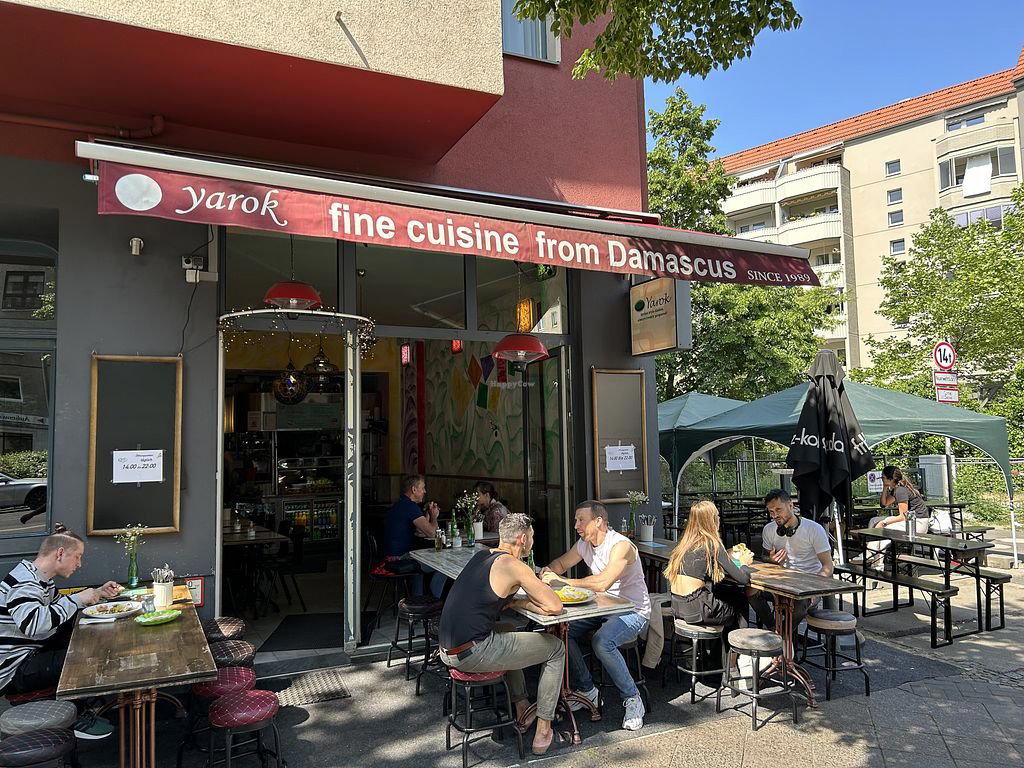
Torstraße in Mitte has a particular rhythm to it: ground-floor restaurants pressed up against the pavement, a mix of long-standing neighbourhood spots and newer arrivals testing whether Berlin's appetite for a specific cuisine runs deeper than trend. Yarok is a casual Syrian restaurant at Torstraße 195, 10115 Berlin, Germany, known for approachable pricing at about $15 per person. It sits inside that pattern. The address alone places it in one of the city's more competitive stretches for casual-to-mid dining, where the question any kitchen faces is not whether it can draw a crowd but whether it can hold one.
What the Menu Reveals About the Kitchen
Middle Eastern cooking in Berlin has expanded considerably over the past decade, splitting between quick-service falafel counters and a smaller tier of restaurants that treat Levantine and broader Arab culinary tradition with the same seriousness that European cuisines have long received. Yarok operates in that second register. The name itself is Arabic for "green," a signal that points toward the herb-heavy, vegetable-forward architecture that defines much of Syrian and Lebanese cooking at its most considered.
A menu structured around that philosophy tends to prioritise spread and sequence over the single-plate headline. Mezze logic, when applied with discipline, is actually a more demanding format than it appears: every component has to carry its own weight because there is no main course doing the heavy lifting. The balance between acid, fat, and char across a table of small dishes requires a kitchen that understands proportion. That is the editorial argument Yarok's menu format makes before a single dish arrives.
For comparison, Berlin's highest-rated kitchens, including Nobelhart & Schmutzig and Rutz, use tasting-menu structures to assert control over sequence and pacing. CODA Dessert Dining does something similar with a dessert-forward format that reorders conventional meal logic. Yarok's mezze architecture is its own version of that argument: the menu structure itself is a position, not just a convenience.
Berlin's Levantine Tier and Where Yarok Sits
Berlin has more Levantine and Middle Eastern restaurants per capita than most western European capitals, partly because of the city's Syrian diaspora community, which arrived in significant numbers from 2015 onward and brought with it a cooking tradition that was already sophisticated. That history matters when reading any restaurant in this category. The baseline in Berlin is high, and the difference between a good and a mediocre version of this cuisine is legible to a larger portion of the city's diners than would be the case elsewhere.
Yarok competes in a tier that sits above the street-food end of the market and below the kind of price point occupied by FACIL or Restaurant Tim Raue. That middle ground is especially contested in the city, where diners are making value judgements based on cooking quality and sourcing rather than room design or tasting-menu prestige. It is a harder position to hold than either extreme.
For context on Germany's broader fine-dining geography, venues such as Aqua in Wolfsburg, Schwarzwaldstube in Baiersbronn, and Vendôme in Bergisch Gladbach anchor the Michelin-heavy end of the country's restaurant map. Berlin's Michelin presence, represented by spots like Nobelhart & Schmutzig and Rutz, is real but smaller than its reputation as a food city might suggest. Yarok operates well outside that award-circuit conversation, which is a different kind of position to hold.
The Room and the Experience
The Mitte stretch of Torstraße rewards restaurants that do not try to out-design their neighbours. The more durable spots tend to be the ones where the room serves the food rather than competing with it. A Levantine dining room done well leans into warmth and density: tiled surfaces, close tables, the smell of char and spice arriving before the food does. Whether Yarok's interior fully commits to that logic is something a visit confirms; what the address and format suggest is that the experience is built around the table rather than the space.
The neighbourhood context also shapes timing. Mitte draws a mixed crowd: tourists staying in the area, creative-industry workers from nearby offices, and long-term residents who treat Torstraße as their local strip. Evening service in this part of the city tends to run late by northern European standards, and walk-in availability varies considerably depending on the day of the week.
How It Reads Against International Peers
Levantine fine dining has been formalised at a higher price point in cities like New York, where restaurants operating with serious technique and sourcing discipline have attracted sustained critical attention. Atomix in New York demonstrates how a non-European culinary tradition can be treated with the same structural rigour as French or Japanese cuisine. Le Bernardin represents a different point on that spectrum, but the underlying argument, that technique and tradition together produce something more durable than trend, applies across categories.
Yarok is not operating at that price or prestige tier, but the same editorial logic applies at its level. A kitchen that takes mezze seriously as a format, that uses sourcing and seasoning as its primary tools, is making an argument about what this cuisine can do when it is not being simplified for a mass market.
For readers planning a broader Germany trip and building a restaurant itinerary, the contrast is instructive: JAN in Munich, ES:SENZ in Grassau, Victor's Fine Dining by Christian Bau in Perl, Waldhotel Sonnora in Dreis, Restaurant Haerlin in Hamburg, Schanz in Piesport, and Bagatelle in Trier all represent Germany's European fine-dining axis. Yarok sits orthogonal to that, in a culinary tradition that Germany's award infrastructure has not yet fully engaged with.
Planning Your Visit
Yarok is located at Torstraße 195, 10115 Berlin, in the Mitte district, accessible by U-Bahn at Rosenthaler Platz (U8). The surrounding area is walkable and dense with other dining and bar options, making it a practical anchor for an evening in the neighbourhood. Open daily from 12 PM to 11 PM, Yarok is walk-in friendly and priced at about $15 per person.
Address: Torstraße 195, 10115 Berlin, Germany. Nearest U-Bahn: Rosenthaler Platz (U8).
The Quick Read
Comparable venues nearby, for context on price, style, and recognition.
| Venue | Cuisine | Price | Notes |
|---|---|---|---|
| YarokThis venue — the venue you are viewing | Mitte, Authentic Syrian | $$ | Not listed |
| Sama Beirut | Not listed | $$ | Kreuzberg, Authentic Lebanese Street Food |
| Saint Farah | Scheunenviertel, Modern Levantine | $$ | Not listed |
| Yafo | Kreuzberg, Modern Israeli | $$$ | Not listed |
| STADTSALAT | Mitte, Premium Organic Bowls & Salads | $$ | Not listed |
| Layla | Not listed | $$$ | Kreuzberg, Modern Middle Eastern Mediterranean Fusion |
Continue exploring
More in Berlin
Restaurants in Berlin
Browse all →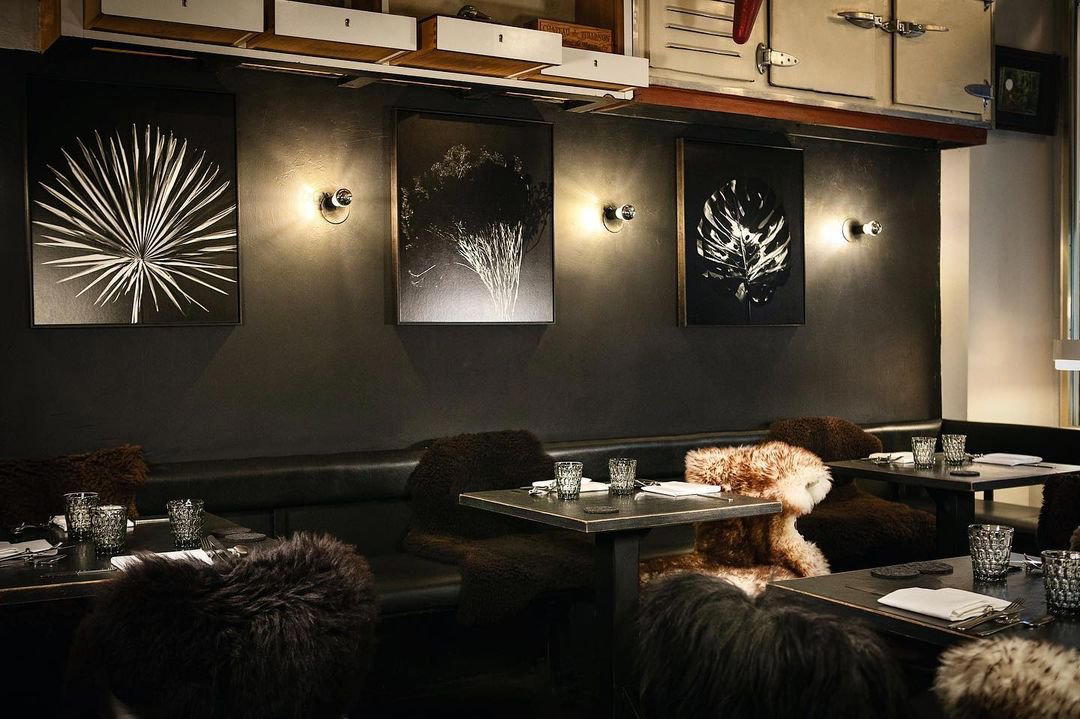
Bars in Berlin
Browse all →
Hotels in Berlin
Browse all →

At a Glance
- Cozy
- Casual Hangout
Current opening hours
- Monday
- 12–11 PM
- Tuesday
- 12–11 PM
- Wednesday
- 12–11 PM
- Thursday
- 12–11 PM
- Friday
- 12–11 PM
- Saturday
- 12–11 PM
- Sunday
- 12–11 PM
Hours can change for holidays and private events. Last verified .
Small and lovely atmosphere surrounded by typical Mitte eateries, offering fresh and lively Middle Eastern flavors.