Tabelog 100 #73
Our verdict
Yamada Ya belongs to Tokyo’s serious yakiniku culture rather than the spectacle-driven steakhouse lane. Its Higashinippori setting, counter seating, tripe focus, shochu listing, and 2025 Tabelog 100 Yakiniku Tokyo selection place it in a compact, locally fluent category where grilling technique and offal literacy matter more than ceremony.

Pearl is the En Primeur Club membership app, where members save venues, book tables and use the concierge.
The menu
What to order
- Assorted yakiniku platters
- Kalbi short rib
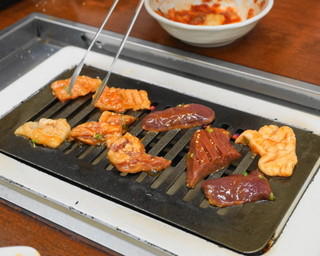
- Hormone (offal) selection
Tokyo changes the tempo before dinner begins. The approach is not hotel polish or destination-dining theatre, but the city rhythm of rail lines, narrow streets, modest shopfronts, and restaurants that do not need to explain themselves at length. In that setting, yakiniku reads less as a luxury import than as a working urban ritual: smoke, heat, sauce, drinks, and the shared concentration of a table managing its own grill.
Yamada Ya sits inside that tradition with unusual clarity. Tokyo’s beef culture often gets discussed through marbling, elaborate menus, and kitchen-controlled sequencing, but yakiniku has a different grammar. It rewards diners who understand cuts, fat, timing, and the social choreography of cooking together. The presence of tripe in the restaurant’s category matters here. Offal is not an accessory in this style of eating; it is one of the ways yakiniku keeps its link to barbecue culture, market cooking, and the city’s less formal appetite for texture.
Yakiniku as Tokyo street-level craft, not steakhouse theatre
The useful comparison is not with Western steakhouse dining, where a kitchen sends out finished plates and the guest judges doneness after the fact. Yakiniku reverses that relationship. The table becomes part of the cooking system, and the meal depends on pace: thin cuts need attention, fattier pieces need patience, and offal punishes distraction. The strongest version of the experience removes some of the banquet-room sprawl that can make barbecue feel anonymous and brings the diner closer to the mechanics of heat.
That is why the recognition signal carries weight. Recognition in Tabelog’s 2025 Hyakumeiten coverage places Yamada Ya within one of Tokyo’s competitive everyday-premium categories. Tabelog scores and lists are not Michelin-style theatre; they reflect a domestic dining culture where consistency, value, and repeat appeal often matter as much as international visibility. A 3.71 score in this category is a serious local marker, especially for a restaurant outside the standard international fine-dining script.
Tokyo gives the format another layer. The city has long supported compact, specialist restaurants that serve regulars, commuters, and destination diners without adopting the language of hotel dining. comparisons points show how broad this dining map can be: Restaurant Kamiya, Habutae Dango Honten, Cafe Mugiwara, Moranbong, and Sadaya all sit in different parts of the wider Tokyo conversation. Yamada Ya belongs to the premium end of this pattern, but not to the international fine-dining script.
Tripe, drinks, and the seriousness of texture
Yakiniku’s cultural importance in Japan comes partly from its refusal to separate pleasure from pragmatism. The format grew around cuts that needed skill, seasoning, and confidence rather than silver-service polish. Tripe is central to that story because it asks diners to value chew, snap, and grill management. This is not a cuisine of passive consumption. A good yakiniku meal has a rhythm of ordering, watching, turning, resting, and eating before the heat erases the point.
Drinks also fit the room better when they support the grill rather than turn the meal into ceremony. Simple pairings work with grilled fat and salt because they can reset the palate without distracting from the table. That drinking culture is part of yakiniku’s social function: people around heat, short intervals between bites, and a table that becomes more conversational as the grill settles into its pace. The shared nature of the meal is not incidental. Yakiniku is built for shared responsibility.
Compared with other Tokyo dining rooms, Yamada Ya occupies a focused premium position without needing to present itself as a status exercise. That matters in Tokyo, where beef dining can quickly become a display of luxury cues. The sharper editorial question is not whether a restaurant is expensive, but whether its format justifies attention within its category. Here, the answer comes from the combination of Tokyo context, yakiniku, tripe, and domestic recognition rather than from imported luxury language.
How to place it within a Tokyo dining itinerary
For travellers building a Tokyo food schedule, this is a useful counterweight to other Japanese dining reservations. It belongs on an itinerary that wants the city’s Japanese dining culture beyond the obvious prestige forms. The format is direct, but not casual in the careless sense. Yakiniku asks for diners who are willing to cook with attention and order with some curiosity beyond standard beef cuts.
The wider Tokyo map helps clarify the choice. Other dining rooms point toward varied styles of Japanese food, each showing how Tokyo’s everyday side can be just as specific as its dinner culture. Yamada Ya’s place in that landscape is more concentrated: it is a grill-led meal built around yakiniku and tripe, with recognition that matters inside the city’s own restaurant culture.
Beyond Yamada Ya, the comparison widens rather than competes. Beef-led cooking, casual meals, regional Japanese formats, and Japanese food culture abroad all take different shapes depending on setting and audience. Those reference points can be useful for planning, but they should not distract from what makes this restaurant legible: a Tokyo yakiniku specialist with a clear category identity and a strong local recognition signal.
Yamada Ya is strongest as a Tokyo meal for diners who want cultural specificity without ceremony. It is not the place to measure luxury by linen, chef biography, or staged progression. Its value lies in a tougher and more local question: how much character can a grill, careful ordering, and a serious understanding of beef and tripe deliver in Tokyo?
For broader planning, use our full Tokyo restaurants guide alongside our full Tokyo hotels guide, our full Tokyo bars guide, our full Tokyo wineries guide, and our full Tokyo experiences guide.
Frequently asked questions
How much does it cost to eat at Yamada Ya?
Pricing at Yamada Ya is listed as Dinner: JPY 8,000 - JPY 9,999; Lunch: JPY 6,000 - JPY 7,999.
What are Yamada Ya's hours?
Hours for Yamada Ya are not listed here; confirm directly with the restaurant before visiting.
What's Yamada Ya's location?
Tokyo.
What is Yamada Ya known for?
Yamada Ya is known for yakiniku and tripe in Tokyo, with a 3.71 Tabelog score and 2025 Tabelog Hyakumeiten recognition.
Category Peers
Comparable venues to place this listing in its category.
| Venue | Cuisine | Price | Awards | Notes |
|---|---|---|---|---|
| Yamada YaThis venue (the venue you are viewing) | Tokyo Yakiniku (Japanese BBQ) | $20–30 | Tabelog 100 #73 | Not listed |
| Japanese Soba Noodles Tsuta (Japanese Soba Noodles 蔦) | Michelin-Starred Japanese Soba Ramen | $20–30 | Tabelog 100 #32 | Yoyogi-Uehara |
| Kayanoya (茅乃舎) | Japanese Regional Cuisine and Dashi | $10–20 | Not listed | Roppongi |
| Coffee Tengoku | Retro Japanese Pancake Cafe | $10–20 | Tabelog 100 | Asakusa |
| HAGI CAFE | Seasonal Japanese cafe with hand-drip coffee | $10–20 | Tabelog 100 #34 | Taitō |
| Maruchiba | Classic Tokyo Izakaya & Seafood Tavern | $30–50 | Tabelog 100 #23 | Taitō |
Recognition history
Dated appearances from independent guides and award organizations, with the underlying list record or original source where available.
Tabelog 100 #73 · No. 73
Tabelog · Tabelog 100 - Yakiniku - TOKYO - 2025