
Nagoya’s yakitori scene rewards precision rather than spectacle, and Yakitori Kissho sits in the serious charcoal-grill tier with Tabelog 100 Yakitori EAST selections from 2023 through 2025. The format is compact and adult without being austere: counter seats, table seating, private rooms, sake, shochu and wine, with a price band that keeps it below the city’s French fine-dining bracket.
Pearl is the En Primeur Club membership app — saves, bookings, and concierge access live there. Same editors, same standards.
- Address
- 2 Chome-17-46 Higashisakura, Higashi Ward, Nagoya, Aichi 461-0005, Japan
- Phone
- +81 52-325-2334
- Website
- kissho.biz
 Saves & bookings on Pearl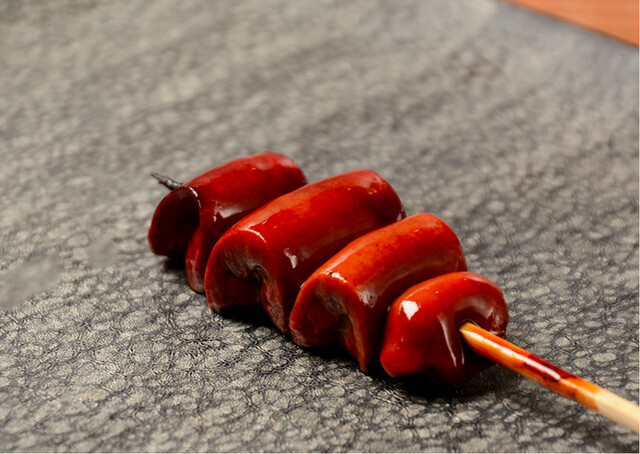
Higashisakura after dark differs from Nagoya Station’s retail glare and Sakae’s louder late-night grid. Streets tighten, restaurant signs thin, and the appeal shifts from spectacle to rooms for diners who know what they want. Yakitori fits: heat control, timing and repetition, where small decisions carry the meal.
In Nagoya, that matters. The city’s dining identity is often reduced to miso katsu, hitsumabushi and tebasaki, yet its stronger restaurants are less provincial than that shorthand. They borrow Tokyo-style counter discipline, Kyoto restraint and French service cues, then set them against Aichi’s appetite for chicken, beef, freshwater eel, rice and fermented depth. Yakitori Kissho belongs to that hybrid category: local in appetite, polished in technique, and built for diners who want charcoal cooking treated as a serious evening, not a casual stop.
Charcoal craft in a city better known for richer signatures
Yakitori is often misunderstood outside Japan as a skewer format. At serious counters, it is closer to a grammar of cuts, fat, salt, tare, smoke and pacing. The cook decides which part takes direct heat, which needs distance from coals, where seasoning should lead, and where restraint lets texture work. That technical frame is why Tabelog’s yakitori lists matter to Japanese diners: they sort a crowded category by consistency and craft, not room design alone.
Yakitori Kissho was selected for Tabelog 100 Yakitori EAST in 2023, 2024 and 2025, a useful signal where Michelin coverage misses serious specialists. Its Tabelog score is 3.61, and the restaurant has 30 seats: 10 counter seats and 20 table seats. Those numbers matter because yakitori quality depends on throughput. A counter shows the craft close up; tables and private rooms broaden the use case without making it a banquet hall.
The price band clarifies its place. Dinner is listed at JPY 8,000 to JPY 9,999, with review-based spending higher at JPY 10,000 to JPY 14,999. That puts it above everyday yakitori and below Nagoya’s more formal French bracket, where French Ryori Kochuten sits at JPY 20,000 to JPY 29,999 for dinner. Against Ronin and Yagumo, both in the JPY 10,000 to JPY 14,999 dinner tier, Kissho reads as a charcoal-led alternative rather than another tasting-menu evening. Binchotan Yakiniku Takechiyo, at JPY 6,000 to JPY 7,999, occupies a more meat-grill-adjacent lane; the difference is not only ingredient but tempo, with yakitori asking diners to follow small, precisely timed decisions.
This is where Nagoya’s local-material, global-technique tension gets interesting. Charcoal grilling is old, but its premium expression borrows from dégustation logic: sequencing, beverage pairing, calibrated pacing and a room built for attention. The drinks list covers sake, shochu and wine rather than treating beer as default. Wine with yakitori is not a novelty in Japan’s larger cities; it reads chicken fat, smoke and tare through acidity, tannin and temperature as much as through nihonshu’s umami structure.
Counter intimacy, private-room practicality and the Nagoya middle tier
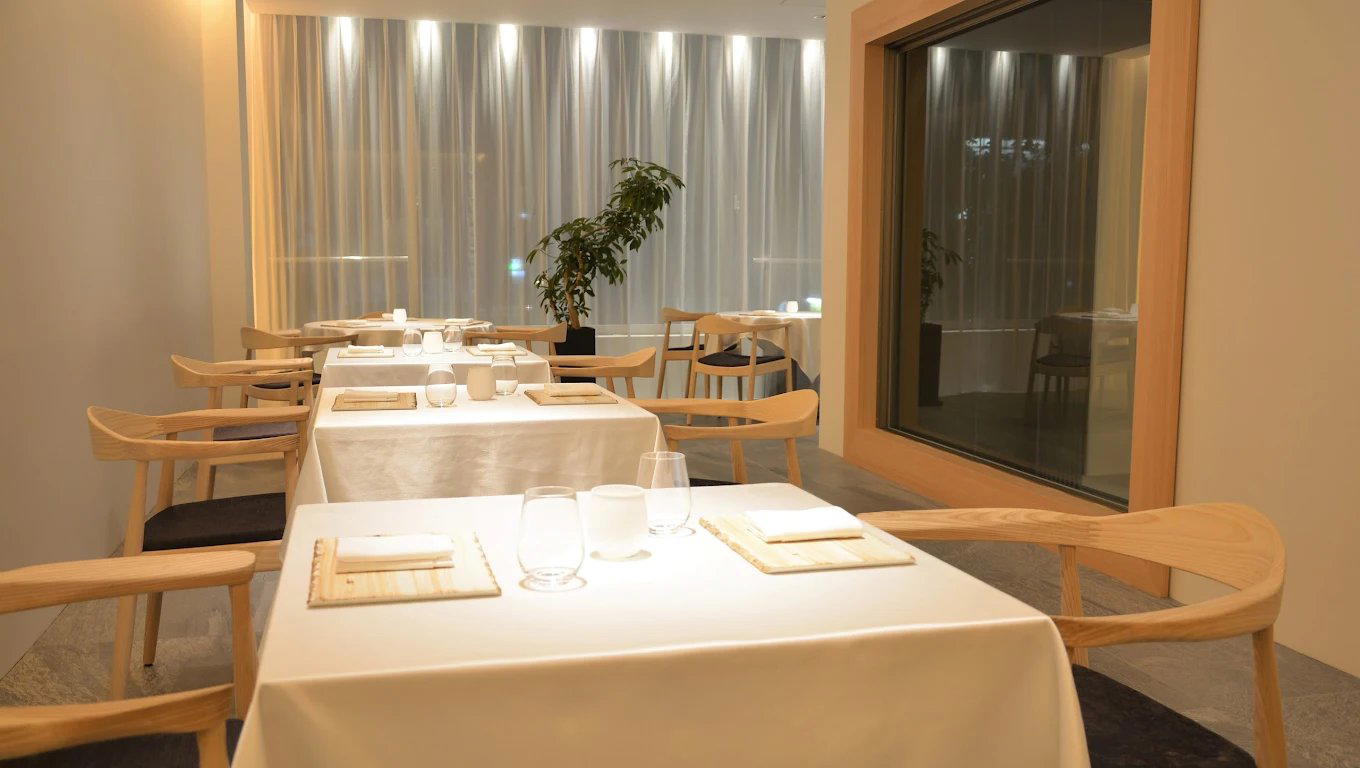
Stronger Nagoya dining rooms often sit between categories: neither temple-like counters nor group-friendly izakaya. Yakitori Kissho’s counter seats, tables and semi-private rooms for 4 to 8 people place it in that middle tier: polished enough for a planned dinner, flexible enough for family occasions or small business meals. That matters in Nagoya, where corporate entertaining and family dining overlap more than in Tokyo’s narrower specialist rooms.
Practical details shape the experience without ceremony. Credit cards are accepted; electronic money and QR code payments are not. Heated tobacco has designated spaces. English-speaking staff are listed, making the restaurant more workable for international diners than many regional yakitori rooms, though the format still rewards following the kitchen’s rhythm. Same-day cancellations carry a JPY 7,000 per-person fee, a reminder that small restaurants built around prepared inventory cannot casually absorb empty seats.
For a Nagoya itinerary, the question is not whether to eat yakitori, but where it fits. A night here works after classic Nagoya dishes because the meal is quieter and more technical. It also contrasts with French and modern Japanese rooms, where luxury often appears through plate composition and service theatre. Here, the argument is narrower: ingredient, cut, fire, drink, repeat.
That narrowness makes comparisons beyond the city misleading. A Tokyo counter may carry more scarcity and a higher bill; a casual neighborhood yakitori shop may offer looseness and less precision. Nagoya sits between those poles, delivering seriousness without the ritual pressure of Japan’s hardest-to-enter counters, and Kissho’s seating mix reflects that balance.
How to place it within a Nagoya dining week
Use this as the charcoal night, not a catch-all introduction to Nagoya food. The city’s dining week is stronger across formats: a local specialty meal, one polished counter, one French or modern room, and a bar-led evening. For planning, Our full Nagoya restaurants guide maps the restaurant side, while Our full Nagoya hotels guide, Our full Nagoya bars guide, Our full Nagoya wineries guide and Our full Nagoya experiences guide place dinner inside the wider trip.
Within the city’s restaurant set, it pairs well with formal or contrasting reservations such as 1022, 451, Aaron, Alan. and All Day Dining Montmartre. The point is contrast: charcoal and chicken one evening, French or broader hotel dining another, then a dedicated bar night instead of forcing every meal into the same luxury template.
Travelers extending the food route across Japan can use the meal as a benchmark for specialist cooking, not a standalone trophy. Compare the discipline of a Nagoya yakitori counter with beef sukiyaki at -Grilled beef Sukiyaki- KAMAKURA TANUKIAN 鎌倉 たぬき庵 in Kamakura, tuna and charcoal at. 鮪と炭火焼き うお炭 秋葉原店 in Tokyo, cafe culture at.cafe in Osaka, regional cooking at.know in Kumamoto, Vietnamese cooking in Kanagawa at (Shoku) Vietnam in Kawasaki, curry specialization at [Curry Senmon Ten] Maruyama Kyoju. in Sapporo, sake-bar thinking at Jōdo Saké Bar in Los Angeles and Japanese comfort format abroad at Onigiri Time in Pasadena. The through-line is not sameness; it is how specific formats reveal what a city values when the room is small and choices are deliberate.
Yakitori Kissho’s appeal is measured, not theatrical. Its credentials, scale and price point make it credible for diners who want Nagoya beyond familiar specialties, with enough structure for a planned night and enough local ease to avoid the stiffness that can flatten specialist dining. In a city often caricatured by hearty signatures, that restraint is the point.
Price Lens
Comparable venues to place this listing in its category.
| Venue | Cuisine | Price | Notes |
|---|---|---|---|
| Yakitori KisshoThis venue — the venue you are viewing | Not listed | $$$ | Not listed |
| Toriryori Jun | Not listed | $$$ | Higashi, Omakase Yakitori & Chicken Cuisine |
| Gyutei | Higashi, High-end Wagyu Yakiniku | $$$ | Not listed |
| Yakitori Shige Higashizakura | Higashi, Nagoya Cochin Yakitori Omakase | $$$ | Not listed |
| Unagi Okafuji | Naka, Nagoya-style eel and hitsumabushi | $$$ | Not listed |
| Chisouan Hijiri | Higashi, Traditional Kyoto-style kaiseki | $$$ | Not listed |
Recognition history
Dated appearances from independent guides and award organizations, with the underlying list record or original source where available.
Tabelog 100 #56 · No. 56
Tabelog · Tabelog 100 - Yakitori - EAST - 2025
Continue exploring
More in Nagoya
Restaurants in Nagoya
Browse all →
At a Glance
- Modern
- Cozy
- Intimate
- Elegant
- Date Night
- Special Occasion
- After Work
- Solo
- Chefs Counter
- Open Kitchen
- Standalone
- Design Destination
- Sake Program
- Beer Program
- Local Sourcing
Current opening hours
- Monday
- 5:30–11 PM
- Tuesday
- 5:30–11 PM
- Wednesday
- 5:30–11 PM
- Thursday
- 5:30–11 PM
- Friday
- 5:30–11 PM
- Saturday
- 5:30–11 PM
- Sunday
- Closed
Hours can change for holidays and private events. Last verified .
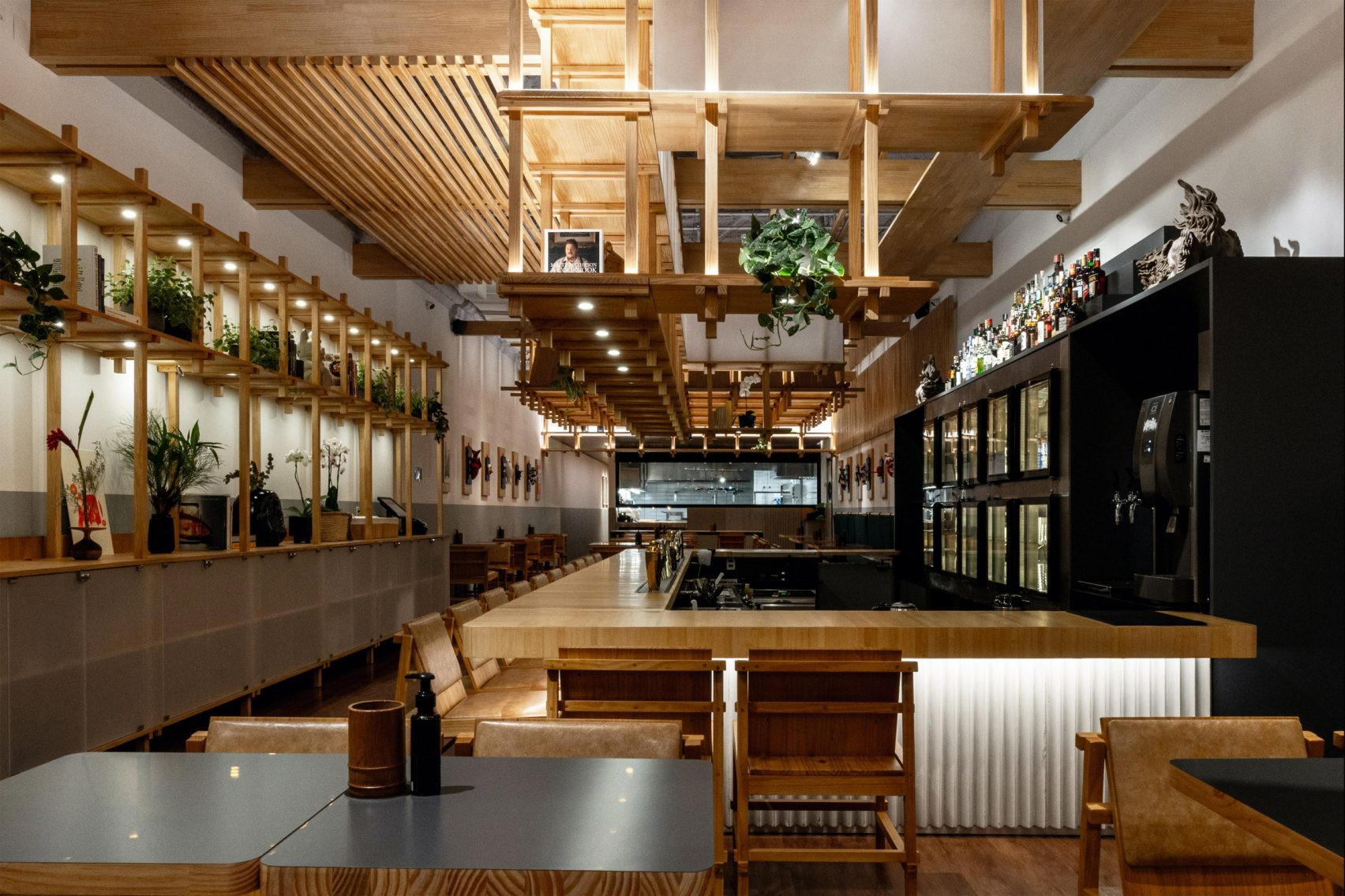
A small, modern Japanese space in a converted old house, centered on a yakitori counter with warm lighting and a calm but lively atmosphere where the focus is on watching skewers grilled over charcoal.