Wonhalmae Somunnan Wonjo Dakhanmari
Wonhalmae Somunnan Wonjo Dakhanmari is one of Seoul's most recognised names in dakhanmari, the single-chicken hotpot tradition that has anchored the Dongdaemun area for decades. The format is deliberately simple: one bird, a shared pot, and condiments built for communal adjustment. For visitors serious about tracing Seoul's everyday dining traditions beyond the fine-dining circuit, this is a useful reference point.
Pearl is the En Primeur Club membership app — saves, bookings, and concierge access live there. Same editors, same standards.
- Address
- 종로구 종로5가 282-21, 종로5가, 종로구, 서울특별시, 03197
- Directions
- Get directions
 Saves & bookings on Pearl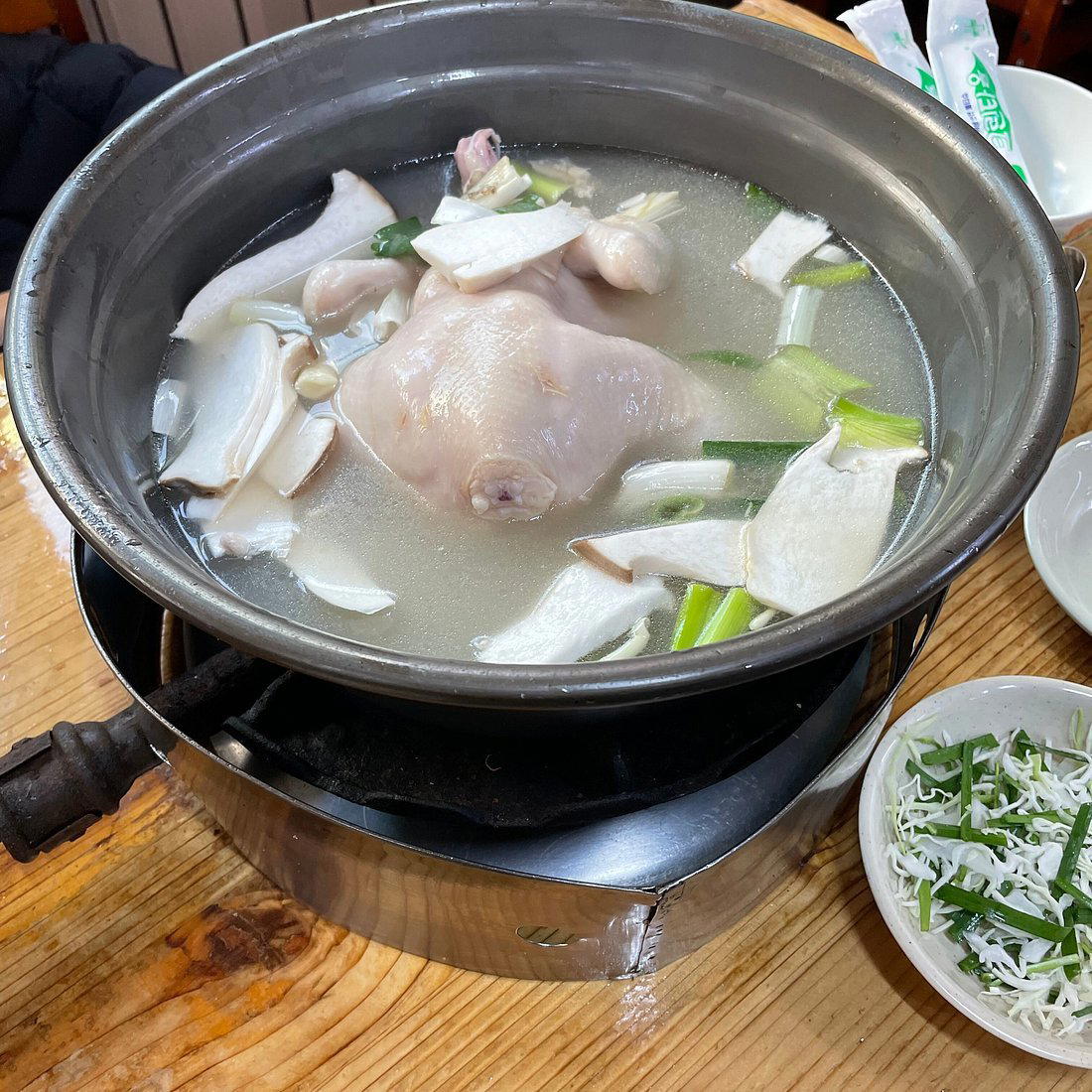
The Chicken Pot Tradition and Where Seoul Still Takes It Seriously
There is a category of Seoul dining that operates entirely outside the Michelin conversation — not because the cooking is lesser, but because the format was never designed for that kind of assessment. Dakhanmari is the clearest example. A whole chicken, simmered in a broth that the diner adjusts at the table with mustard, gochujang, and vinegar, served in a clay or metal pot that stays on the heat throughout the meal. The dish belongs to a cluster of restaurants that grew up in Dongdaemun, a neighbourhood historically associated with late-night workers, textile traders, and market vendors who needed hot, filling food at hours when most kitchens had closed. Wonhalmae Somunnan Wonjo Dakhanmari is one of the addresses the neighbourhood produced, and it carries the kind of name recognition that comes from longevity and word-of-mouth rather than from awards infrastructure.
Seoul's fine-dining circuit has expanded considerably over the past decade. Restaurants like Mingles and Jungsik have positioned Korean cuisine in an international conversation, while places like Kwonsooksoo and Soigné represent the city's appetite for rigorous, format-driven experimentation. Wonhalmae sits at the opposite end of that spectrum, and that is precisely what makes it legible as a cultural reference point. The dish it serves has not changed to accommodate shifting tastes. The broth is the broth. The chicken is the chicken. Diners who want tteok or handmade noodles added to the pot at the end of the meal order them separately, as they always have.
How the Booking Experience Shapes the Visit
The practical reality of visiting Wonhalmae reflects the broader logic of popular everyday restaurants in Seoul: walk-in capacity, variable queues, and no reservations system to speak of. This is not a place where planning six weeks ahead secures a specific seat at a specific time. It is a place where timing your arrival — earlier in the lunch window, later in the dinner rush, or on a weekday rather than a Saturday evening, determines how long you wait rather than whether you get in at all. That dynamic differs sharply from the allocation and waitlist culture that governs Seoul's tasting-menu tier, where venues like alla prima operate on controlled seating and advance booking. Knowing the difference before you arrive saves frustration.
For visitors approaching Seoul's dining from the outside, the Dongdaemun area warrants some orientation. The neighbourhood functions across multiple registers simultaneously: wholesale markets, street food, department stores, and a cluster of late-night restaurants built around the kind of communal, pot-based cooking that dakhanmari represents. Arriving mid-afternoon on a weekday typically means shorter waits than weekend evenings, when domestic tourists and after-work groups converge on the same handful of addresses. The restaurant's name, which references a grandmother figure and the concept of origination, signals the kind of lineage claim common among Seoul's most established neighbourhood institutions, where the founding story is worn openly as a quality marker.
What the Format Requires of the Diner
Dakhanmari is an active meal. The pot arrives with the chicken whole or in large pieces, the broth plain enough to serve as a base for whatever the table builds. The condiment set, typically a mustard-vinegar dipping sauce, a gochujang paste, and a salted green onion accompaniment, is assembled by the diner, not pre-plated by the kitchen. This is the opposite of the composed, course-by-course logic that structures the meal at somewhere like Jungsik or the contemporary Korean tasting formats found at Mingles. The skill in eating dakhanmari well lies in how you manage the pot: when to add starch, how much broth to leave for the final juk-style porridge if the kitchen offers it, and how to balance the heat of the dipping sauce against the clean flavour of the chicken itself.
That participatory format also means the meal works well with at least two people. One whole chicken is the base unit, and the ritual of breaking it apart, adjusting the broth, and working through the pot over an extended sitting is a communal activity by design. Solo diners can and do eat dakhanmari, but the format's logic is oriented toward a shared table. This is worth knowing before you plan the visit.
Seoul's Everyday Dining Traditions in Regional Context
The pattern Wonhalmae represents, a single-dish restaurant with deep neighbourhood roots, no formal booking system, and recognition built entirely through consistency, appears across South Korea's major food cities. In Busan, Mori occupies a different register but shares a similar logic of earned local trust. In Jeju, addresses like Badang Lounge and the black pork specialists at Black Pork BBQ in Seogwipo demonstrate how regional ingredient identity anchors a restaurant's reputation in ways that transcend formal recognition systems. In Suwon, Doosoogobang holds a comparable position in its own category. The connective tissue across all of these is consistency of format, clarity of dish, and a booking experience that rewards local knowledge over advance planning. You can find more of these patterns mapped across our full Seoul restaurants guide.
For international visitors who have eaten Korean food primarily through the export formats, the galbi houses, the modern Korean-American tasting menus at places like Atomix in New York, or the fish-focused refinement of somewhere like Le Bernardin, dakhanmari offers a genuinely different reference point. It is Korean food as functional tradition rather than as cultural export, and Wonhalmae is one of the most cited addresses in that specific category.
Planning Your Visit
Because no confirmed address, hours, or booking infrastructure data is available in the public record for this listing, the most reliable approach is to confirm current operating hours and location through a Korean-language map application (Naver Maps is the standard for Seoul navigation) before travelling. The restaurant's name is distinctive enough to locate in Korean script: 원할머니 소문난 원조 닭한마리. Visitors connecting from other parts of South Korea, from Gyeongju via Gyeongju Wonjo Kongguk or from Jeju after stops at 88돼지, should factor in the Dongdaemun area's peak traffic, which runs from around 6pm on weeknights and extends considerably later on weekends. The meal itself is priced in the range expected of Seoul's everyday restaurant tier, considerably below the ₩₩₩₩ tasting-menu bracket occupied by venues like Kwonsooksoo or alla prima.
In Context: Similar Options
Comparable venues nearby, for context on price, style, and recognition.
| Venue | Cuisine | Price | Notes |
|---|---|---|---|
| Wonhalmae Somunnan Wonjo DakhanmariThis venue — the venue you are viewing | Traditional Korean Dakhanmari | $$ | Not listed |
| 영동설렁탕 | Traditional Korean Seolleongtang | $$ | Jamwon-dong, Seocho-gu |
| 듬북담북 선릉1점 | 북어국 전문 한식 | $$ | 삼성동 |
| Mongvely 2 Myeongdong Korean BBQ restaurant kbbq Beef All You Can Eat | All-You-Can-Eat Korean BBQ | $$ | Sajik-dong |
| ë§í 르 | korean | Not listed | 압구정동 |
| MapleTree House | Korean BBQ | $$ | 이태원동 |
Continue exploring
More in Seoul
Restaurants in Seoul
Browse all →
At a Glance
- Classic
- Cozy
- Well Known
- Group Dining
- Family
- Casual Hangout
- Standalone
- Sake Program
Current opening hours
- Monday
- 11 AM–11 PM
- Tuesday
- 11 AM–11 PM
- Wednesday
- 11 AM–11 PM
- Thursday
- 11 AM–11 PM
- Friday
- 11 AM–11 PM
- Saturday
- 11 AM–11 PM
- Sunday
- 11 AM–11 PM
Hours can change for holidays and private events. Last verified .
Unpretentious, bustling local atmosphere with simple, hardworking vibe popular among families and coworkers.
Know Before You Go
- Getting there
- 종로구 종로5가 282-21, 종로5가, 종로구, 서울특별시, 03197