On the Elbchaussee, one of Hamburg's most storied addresses, Wehmanns Bistro occupies a stretch of road where the Hanseatic city's appetite for understated quality has long found expression. The bistro format here reads less as a price-point compromise and more as a deliberate register: informal enough for repeat visits, considered enough to hold its ground on a street lined with serious dining intentions.
Pearl is the En Primeur Club membership app — saves, bookings, and concierge access live there. Same editors, same standards.
- Address
- Elbchaussee 130, 22763 Hamburg, Germany
- Phone
- +4940883070050
- Website
- wehmanns-bistro.de
- Directions
- Get directions
 Saves & bookings on Pearl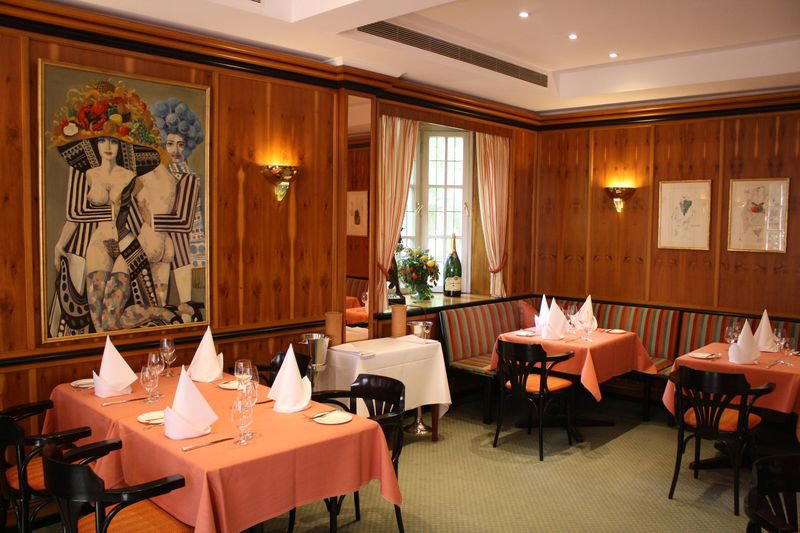
The Elbchaussee and What It Asks of a Restaurant
The Elbchaussee is not a street that tolerates mediocrity passively. Running along the northern bank of the Elbe from Altona toward Blankenese, it has accumulated, over generations, a density of serious bourgeois expectation that few Hamburg addresses match. Large villas sit behind mature trees, the river occasionally visible through gaps, and the restaurants that survive here tend to do so because they understand the specific social contract the address implies: quality without theatre, hospitality without performance, food that earns its place on a table where the surroundings already do a great deal of work.
Wehmanns Bistro at Elbchaussee 130 operates inside that contract. The bistro designation is meaningful context here. In a Hamburg dining scene that has moved decisively toward either casual-international formats or high-investment tasting menus, the neighbourhood bistro occupying premium real estate represents a particular kind of confidence. It is saying, in effect, that the format itself carries enough weight without escalating to the register of, say, Restaurant Haerlin or The Table Kevin Fehling, both of which operate at the city's highest price and ambition tier.
Bistro as a Cultural Position, Not a Compromise
The European bistro tradition has a more complex history than its casual reputation suggests. In France, where the format originates, the bistro was never simply a cheaper restaurant. It was a place where cooking skill expressed itself through economy of means: stocks made from bones, sauces built over time, dishes that rewarded attention without demanding ceremony. Hamburg absorbed that tradition through its long mercantile relationship with France and the Low Countries, and the city's better bistro-format addresses carry that inheritance in their approach to classical technique applied to approachable plates.
This context matters when reading Wehmanns Bistro against the Hamburg scene. The comparison set is not the same as for the city's Michelin-tracked properties. Venues like 100/200 Kitchen or bianc operate with different format ambitions and pricing logic. Wehmanns sits closer to the register of considered neighbourhood dining, where the value proposition rests on consistency and a sense of place rather than on tasting-menu construction or chef-name recognition.
Germany's broader fine and mid-range dining scene has, over the past decade, developed a productive tension between internationally inflected creativity and a renewed interest in rooted, regional cooking. That tension appears at the national level in destinations as varied as Schwarzwaldstube in Baiersbronn or Waldhotel Sonnora in Dreis, and it filters down into how a bistro-format address on the Elbchaussee frames its menu identity.
The Neighbourhood and Its Dining Logic
Altona and the western Elbe corridor function as Hamburg's most affluent residential stretch, distinct in character from the Hafencity waterfront developments or the Eimsbüttel neighbourhood dining scene. Residents here tend to want restaurants they can visit without occasion: places that hold quality week to week rather than peak for special-event meals. That demand profile shapes what succeeds on the Elbchaussee, and it explains why a bistro format can hold ground here that it might not sustain in a more tourist-facing part of the city.
The contrast with Lakeside, another Hamburg address positioned around a specific environmental quality, is instructive. Lakeside builds its identity around setting as a primary draw. Wehmanns, by address logic, competes differently: the street itself provides the setting, and the restaurant's role is to match that setting's expectations through what arrives at the table.
Hamburg in the German Dining Conversation
Hamburg's position in German fine dining has always been slightly peripheral to the Michelin-dense corridors of Baden-Württemberg or the Moselle Valley, where addresses like Schanz in Piesport, Bagatelle in Trier, and Vendôme in Bergisch Gladbach cluster. Hamburg has strong representation at the top tier, with The Table Kevin Fehling holding three Michelin stars, but the city's dining character is shaped as much by its mercantile self-confidence as by award accumulation. Hamburgers eat well without needing external validation, and the bistro tier here reflects that attitude.
Nationally, the restaurants drawing the most serious attention sit in less expected locations: ES:SENZ in Grassau and JAN in Munich both demonstrate that Germany's serious cooking is geographically distributed. Hamburg's contribution to that map includes its credible mid-range and neighbourhood tier, not only its headline names. Aqua in Wolfsburg and Victor's Fine Dining by Christian Bau in Perl illustrate the range across northern and western Germany. CODA Dessert Dining in Berlin shows how format innovation can anchor serious recognition. Wehmanns operates in a different register from all of these, but it belongs to the same national story about where and how Germans choose to eat seriously.
For international context, the bistro tradition that Wehmanns draws on has parallels at institutions like Le Bernardin in New York City (which shares the classical European seriousness, if not the format) and sits in a completely different cultural conversation from precision-driven newcomers like Atomix in New York City. The point of comparison is not ambition level but rather the relationship between tradition and contemporary dining identity.
Planning Your Visit
Wehmanns Bistro is at Elbchaussee 130, 22763 Hamburg. The address places it in the Ottensen-adjacent stretch of the western Elbe bank, accessible by car from central Hamburg in under fifteen minutes outside peak traffic hours, and reachable by the Elbchaussee bus corridor. Visitors combining the Elbchaussee with Hamburg's broader dining scene should consult our full Hamburg restaurants guide for neighbourhood-level routing and peer comparisons.
Contact and booking details were not available at time of publication. Given the address and format, direct contact via the venue is the standard approach for table reservations at bistro-tier Hamburg addresses in this residential corridor.
| Venue | Format | Price Tier |
|---|---|---|
| Wehmanns Bistro | Neighbourhood bistro | Not published |
| The Table Kevin Fehling | Creative tasting menu | €€€€ |
| bianc | Modern Mediterranean | €€€€ |
| Lakeside | German lakeside setting | €€€€ |
How Wehmanns Bistro Hamburg compares with similar nearby venues.
| Venue | Cuisine | Price |
|---|---|---|
| Landhaus Scherrer | Modern European, Classic Cuisine | €€€€ |
| Le Canard | Modern French | €€€ |
Continue exploring
More in Hamburg
Restaurants in Hamburg
Browse all →
Bars in Hamburg
Browse all →
Hotels in Hamburg
Browse all →
Wineries in Hamburg
Browse all →
At a Glance
- Classic
- Elegant
- Cozy
- Intimate
- Casual Hangout
- After Work
- Historic Building
- Standalone
- Local Sourcing
- Organic
Current opening hours
- Monday
- 12–3 PM, 6–11 PM
- Tuesday
- 12–3 PM, 6–11 PM
- Wednesday
- 12–3 PM, 6–11 PM
- Thursday
- 12–3 PM, 6–11 PM
- Friday
- 12–3 PM, 6–11 PM
- Saturday
- 12–3 PM, 6–11 PM
- Sunday
- Closed
Hours can change for holidays and private events. Last verified .
Classic, elegant country house ambience with wood panelling and antique paintings; warm and personal service in a peaceful, historic 1840s building.
Know Before You Go
- Getting there
- Elbchaussee 130, 22763 Hamburg, Germany