
Star Wine List
Our verdict
On Deichstraße, one of Hamburg's oldest surviving merchant streets, BUDDELS occupies a position that rewards those who understand the city's quieter dining registers. The address alone situates it within Hamburg's historic Speicherstadt-adjacent corridor, where the built environment does considerable atmospheric work before a meal even begins. For visitors working through Hamburg's serious restaurant tier, BUDDELS represents a thread worth pulling.

Pearl is the En Primeur Club membership app — saves, bookings, and concierge access live there. Same editors, same standards.
- Address
- Deichstraße 37, 20459 Hamburg, Germany
- Phone
- +494031171222
- Hours
- Mon–Fri 11:30 AM–3 PM, 5–11 PMSat–Sun Closed
- Website
- buddels.de
- Directions
- Get directions
- Booking
- Book on TheFork
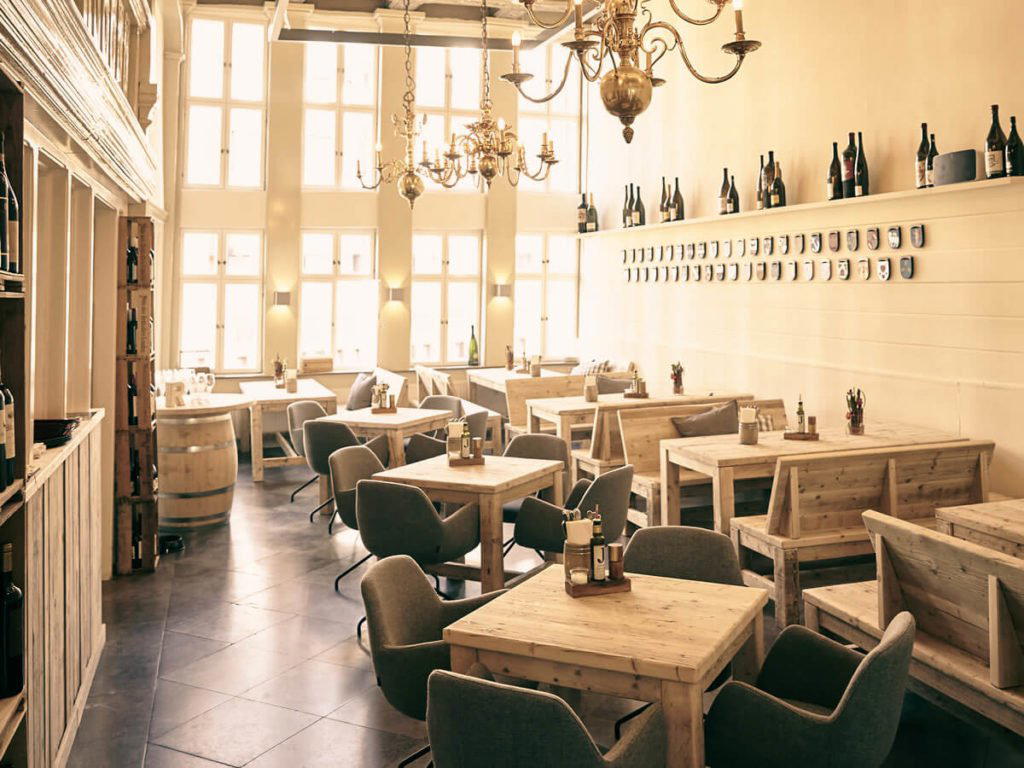
Deichstraße and the Architecture of a Hamburg Meal
Hamburg's oldest surviving row of merchant houses lines Deichstraße, a narrow canal-flanked street in the city's warehouse district that predates the Speicherstadt by several centuries. The buildings lean over the Nikolaifleet with the particular confidence of structures that have watched the city rebuild itself around them. Walking toward BUDDELS at number 37, the physical context does something menus cannot: it places you inside a Hamburg that runs deeper than the HafenCity glass towers a few blocks south. That atmospheric orientation matters when you're about to eat, because it shapes the register of the meal before you've seen a single dish.
Hamburg's fine-dining circuit tends to concentrate either around the Alster lakes or inside design-forward rooms that signal ambition through architecture. Deichstraße sits outside both of those gravitational pulls. Venues here operate with the street's own logic: restrained, historically freighted, positioned for guests who arrive with some knowledge of where they are rather than venues that explain themselves loudly. BUDDELS, at this address, belongs to that quieter current in the city's eating life.
Hamburg's Dining Tiers and Where BUDDELS Sits
The city's restaurant scene has developed a legible structure over the past decade. At the leading, a small cluster of destination addresses draws international visitors: Restaurant Haerlin for classic French technique applied with precision, The Table Kevin Fehling for the kind of creative cooking that earns three Michelin stars and a counter format with strictly limited seats. Below that, a middle tier of serious rooms operates with strong kitchen credentials and prices in the €€€€ range: bianc working modern Mediterranean, Lakeside with its German-rooted approach on the water, and 100/200 Kitchen pushing creative formats in a format-forward room.
BUDDELS on Deichstraße occupies a distinct position within this structure. The address signals independent operation, the street's character argues against high-volume throughput, and the setting places it in a category where atmosphere and culinary specificity carry weight together rather than separately. This is the kind of address serious Hamburg eaters know by reputation before they've made a reservation.
The Progression of a Meal: How the Setting Shapes the Sequence
At restaurants on streets like Deichstraße, the meal tends to begin before the first course arrives. The walk from the nearest U-Bahn stop at Rödingsmarkt, roughly five minutes south along the canal, introduces the rhythm of the old city: compressed facades, water on one side, the absence of the kind of ambient noise that fills harbour-facing rooms. By the time you're seated, the pace has already been set for you.
That pacing matters for how multi-course eating lands. The progression of a serious tasting menu, or even an ambitious à la carte sequence, depends partly on a room that doesn't fight the cadence. Deichstraße settings historically impose a kind of quiet formality, not the stiff variety but the kind that comes from old walls and low ceilings, from rooms that have been used for hospitality across different centuries. What you eat in such a room tends to register differently than the same food served in a glass-walled contemporary space. The architecture contributes a low, steady bass note to the meal's overall register.
Within that frame, the progression of courses at BUDDELS carries the weight of the setting. Hamburg's broader dining tradition at this level draws on Northern European restraint: clean flavours, quality ingredients referenced precisely rather than obscured by technique, protein treatments that acknowledge the city's maritime history without reducing themselves to tourist shorthand. The narrative arc of a meal in this corner of Hamburg moves from that contextual grounding through whatever the kitchen chooses to emphasise, and the Deichstraße address ensures the opening chapters are written before a fork is lifted.
Hamburg in a Wider German Context
Placing Hamburg's serious restaurant tier against the national picture sharpens its particular character. Germany's decorated fine-dining addresses spread across the country in ways that reflect regional culinary identities: Schwarzwaldstube in Baiersbronn operating within Black Forest tradition, Aqua in Wolfsburg with its modernist ambition, JAN in Munich in the Bavarian premium tier, Vendôme in Bergisch Gladbach and Victor's Fine Dining by Christian Bau in Perl at the country's highest recognition level. Further out, ES:SENZ in Grassau, Schanz in Piesport, Waldhotel Sonnora in Dreis, and Bagatelle in Trier each represent distinct regional registers.
Hamburg's contribution to that picture is consistently maritime and mercantile in inflection. The city's history as a trading port means its food culture absorbed external influences steadily over centuries, and the leading kitchens here tend to work with that layered inheritance rather than against it. CODA Dessert Dining in Berlin represents how Germany's other major northern city takes a structurally different approach to fine dining's format possibilities. Hamburg's answer is typically less conceptual and more rooted in product and place.
For international comparison, the tasting progression format that serious Hamburg restaurants employ shares structural DNA with kitchens like Le Bernardin in New York City or Lazy Bear in San Francisco, where the sequencing of courses carries editorial weight and the room's atmosphere is treated as part of the menu's delivery, not its backdrop.
Planning a Visit to Deichstraße
Deichstraße 37 sits within easy reach of Hamburg's central transport network: Rödingsmarkt on the U3 line is the closest underground stop, and the street runs roughly parallel to the Nikolaifleet canal. The historic character of the block means the street itself is worth arriving for ahead of any reservation. Hamburg's dining culture at this level runs across the full week in terms of serious kitchen output, though independent addresses in historic buildings often have service patterns that differ from hotel-anchored or group-operated rooms. Confirming hours and reservation policy directly, and planning around the Deichstraße's general character as a quieter, residential-inflected strip, sets the right expectations for pacing. For a fuller picture of Hamburg's restaurant scene across price tiers and neighbourhood contexts, the EP Club Hamburg restaurants guide maps the city's options with editorial specificity.
Frequently asked questions
What should I eat at BUDDELS?
How far ahead should I plan for BUDDELS?
Is BUDDELS on Deichstraße a good choice for visitors who want to understand Hamburg's historic dining character alongside the city's newer restaurant generation?
Cuisine and Recognition
A compact comparison to help you place this venue among nearby peers.
| Venue | Cuisine | Price | Awards | Notes |
|---|---|---|---|---|
| BUDDELSThis venue — the venue you are viewing | Refined North German Gastropub | $30–50 | Star Wine List | Not listed |
| The Table Kevin Fehling | Avant-Garde Fusion Fine Dining | $200–300 | 3 Michelin Stars · La Liste Top Restaurants | Creative |
| bianc | Modern Mediterranean Fine Dining | $200–300 | 2 Michelin Stars · La Liste Top Restaurants | Modern Mediterranean, Mediterranean Cuisine |
| Lakeside | Modern European Fine Dining | $200–300 | 2 Michelin Stars · La Liste Top Restaurants | German Lakeside |
| Heimatjuwel | Modern Regional German Vegetarian Fine Dining | Not listed | 1 Michelin Star · We're Smart World 3 Radishes | German, Creative |
| Landhaus Scherrer | Michelin-Starred North German Fine Dining | $150–200 | 1 Michelin Star · Star Wine List | Modern European, Classic Cuisine |
Recognition history
Dated appearances from independent guides and award organizations, with the underlying list record or original source where available.
Star Wine List
Star Wine List
Continue exploring
More in Hamburg
Restaurants in Hamburg
Browse all →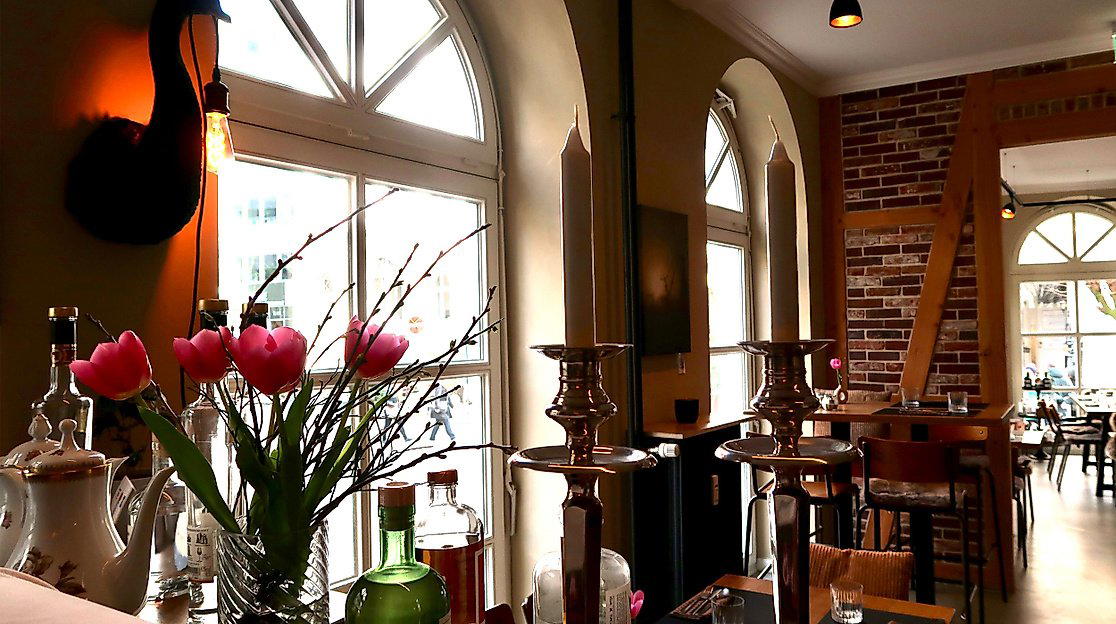
Bars in Hamburg
Browse all →
Hotels in Hamburg
Browse all →
Wineries in Hamburg
Browse all →
Details
- Cozy
- Romantic
- Historic
- Elegant
- Date Night
- Solo
- Waterfront
- Historic Building
- Extensive Wine List
- Local Sourcing
- Waterfront
- A La Carte
- Vegetarian Friendly
- Vegan Options
- Gluten Free Options
Current opening hours
- Monday
- 11:30 AM–3 PM, 5–11 PM
- Tuesday
- 11:30 AM–3 PM, 5–11 PM
- Wednesday
- 11:30 AM–3 PM, 5–11 PM
- Thursday
- 11:30 AM–3 PM, 5–11 PM
- Friday
- 11:30 AM–3 PM, 5–11 PM
- Saturday
- Closed
- Sunday
- Closed
Hours can change for holidays and private events. Last verified .
Cozy, tidy atmosphere with country-chic charm and beautiful lighting enhanced by the scenic fleet view.