

Tabelog 100 #93
Our verdict
Positioned in Kyoto's Arashiyama district, Unagi Hirokawa is a specialist eel restaurant recognised by Opinionated About Dining in both 2023 and 2024. The kitchen focuses on a single ingredient with the precision that defines Kyoto's approach to mono-cuisine dining. Tuesday through Sunday service runs across split lunch and dinner sittings, making advance timing essential.

Pearl is the En Primeur Club membership app — saves, bookings, and concierge access live there. Same editors, same standards.
Eel as a Discipline: Kyoto's Approach to Mono-Cuisine
Japan's unagi tradition stretches back to the Edo period, when freshwater eel, grilled over binchōtan and lacquered with tare, became one of the country's most carefully codified preparations. The techniques split along regional lines long ago: Kansai-style cooks the eel without steaming, pressing the fat directly against the grill to produce a crispier skin and more pronounced char, while Kantō-style steams first for a softer, more yielding result. Kyoto, as the cultural heart of Kansai, carries the Kansai method as its default, and specialist unagi houses in the city work within that framework with a rigour that leaves very little room for improvisation.
Unagi Hirokawa sits in Arashiyama's Sagatenryuji district, one of the quieter residential pockets behind the area's main tourist corridor, and has earned recognition from Opinionated About Dining as a Recommended restaurant in Japan (2023) and ranked 56th in the OAD Casual Japan list (2024). Those two signals, taken together, place it in the credible mid-tier of Japan's specialist dining recognition, not among the three-Michelin-star kaiseki houses on the city's leading end, but well above the generic tourist-facing eel counters that crowd the Arashiyama approach roads.
The Arc of the Meal
Unagi dining, when done with any seriousness, is less a multi-course progression than a study in incremental concentration. The meal at a specialist unagi-ya typically begins with lighter preparations that let the cook's handling of the eel register before tare intensity and smoke take over. A house dashi, served with fine-cut vegetables or tofu, often opens the sequence, calibrating the palate before the main event arrives. Housemade pickles work in a similar register, their acidity doing preparatory work that a richer dish cannot.
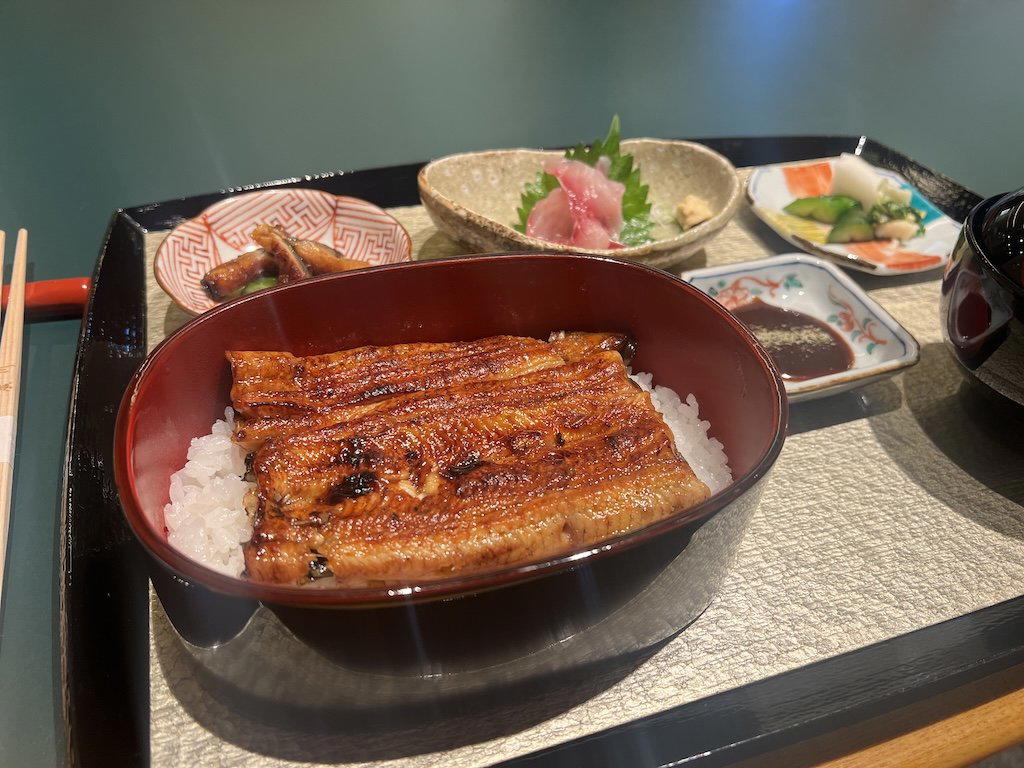
The core of the meal at any serious unagi counter is the kabayaki itself, eel fillets split, skewered, and grilled in stages with layers of tare applied between each pass over the coals. In Kansai practice, this means a direct encounter with rendered fat and caramelised sauce without the textural softening that steaming would introduce. The result, at its finest, is a skin that holds its structure against the rice beneath it, rather than collapsing into it. Unaju, the lacquered eel served over rice in a lacquer box, is the format through which most of that experience is delivered, and the quality of both the rice and the tare ratios determine whether the dish coheres or oversaturates.
Later in the sequence, liver preparations often appear at specialist houses, either as a small skewered piece or as a delicate soup. Liver has a pronounced bitterness and a different textural logic than the main fillet, and it functions as a palate pivot before a meal ends on something restoring, typically a clear soup or a simple seasonal sweet. This arc is not decorative. It is the accumulated logic of a cuisine that has had centuries to refine its internal sequence.
Arashiyama as a Setting for This Kind of Dining
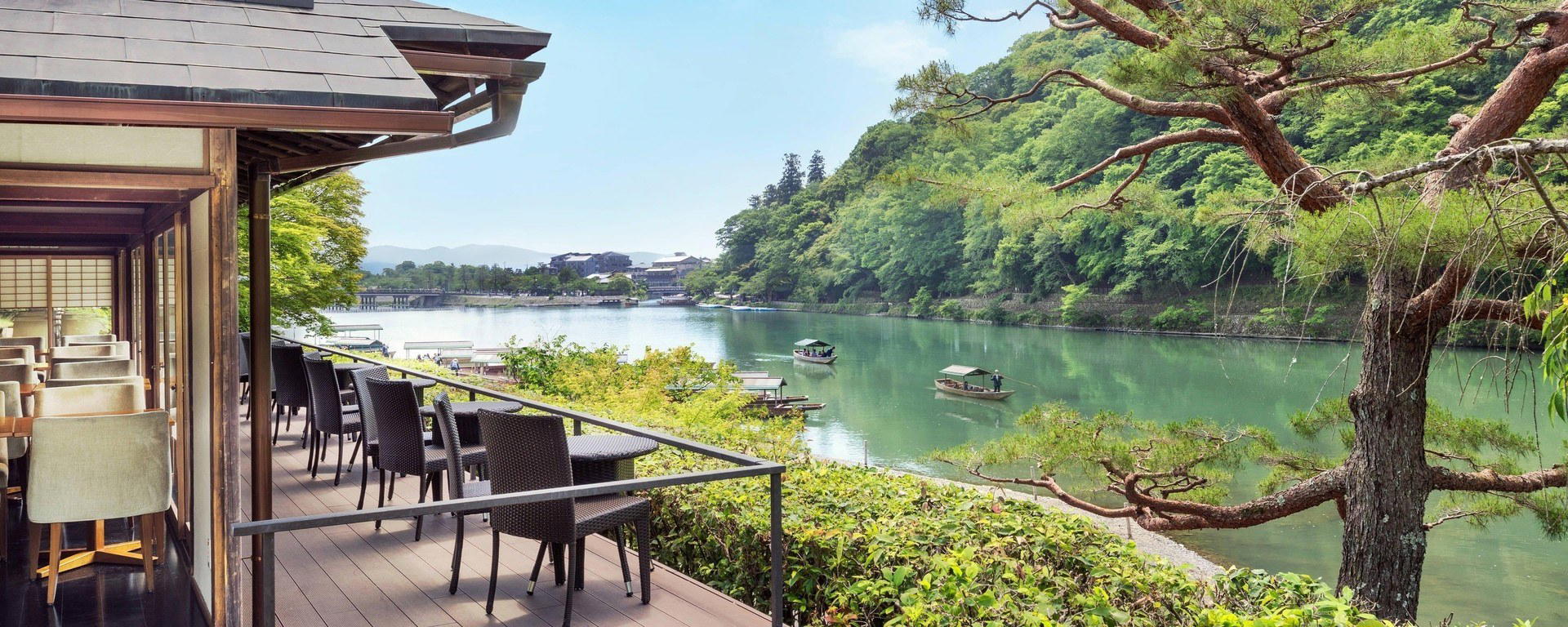
The location in Ukyo Ward, Arashiyama, matters for how the meal reads. Arashiyama has been a retreat from Kyoto's urban centre since the Heian period, and that particular character still holds in the Sagatenryuji neighbourhood, which operates at a slower tempo than the temple-facing main streets. Eating unagi here has a different quality than eating it in a city-centre dining room. The surrounding cedar bamboo groves and the Ōi River running nearby are not incidental aesthetics; they are part of why visitors and locals alike time a meal at a specialist house in this pocket to coincide with a longer half-day in Arashiyama rather than a quick detour.
For visitors building a broader Kyoto dining plan, Unagi Hirokawa occupies a specific and distinct lane from the kaiseki houses that define the city's high-end reputation. Places like Gion Sasaki, Hyotei, Isshisoden Nakamura, and Kikunoi Honten represent the multi-course kaiseki tradition, which draws from an entirely different register. An eel specialist like Hirokawa is not a lesser version of that experience; it is a different discipline entirely, one where a single ingredient, handled correctly across a compressed sequence, makes the case for depth over breadth.
For unagi specifically across Japan, the comparison set includes Akimoto in Tokyo, where Kantō-style preparation dominates, and Chikuyoutei in Osaka, which operates within Kansai tradition at a more formal price tier. Hirokawa's OAD Casual ranking places it in accessible rather than luxury territory, which in Kyoto terms is a meaningful distinction given the city's kaiseki pricing benchmarks. Those planning a broader Japan itinerary might also consider Harutaka in Tokyo, HAJIME in Osaka, akordu in Nara, Goh in Fukuoka, 1000 in Yokohama, and 6 in Okinawa for specialist dining across the country's range.
Within Kyoto itself, Manbei is worth noting as a separate entry point into the city's traditional dining culture. For a broader view of where eel dining fits within the city's full dining picture, our full Kyoto restaurants guide maps the scene across cuisine types and price points. Arashiyama visitors may also find our Kyoto hotels guide, Kyoto bars guide, Kyoto wineries guide, and Kyoto experiences guide useful for planning a full stay.
Planning Your Visit
Service runs Tuesday through Sunday, with a lunch sitting from 11am to 2:30pm and an evening sitting from 5pm to 8pm. Monday is closed. The split-service format is standard for serious unagi-ya and signals a kitchen that requires preparation time between sittings — eel handling at this level is not something that scales to continuous service. The Arashiyama area draws significant foot traffic from late morning through mid-afternoon, particularly around the bamboo grove and Tenryuji Temple, which means the lunch sitting at any specialist restaurant in the pocket fills quickly on weekends. A Tuesday or Wednesday lunch avoids most of that pressure. The address, 44-1 Sagatenryuji Kitatsukurimichi-cho, Ukyo Ward, places the restaurant west of central Kyoto, accessible by the Randen Arashiyama line or by bus from Kyoto Station.
Frequently asked questions
Is Unagi Hirokawa better for a quiet night or a lively one?
The Arashiyama location and the specialist unagi format both point toward a composed, unhurried meal rather than an energetic dining room atmosphere. Unagi-ya in Kyoto generally operate at a quieter register than izakaya or large kaiseki dining rooms, and the Sagatenryuji neighbourhood, once the day-tripper crowds have cleared, is among the calmer pockets in an already reserved city. OAD's Casual designation confirms the accessible, unpretentious character, placing it in a price bracket that sits well below the formal kaiseki houses of Gion. For those looking for lively evening energy, the Kyoto dining scene centres further east; Hirokawa is better suited to a deliberate, focused meal, particularly at lunch or early evening.
What do regulars order at Unagi Hirokawa?
The OAD recognition and the specialist unagi focus both point toward the kabayaki and unaju preparations as the core of what the kitchen does. At Kansai-style unagi houses of this calibre, the lacquered eel over rice is the defining order, with the tare recipe and grill technique the primary variables that separate one house from another. Liver preparations, where available, are the order that signals familiarity with the tradition; they appear at specialist houses precisely because a kitchen confident in its primary ingredient tends to find ways to use the whole eel.
City Peers
A quick peer reference to anchor this venue in its category.
| Venue | Cuisine | Price | Awards | Notes |
|---|---|---|---|---|
| Unagi HirokawaThis venue (the venue you are viewing) | Grilled Unagi Specialist | $30–50 | Tabelog 100 #93 | Not listed |
| Gion Sasaki | Modern Kaiseki | $300–500 | 3 Michelin Stars · La Liste Top Restaurants | Kaiseki, Japanese |
| cenci | Innovative Italian-Japanese Fusion | $100–150 | 1 Michelin Star · World's 50 Best #76 | Italian |
| Ifuki | Sumibi Kappo Kaiseki | $200–300 | 2 Michelin Stars · La Liste Top Restaurants | Kaiseki |
| Kyokaiseki Kichisen | Kyoto Kaiseki | $200–300 | 2 Michelin Stars · La Liste Top Restaurants | Japanese |
| Kyo Seika | Seasonal Chinese Fine Dining in Kyoto | Not listed | 1 Michelin Star | Chinese |
Recognition history
Dated appearances from independent guides and award organizations, with the underlying list record or original source where available.
Opinionated About Dining Casual in Japan Ranked #67
Opinionated About Dining
Tabelog 100 #93 · No. 93
Tabelog · Tabelog 100 - Unagi - 2024
Full recognition history (4 entries)
Opinionated About Dining Casual in Japan Ranked #56
Opinionated About Dining
Opinionated About Dining Top Restaurants in Japan Recommended
Opinionated About Dining
Continue exploring
More in Kyoto
More from Chef Various
Browse all →
Restaurants in Kyoto
All restaurants in Kyoto →
Bars in Kyoto
All bars in Kyoto →
Hotels in Kyoto
All hotels in Kyoto →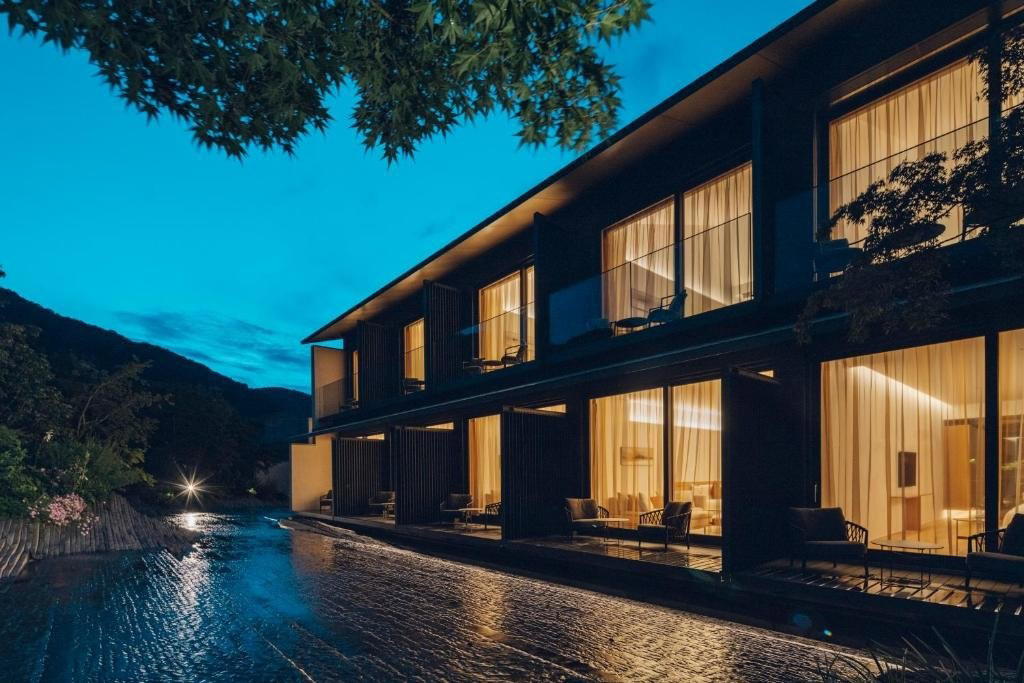
Wineries in Kyoto
Browse all →
Details
- Quiet
- Cozy
- Elegant
- Intimate
- Solo
- Date Night
- Special Occasion
- Sake Program
- Garden
- A La Carte
Current opening hours
- Monday
- Closed
- Tuesday
- 11 AM–2:30 PM, 5–8 PM
- Wednesday
- 11 AM–2:30 PM, 5–8 PM
- Thursday
- 11 AM–2:30 PM, 5–8 PM
- Friday
- 11 AM–2:30 PM, 5–8 PM
- Saturday
- 11 AM–2:30 PM, 5–8 PM
- Sunday
- 11 AM–2:30 PM, 5–8 PM
Hours can change for holidays and private events. Last verified .
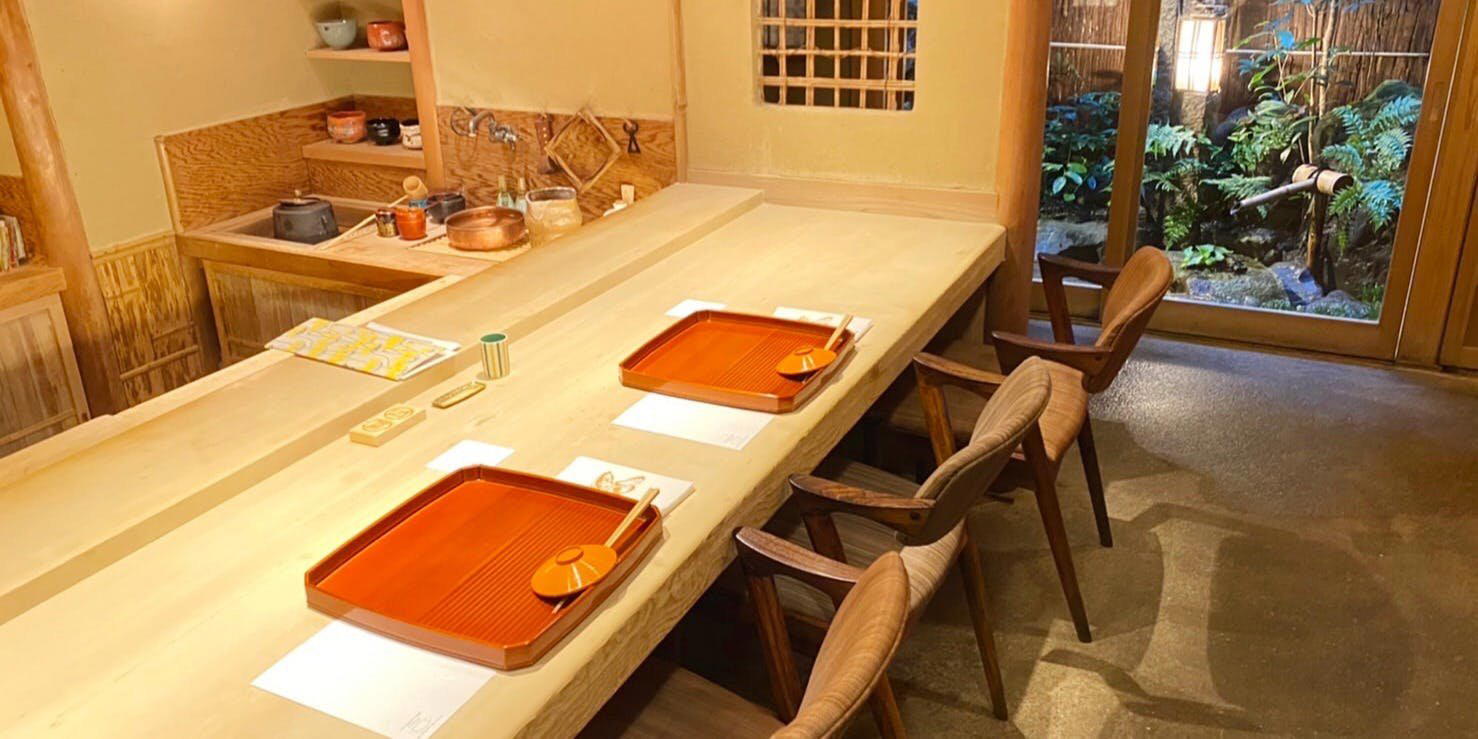
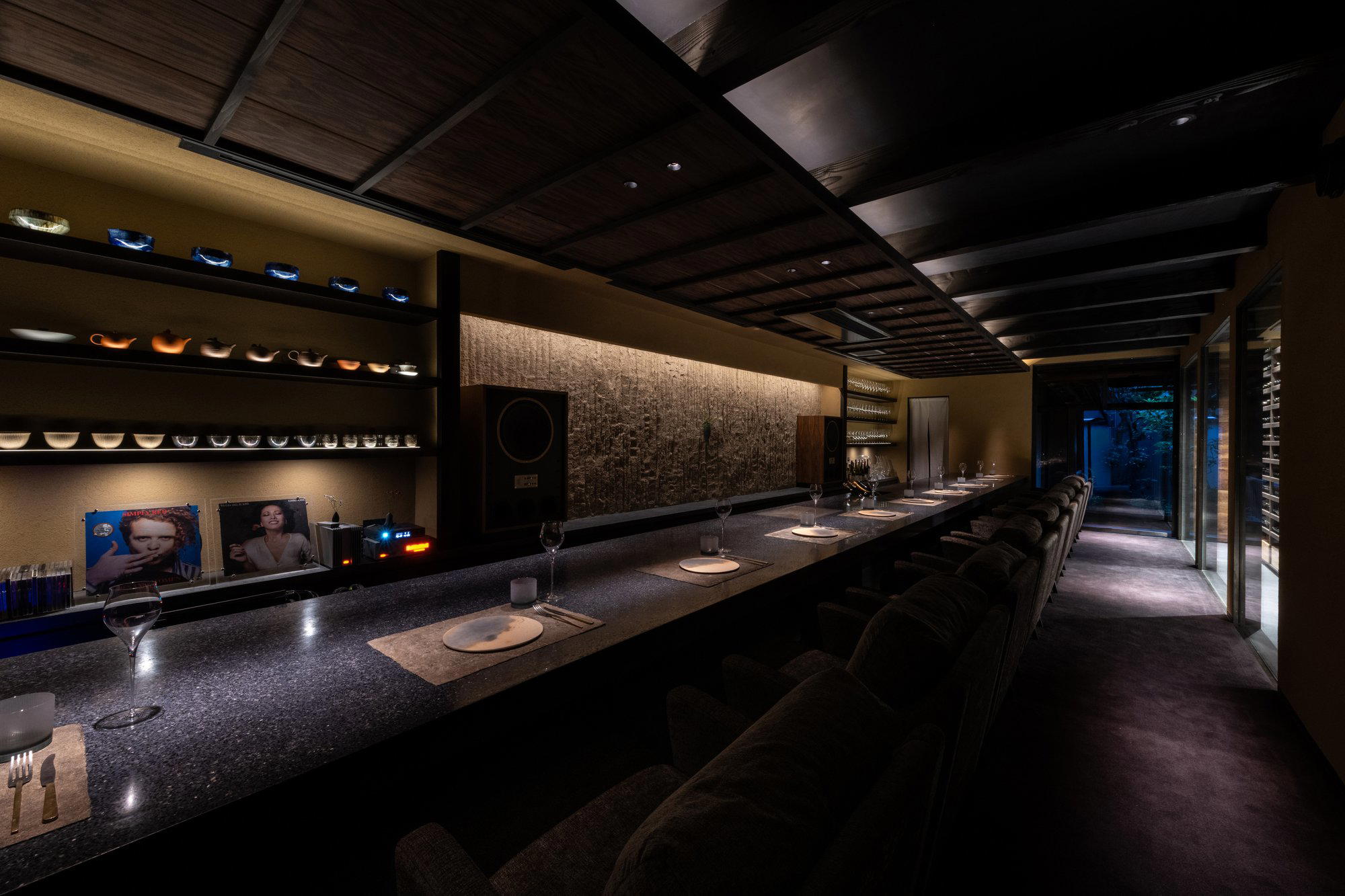
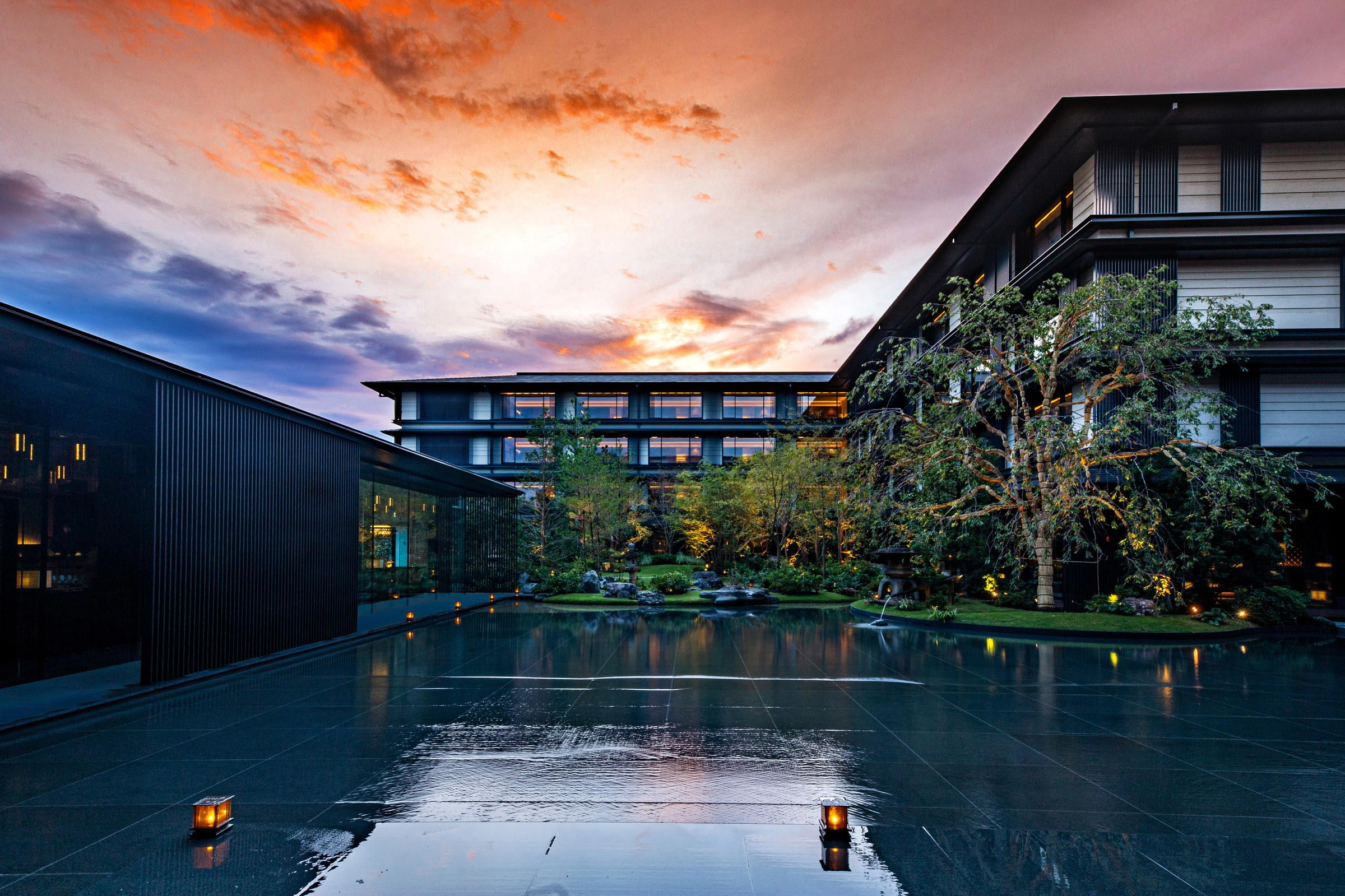
Zen garden-like setting with simple, comfy, and peaceful atmosphere.