
Umai Yo Yuchan Ramen belongs to Yamato’s serious ramen tier: a 17-seat, no-reservations shop selected for Tabelog Ramen Kanagawa 100 in 2025 after repeated East-area selections from 2019 onward. The draw is not luxury signalling but ingredient-led ramen culture, where broth structure, noodle handling, and table condiments matter more than décor.
Pearl is the En Primeur Club membership app — saves, bookings, and concierge access live there. Same editors, same standards.
- Address
- 3 Chome-15-15 Kamisoyagi, Yamato, Kanagawa 242-0029, Japan
- Phone
- +81 46-260-3790
- Website
- twitter.com
- Directions
- Get directions
 Saves & bookings on Pearl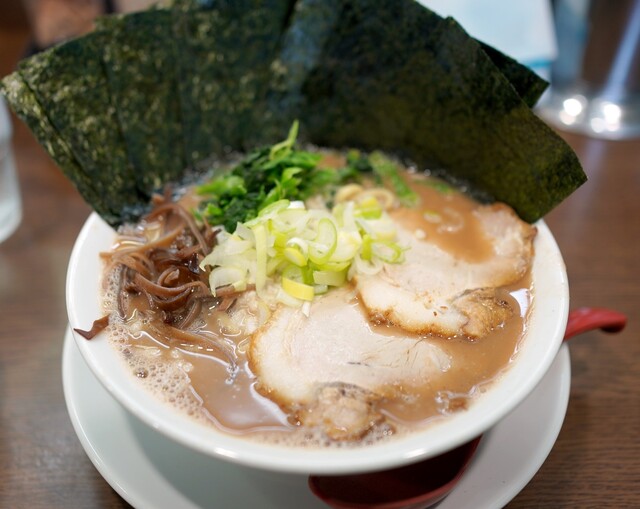
Approaching a suburban ramen shop in Yamato is a different proposition from chasing a counter in central Tokyo. The rhythm is local, the room compact, and the stakes are judged bowl by bowl rather than by ceremony. Umai Yo Yuchan Ramen sits in that Kanagawa tradition: small enough to feel purposeful, practical enough for regulars, and serious enough to have earned repeat recognition in Tabelog’s ramen lists.
Kanagawa ramen is often treated as a side trip from Tokyo’s denser noodle scene, but that reading misses the point. The prefecture has its own appetite for powerful broths, local repeat custom, and shops where sourcing decisions show up in texture and seasoning rather than in long menu explanations. In Yamato, the comparison set spans lower-priced ramen counters such as Niboshi Raamen Neko Tora Tei and Men Tei Tsumugi, both listed around JPY 1,000 to JPY 1,999, and cheaper everyday bowls at Ramen Go. Umai Yo Yuchan Ramen prices a notch above that local ramen band, which places it closer to a specialist stop than a casual fallback.
Kanagawa ramen judged by broth discipline, not dining-room theatre
The relevant lens here is ingredient sourcing, because ramen’s hierarchy is built from components that rarely announce themselves politely. Broth demands bones, seafood, aromatics, tare, fat, and time; noodles have to carry both heat and salinity; condiments need to sharpen the bowl without flattening it. The shop’s table setup gives a clue to that format. Sesame seeds, grated garlic, fried garlic, and chili bean paste are part of the experience, allowing diners to tune intensity after the kitchen has set the baseline.
That detail matters in a region where ramen can move between restrained, clear soup styles and heavier, garlic-friendly bowls. Table condiments are not an afterthought when the bowl is built for adjustment; they suggest a ramen idiom that accepts personal calibration while keeping the kitchen’s core structure intact. Drinks from vending machines are allowed, another signal that the meal is organised around the ramen rather than a full-service restaurant script.
The awards history gives the strongest external signal. Umai Yo Yuchan Ramen was selected for Tabelog Ramen Kanagawa 100 in 2025 and 2024, after earlier selections in the broader Tabelog Ramen East 100 from 2019 through 2023. That continuity is more useful than a single year of attention. Ramen rankings can be volatile because new openings draw fast curiosity; repeated selection points to sustained local credibility.
For a wider look at the city’s food map, Our full Yamato restaurants guide places the ramen scene alongside curry, sweets, and regional dining. Nearby editorial references include China Soba Suzuki, Men Tei Tsumugi, Ethan Shokudo, CINNAMON GARDEN, and Maison Givree, each useful for reading how Yamato’s dining culture stretches beyond a single category.
A small-room format with regular-customer logic
The room runs on a compact 17-seat arrangement: five counter seats and 12 table seats. That mix is telling. Counter seating suits solo ramen eating, where turnover and focus define the meal; tables make the place workable for friends and families, a practical distinction in a suburban city where restaurants often need to serve neighbourhood patterns rather than destination diners alone.
Reservations are unavailable, which is common in this tier of ramen and changes the reader’s planning calculus. This is not a tasting-menu transaction with a secured slot; it is a queue-and-eat format where timing, patience, and appetite matter. The restaurant has been open since December 2014, long enough to have moved beyond opening buzz and into the harder category of places locals keep testing against newer arrivals.
Relative to Yamato peers, the price band is also part of the editorial read. Niboshi Raamen Neko Tora Tei, Men Tei Tsumugi, Ethan Shokudo, and Pentai sit around JPY 1,000 to JPY 1,999, while the restaurant is listed at JPY 2,000 to JPY 2,999 for lunch and dinner. In ramen terms, that difference is meaningful. It asks diners to judge not just comfort and speed, but ingredient density, portion satisfaction, and whether the bowl carries enough structure to justify the step up.
Payment is cash-oriented, with credit cards, electronic money, and QR code payments not accepted. The venue is non-smoking, private rooms are unavailable, and take-out is listed as part of the service format. These are not decorative details; they define the kind of meal this is. Expect a practical ramen shop, not a long-form dining room.
How to place it inside a Yamato food day
Yamato rewards a local approach rather than a trophy-hunting one. A ramen stop here makes more sense when paired with the city’s broader, lived-in dining spread: a curry meal, a sweets stop, or a second casual counter rather than a single high-stakes reservation. For travellers mapping that wider circuit, Our full Yamato hotels guide, Our full Yamato bars guide, Our full Yamato wineries guide, and Our full Yamato experiences guide help frame the city beyond lunch.
For broader Japan dining context, EP Club’s restaurant archive ranges from -Grilled beef Sukiyaki- KAMAKURA TANUKIAN 鎌倉 たぬき庵 in Kamakura and. 鮪と炭火焼き うお炭 秋葉原店 in Tokyo to.cafe in Osaka.know in Kumamoto, (Shoku) Vietnam in Kawasaki, and [Curry Senmon Ten] Maruyama Kyoju. in Sapporo. The same archive also tracks Japanese food culture abroad through addresses such as Jōdo Saké Bar in Los Angeles and Onigiri Time in Pasadena.
The case for the restaurant is clearest for diners who care about ramen as a craft of sourcing, seasoning, and repetition. The awards provide the external credential, the 17-seat format keeps the meal direct, and the condiment set points to a bowl designed for controlled adjustment. In Yamato, that combination is enough to move it from convenient noodle shop to a serious local ramen reference.
In Context: Similar Options
Nearby venues at a similar price tier for orientation.
| Venue | Cuisine | Price | Notes |
|---|---|---|---|
| Umai Yo Yuchan RamenThis venue — the venue you are viewing | Rich Tonkotsu Ramen Shop | $ | Not listed |
| Nakamizo | Authentic Sushi | $$ | Chuo-Rinko |
| Pentai | Casual Thai restaurant | $$ | Minamirinkan |
| Niboshi Raamen Neko Tora Tei | Niboshi-focused ramen shop | $ | / Yamato Sta., Tsuruma Sta., Sagami Otsuka Sta. |
| Men Tei Tsumugi | Ramen shop | $ | Minami Rinkan |
| Ramen Go | Sapporo-style miso ramen | $ | Tsuruma, Yamato |
Recognition history
Dated appearances from independent guides and award organizations, with the underlying list record or original source where available.
Tabelog 100 #45 · No. 45
Tabelog · Tabelog 100 - Ramen - KANAGAWA - 2025











At a Glance
- Lively
- Cozy
- Solo
- Casual Hangout
- Family
- After Work
- Group Dining
- Standalone
- Beer Program
Current opening hours
- Monday
- 11 AM–8:30 PM
- Tuesday
- 11 AM–8:30 PM
- Wednesday
- Closed
- Thursday
- 11 AM–8:30 PM
- Friday
- 11 AM–8:30 PM
- Saturday
- 11 AM–8:30 PM
- Sunday
- 11 AM–8:30 PM
Hours can change for holidays and private events. Last verified .
A compact, casual neighborhood ramen shop with counter and table seating, lively energy, and a focus on serious pork-bone broth rather than decor or formality.