Uluh Tea House

Our verdict
On the East Village's Second Avenue, Uluh Tea House has built a steady reputation for Szechuan cooking that Opinionated About Dining ranked #198 in North America for 2025, up from #268 the previous year. The progression signals a kitchen gaining confidence rather than coasting.

Pearl is the En Primeur Club membership app, where members save venues, book tables and use the concierge.
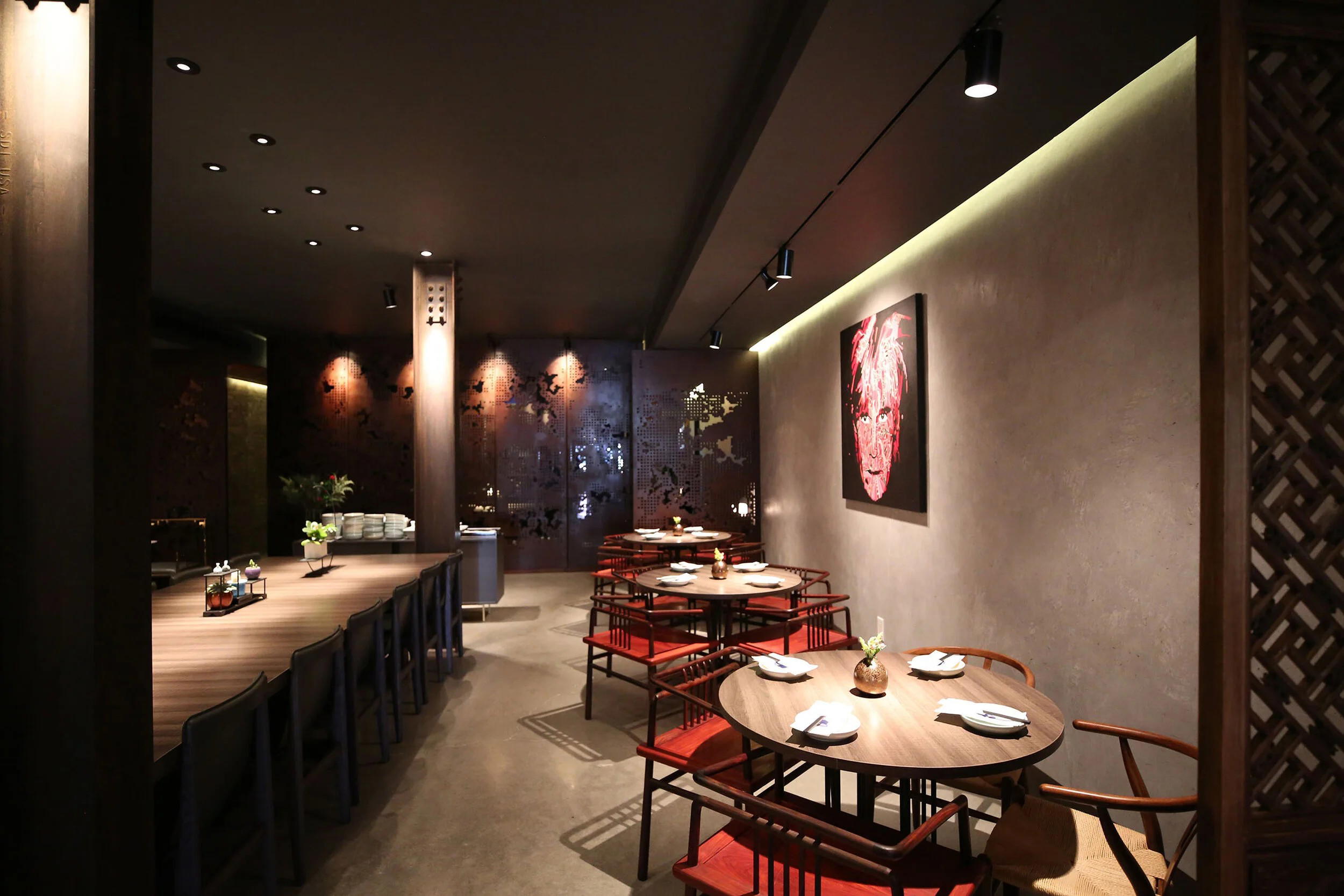
The menu
What to order
- Fermented fish in cabbage stew
- Mapo tofu
- Scallion pancakes
Szechuan on Second Avenue: How Uluh Tea House Fits Into New York's Chinese Dining Arc
New York's relationship with Szechuan cooking spans several decades and several distinct phases. The first wave arrived largely through Hunan and Szechuan restaurants that opened in the 1970s, adapting bold flavors for an American audience that hadn't yet encountered mala spice. The second wave, roughly from the 2000s onward, brought less-compromised regional Chinese cooking to neighborhoods outside Chinatown, with Second Avenue in the East Village emerging as one of the corridors where that shift became legible. Uluh Tea House, at 152A 2nd Avenue, sits inside that longer story, operating in a stretch of Manhattan where Chinese food has moved from niche to neighborhood fixture.
The progression of Opinionated About Dining's assessments offers a useful frame. In 2023, OAD placed Uluh Tea House on its Highly Recommended list for Casual dining in North America. By 2024, a specific ranking appeared: #268. In 2025, that figure moved to #198. A three-year upward arc on a survey this closely watched by serious eaters is not incidental. OAD's casual category rewards consistency and cooking integrity over polish, which makes its recognition a more pointed signal about the food itself than a service-heavy award might be.
The Szechuan Tradition This Kitchen Is Working Within
Szechuan cooking's complexity comes from a specific set of techniques and ingredient relationships that took centuries to develop. The Szechuan peppercorn, which produces the numbing sensation known as ma, works in deliberate counterpoint to the fiery heat of dried chilies, creating what the Chinese call mala, a flavor state rather than a single taste. This is not a cuisine built around heat as an end in itself. The numbing sensation slows the perception of spice and creates space for other flavors, fermented bean pastes, aged vinegars, soy in multiple preparations, to register alongside it.
What distinguishes the better Szechuan kitchens in New York from the broader Chinese restaurant field is not just sourcing but technique fidelity. Oil-blanching versus dry-wok cooking, the precise moment to add fermented black bean paste to a dish, the balance between aromatic base and finishing sauce: these are the details where kitchens separate. The East Village addresses where this cuisine has taken hold tend to pull from a network of suppliers and cooks who trained in that tradition rather than adapting from adjacent Chinese regional styles.
In this context, Uluh operates in a different competitive register than the high-format Chinese restaurants that have opened in Midtown and the Upper East Side in recent years. It is not positioning itself against the tasting-menu end of the spectrum. Within that set, #198 in North America in 2025 represents a meaningful position. For comparison, other New York Chinese addresses tracked by OAD tend to cluster around Flushing and Chinatown; a Manhattan address holding this rank within that framework is less common.
East Village as Context
The East Village has never been a single-cuisine neighborhood. Its dining character has historically formed through layering: Eastern European Jewish delis, Ukrainian diners, Japanese izakayas, and since the 2010s, a thickening presence of regional Chinese cooking. Second Avenue functions as a kind of longitudinal cross-section through that history. The address at 152A sits in the southern portion of the avenue, close enough to the East Village's denser blocks that foot traffic is consistent across the week.
This is relevant because Szechuan cooking rewards repeat visits in a way that tasting-menu dining does not. The format is built around a table of dishes shared across multiple eaters, with different flavor profiles arriving simultaneously. A solo diner can certainly eat here, but the cuisine's logic is communal. The neighborhood around Uluh, dense with apartments and long-term residents, supports the kind of regulars who return often enough to work through a longer menu over time.
For visitors building a New York itinerary, the East Village address places this alongside several other Chinese-focused options in lower Manhattan. China Cafe, Hwa Yuan, and Wu Liang Ye each represent different moments in New York's Chinese dining history and different regional emphases. The East Village and Chinatown corridors together give a serious eater access to a range of Chinese regional styles within a manageable geographic area.
Where Uluh Sits in New York's Broader Dining Structure
New York's top-tier restaurant tier, represented by addresses like Le Bernardin and Atomix, operates at a price and format level that occupies a separate planning category. Uluh Tea House is not in that bracket, and it is not trying to be. The OAD Casual category is specifically designed to recognize kitchens that perform well outside the fine-dining tier, where cooking rigor often goes less noticed by generalist critics. The fact that Uluh has climbed within that category over three consecutive years suggests a kitchen that is improving, not simply maintaining a position.
Across the United States, a handful of restaurants have achieved sustained critical recognition across multiple years and formats. Lazy Bear in San Francisco, Alinea in Chicago, and The French Laundry in Napa all represent the fine-dining end of that sustained recognition. In the casual tier, the signal is different: it comes from repeat visits by a demanding survey population rather than structured critic meals. Uluh's consistent OAD presence over 2023, 2024, and 2025 fits that pattern.
Beyond New York, the wider EP Club network covers serious regional American cooking at places like Emeril's in New Orleans, Providence in Los Angeles, and Single Thread Farm in Healdsburg, as well as international addresses including 8½ Otto e Mezzo Bombana in Hong Kong and Alain Ducasse's Louis XV in Monte Carlo.
Planning Your Visit
Uluh Tea House operates seven days a week. Monday through Thursday and Sunday, the kitchen runs from 11:30am to 10:15pm. Friday and Saturday service extends to 10:45pm. The consistent daily schedule makes this an accessible option for visitors with variable itineraries, though weekend evenings at a restaurant with this level of recognition tend to fill earlier. No booking method is listed in the public record, so checking directly with the restaurant is advisable for larger parties or specific timing.
For those building a fuller New York itinerary around food, drink, and stays, the EP Club's city guides provide a structured starting point: our full New York City restaurants guide, our full New York City hotels guide, our full New York City bars guide, our full New York City wineries guide, and our full New York City experiences guide cover the full range.
Quick reference: 152A 2nd Ave, East Village, New York, NY 10003. Open daily 11:30am; closes 10:15pm Sunday–Thursday, 10:45pm Friday–Saturday.
What Do People Recommend at Uluh Tea House?
Because Uluh Tea House does not publish a fixed signature dish list in its public record, specific dish recommendations are not something EP Club can verify and print. OAD's survey relies heavily on returning diners who track and compare over time, which means a #198 ranking in 2025 reflects accumulated meals rather than a single strong impression. The awards data anchors to the cuisine itself and to the credentials behind it: three consecutive years of OAD recognition, a rising trajectory, and a Google average that holds above 4.3 across a sample size large enough to be statistically meaningful.
For visitors uncertain about format, Szechuan restaurants at this level typically organize their menus around cold starters, wok dishes, clay pot preparations, and noodles, with communal ordering being the most effective way to engage the range. Arriving with two or more people and ordering across categories will give a clearer picture of what the kitchen can do than a single-dish visit.
Frequently asked questions
What kind of recognition has Uluh Tea House received?
Uluh Tea House has received recognition including: Opinionated About Dining Casual in North America Ranked #198 (2025); Opinionated About Dining Casual in North America Ranked #268 (2024); Opinionated About Dining Casual in North America Highly Recommended (2023).
Is there a head chef associated with Uluh Tea House?
The chef associated with Uluh Tea House is Various.
What do people recommend at Uluh Tea House?
Uluh Tea House does not publish a fixed signature dish list in its public record, so EP Club does not specify individual dishes. What the venue's OAD Casual North America ranking in 2024 and 2025 does confirm is that the Szechuan kitchen has drawn sustained critical attention across consecutive years. Szechuan menus of this register typically anchor around mapo tofu, dry-fried preparations, and dishes built on the numbing heat of Szechuan pepper, though ordering specifics are best confirmed directly at 152A 2nd Ave.
Is Uluh Tea House focused on a specific cuisine style?
What are the opening hours for Uluh Tea House?
Hours at Uluh Tea House: Hours: Monday 11:30 am–10:15 pm Tuesday 11:30 am–10:15 pm Wednesday 11:30 am–10:15 pm Thursday 11:30 am–10:15 pm Friday 11:30 am–10:45 pm Saturday 11:30 am–10:45 pm Sunday 11:30 am–10:15 pm.
What part of town is Uluh Tea House in?
Uluh Tea House is located at 152A 2nd Ave, New York, NY 10003, New York City.
Cost and Credentials
| Venue | Cuisine | Price | Awards | Notes |
|---|---|---|---|---|
| Uluh Tea HouseThis venue (the venue you are viewing) | Regional Chinese Teahouse | $30–50 | Not listed | Not listed |
| Le Bernardin | French Seafood Fine Dining | $300–500 | 3 Michelin Stars · World's 50 Best #13 | French, Seafood |
| Atomix | Modern Korean Tasting Menu | $300–500 | 2 Michelin Stars · World's 50 Best #7 | Modern Korean, Korean |
| Masa | Seasonal Hokkaido Tempura Omakase | $150–200 | Tabelog 100 #34 | Sushi, Japanese |
| Per Se | French Fine Dining Tasting Menu | $300–500 | 3 Michelin Stars · World's 50 Best #40 | French, Contemporary |
| Eleven Madison Park | Contemporary Plant-Based Fine Dining | $300–500 | 3 Michelin Stars · World's 50 Best #4 | French, Vegan |
Recognition history
Dated appearances from independent guides and award organizations, with the underlying list record or original source where available.
Opinionated About Dining Casual in North America Highly Recommended
Opinionated About Dining
Full recognition history (4 entries)
Opinionated About Dining Casual in North America Ranked #198
Opinionated About Dining
Opinionated About Dining Casual in North America Ranked #268
Opinionated About Dining
Opinionated About Dining Casual in North America Highly Recommended
Opinionated About Dining