Wu Liang Ye

Our verdict
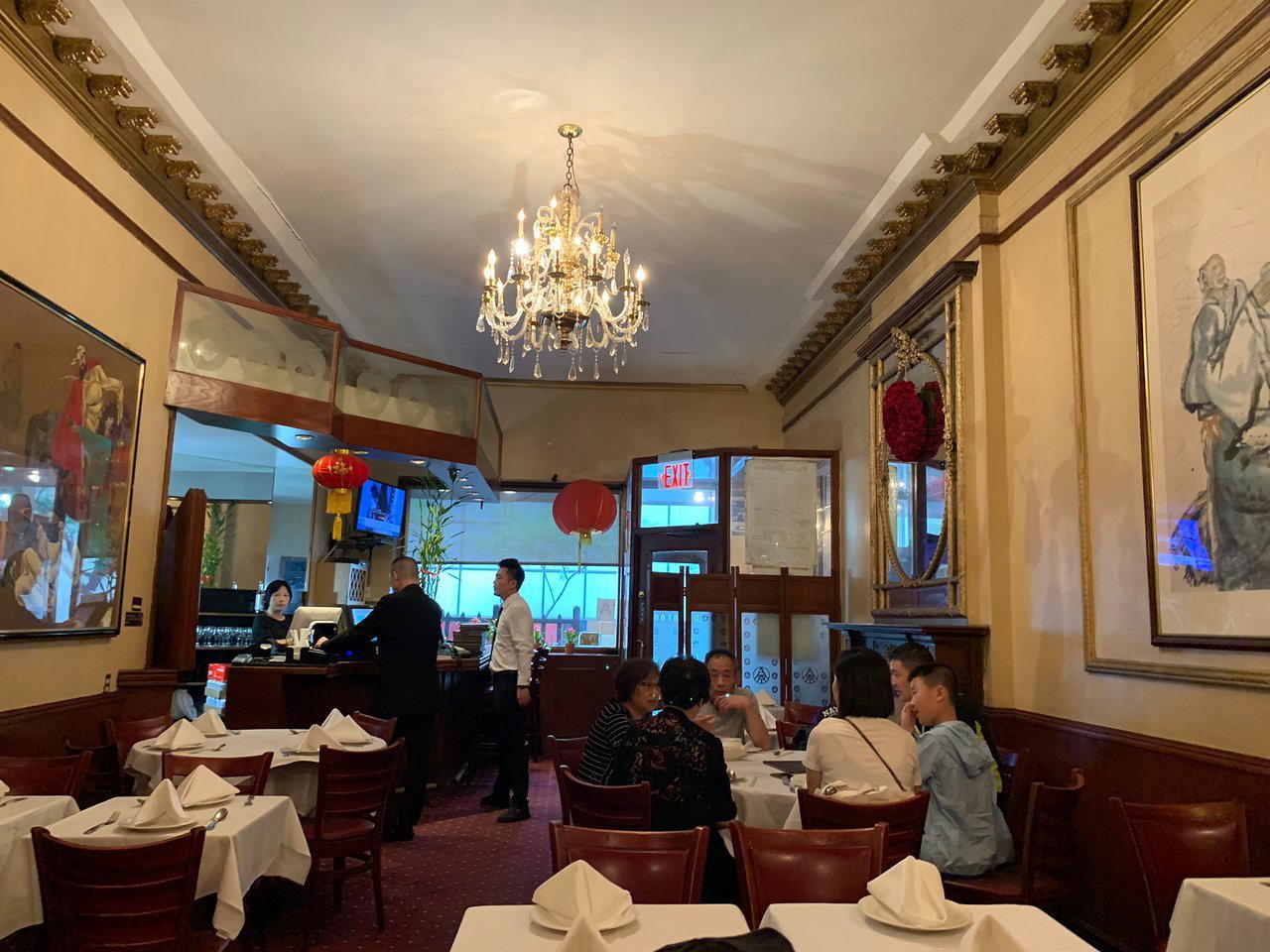
Wu Liang Ye on West 48th Street has held a place in New York's Sichuan conversation long enough to earn consecutive Opinionated About Dining recognition from 2023 through 2025, climbing from Recommended to a ranked position in North American cheap eats. The kitchen applies the heat logic and numbing spice architecture of Sichuan cooking to a Midtown room that runs seven days a week from 11am to 9pm.

Pearl is the En Primeur Club membership app, where members save venues, book tables and use the concierge.
The menu
What to order
- Dan dan noodles
- Camphor-smoked duck
- Chengdu wonton in broth
- Kung Pao Chicken
- General Tso's Chicken
- Tangerine Beef
Sichuan in Midtown: Where the Heat Has a Purpose
New York's Chinese restaurant scene has always fractured along regional lines, and no regional cuisine makes that fracture more legible than Sichuan. The cooking from China's southwest province is built around a dual-sensation principle: the mala combination of dried chili heat and the tongue-numbing tingle of Sichuan peppercorn. These are not interchangeable with the gentler, umami-forward profiles of Cantonese cooking, nor with the vinegar-bright sour notes of Shanghainese cuisine. Sichuan food operates on a different register entirely, and restaurants that take it seriously have to manage that register with precision. Wu Liang Ye, at 36 West 48th Street, sits in the tier of Midtown Sichuan addresses that have accumulated enough critical attention to register on lists beyond the neighbourhood.
Opinionated About Dining, which tracks a granular cross-section of the North American restaurant scene through critic and enthusiast consensus, has noted Wu Liang Ye in each of the last three years: a Recommended listing in 2023, a ranked position at #478 in 2024, and a climb to #385 in the 2025 North America Cheap Eats list. That upward movement in the OAD rankings is a meaningful signal in a category where competition is dense and the scoring draws on repeated visits from people who eat in this specific tier seriously. For a Midtown address in a zip code better known for expense-account French and midrange prix-fixe than for regional Chinese cooking, that trajectory is notable.
The Logic of Sichuan Spice, and Why It Matters Here
Understanding what Wu Liang Ye is doing requires some grounding in what Sichuan cooking actually demands. The province's cuisine is one of China's Eight Great Culinary Traditions, and its defining technique is not simply adding chili heat. The Sichuan peppercorn (huajiao) produces a citrusy, floral numbness má, that chemically suppresses certain pain receptors, creating the sensation of tingling rather than burning. Layered against the deep heat of dried chilies, this produces the málà effect that serious Sichuan kitchens treat as a craft variable, not a on-off switch. The ratio of numbing to heat changes dish by dish. A properly executed Sichuan kitchen calibrates these components the way a French kitchen calibrates acidity and fat.
That specificity is what separates credible Sichuan restaurants from those using the cuisine's aesthetic without its underlying logic. In New York, the category has grown considerably since the early 2000s, when the options outside of Flushing were sparse. The current decade has seen Sichuan cooking move into more central Manhattan locations without necessarily losing technical fidelity. Maintaining that score at volume, without the self-selecting audience of a destination-only dining room, reflects consistent kitchen output.
Midtown Chinese and the Regional Distinction Problem
Midtown Manhattan has historically flattened Chinese cuisine into a generic category, offering americanized or generalist menus to capture lunch traffic from the surrounding offices. The more interesting story in recent years is the countercurrent: addresses that hold to regional specificity despite operating in a geography that doesn't reward it automatically. Wu Liang Ye sits alongside a small cohort of restaurants in and around the 40s and 50s that have committed to a recognizable regional identity rather than a broad Chinese-American hybrid. For context on what that broader New York Chinese dining picture looks like, our coverage of China Cafe, Hwa Yuan, and Uluh Tea House covers adjacent points in the city's Chinese dining conversation.
The Sichuan category in New York also exists in obvious contrast to the city's pricier end. Le Bernardin and Atomix represent the tier where tasting menus and wine pairings structure the experience. Wu Liang Ye's OAD Cheap Eats recognition places it in an entirely different competitive conversation, one where the evaluation criteria involve value density, kitchen honesty, and the ratio of flavour intensity to cost. It is not competing with Midtown's expense-account rooms. It is competing with the leading accessible regional Chinese cooking the city produces.
What the Rankings Signal About Quality at This Price Point
The Opinionated About Dining Cheap Eats list operates on a different logic from Michelin or the World's 50 Best. It tracks restaurants where the price-to-quality relationship is the primary editorial criterion. A restaurant rising from Recommended to #385 in that framework, over three consecutive years, indicates something specific: the kitchen is consistent, the food is considered seriously by people who eat in this category professionally, and the pricing remains accessible relative to the quality delivered. In New York City's Sichuan tier, that combination is not as common as the volume of Chinese restaurants in the five boroughs might suggest.
For readers mapping this against the city's broader scene, Wu Liang Ye represents the Sichuan node in a network of serious regional Chinese cooking that rewards specificity. The OAD signal matters here because the list's methodology tracks repeat visits and critical consensus rather than popularity or hospitality theatre.
Planning a Visit: The Practical Picture
Wu Liang Ye operates at 36 West 48th Street in Midtown Manhattan, seven days a week from 11am to 9pm. Those hours make it one of the more accessible serious Sichuan addresses in the neighbourhood, open through the afternoon when most comparable destination restaurants are closed between lunch and dinner service. The Midtown location is within walking distance of Rockefeller Center and the 47-50 Streets subway stop on the B, D, F, and M lines.
For those building a broader New York itinerary, the full range of EP Club coverage across the city spans every category: see our full New York City restaurants guide, our full New York City hotels guide, our full New York City bars guide, our full New York City wineries guide, and our full New York City experiences guide. For readers also covering other American cities, the fine dining tier looks quite different at Emeril's in New Orleans, Lazy Bear in San Francisco, Alinea in Chicago, The French Laundry in Napa, Single Thread Farm in Healdsburg, and Providence in Los Angeles. Internationally, 8½ Otto e Mezzo Bombana in Hong Kong and Alain Ducasse at Louis XV in Monte Carlo represent the opposite end of the price-and-formality axis.
Frequently asked questions
Is Wu Liang Ye open every day?
Hours at Wu Liang Ye: Hours: Monday 11 am–9 pm Tuesday 11 am–9 pm Wednesday 11 am–9 pm Thursday 11 am–9 pm Friday 11 am–9 pm Saturday 11 am–9 pm Sunday 11 am–9 pm.
Is Wu Liang Ye chef-led?
The chef associated with Wu Liang Ye is Various.
What It’s Closest To
| Venue | Cuisine | Price | Awards | Notes |
|---|---|---|---|---|
| Wu Liang YeThis venue (the venue you are viewing) | Sichuan Chinese | Not listed | Not listed | Not listed |
| Le Bernardin | French Seafood Fine Dining | $300–500 | 3 Michelin Stars · World's 50 Best #13 | French, Seafood |
| Atomix | Modern Korean Tasting Menu | $300–500 | 2 Michelin Stars · World's 50 Best #7 | Modern Korean, Korean |
| Masa | Seasonal Hokkaido Tempura Omakase | $150–200 | Tabelog 100 #34 | Sushi, Japanese |
| Per Se | French Fine Dining Tasting Menu | $300–500 | 3 Michelin Stars · World's 50 Best #40 | French, Contemporary |
| Eleven Madison Park | Contemporary Plant-Based Fine Dining | $300–500 | 3 Michelin Stars · World's 50 Best #4 | French, Vegan |
Recognition history
Dated appearances from independent guides and award organizations, with the underlying list record or original source where available.
Opinionated About Dining Cheap Eats in North America Recommended
Opinionated About Dining
Full recognition history (4 entries)
Opinionated About Dining Cheap Eats in North America Ranked #385
Opinionated About Dining
Opinionated About Dining Cheap Eats in North America Ranked #478
Opinionated About Dining
Opinionated About Dining Cheap Eats in North America in Recommended
Opinionated About Dining
Continue exploring
More in New York City
More from Chef Various
Browse all →
Restaurants in New York City
All restaurants in New York City →
Bars in New York City
All bars in New York City →




Details
- Classic
- Cozy
- Casual Hangout
- Solo
- Standalone
- A La Carte
Current opening hours
- Monday
- 11 AM–9 PM
- Tuesday
- 11 AM–9 PM
- Wednesday
- 11 AM–9 PM
- Thursday
- 11 AM–9 PM
- Friday
- 11 AM–9 PM
- Saturday
- 11 AM–9 PM
- Sunday
- 11 AM–9 PM
Hours can change for holidays and private events. Hours as of .
Simple, no-frills setting with a casual neighborhood feel.