
Udon Yamacho places Ebisu’s everyday noodle culture in a more curated register: udon, tempura, izakaya drinking, and dashi-led cooking under one roof. Its selection for Tabelog’s Udon EAST 100 in 2024, with earlier selections in 2022 and 2020, gives it a clear signal in a city where casual noodle shops rarely need ceremony to be taken seriously.
Pearl is the En Primeur Club membership app — saves, bookings, and concierge access live there. Same editors, same standards.
- Address
- Japan, 〒150-0013 Tokyo, Shibuya, Ebisu, 1 Chome−1−5 Ebisu Oak Bldg., 1F
- Phone
- +81 3-3443-1701
- Website
- instagram.com
 Saves & bookings on Pearl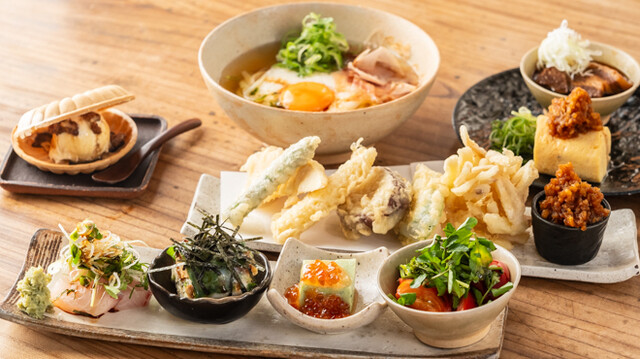
Ebisu makes dinner feel less formal than the bill might suggest. Around the station, office workers, couples, and small groups move between standing bars, polished izakaya rooms, ramen counters, dessert shops, and late-night drinking dens. Here, udon has a practical Tokyo role: lunch, drinking companion, or low-key evening anchor built around broth, wheat, and small plates.
Udon Yamacho sits in a Tokyo middle lane: not a luxury counter, not a chain noodle stop, but a compact specialist broad enough to work beyond a quick bowl. Its 2024 Tabelog Udon EAST 100 selection matters because the category is crowded, regional, and format-driven. In Tokyo, udon competes on noodle texture and on how well a kitchen handles dashi, tempura, alcohol, pacing, and customers seeking either a solo meal or an izakaya-style evening.
Ebisu udon with izakaya range, not just a noodle stop
Tokyo udon culture is less monolithic than visitors assume. Sanuki-style firmness, Kansai-style broth clarity, standing-shop speed, and restaurant-style drinking formats all coexist. The question is not whether a place serves udon, but what role udon plays. Here, the category listing says it: udon, tempura, and izakaya. That places the restaurant in a practical Tokyo lineage where noodles are not a finale after courses, but the centre of a meal that can stretch or contract.
The dashi focus matters. In Japanese noodle cooking, broth is not background; it sets the bowl’s register. Serious dashi programs attract diners who care about balance over novelty. Tempura adds another test: timing, oil management, and contrast against soft, warm noodles. The izakaya element broadens appeal without making the room a generalist tavern. Sake, shochu, and cocktails are part of the drinks profile, making the format useful for groups wanting more than a counter meal but less than a tasting menu.
Against nearby casual options, the positioning is clear. AFURI Ebisu works in the ramen-and-fast-casual lane; JAPANESE ICE OUCA and Taiyaki Hiiragi sit closer to snack and dessert culture; Bar ODIN belongs to the cocktail side of the neighbourhood. Udon Yamacho occupies the savoury, sit-down noodle slot, with enough drinking-house flexibility for dinner rather than refuelling. That is why the Tabelog 100 signal helps: it identifies a specialist in a category where the exterior often tells only half the story.
Why the recognition matters in a city crowded with specialists
Tabelog’s Hyakumeiten lists are not Michelin theatre. They work more like category maps for Japanese diners, especially in genres where local preference and repeat use matter. Selection for Udon EAST 100 in 2024, after appearances in 2022 and 2020, puts the restaurant in a recurring conversation rather than a one-year curiosity. For travellers, that reduces guesswork. Tokyo has countless noodle rooms with short menus and loyal followings; repeated category selection gives a clearer reason to choose one when time is limited.
The 3.68 score also needs Japanese context. Tabelog ratings compress tightly, and scores above the mid-threes can signal serious local approval, especially in everyday genres. That does not make the room a destination like a high-end Ginza counter. It makes it a stronger bet within a democratic dining tradition where value, repeatability, and execution count as much as ceremony.
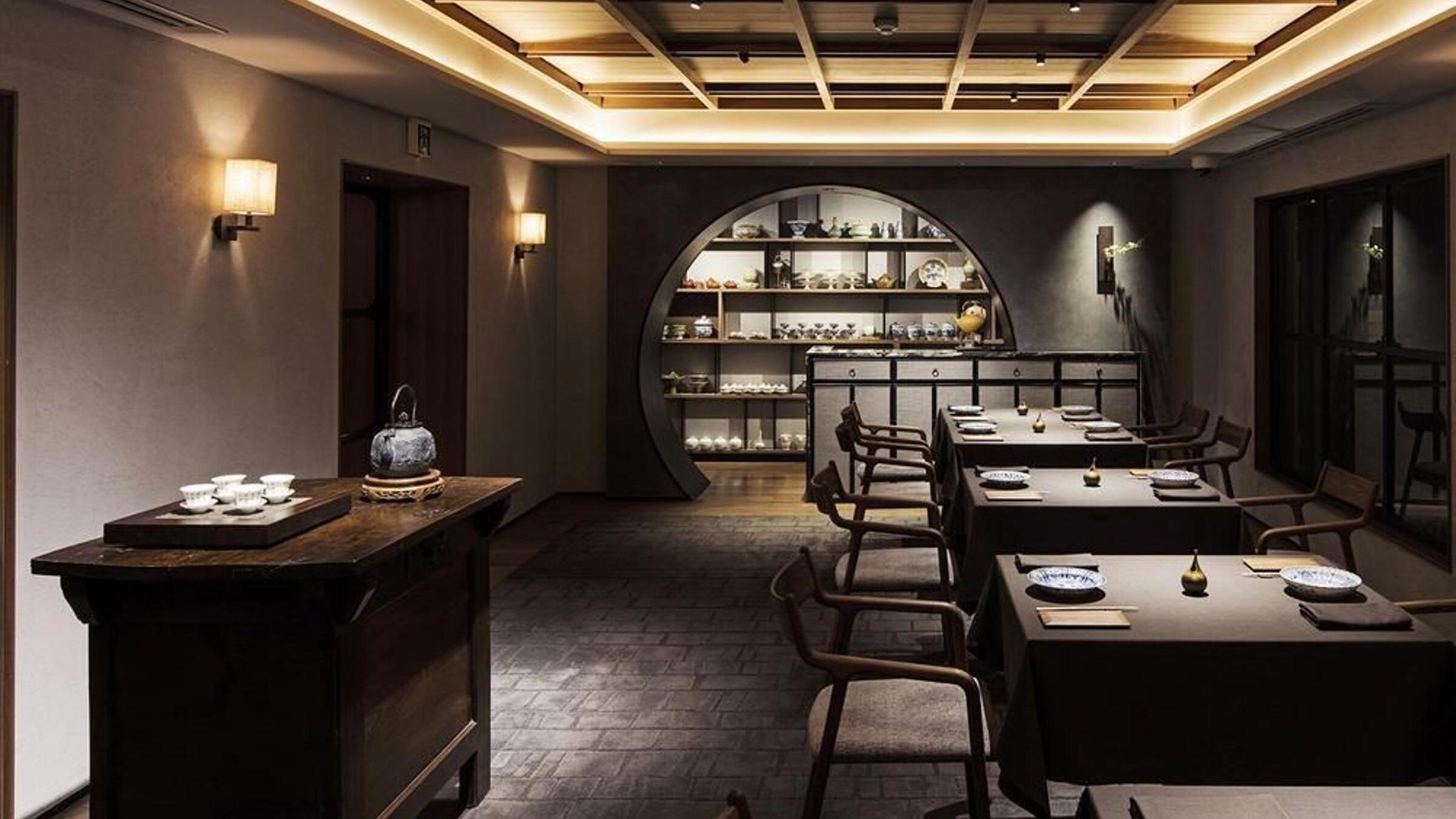
Ebisu strengthens the case. Its restaurant culture serves people who eat out often, not only on special occasions. It has central Tokyo density without Ginza’s single-purpose glamour or the tourist concentration of Shibuya’s busiest corridors. A 27-seat, table-only format fits: small enough to feel focused, structured enough for groups, and better for conversation than a shoulder-to-shoulder noodle counter. Children are welcome, private rooms are not part of the format, and private use is listed for larger groups, reinforcing its hybrid identity between noodle specialist and neighbourhood dining room.
How it fits into a wider Tokyo itinerary
For an EP Club reader, the appeal is category clarity, not rarity alone. A Tokyo trip can over-index on sushi, wagyu, and cocktail bars, leaving daily food culture as an afterthought. Udon corrects that. It shows how much technique sits inside ordinary formats: wheat dough, broth extraction, frying, seasoning, and pacing, without chef-counter theatre.
This is a useful lunch or dinner around Ebisu, especially when the day already includes a heavier reservation. Lunch is the lighter financial move, listed at JPY 1,000 to JPY 1,999; dinner moves to JPY 4,000 to JPY 4,999, reflecting broader izakaya and drinks use. Reservations are available, though lunch operates without reservations, so midday depends more on timing than advance planning. The room is non-smoking, card payments are accepted, PayPay is listed, and electronic money is not.
Readers building a Tokyo dining map can place this beside other category-specific stops rather than treating every meal as a trophy booking. For broader planning, use Our full Tokyo restaurants guide, then branch into adjacent city coverage through Our full Tokyo hotels guide, Our full Tokyo bars guide, Our full Tokyo wineries guide, and Our full Tokyo experiences guide. Within the restaurant index, compare category moods rather than chasing one hierarchy: 鮪と炭火焼き うお炭 秋葉原店 for tuna and charcoal, 12/10 Shinjuku ten for Shinjuku dining, 124. KAGURAZAKA (Yakitori) for skewers, 2D Cafe for visual café culture, and 3 Chome no Curry Ya San for curry. Regional contrasts sharpen the picture: -Grilled beef Sukiyaki- KAMAKURA TANUKIAN 鎌倉 たぬき庵 in Kamakura.cafe in Osaka.know in Kumamoto, (Shoku) Vietnam in Kawasaki, [Curry Senmon Ten] Maruyama Kyoju. in Sapporo, and [ki:] in Kyoto. For Japanese drinking and rice-ball culture outside Japan, Jōdo Saké Bar in Los Angeles and Onigiri Time in Pasadena show how familiar formats travel.
The editorial call is simple: choose this for a meal that explains Tokyo’s everyday craft without making the evening formal. The award history supplies trust; the udon-tempura-izakaya format supplies the reason to go.
The Minimal Set
Comparable venues for orientation by cuisine and category.
| Venue | Cuisine | Price | Notes |
|---|---|---|---|
| Udon YamachoThis venue — the venue you are viewing | Not listed | $$ | Not listed |
| Yukinoshita Pancake | Not listed | $$ | Ginza, Japanese Thick Pancakes & Shaved Ice |
| Tatemichiya | Shibuya, Punk Rock Izakaya | $$ | Not listed |
| Azabu Shogetsudo | Not listed | $$ | Minato, Japanese Traditional Sweets (Wagashi) |
| Maidreamin Shibuya Store | Shibuya, Japanese Maid Cafe | $$ | Not listed |
| Tokyo Dominica | Not listed | $$ | Shinjuku, Sapporo-style Japanese soup curry |
Recognition history
Dated appearances from independent guides and award organizations, with the underlying list record or original source where available.
Tabelog 100 #3 · No. 3
Tabelog · Tabelog 100 - Udon - EAST - 2024












At a Glance
- Cozy
- Classic
- Solo
- Casual Hangout
- After Work
- Late Night
- Group Dining
- Standalone
- Sake Program
- Beer Program
Current opening hours
- Monday
- 12–3:30 PM, 5–10 PM
- Tuesday
- 12–3:30 PM, 5–10 PM
- Wednesday
- 12–3:30 PM, 5–10 PM
- Thursday
- 12–3:30 PM, 5–10 PM
- Friday
- 12–3:30 PM, 5–10 PM
- Saturday
- 12–3:30 PM, 5–10 PM
- Sunday
- 12–3:30 PM, 5–10 PM
Hours can change for holidays and private events. Last verified .
A small, classic-style udon shop with simple counter and table seating, relaxed neighborhood feel, and a casual, non-smoking atmosphere suited to solo diners and small groups.