

Tabelog 100 #67
Our verdict
A focused stop for anyone building a picture of how craft udon operates in the capital.

Pearl is the En Primeur Club membership app, where members save venues, book tables and use the concierge.
The menu
What to order
- Carbonara Udon with Bacon Tempura
- Butter and Egg Udon
- Beef Broth Udon
Serious Noodle Work in Yoyogi
Tokyo's udon scene has never been casual in the way the word is usually meant. The city applies to noodle craft the same exacting standards it brings to sushi and kaiseki: flour specification, water temperature, rest time, the precise tension of the dough at the moment it goes under the blade.
The Opinionated About Dining recognition for Casual Japan in 2025 is the relevant credential here. OAD's casual list is not a consolation category; it documents the restaurants where rigour and value intersect most honestly, and where a city's food culture often shows its real character. For the reader trying to understand how udon functions at its most committed in Tokyo, this is the right benchmark to hold in mind.
Where Craft Udon Fits in Tokyo's Broader Dining Picture
Tokyo's dining hierarchy is well-mapped at the leading end. The city's kaiseki rooms, sushi counters, and French tables, places like RyuGin, Harutaka, L'Effervescence, and Sézanne, occupy the ¥¥¥¥ bracket where tasting menus and reservation lead times are central to the experience. Craft udon operates in a structurally different register: walk-in or low-friction booking, direct pricing, and a format where you are paying for the noodle's integrity rather than the theatre around it.
That distinction matters when deciding how udon counters like Udon Shin fit into a serious eating itinerary. They are not a lower-tier version of fine dining. They represent a parallel tradition in which constraint, flour, water, salt, time, produces something that can hold its own against far more elaborate preparations.
The Intersection of Technique and Indigenous Ingredients
Craft udon in Japan draws heavily on regional flour traditions. Sanuki udon from Kagawa Prefecture established the modern benchmark for the style: thick, firm noodles with a particular chew that comes from high-gluten wheat and a specific kneading method. Tokyo kitchens have absorbed that heritage and, in some cases, layered onto it: sourcing specific domestic wheat varieties, adjusting dashi construction to reflect the capital's harder water profile, and incorporating ingredient relationships that would have been unusual a generation ago.
The editorial angle worth holding onto is the gap between how udon is perceived internationally, as a simple, abundant, affordable staple, and how it functions at the counter level in Tokyo. Abroad, udon is often made with imported flour to approximate a style. In kitchens that take the category seriously, the flour itself is a primary decision, and the sourcing chain behind it reflects the same logic that a Burgundy-trained chef applies when choosing a specific appellation for a white wine component. The end result looks similar on the surface; the methodology underneath is entirely different.
For visitors who have been tracking Tokyo's tasting-menu circuit, the kaiseki rooms and omakase counters that set the city's international reputation, a stop at a craft udon counter provides a useful counterpoint. The complexity here is structural rather than additive. There are no additional components to obscure the noodle's quality. What you receive is the outcome of decisions made hours before service began.
Yoyogi and the Neighbourhood Context
Yoyogi sits between the density of Shinjuku to the north and the more polished retail character of Harajuku to the south. It is not a neighbourhood that announces itself as a dining destination the way some areas of the city do, which partly explains the character of the restaurants that have taken root there. The area supports a working restaurant culture rather than a destination-dining circuit, places that sustain themselves on consistent quality and local return visits rather than tourist routing.
Udon Shin's location on the ground floor of a residential-commercial building in this neighbourhood is consistent with how serious casual dining in Tokyo tends to operate: no marquee position, no elaborate shopfront, the address doing nothing to sell the food inside. Finding it requires a degree of intentionality that filters the room toward people who came specifically for the udon.
How Udon Shin Compares Regionally
Beyond Tokyo, Japan's craft udon tradition has strong regional anchors. Aozora Blue in Osaka and Gion Yorozuya in Kyoto each reflect different regional approaches to the same foundation, Osaka tending toward softer, broth-forward presentations, Kyoto incorporating the city's broader ingredient sensibility and seasonal discipline. Tokyo's craft udon positions itself against both traditions while also absorbing influences from the national pool of technique that concentrates in the capital.
Visitors building a broader Japan itinerary who want to trace this thread might also consider Udon Maruka within Tokyo, and extend comparisons to other serious kitchens across the country: HAJIME in Osaka, Gion Sasaki in Kyoto, akordu in Nara, Goh in Fukuoka, 1000 in Yokohama, and 6 in Okinawa. Each sits in a different cuisine register, but together they map out what serious eating in Japan looks like across its regions.
For the full picture of where to eat, drink, and stay in Tokyo, see our full Tokyo restaurants guide, our full Tokyo hotels guide, our full Tokyo bars guide, our full Tokyo wineries guide, and our full Tokyo experiences guide.
Know Before You Go
- Address: 2 Chome-20-16 Soma Building 1F, Yoyogi, Shibuya, Tokyo
- Cuisine: Udon
- Recognition: Opinionated About Dining, Casual Japan 2025
- Neighbourhood: Yoyogi, between Shinjuku and Harajuku
- Phone / Website: Not publicly listed, arrive in person or check local reservation platforms
- Hours / Booking: Confirm directly on arrival or via Google listing; in
Frequently asked questions
What's Udon Shin's location?
Udon Shin is located at Japan, 〒151-0053 Tokyo, Shibuya, Yoyogi, 2 Chome−20−16 相馬ビル 1F, Tokyo.
What distinctions does Udon Shin have?
Udon Shin has received recognition including: Opinionated About Dining Casual in Japan (2025).
Is there a head chef associated with Udon Shin?
The chef associated with Udon Shin is Various.
What's the best way to book Udon Shin?
No phone number or website is listed in our confirmed records for Udon Shin. For casual udon counters in Tokyo's Yoyogi district, walk-in is often the standard approach, though arriving at opening or off-peak hours reduces wait time considerably.
What has Udon Shin built its reputation on?
The OAD Casual Japan 2025 listing places Udon Shin in a specific and demanding category: restaurants where craft and value intersect at a level that draws critical notice. In Tokyo's udon scene, that recognition typically reflects consistency in noodle production and a kitchen that takes the fundamentals seriously, operating out of a ground-floor space in Yoyogi's Soma Building.
Cuisine Lens
Comparable venues nearby, for context on price, style, and recognition.
| Venue | Cuisine | Price | Awards | Notes |
|---|---|---|---|---|
| Udon ShinThis venue (the venue you are viewing) | Creative Fusion Udon | $20–30 | Tabelog 100 #67 | Not listed |
| Gaigai | Charcoal-Grilled Yakitori & Izakaya | $50–100 | Not listed | Minato |
| Shinjuku Takano Fruits Parlor | Japanese Fruit Parlor | $30–50 | Not listed | Shinjuku |
| Yuji | Exquisite Omakase Sushi | $100–150 | Tabelog Bronze #531 | Shibuya |
| Kuroda | Yakiniku (Japanese BBQ) | $50–100 | Not listed | Shibuya |
| Tonkatsu Koko Made Yaru Ka. | Modern Tonkatsu & Seafood | $50–100 | Tabelog 100 #40 | Minato |
Recognition history
Dated appearances from independent guides and award organizations, with the underlying list record or original source where available.
Opinionated About Dining Casual in Japan Ranked #139
Opinionated About Dining
Tabelog 100 #67 · No. 67
Tabelog · Tabelog 100 - Udon - EAST - 2024
Full recognition history (3 entries)
Opinionated About Dining Casual in Japan
Opinionated About Dining
Continue exploring
More in Tokyo
More from Chef Various
Browse all →
Restaurants in Tokyo
All restaurants in Tokyo →


Bars in Tokyo
All bars in Tokyo →



Details
- Trendy
- Well Known
- Lively
- Casual Hangout
- Solo
- Open Kitchen
- A La Carte
- Counter Dining
Current opening hours
- Monday
- 11 AM–10 PM
- Tuesday
- 11 AM–10 PM
- Wednesday
- 11 AM–10 PM
- Thursday
- 11 AM–10 PM
- Friday
- 11 AM–10 PM
- Saturday
- 11 AM–10 PM
- Sunday
- 11 AM–10 PM
Hours can change for holidays and private events. Hours as of .
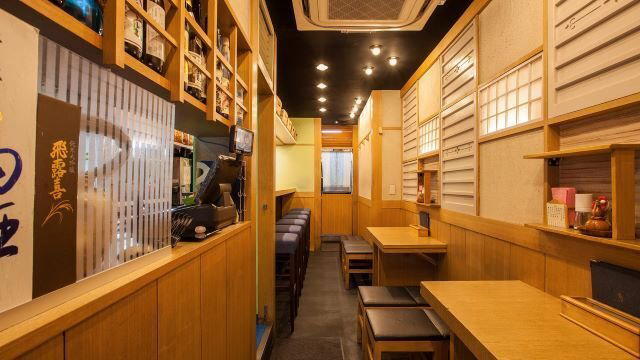
Intimate, bustling counter-style setting with open kitchen where chefs meticulously prepare noodles by hand; energetic atmosphere driven by long queues and high demand despite the tiny 10-seat capacity.