
A Nagoya Station wagashi stop inside the Dai Nagoya Building, Tsubameya Dainagoya birudingu ten belongs to the city’s practical sweets culture rather than the ceremonial tea-room register. Its Tabelog 100 selection for Japanese traditional sweets and cafe featuring Japanese sweets in 2023 signals a serious address for warabi mochi and dorayaki in a transport-heavy neighbourhood.
Pearl is the En Primeur Club membership app — saves, bookings, and concierge access live there. Same editors, same standards.
- Address
- Japan, 〒450-0002 Aichi, Nagoya, Nakamura Ward, Meieki, 3 Chome−28−12 Dai Nagoya Building, 地下1階
- Phone
- +81 52-414-4758
- Website
- tsubame-ya.jp
 Saves & bookings on Pearl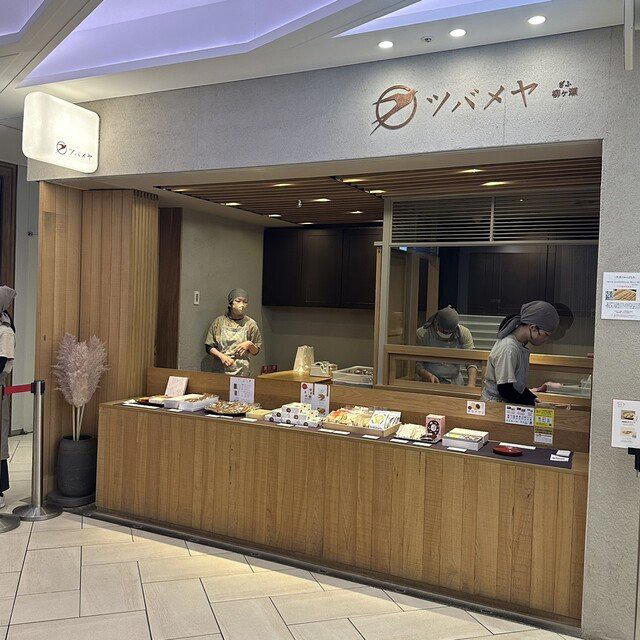
The basement of a station-side commercial building reveals Nagoya’s appetite. Commuters move toward trains, office workers buy boxed sweets home, and food counters compete through usefulness, not ceremony. Here, Japanese confectionery must travel, gift cleanly, and survive a rail hub’s compressed decisions.
Tsubameya Dainagoya birudingu ten fits that Meieki logic. It is not a slow tea salon for lingering, but a take-out wagashi counter in the basement of the Dai Nagoya Building, close to station flow and shaped by same-day buyers. In Japan, wagashi prestige often sits in seasonal presentation and craft; at major stations it becomes more direct: a box for colleagues, a family sweet after dinner, or a regional purchase before the Shinkansen.
Station wagashi in Nagoya is about timing, not theatre
Nagoya Station’s food floors compress many dining cultures into a small radius: quick noodles, lunch sets, premium beef counters, bakeries, coffee, and gift sweets. The comparison helps. New Old Style Niku Soba Keisuke Dainagoya birudingu ten operates in the same everyday spend tier, while Cutlet Matsumura sits slightly above it for a meal rather than a sweet purchase. At the other end, TANAKA YAKINIKU RESTAURANTE reflects a different Nagoya spend pattern, where dinner becomes the plan rather than an add-on to travel or work.
Wagashi benefits from that density. A dedicated sweets counter can be serious without demanding restaurant time. Tsubameya Dainagoya birudingu ten is listed for Japanese traditional sweets and dorayaki, and its recognition on the Tabelog 100 Japanese traditional sweets and cafe featuring Japanese sweets EAST list in 2023 places it in a competitive regional conversation, not a casual souvenir category. Earlier selections on Tabelog’s Sweets EAST lists in 2018, 2019, 2020, and 2022 show this was no single-year spike.
The counter’s identity is closely tied to warabi mochi, judged more on texture than decoration: softness, spring, moisture, and how roasted soybean flour changes the finish. Here, the Nagoya location’s Kogane Warabi is described as a store-specific item, packed under kinako and hand-cut each morning. That matters because station sweets often trade fragility for durability; this address leans into a product that does not keep well, making timing part of the purchase.
Warabi mochi sets the pace, dorayaki broadens the appeal
The menu is best read not as dessert after a meal, but as a narrow wagashi edit for immediate consumption or short-distance gifting. Dorayaki gives the counter a familiar anchor: two pancake-like cakes around sweet filling, easy to carry and legible even to travellers with limited Japanese. Warabi mochi is less forgiving. It asks the buyer to care about freshness and plan around shelf life, which is why same-day movement through Meieki helps.
That perishability is not a drawback; it is the point. Serious city sweets culture often shows in what it refuses to over-engineer. Many station confections are built for long shelf life, elaborate packaging, and distant transport. A warabi mochi specialist inside a transport node creates useful tension: convenient location, less convenient product. For readers using Nagoya as a rail base, treat this as a same-day purchase, not luggage candy for a long onward itinerary.
The price positioning keeps the experience in everyday Nagoya rather than special-occasion dining. It shares a spend tier with casual station-area meals such as Solo Pizza Napoletana Da Lucio Nagoya eki ten, but the use case differs: a compact box of sweets, not a seat and a full stop. That distinction matters in Meieki, where eating decisions often happen between appointments, transfers, and hotel check-ins.
There is no chef narrative to lean on, which suits the category. Wagashi counters are often judged less by personality than by consistency, freshness, and whether the product makes sense in place. In a neighbourhood dominated by movement, the strongest argument is logistical clarity: a specialist sweet, made for a narrow window, sold where that window is easiest to manage.
How it fits into a Nagoya food day
For a first Nagoya pass, this is a useful counterpoint to the city’s heavier signatures. Miso katsu, hitsumabushi, tebasaki, kishimen, and beef-focused dining dominate many visitor itineraries; wagashi gives a quieter read on local eating habits. It also works around hotel movement, since Meieki is the practical base for many arrivals. Pairing a station sweet stop with a broader plan from Our full Nagoya restaurants guide gives a better picture of the city than treating dessert as an afterthought.
The surrounding district makes cross-category planning easy. Travellers staying near the station can map restaurants against Our full Nagoya hotels guide, then use Our full Nagoya bars guide for a later drinking plan. For wider trip-building, Our full Nagoya experiences guide and Our full Nagoya wineries guide sit outside the narrow station-food frame but help position Nagoya as more than a transit city.
Within the restaurant pages, the contrast is instructive. Listings such as 1022, 451, Aaron, Alan., and All Day Dining Montmartre represent different dining rhythms, from meal-led planning to hotel-adjacent convenience. A wagashi counter near the station plays another role: short, precise, and dependent on when the sweets will be eaten.
For readers comparing Japanese food culture across cities, the lesson travels. A beef sukiyaki address such as -Grilled beef Sukiyaki- KAMAKURA TANUKIAN 鎌倉 たぬき庵 in Kamakura, a Tokyo izakaya-style listing like. 鮪と炭火焼き うお炭 秋葉原店 in Tokyo, or casual formats such as.cafe in Osaka.know in Kumamoto, (Shoku) Vietnam in Kawasaki, and [Curry Senmon Ten] Maruyama Kyoju. in Sapporo each show how format shapes expectation. Even outside Japan, places such as Jōdo Saké Bar in Los Angeles and Onigiri Time in Pasadena remind readers that Japanese food categories change meaning when they leave their original daily context.
The verdict is simple: this is a station-area wagashi stop with enough recognition to justify attention and enough perishability to require planning. Buy with the same day in mind, especially for warabi mochi, and treat the counter as Nagoya everyday food infrastructure, not a detached dessert detour. Its value is craft compressed into Meieki’s practical choreography.
- Kogane Warabi Mochi
- Daichi no Dorayaki
- Tsubame Yokan
- Tsubame Arare
- Tsubame Sabure
- Nagoya Anko Sabure
A Lean Comparison
Comparable venues by cuisine and price in the same metro.
| Venue | Cuisine | Price | Notes |
|---|---|---|---|
| Tsubameya Dainagoya birudingu tenThis venue — the venue you are viewing | Not listed | $ | Not listed |
| Joshin Ya | Nakamura, Classic Nagoya Ramen Shop | $ | Not listed |
| Tori Soba Nagonoki | Not listed | $ | Nishi, Local chicken ramen (Tori Soba) in Nagoya |
| Menya Saisakizaka | Naka, Modern Japanese ramen & tsukemen | $ | Not listed |
| Wagashi Karyo ocobo | Chikusa, Japanese Wagashi Cafe | $ | Not listed |
| Ichiyoken | Tenpaku, Nagoya tonkotsu ramen shop | $ | Not listed |
Recognition history
Dated appearances from independent guides and award organizations, with the underlying list record or original source where available.
Tabelog 100 #45 · No. 45
Tabelog · Tabelog 100 - Japanese traditional sweets / Japanese sweets cafe - EAST - 2023
Continue exploring
More in Nagoya
Restaurants in Nagoya
Browse all →

At a Glance
- Quiet
- Classic
- Cozy
- Solo
- After Work
- Casual Hangout
- Family
- Standalone
- Design Destination
- Local Sourcing
- Farm To Table
Current opening hours
- Monday
- 10 AM–8 PM
- Tuesday
- 10 AM–8 PM
- Wednesday
- 10 AM–8 PM
- Thursday
- 10 AM–8 PM
- Friday
- 10 AM–8 PM
- Saturday
- 10 AM–8 PM
- Sunday
- 10 AM–8 PM
Hours can change for holidays and private events. Last verified .
A small basement-level wagashi shop in Dai Nagoya Building with a calm, understated feel, focused on takeaway sweets rather than eat-in dining, emphasizing the warmth and simplicity of traditional Japanese confections.