
Ichiyoken places Nagoya ramen in a compact, counter-led frame: an 11-seat room in Tenpaku Ward, selected for Tabelog 100 - Ramen - AICHI - 2025 and rated 3.63 on Tabelog. The appeal is not theatrical luxury, but the disciplined format that defines serious everyday ramen in Japan: quick turnover, low pricing, solo-friendly seating, and a room built around the bowl rather than the table.
Pearl is the En Primeur Club membership app — saves, bookings, and concierge access live there. Same editors, same standards.
- Address
- Japan, 〒468-0058 Aichi, Nagoya, Tempaku Ward, Uedanishi, 2 Chome−1601 緑ハイツ 1F
- Phone
- +81 52-802-5525
- Website
- tabelog.com
 Saves & bookings on Pearl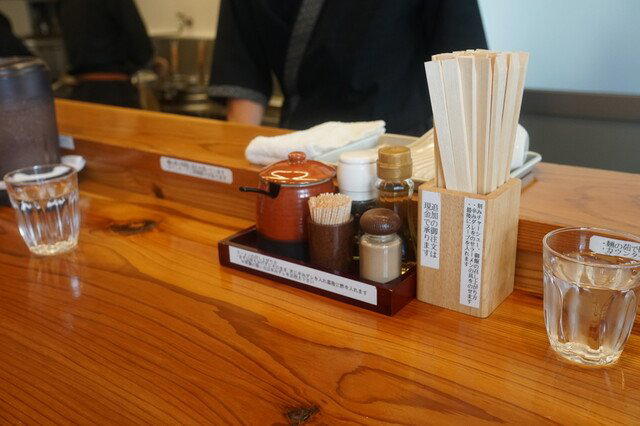
Approaching a small ramen shop in suburban Nagoya is unlike entering a city-centre dining room. The cues are quieter: compact frontage, likely short queue, counter service rather than table theatre. In Tenpaku Ward, Ichiyoken belongs to the practical, highly competitive ramen category where the room is operating logic, not decoration. Eleven counter seats say nearly everything: food built for focus, pace, and proximity to the kitchen.
Nagoya’s ramen culture lacks the international shorthand of Tokyo’s ticket-machine counters or Sapporo’s miso houses, but Aichi has a serious ramen audience and dense local ranking culture. Selection for Tabelog 100 - Ramen - AICHI - 2025 places Ichiyoken in that conversation, among shops judged by repeat diners rather than destination-dining ritual. A 3.63 Tabelog score here is not a luxury signal; it is a crowd-filtered marker in a field where small differences in broth, noodle texture, and service rhythm are debated intensely.
An 11-seat counter explains the experience before the bowl arrives
Ramen shops this small function more like workshops than Western restaurants. Counter seating compresses the encounter: the kitchen is visible, the meal has a natural tempo, and the diner focuses on one bowl rather than a sequence. That arrangement removes table-service ceremony and leaves the shop to compete on execution, consistency, and local memory.
Ichiyoken’s counter-only format clarifies its place in Nagoya dining. This is not the city’s business-dinner side, nor the polished hotel-restaurant circuit covered in Our full Nagoya hotels guide. It is the everyday specialist tier: narrow in scope, inexpensive by category, and judged on repetition. For travellers mapping the city beyond the station-and-Sakae axis, Our full Nagoya restaurants guide gives the wider frame, but the lesson here is specific: Nagoya’s better casual eating often sits in compact neighbourhood rooms, not grand dining addresses.
The design angle is practical, not aesthetic. Counter seats reduce distance between cook and diner; a small footprint limits drift; a non-smoking room keeps focus on broth and heat. Family-friendly notes, including children being welcome and a high chair, add another local clue. In Japan, serious ramen need not mean hushed adult exclusivity. It can be technically minded and still work for solo diners, friends, and parents managing a quick meal.
Ramen in Nagoya is a local ranking game, not a luxury performance
The useful comparison is not with tasting-menu restaurants, but with other low-price specialists earning loyalty through one category. In Nagoya, Boulangerie Papi-Pain and Raa Men Sora occupy similarly accessible price territory, while Patisserie Avalon sits in a slightly higher everyday-spending band. Heritage belongs in the same city conversation as another named point on the local map, though the categories differ. These comparisons show how Nagoya rewards narrow craft at modest spend: bread, pastry, and ramen can be serious pursuits without fine-dining signals.
Ichiyoken’s 2025 Tabelog 100 selection gives the shop an external credential, but the format keeps it grounded. No chef biography is needed to explain the appeal, no luxury vocabulary required, and no reason to inflate the room beyond what it is. The counter is the argument. In a city where many visitors arrive primed for hitsumabushi, miso katsu, or tebasaki, ramen offers a less ceremonial reading of local appetite: fast, repeatable, and technically judged by diners who know the category well.
That distinction helps travellers who treat food cities as systems, not checklists. Nagoya’s drinking and nightlife options sit in a separate rhythm, mapped in Our full Nagoya bars guide, while Our full Nagoya experiences guide covers cultural planning beyond restaurants. A ramen counter such as this belongs to the day-to-day city: the meal between errands, solo lunch, or quick evening stop where quality is measured in repeat custom rather than spectacle.
How to read Ichiyoken within a Nagoya itinerary
The Tenpaku Ward setting changes the decision. This is not a casual add-on for travellers staying around Nagoya Station. It suits diners willing to treat the city’s eastern residential districts as part of the food map, especially when the reward is a compact ramen room with formal recognition rather than tourist-facing polish. Parking and proximity to Shiogama Guchi Station make it workable for local drivers and subway users, often how neighbourhood ramen enters a serious itinerary.
Use Ichiyoken as a category stop, not a long-form occasion. Counter ramen has its own etiquette of speed: arrive prepared, eat with focus, and do not turn a small seat into a lounge. That rhythm is part of the pleasure. It also explains why the room can feel more instructive than many larger restaurants. A diner sees the whole system at once: seating, kitchen pace, narrow menu logic, and the local audience moving through it.
For broader comparison across Japan, the contrast with destination pages such as -Grilled beef Sukiyaki- KAMAKURA TANUKIAN 鎌倉 たぬき庵 in Kamakura, . 鮪と炭火焼き うお炭 秋葉原店 in Tokyo, .cafe in Osaka, .know in Kumamoto, (Shoku) Vietnam in Kawasaki, and [Curry Senmon Ten] Maruyama Kyoju. in Sapporo is instructive. Japan’s casual specialists vary sharply by city and category, but the strongest ones share a refusal to overcomplicate the frame.
Nagoya also rewards cross-category planning. Readers comparing compact local formats can move from restaurant pages such as 1022, 451, Aaron, Alan. and All Day Dining Montmartre to citywide resources such as Our full Nagoya wineries guide. For an overseas counterpoint, Jōdo Saké Bar in Los Angeles and Onigiri Time in Pasadena show how Japanese formats change when transplanted abroad. Ichiyoken is the domestic version of that lesson: small room, clear purpose, and a format that asks the diner to pay attention without making a ceremony of it.
City Peers
Comparable venues for orientation by cuisine and category.
| Venue | Cuisine | Price | Notes |
|---|---|---|---|
| IchiyokenThis venue — the venue you are viewing | Nagoya tonkotsu ramen shop | $ | Not listed |
| Heritage | Traditional Nagoya Eel (Hitsumabushi) | $ | Tenpaku |
| Masago | Traditional Nagoya ramen (chuka soba) counter | $ | Naka |
| Chuka Soba Raian | Ramen shop near Nagoya Station | $ | Nakamura |
| Ramen Maze-soba Arashi Nishiki ten | Nagoya-style Taiwanese Mazesoba & Ramen Counter | $ | Naka |
| Kishiya | Nagoya kishimen & ramen | $ | Chikusa |
Recognition history
Dated appearances from independent guides and award organizations, with the underlying list record or original source where available.
Tabelog 100 #80 · No. 80
Tabelog · Tabelog 100 - Ramen - AICHI - 2025
Continue exploring
More in Nagoya
Restaurants in Nagoya
Browse all →
At a Glance
- Cozy
- Lively
- Solo
- Family
- Casual Hangout
- After Work
- Standalone
Current opening hours
- Monday
- Closed
- Tuesday
- 11 AM–2 PM, 6–8 PM
- Wednesday
- 11 AM–2 PM, 6–8 PM
- Thursday
- 11 AM–2 PM, 6–8 PM
- Friday
- 11 AM–2 PM, 6–8 PM
- Saturday
- 11 AM–2 PM, 6–8 PM
- Sunday
- 11 AM–2 PM
Hours can change for holidays and private events. Last verified .
Small counter-only ramen shop with a relaxed, casual feel and clean, orderly interior; bright enough for families and solo diners, often busy and energetic during peak lunch and early dinner hours.