
Nakameguro’s yakitori scene sits between casual after-work skewers and tightly run counter restaurants where sourcing, grilling cadence, and drink pairing define the evening. Tori Yoshi Nakameguro honten belongs to the latter tier, with Tabelog 100 Yakitori EAST 2025 recognition, counter seating, a 21-seat room, and a dinner budget in the JPY 10,000–14,999 range.
Pearl is the En Primeur Club membership app — saves, bookings, and concierge access live there. Same editors, same standards.
- Address
- Japan, 〒153-0051 Tokyo, Meguro City, Kamimeguro, 2 Chome−8−6 Yajima Bldg., 1F
- Phone
- +81 3-3716-7644
- Website
- yakitori-toriyoshi.com
 Saves & bookings on Pearl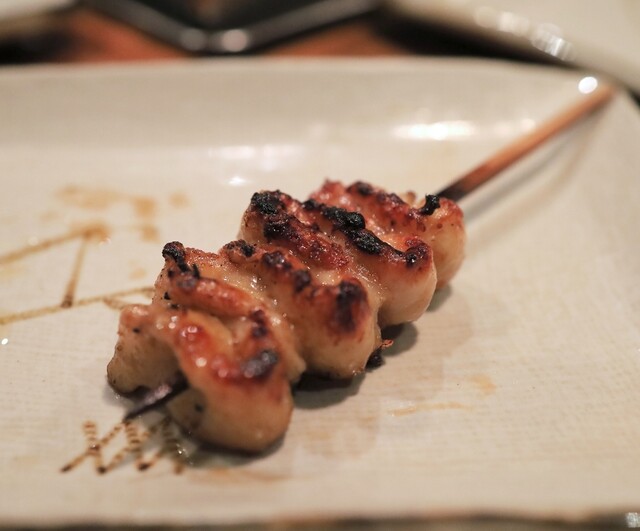
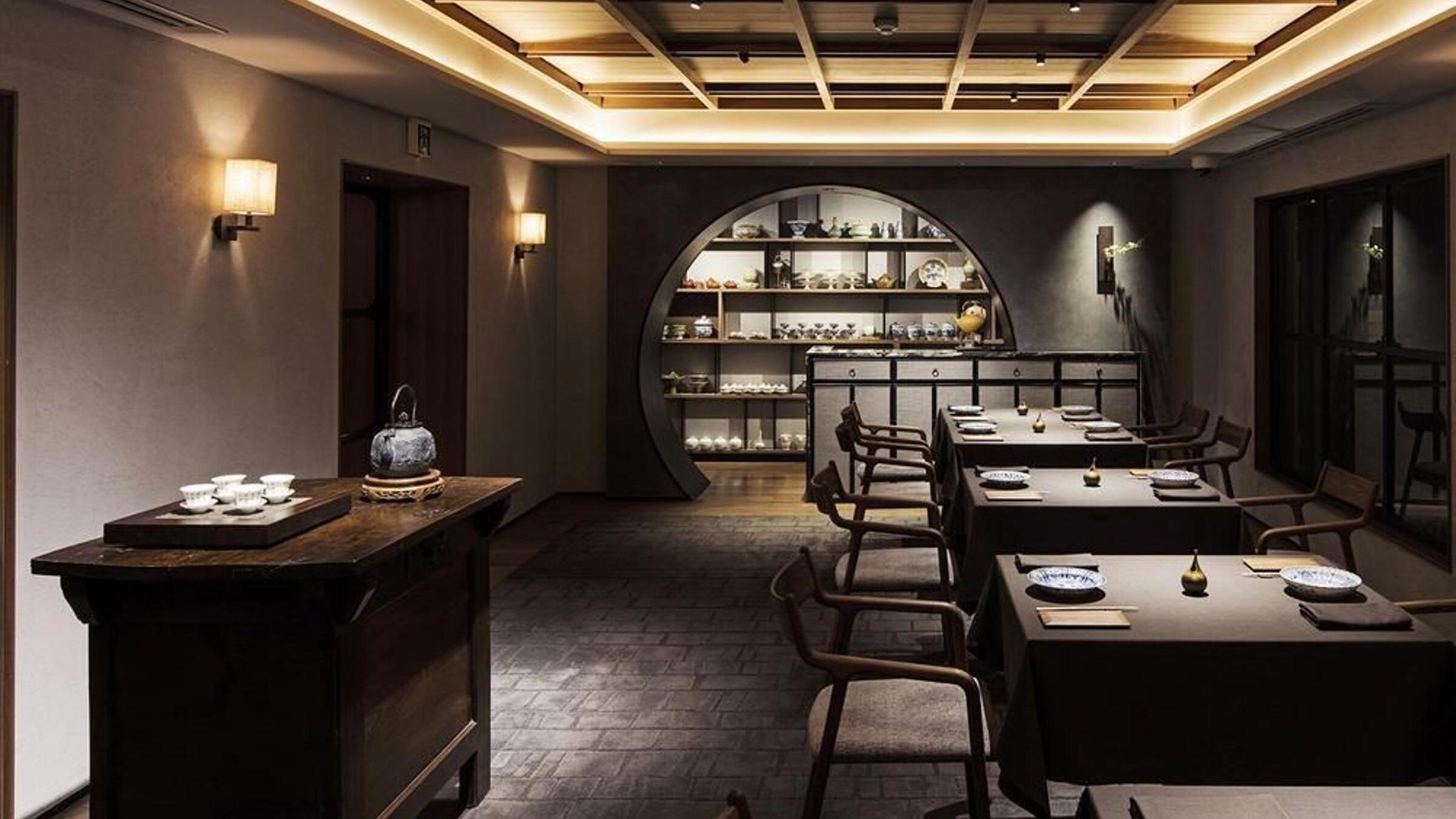
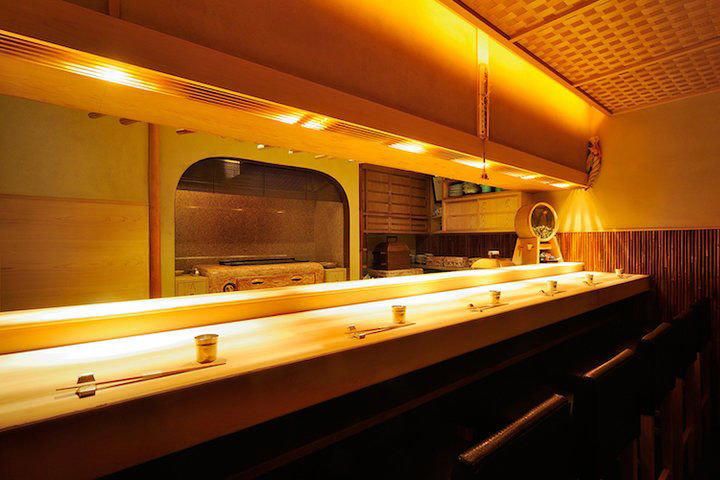
Approaching dinner in Nakameguro, the city changes scale. The station area moves fast, then the side streets narrow into the kind of Tokyo dining territory where a small counter can carry more weight than a large dining room. Yakitori suits this rhythm: smoke, heat, timing, and short intervals between skewers give the meal its pace. Tori Yoshi Nakameguro honten fits that register, a 21-seat counter-led restaurant in Kamimeguro where grilled chicken skewers and chicken dishes sit at the center of the evening rather than functioning as bar snacks on the way somewhere else.
Tokyo has many yakitori formats, from casual beer-led shops to highly controlled counters where the grill becomes the room’s anchor. The more serious end of the category is not about ornament. It is about sequence, heat management, and how a limited set of parts can feel varied over a full dinner. Selection for Tabelog 100 Yakitori EAST 2025 places this address in a competitive bracket for eastern Japan, and its listed score of 3.74 signals a restaurant with sustained local attention rather than passing novelty.
Counter yakitori in a neighbourhood built for second dinners
Nakameguro has a particular advantage for this kind of meal. It is central enough for cross-town dining, but less formal in mood than Ginza and less scene-driven than parts of Shibuya. The area rewards compact restaurants with a clear point of view: ramen counters, bakeries, pizzerias, French rooms, and grill houses can sit close together without competing for the same diner. In that context, yakitori has a natural place because it supports both intent and flexibility. A full dinner can be built skewer by skewer, while the room still keeps the tempo of a neighbourhood restaurant.
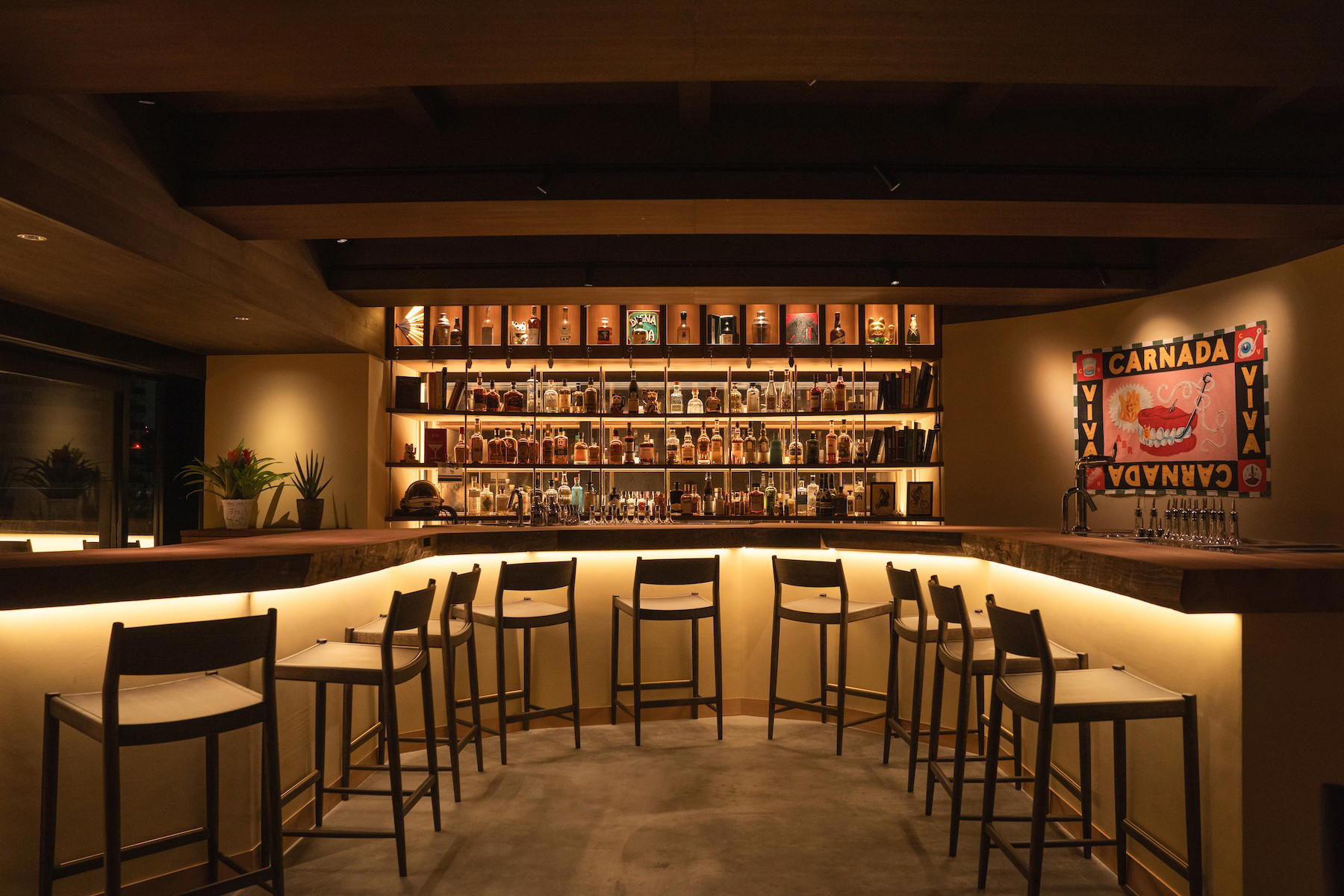
The format here matters. Counter seating changes how yakitori reads. Instead of disappearing into a kitchen, the act of cooking remains part of the room’s structure: the grill sets the pace, drinks fill the pauses, and the meal advances in small decisions rather than courses announced with ceremony. Sake, shochu, and wine are listed, a useful signal for the category because serious yakitori now often sits between izakaya drinking culture and more composed counter dining.
The dinner budget, JPY 10,000–14,999, places the restaurant above everyday skewers and below Tokyo’s more elaborate tasting-counter pricing. That middle-upper band is often where yakitori is at its most revealing: expensive enough for careful sourcing and pacing, not so ceremonial that the food loses its directness. Compared with nearby casual options such as TRASPARENTE Nakameguro ten or Kitchen Pan Chi, this is a different evening. Compared with broader Tokyo dining references such as Seirinkan, Les deux, or Teuchi Asama, it shows how Nakameguro’s appeal rests on category specialization rather than a single dominant cuisine.
What the recognition says about the meal
Tabelog’s Hyakumeiten lists matter in Japan because they reflect depth within a specific genre. Yakitori is a demanding category for that kind of recognition: the cooking can look simple, but small lapses in timing, seasoning, or pacing are obvious at counter distance. Tori Yoshi Nakameguro honten has appeared across multiple Tabelog Yakitori 100 selections, including 2018, 2019, 2021, 2022, 2023, 2024, and 2025. That continuity is more persuasive than a single-year appearance, especially in a city where diners are quick to move on.
The restaurant’s listed categories are yakitori and chicken dishes, which keeps expectations clear. This is not a broad izakaya built around a long menu and a noisy drinks-first identity. The narrower frame is the point. In Tokyo, the strength of yakitori lies in repetition with variation: different cuts, different textures, different levels of fat and char, all managed through a grill rather than through heavy saucing or elaborate plating. The room’s non-smoking policy also matters for a counter restaurant where smoke from the grill is part of the atmosphere but cigarette smoke would flatten the experience.
There is no need to force a chef mythology onto the place. The more useful reading is structural: limited seats, counter orientation, a focused chicken-and-skewer category, and repeated inclusion in a genre-specific Japanese dining list. Those facts describe the competitive set better than a personal origin story would. For travellers building a Tokyo dining week, this is the kind of address that gives yakitori its own slot rather than treating it as a casual add-on after sushi, tempura, or kaiseki.
How to place it in a Tokyo itinerary
The practical decision is not whether Tokyo has yakitori; it has an abundance of it. The decision is whether to allocate an evening to a counter restaurant where the format itself is the experience. Tori Yoshi Nakameguro honten makes sense for diners who want a focused, adult, grill-led meal in a neighbourhood that can carry the rest of the night without needing a hotel-district setting. The listed occasion skews toward friends, which aligns with the room: intimate enough for attention, relaxed enough for conversation.
For a wider city plan, pair this kind of dinner with broader EP Club Tokyo research rather than treating it as an isolated stop. Use Our full Tokyo restaurants guide for category mapping, then cross-check drinking and stay options through Our full Tokyo bars guide and Our full Tokyo hotels guide. Travellers building a longer Japan route can also compare city styles through Our full Tokyo experiences guide and Our full Tokyo wineries guide.
Within the restaurant index, useful contrasts include 124. KAGURAZAKA (Yakitori) for another yakitori reference, 12/10 Shinjuku ten for a different Tokyo dining mood, and. 鮪と炭火焼き うお炭 秋葉原店 for charcoal-led eating in another district. Broader contrasts, from 2D Cafe to 3 Chome no Curry Ya San, show how varied Tokyo’s specialist dining can be at street level. For travel beyond the capital, compare with -Grilled beef Sukiyaki- KAMAKURA TANUKIAN 鎌倉 たぬき庵 in Kamakura.cafe in Osaka.know in Kumamoto, (Shoku) Vietnam in Kawasaki, [Curry Senmon Ten] Maruyama Kyoju. in Sapporo, [ki:] in Kyoto, Jōdo Saké Bar in Los Angeles, and Onigiri Time in Pasadena.
A Tight Comparison
Comparable venues to anchor price and recognition.
| Venue | Cuisine | Price | Notes |
|---|---|---|---|
| Tori Yoshi Nakameguro hontenThis venue — the venue you are viewing | Meguro, Traditional Yakitori Izakaya | $$ | Not listed |
| Sora to Mugi to | Shibuya, Organic Vegan Bakery & Café | $$ | Not listed |
| Teuchi Shimada | Not listed | $$ | Minato, Udon & soba izakaya with handmade noodles |
| Enseigne d'angle Harajuku ten | Not listed | $$ | Shibuya, Classic Japanese kissaten & coffeehouse |
| Negishi | Shinjuku, Japanese Beef Tongue Grill | $$ | Not listed |
| Gyukatsu Motomura Behind Shinjuku Alta Branch | Not listed | $$ | Shinjuku, Japanese Beef Cutlet (Gyukatsu) |
Recognition history
Dated appearances from independent guides and award organizations, with the underlying list record or original source where available.
Tabelog 100 #60 · No. 60
Tabelog · Tabelog 100 - Yakitori - EAST - 2025











At a Glance
- Cozy
- Lively
- Classic
- Intimate
- After Work
- Casual Hangout
- Solo
- Date Night
- Group Dining
- Late Night
- Open Kitchen
- Standalone
- Sake Program
- Beer Program
Current opening hours
- Monday
- 4–9:30 PM
- Tuesday
- 4–9:30 PM
- Wednesday
- 4–9:30 PM
- Thursday
- 4–9:30 PM
- Friday
- 4–9:30 PM
- Saturday
- 4–9:30 PM
- Sunday
- 4–9:30 PM
Hours can change for holidays and private events. Last verified .
Compact, counter-focused yakitori joint with a warm charcoal grill glow, smoky aromas, and a casual, convivial atmosphere typical of classic Tokyo yakitori shops.